When the San Francisco Symphony announced that A.R. Rahman would appear in concert on July 2, the 2,743-seat Davies Hall sold out almost instantly.
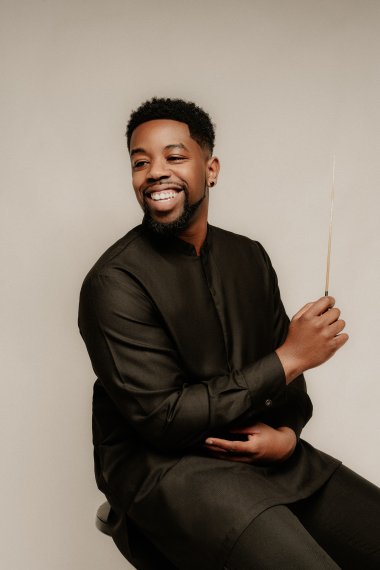
With Jonathan Taylor Rush as conductor for the concert, Rahman is joined by vocalists and keyboard artists Kevin Doucette, Rohith Jayaraman, Pragathi Guruprasad, and Kiran and Nivi Saishankar.
About the almost-complete sell-out: what is Rahman’s magic?
There are two answers: who he is and the cultural geography of this eager audience.
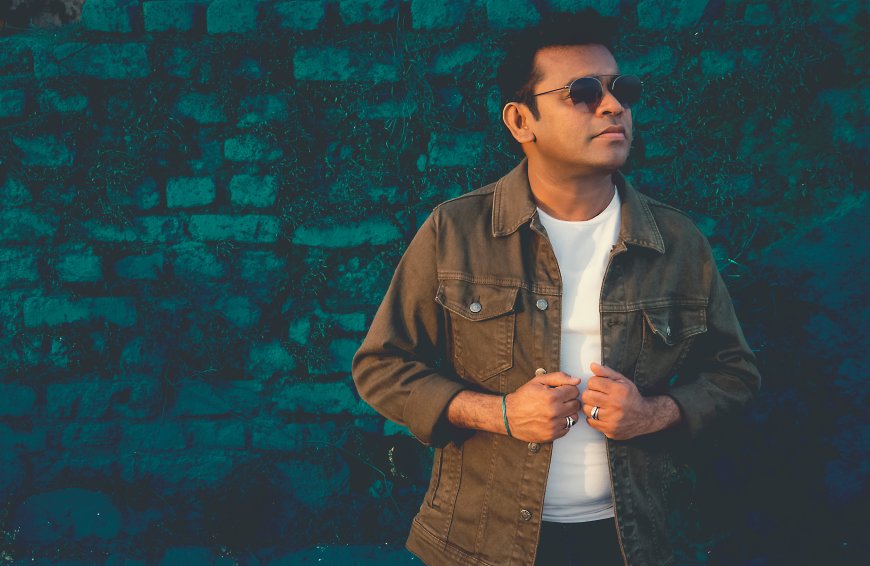
Allah Rakha Rahman, 59, born A. S. Dileep Kumar in India’s Tamil Nadu, was known as “the Mozart of Madras” when he started his music career, which soon became a global sensation.
A singer, composer, record producer, songwriter, and multi-instrumentalist, Rahman’s work in cinema, musicals, and concert tours earned him seven National Film Awards, two Academy Awards, two Grammy Awards, a BAFTA Award, a Golden Globe Award, seven Tamil Nadu State Film Awards, 15 Filmfare Awards, and 18 Filmfare Awards South.
Rahman is the composer of more than 120 films, including the Oscar- and Grammy-winning Slumdog Millionaire and the West End/Broadway hit musical Bombay Dreams. Jai Ho, a documentary about Rahman named after his famous song from Slumdog Millionaire, highlights these achievements.
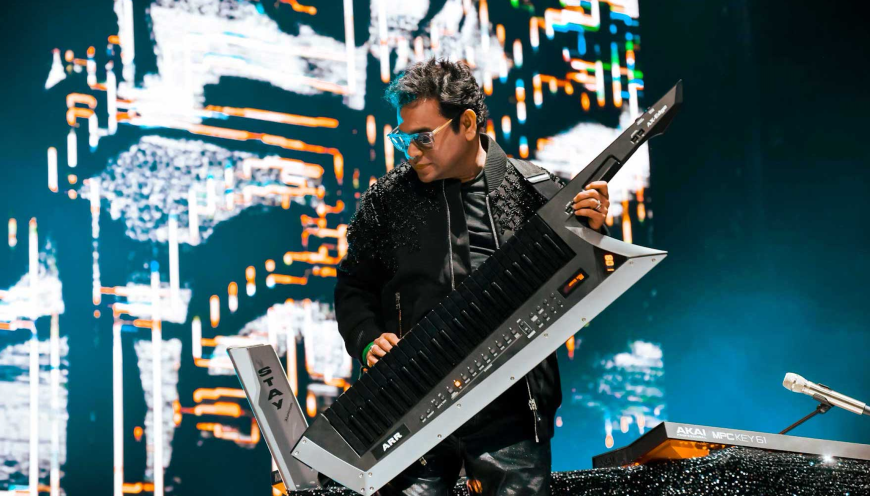
In Rahman’s music, described as “a symphony of contrasts,” there is a fusion of traditional Indian elements with Western orchestration, electronic synthesizers, and world music influence. His compositions are characterized by lush harmonies, exciting rhythms, and superb sound engineering.
The variety of styles included in his music reflects Rahman's interest in multiple religions, ranging from his native Hinduism to Sufi Islam, which he embraced at age 23. “I am a fan of all the religions,” he has said, though he rejects “harming other people in the name of religion.”
Examples of Rahman’s work include “Khwaja Mere Khwaja” (“Oh my Lord!”) from the film Jodhaa Akbar, and the score for Lagaan. Also, “Jamal,” a song about happiness, and “Vande Mataram” (“I bow to thee, Mother”).
For the SF Symphony concert, as usual for Rahman’s appearances, no program is announced in advance.
As to the audience, the San Francisco Bay Area is a virtual hotbed for Indian and Asian music and culture. The Asian Art Museum is one of the greatest such institutions in the world. Besides the 69-year-old SFFILM, CAAMFest (Center for Asian American Media), 3rd i films (SF International South Asian Film Festival), and other festivals feature Asian and Asian American films.
From Alan Watts in Marin, introducing and popularizing Eastern culture and philosophy, to the Esalen Institute in Big Sur, with its East-West workshops — Northern California has had nearly a century of preparation for Rahman’s music.
Among the antecedents are Ali Akbar Khan and his College of Music; Zakir Hussain teaching and performing; the SF Ethnic Dance Festival’s splendor of Asian American performances; the Chitresh Das Institute, and dozens of Indian dance companies in the Bay Area.