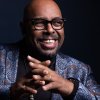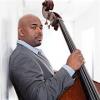
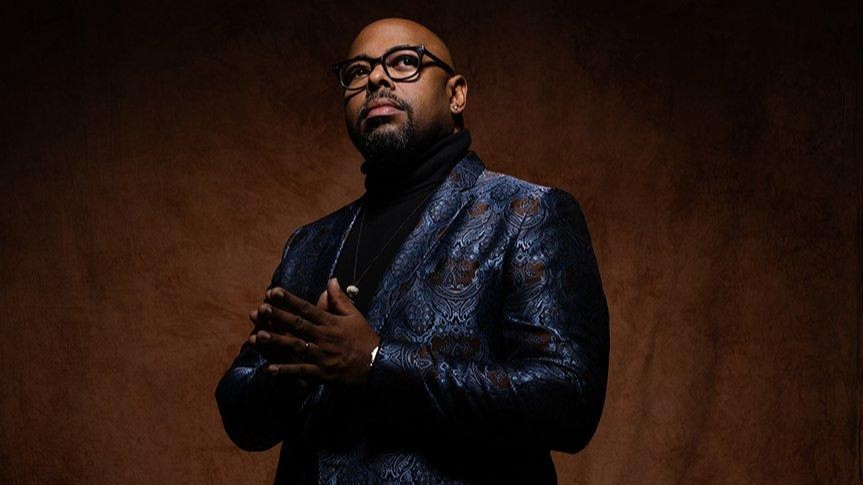
It was a bit past 7:30 p.m. when SFJAZZ CEO Gabrielle Armand brought three good friends onto the Miner Auditorium stage to play a set in living memory of the great bassist Ray Brown. She left the settling auditorium with “two words: Christian McBride.”
The Thursday evening concert (Sept.10) provoked an electric buzz befitting the significance of the occasion, the first concert of the fall season.
Celebrating the Ray Brown centennial, bassist McBride, pianist Benny Green, and drummer Gregory Hutchinson — each a jazz legend — spent the evening largely playing Brown’s arrangements. The intimate atmosphere proved perfect for the chatty McBride, whose comments wove together both the musical numbers, and the history and anecdotes that reveal the roots of the jazz practice we know today.
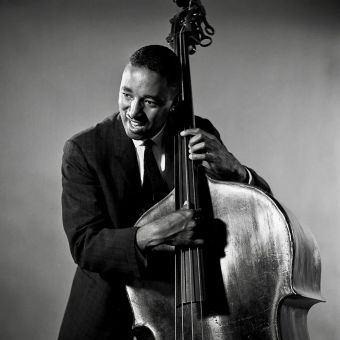
The performance frequently featured solos from all three musicians, yet its most striking facet was their fluidity together. Arrangements like “Nancy With a Laughing Face,” popularized by Frank Sinatra in the 1940s, drew the audience into Green’s light touch on the piano and Hutchinson’s immaculate brushwork. McBride and his bass sat effortlessly over the changes, lightly plucking, complementing Green’s playing and contrasting with Hutchinson’s comping. The instruments themselves seemed simply vessels through which they carried on the conversation.
The ballads were juxtaposed with some of Brown’s livelier compositions. A highlight was - “Gumbo Hump,” a New Orleans-inspired piece with a swinging bridge. Spotlighting Hutchinson, the trio put out a tremendous, full sound. The drummer spun together a groove centered around the loud rimshots of his snare and the pounding responses of his bass drum, making his mastery over the instrument clear.
In the latter half of the chart, Hutchinson passed the time keeping to McBride as he took complete control over the room. He brought in the audience, orchestrating syncopated clapping section by section that eventually resembled a New Orleans beat. His humorous attempts to keep the flame of this audience participation burning were captivating for the remainder of the piece.
The evening also featured charts by Dizzy Gillespie and Chano Pozo, Neal Hefti, and other greats. “Li’l Darlin’” brought Hefti’s familiar delicate touch, contrasting with Gillespie and Pozo’s energetic “Tin Tin Deo.” The group fruitfully navigated Gillespie’s hard swing and the Afro-Cuban bridge characteristic of Chano Pozo, which was, then as now, a powerful combination.
Brown, however, was the center of the evening. The trio took turns speaking about the evening’s program and telling stories of their interactions with the legendary bassist, who was born 100 years ago this October.
All three musicians noted their close relationship to each other and his relationship as a father-figure to each of them. Each had plenty to tell, much of which would not be appropriate for this stage, McBride joked at the beginning of the show.
Green — a Berkeley native — shared a story of his first interaction with Brown, an awkward greeting at a bar during the Edmonton Jazz Festival in the ‘80s. McBride preluded Brown’s, ironically, funkified arrangement of “It Don’t Mean a Thing (If It Ain’t Got That Swing),” with the story of a night when he sacrilegiously — according to some purists — played electric bass at a funk show. Then he saw Brown down front in the audience. The older man’s positive response was a testament to his passion for moving forward with the times, and the story epitomized both the theme of the evening and the season for which this concert was the opener.
Armand had discussed the season’s theme, “Forward Motion,” in a brief intro to the concert. In both the musical sense and the grand scheme, she described its significance as getting unstuck; moving with the artform. In his tribute to Ray Brown — a musician who was not afraid of the future — McBride pointed out that his attitude was not mirrored by all of his colleagues.
The past pushes the future, and the future pushes us all. And, with the fruitful work of the trio of friends that opened the 2026-2027 SF Jazz season, the Ray Brown Centennial represented just that.