Chanticleer has always worn its heart on its sleeve, bringing out the emotions latent in any song, be it by John Dowland or Schubert or Dolly Parton. And that’s true of the men’s chorus’ newest program, a spectacular performance of music by the 14th-century composer and poet Guillaume de Machaut, which is now playing in San Francisco.
Machaut lived and worked in northwest France in the 1300s, the turbulent century of the Black Death and the Hundred Years War. An associate of kings and dukes, he was part of the political and military world, as well as a canon of the great cathedral of Reims, where the kings of France were crowned. He wrote volumes of poems in the intricate rhyming patterns of the courtly love tradition. And his music, both sacred and secular, swept across Europe as spearhead of the international style called ars nova ("the new technique"), with flowing vocal lines powered by dazzling rhythmical intricacy and captivating polyphony.
Chanticleer's current Machaut Project builds on the success of their 2024 concerts of Machaut's music, which presented much the same repertoire as this year's program. Now this is even more powerful dramatic presentation, conceived by Chanticleer Music Director and countertenor Tim Keeler with a creative team led by stage director Elkhanah Pulitzer.).
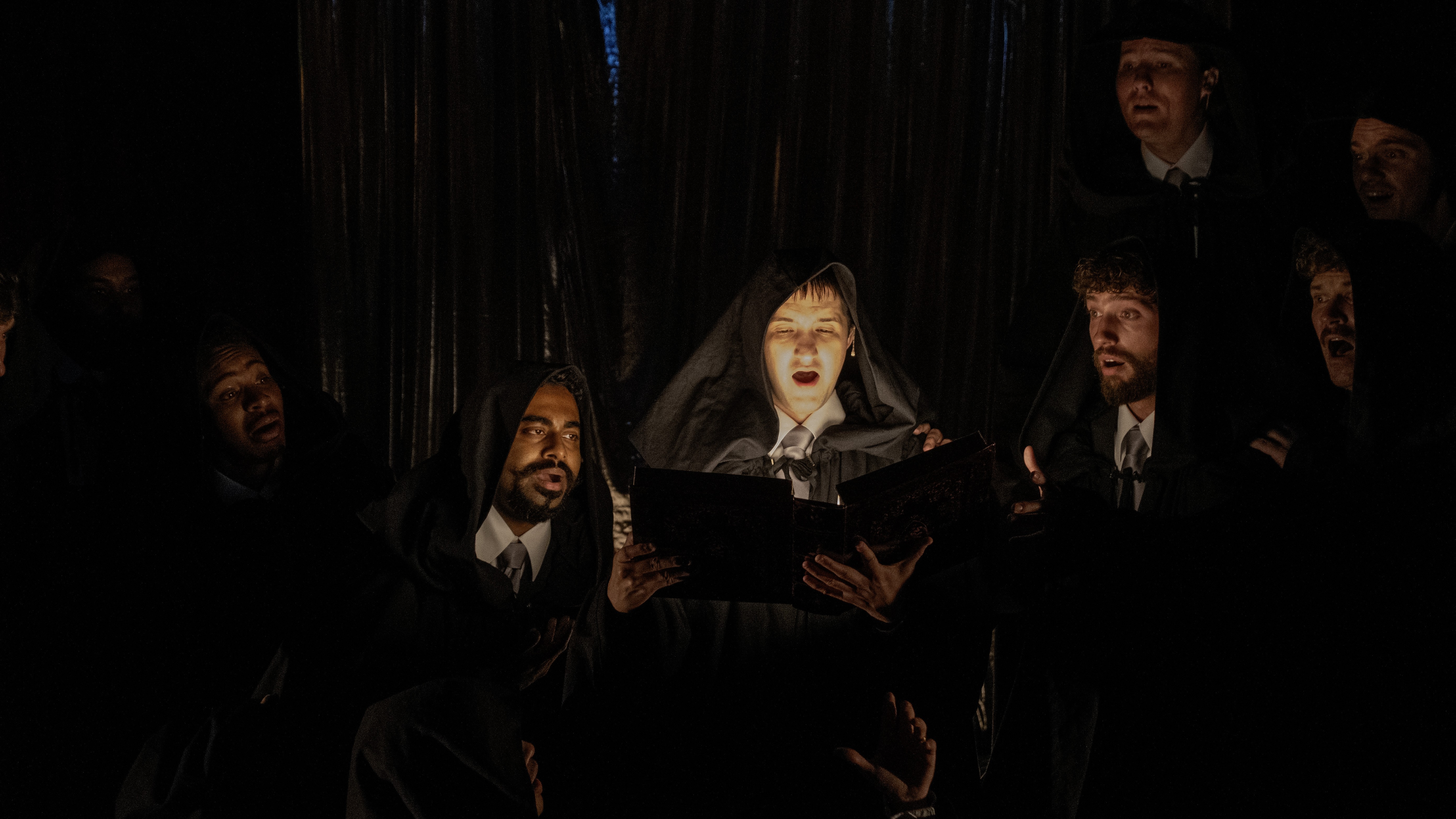
In the intimate space of the ODC Theater on Sunday, Sept. 13, 12 singers in black hooded robes descended, chanting, through the audience to the stage, then launched into the Messe de Nostre Dame, Machaut's groundbreaking setting of the Catholic mass. They evoked a cathedral setting — but these "priests" soon began to break formation, to relate to each other rather than to an abstract liturgy. They collected in small groups, singing almost as if talking to each other. The set texts were freed from their formal meanings, blooming into accessible human emotions.
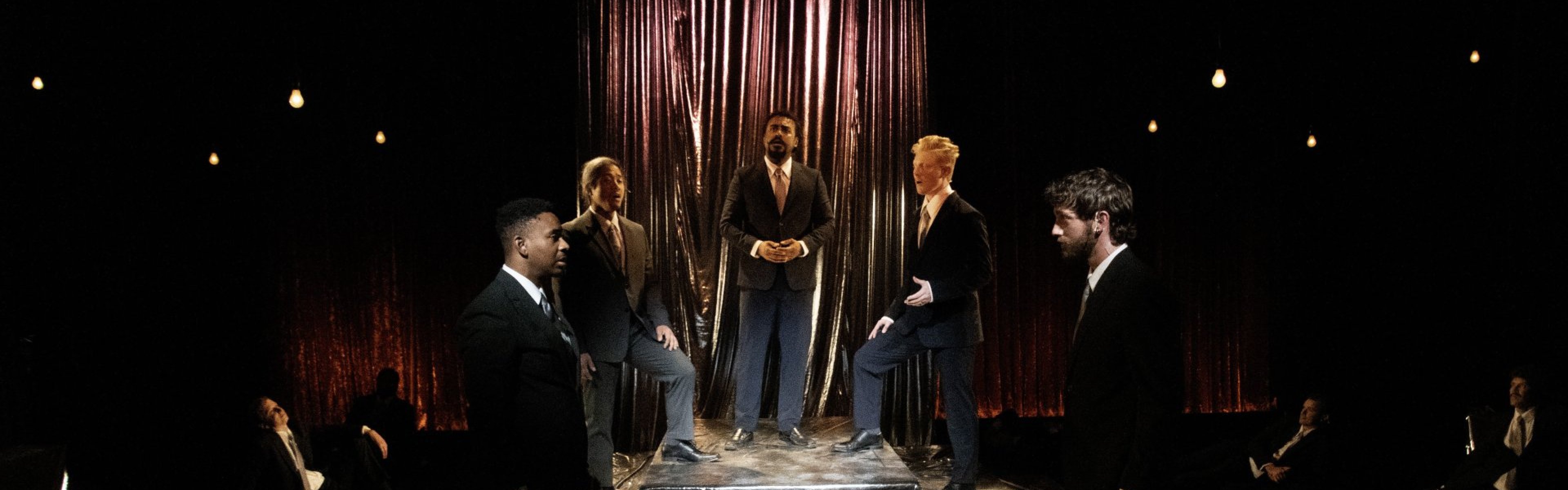
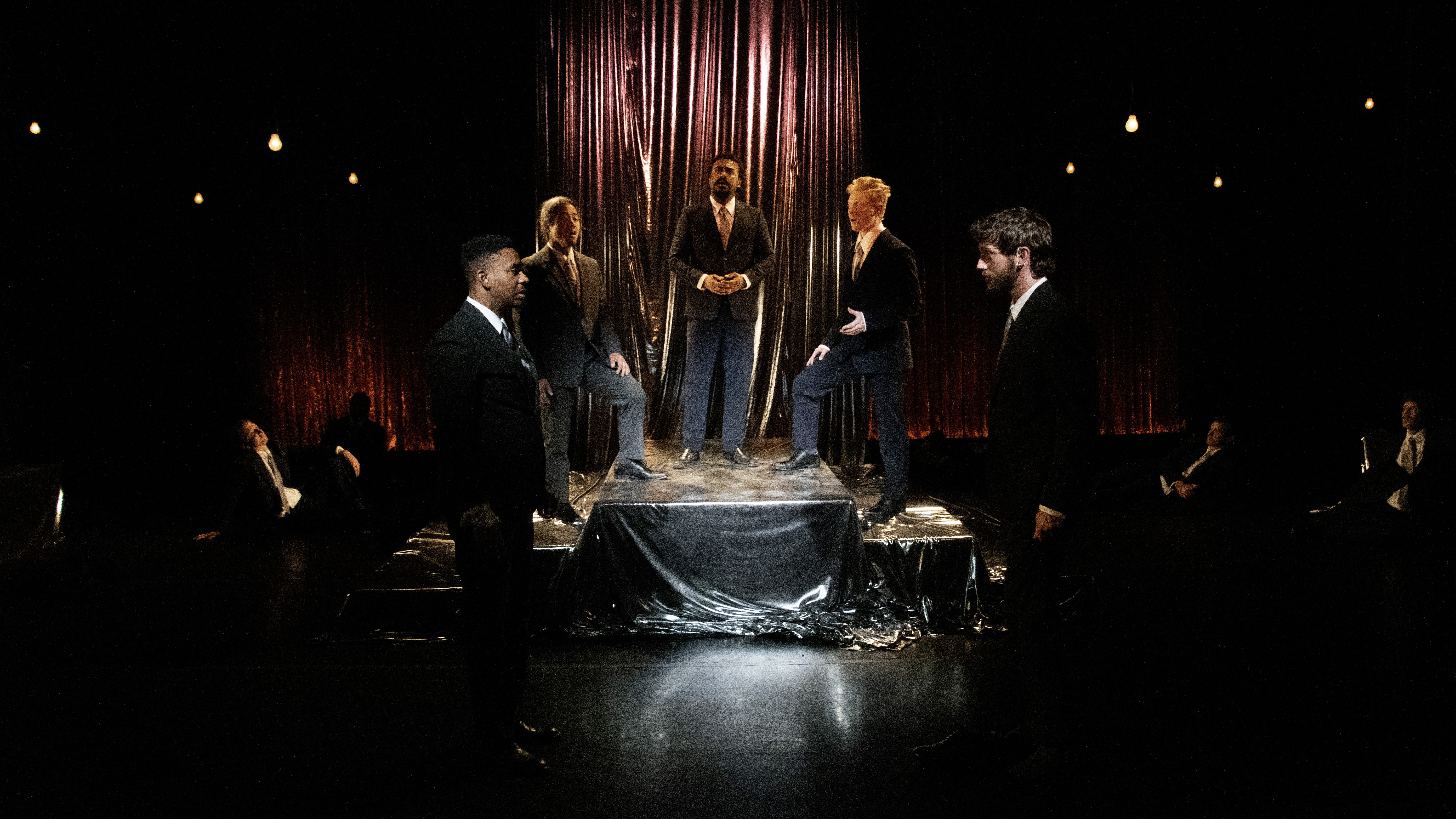
As the program moved into the secular world, those feelings morphed into the anguished world of courtly love, the European 14th-century language of desire — thwarted, rejected, delayed, and occasionally fulfilled. The black robes were shed, followed by the modern suits and ties under them, until the singers became courtiers conversing in an imagined pleasure garden, dressed only in their (very discreet and varied) white underwear and floral garlands.
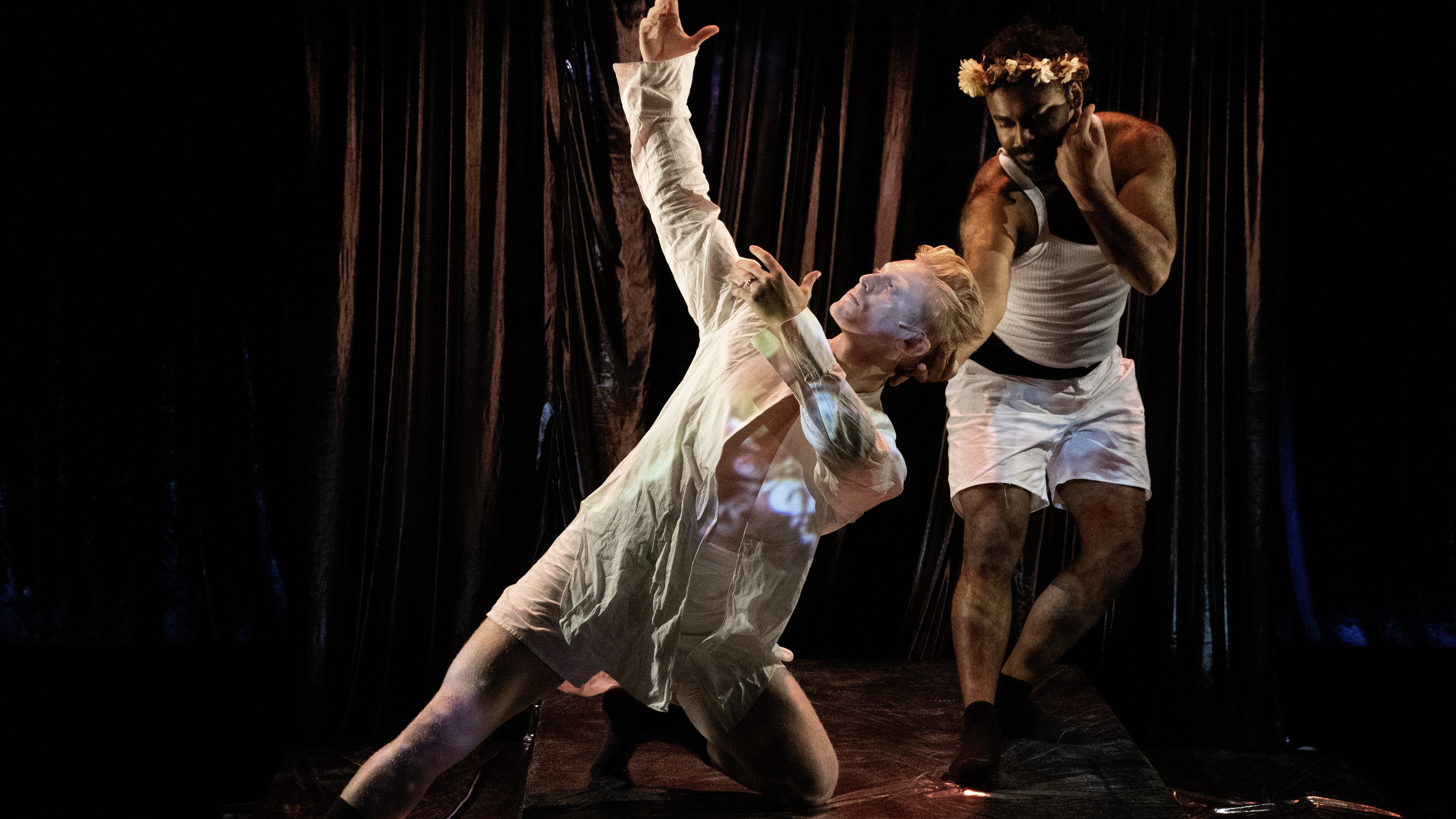
Machaut's great songs of love constituted the emotional center of the program. Two singers shared the extended (and possibly autobiographical) torch song, “Le lay de bonne esperance” (the song of good hope). In another song, De bon espoir/Puis que la douse rose/Speravi, each of the three parts sets a different text, all sung at the same time.
It's daunting to deliver this musical intricacy and rhetorical complexity: Here it became a gentle and familiar conversation, as the men, casually and earnestly, shared their different experiences. “Douce dame jolie” (Sweet, lovely lady), became a lively line dance punctuated by intense solo riffs.
The ballade "Riches d'amour" (Rich in love but poor in hope) was staged simply — two singers sitting disconsolately next to each other on the edge of a bed, barely moving — while the music's rhythmic counterpoint manifested the contrapuntal emotions of the lovers' shifting relationship. In most of his songs, Machaut writes of love for a douce dame, a sweet lady. In this Machaut Project, the poems were sung by men to other men, extending the erotics of courtly love into a world of subtle homoerotic desire.
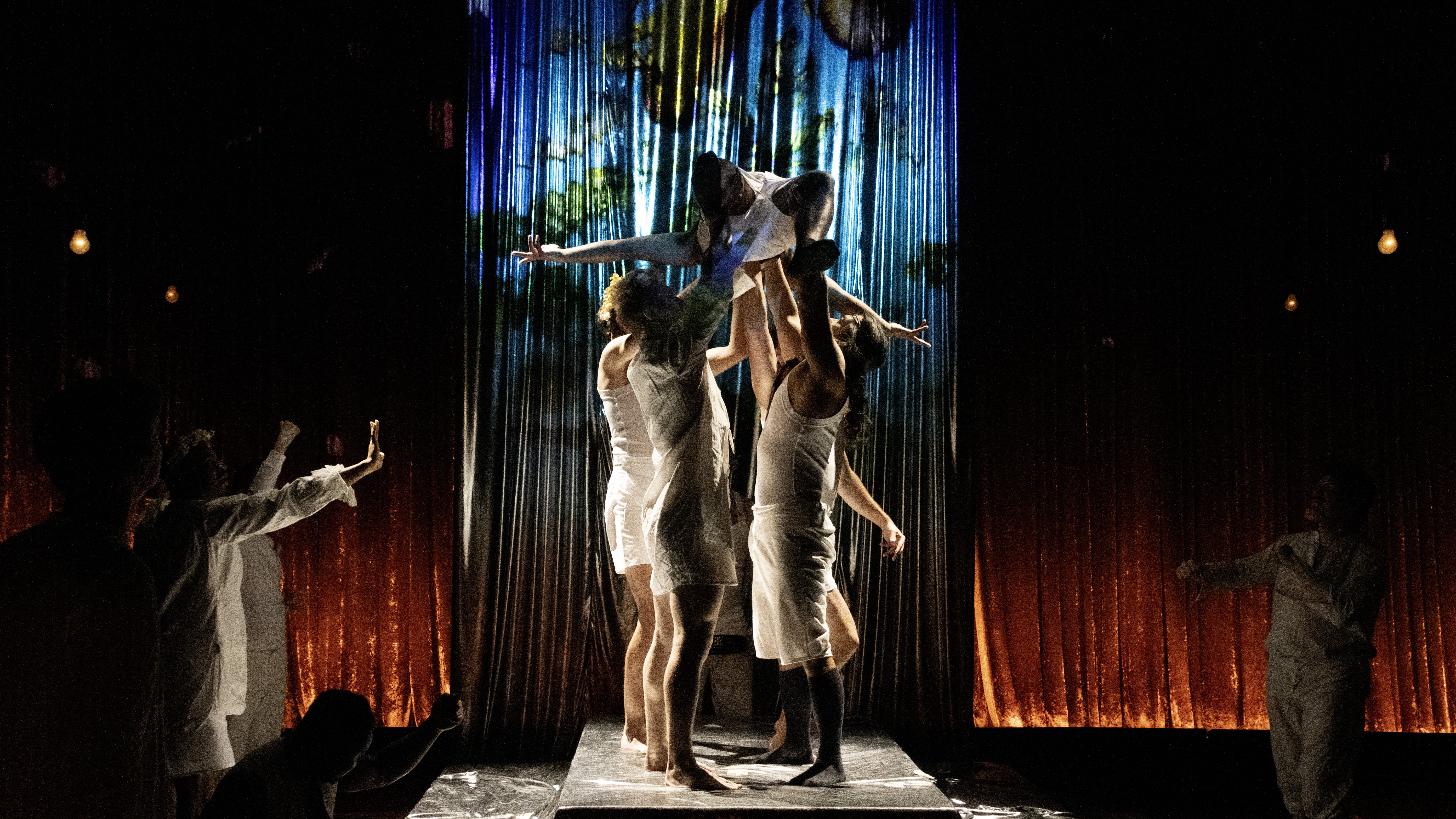
Lighting, projections, and occasional added sound (church bells, winter winds) brought further drama to the performance. The singers performed entirely by memory, with exquisitely accurate and expressive intonation and rhythm, even while mastering the complicated choreography — moving about, breaking into small groups. The formality of a typical choral concert was replaced by simple and effective gestures, smiles, and conversations.
Who would have thought that the splendidly artful music of the 14th century could be so humane and accessible?
The Machaut Project continues at the ODC Theater with performances from Thursday, Sept. 17 through Sunday, Sept. 20.