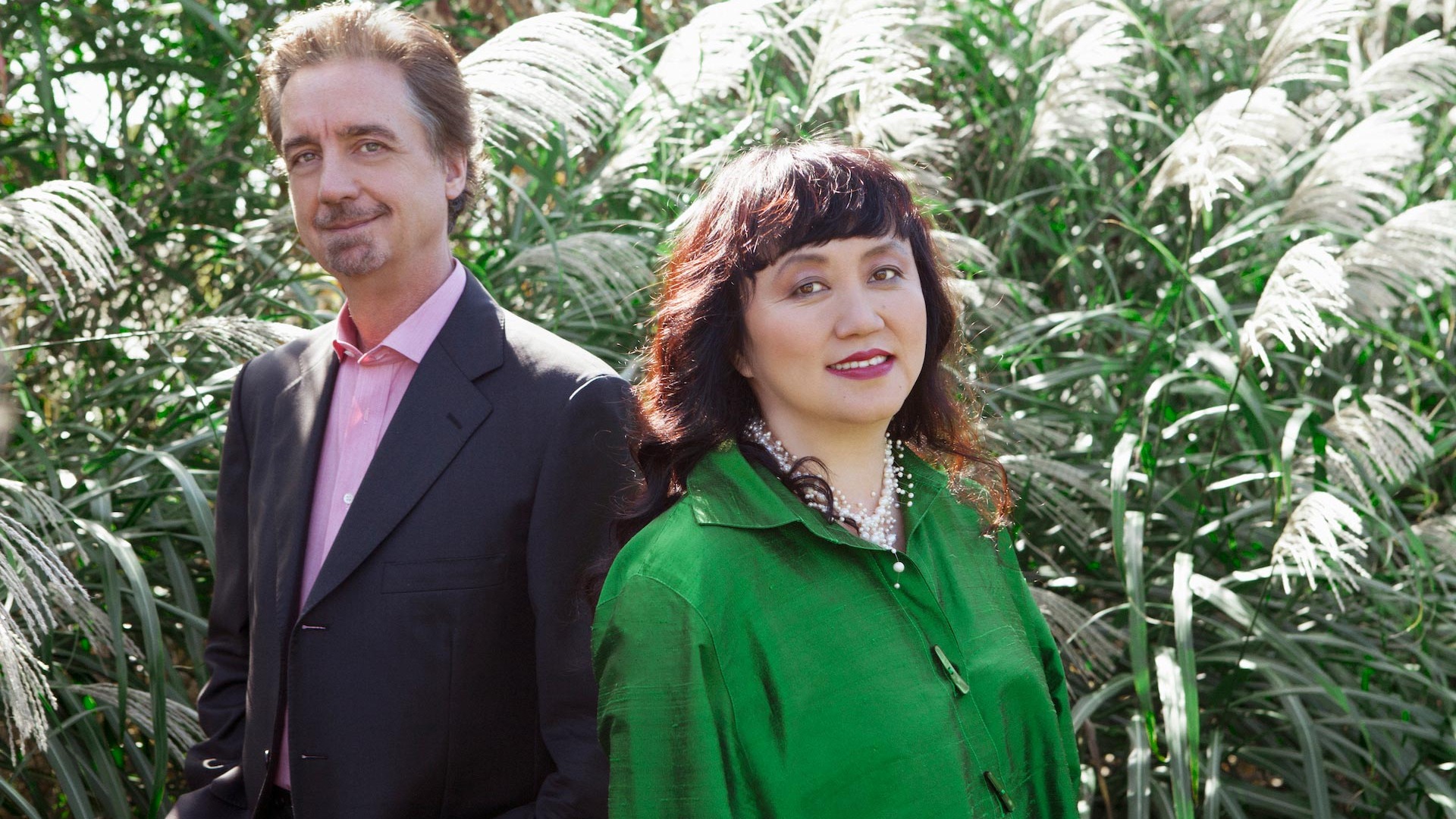
Since this summer’s edition of Music@Menlo is the final one led by its founders and artistic directors David Finckel and Wu Han, the festival is revisiting some of its greatest hits from past years. In that spirit of “Redux,” the concert on Sunday evening July 19 at Spieker Center for the Arts echoed a concert from 2009, a season that focused on Felix Mendelssohn.
Mendelssohn was one of the greatest prodigies of all time who, as Michael Parloff pointed out in an exceptional July 17 lecture, wrote around 750 works before dying at age 38, in 1847.
What were you doing when you were 15 years old? That was Mendelssohn’s age in 1824, when he composed his Piano Sextet in D Major over a two-week period and then performed it with friends at a concert series sponsored by his family. The Piano Sextet received an exciting interpretation by pianist Jean-Efflam Bavouzet, violinist Kristin Lee, violists Guillermo Figueroa and Paul Neubauer, cellist Sterling Elliott, and bassist Scott Pingel. Lee, in particular, did a sterling job filling in on short notice for an ailing colleague.
The first movement was highlighted by an effortless stream of notes from the keyboard, meltingly smooth descending lines, and a grand fortissimo ending from the ensemble. That brightness contrasted well with the tender melody of the second movement. The ensemble picked up the pace in the third, set off by the conversation between the piano and strings that finished with delightful pizzicatos.
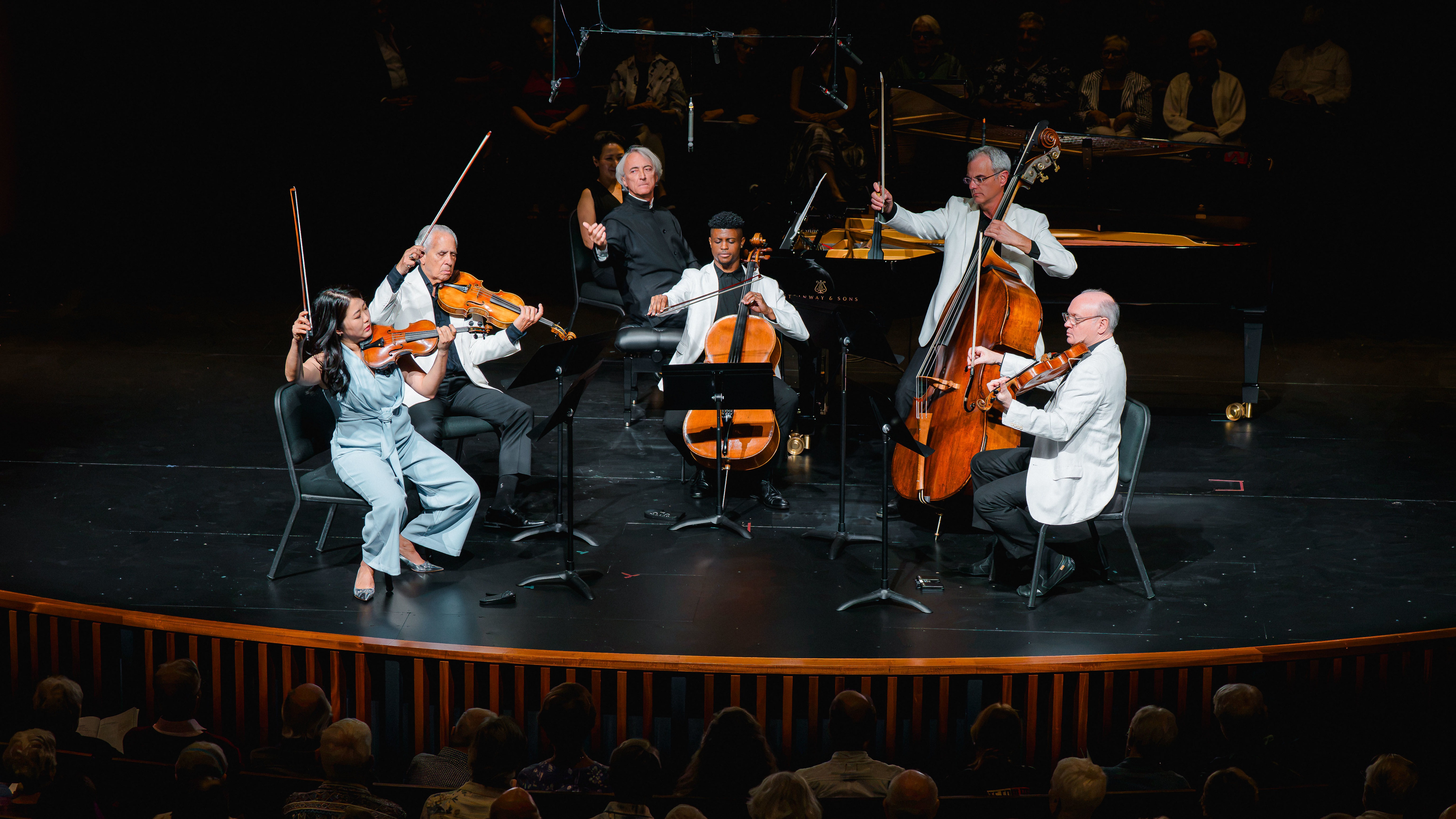
The optimistic atmosphere continued into the final movement. Bavouzet created a wonderful playful feeling that morphed into a more agitated and heavily rhythmic passage before swirling into a scintillating finale. The performance generated a storm of acclaim and a standing ovation from the audience.
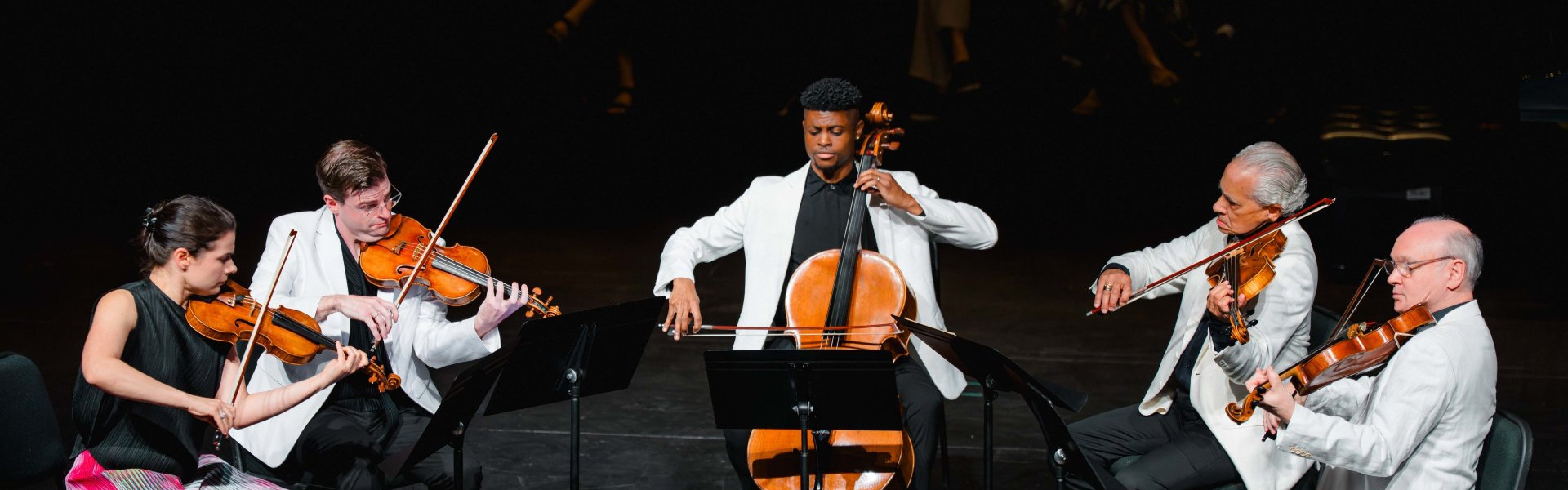
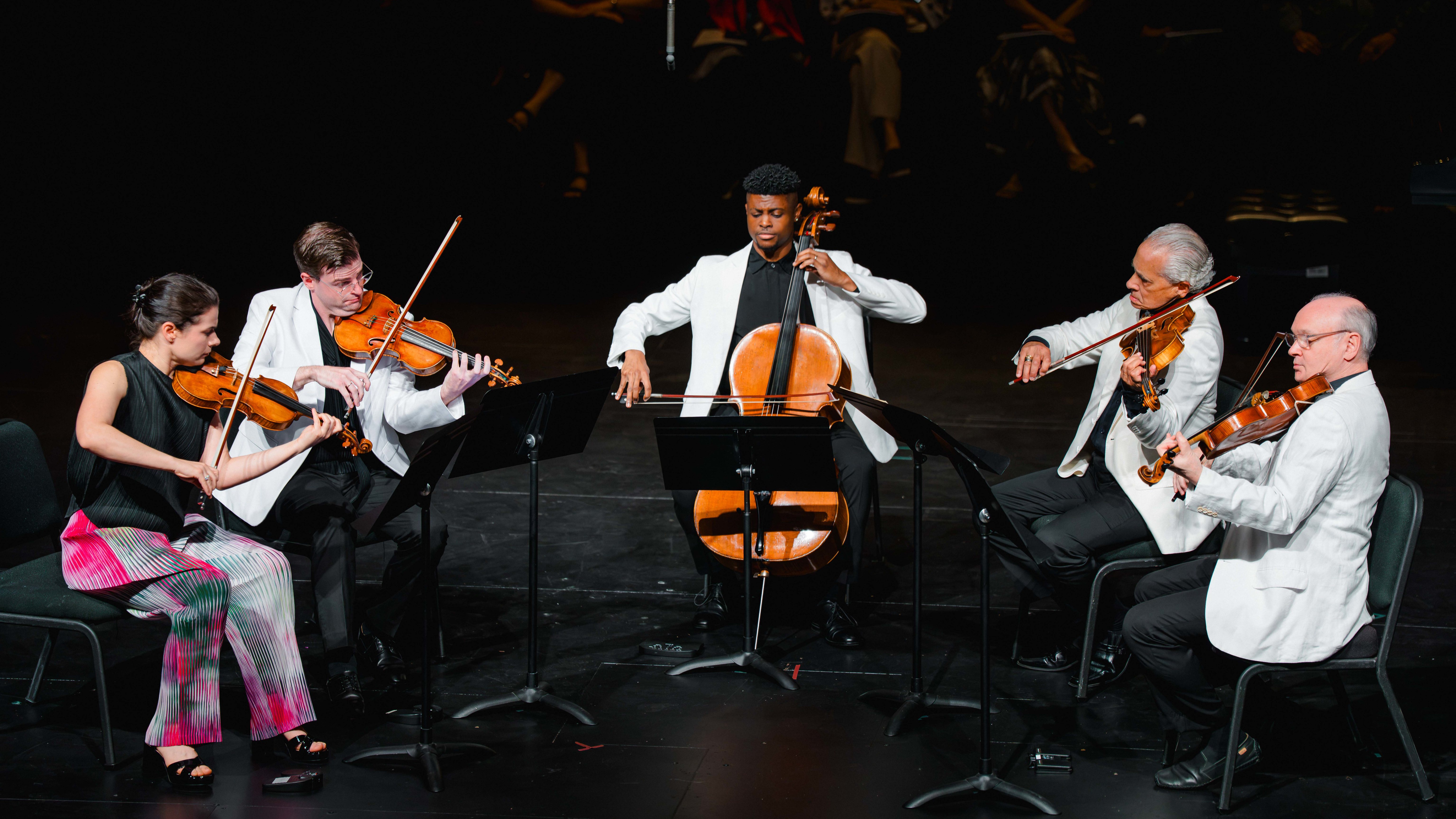
Two years later, Mendelssohn uncorked his String Quintet in A Major and then revised it in 1832 — at age 23 — adding a second movement Intermezzo, which was a response to the death of his violin teacher, Eduard Reitz. Played by violinists Bella Hristova and Chad Hoopes, violists Figueroa and Neubauer, and cellist Elliott, the Quintet buoyantly alternated between wispy, fairytale lightness and a lyrical melody that was carried by Hristova and warmly buttressed by the violas.
In the Intermezzo, a plea issued by the first violin created a feeling of sorrow that was extended into a lovely duet with the cello. The ensemble created a blistering fugue that skittered about with elan before flying away. The final movement wrapped things up with Hristova spinning out filigree lines and the ensemble forcefully generating phrases that climbed higher and higher. They sailed into the final scherzando and concluded with a bout of whimsy.
Figueroa and pianist Wu Han delivered an incisive rendition of the Violin Sonata No. 3 in F Major, written when the composer was 28. This piece was forgotten for almost 100 years until Yehudi Menuhin revived it. It was the slightly revised version, published by Menuhin in1953 that Figueroa played. The violinist impressively conquered the speediest passages with fleet fingerwork. He and Wu Han conveyed the gentle portions of the piece with utmost conviction, interrupting the contemplative mood with a couple of jolting sforzandos. The perpetual motion of the final movement sparkled with verve.
Mendelssohn’s influence will be felt in future Music@Menlo festivals, not least because incoming music directors Dmitri Atapine and Hyeyeon Park named their son Felix, after the great composer.