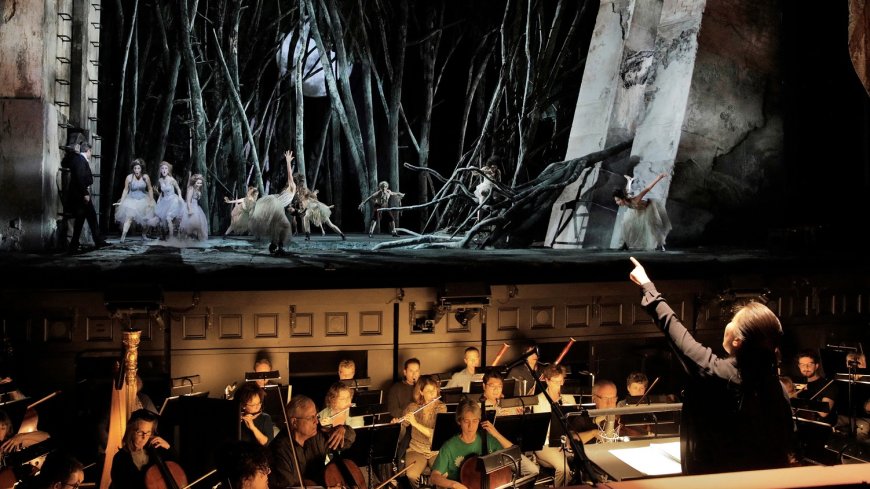
After months of planning for San Francisco Opera’s fall season, a major conflict between SFO’s management and orchestra became public last week.
The issue: The company’s collective labor contract with the American Federation of Musicians Local 6 covering the orchestra expired on July 31, 2026, and negotiations since have stalled.
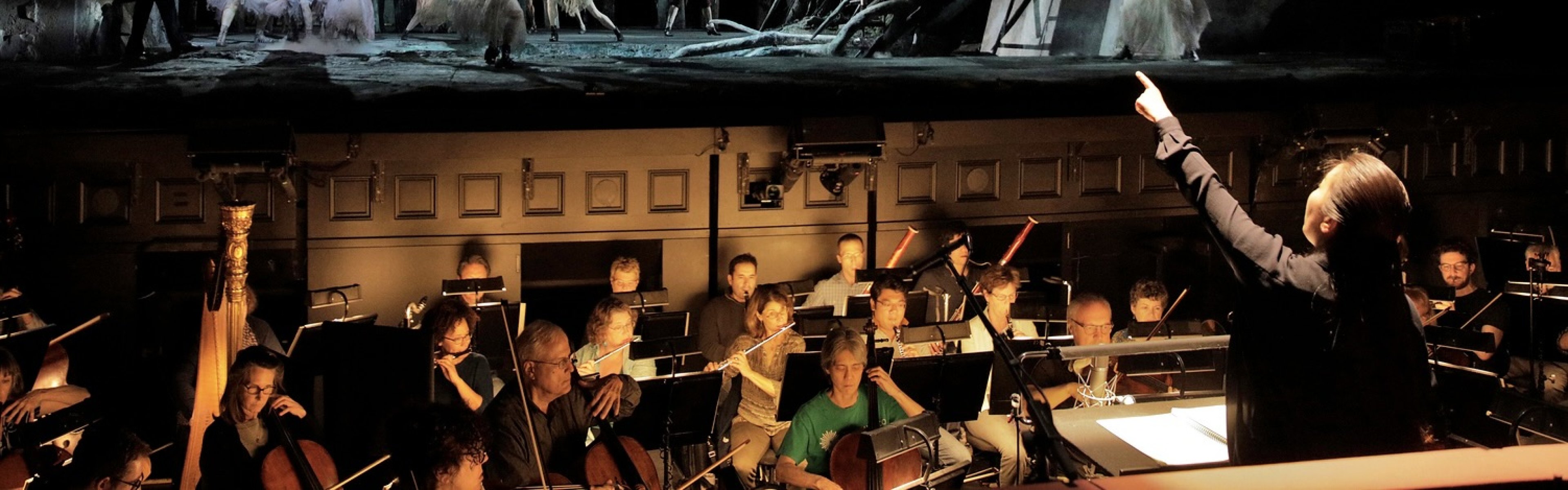
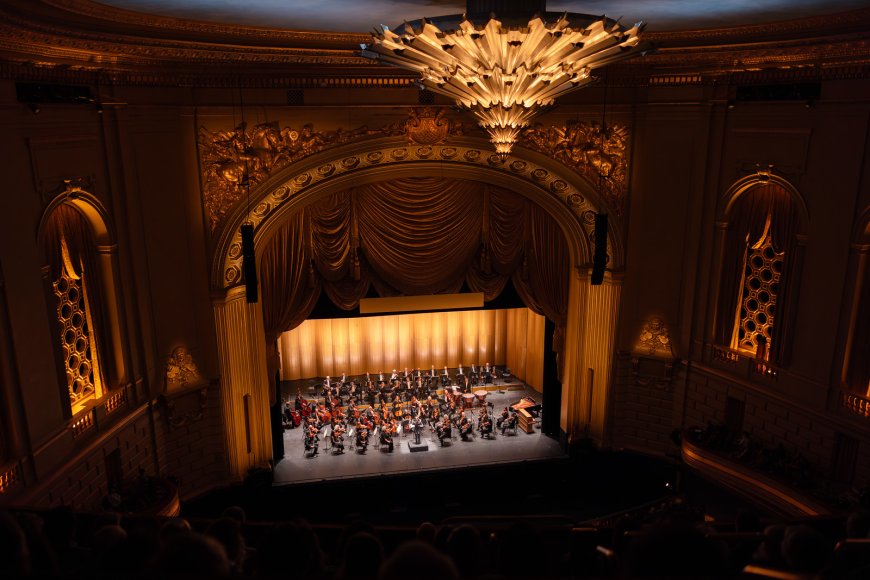
The musicians, just back from vacation and busy with rehearsals, announced on social media that the orchestra “will not be able to perform on opening night, Sept. 12, unless management has reached a fair contract with us before then. We are letting you know this weeks in advance rather than having you be surprised at the door.”
Management responded: “As we have already been doing with all of our employees, artists and labor organizations, we must find a way through this with the Orchestra to find a contract that respects their extraordinary talents and better aligns with the economic realities of the Company.”
Today, SF Opera announced the Opera Ball has been postponed to Nov. 12. The gala event was originally scheduled for Sept. 12.
“Economic realities” have challenged SF Opera for years now, becoming near fatal in 2020 when COVID shut down the War Memorial and other performance venues for 600 days, leaving the company without income. At the time, SFO’s expenses dropped from $77.9 million in 2019 to $52.1 million in 2021. But the company slowly recovered, and currently operates with $89.1 million in expenses.
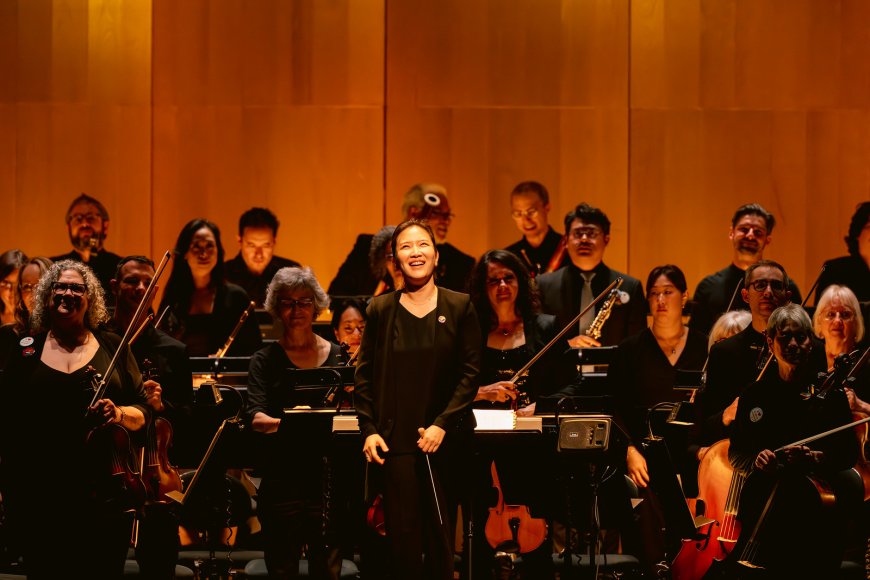
After the shutdown, SFO General Director Matthew Shilvock’s administration offered the musicians 44% of the $95,284 base minimum salary (BMS) reached in the contract for the 2018–2019 season, and promised gradual pay increases.
Salaries in the contract which just ended were at the minimum salary guarantee of $118,326.75 for section musicians, $124,056.47 for assistant principal positions, and $152,705.94 for some principals.
The expired contract also provided for a 24-week season, four weeks of paid vacation, and medical, dental, vision, and instrument insurance, plus a pension.
The musicians' statement this week says, “Management proposed a 26% pay cut, which would have returned us to 2015 wages. They have since ‘improved’ that offer to a 20% cut, which would put us back at our 2018 pay. We cannot begin a season under proposals like these.”
The musicians’ statement continues: “The San Francisco Opera is not a company in trouble. By management’s own account, and by the financial information they have shared with us: six productions have sold out in the past three years. Ticket sales and subscriptions are rising. Donations have increased by $8 million compared to last year, exceeding the Opera’s stated goals by $2.2 million.”
The Administration responded: “While the Opera is seeing incredibly positive trends in audience and donor growth, the fundamental economics underlying the organization have been straining for over 60 years as expense growth has, over decades, outpaced revenue growth.
“This has led to the gradual reduction of our seasons and volume of work, a reality faced by many arts organizations. Even with very positive revenue trends, the growing economic strain has put an unsustainable drain on the Opera’s endowment to balance the budget, and a need to resolve a structural deficit of $15 million each year.”
SFO’s tax return for Fiscal Year ending in July 2025 shows $82.8 million in revenue against its $89.1 million in expenses, so a smaller deficit than claimed by the Administration.
Total assets are $366 million (including an approximately $300 million endowment, the “largest of any American opera company” according to Shilvock), against $36 million total liabilities.
The statement from SFO’s management last week included mention, without explanation, of a plan for gradual changes:
“The Opera has shared a possible five-year framework with the Orchestra that would realize gradual changes to the structure of the Orchestra’s compensation while keeping their earnings constant to current levels each year over the coming five years.
“We look forward to exploring this and other options with the Orchestra and continuing our negotiations together as we work towards a mutually agreeable new contract.”
The musicians’ complaint: “Our contract expired on July 31, and the season is about to open without a new one. We came into these negotiations months ago, expecting to build on the modest agreement we reached two years ago.”
Executive salaries at SFO are in line with those of music organizations of similar size. Shilvock’s reported compensation is $729,130, with an additional $45,839. New Lyric Opera CEO John Mangum’s salary is in the “$700,000 range.” Across Grove Street at SF Symphony, CEO Matthew Spivey earns a reported $724,481.
The head of the Opera Orchestra, SFO Music Director Eun Sun Kim, has a reported annual salary of approximately $578,673, plus $19,949 in additional compensation.
An exception to the music executive salary range is Metropolitan Opera CEO Peter Gelb, who receives annual salary and benefits of $1.3 million to over $2.1 million, depending on deferred compensation.
Both recent SFS Music Directors MTT and Esa-Pekka Salonen received over $2 million each year for a much longer season than SF Opera’s.
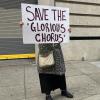
A member of the Opera Chorus — which has a separate contract from the orchestra, negotiated by the American Guild of Musical Artists (AGMA), and in effect through Feb. 28, 2027 — told SF Classical Voice:
“Whenever the subject of ‘financial challenges’ appear, it is the artists (instrumental, vocal, backstage, etc.) who are expected to make the sacrifices. These are the people who make the product which these organizations are selling.
“Workers are expected to make do with less, still perform and do their best to inspire and uplift the people who are able to support financially. If the organization is challenged, imagine what your artists are going through. And now they are being told by the company and industry to which they have dedicated their careers and lives to, more often than not making huge financial sacrifices to be an artist, that they will not be supported, that they cannot make a living, they are increasingly worth less.
“You are not going to raise more funds and generate more support for something seen to be on a downhill trajectory. You need to inspire, build, uplift.”
The Administration’s repeated argument:
“The current structure of the Orchestra’s contract was designed for a volume of work that has not been economically feasible for many years. As we have already been doing with all of our employees, artists and labor organizations, we must find a way through this with the Orchestra to find a contract that respects their extraordinary talents and better aligns with the economic realities of the Company.”
In an interview with SFCV last week, just before the labor contract problem became public, Shilvock spoke enthusiastically about financial gains:
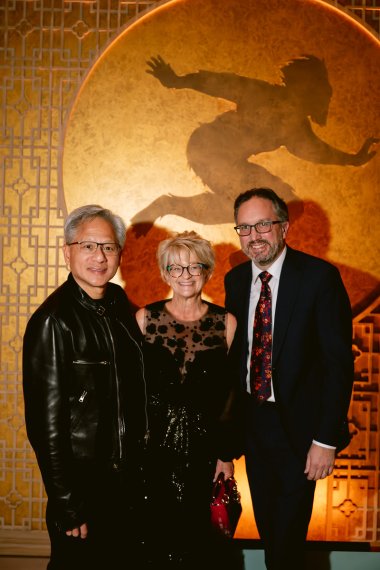
“Six- and seven-figure annual donors has increased from 43 to 74, including a recently announced groundbreaking multi-year, multi-million-dollar commitment from Jensen and Lori Huang. The upcoming 2026–27 season sees another increase in the number of subscribers, including an increase of 12% in full subscribers.”
An enthusiastic and supportive fan of SF Opera and SF Symphony wrote to SF Classical Voice about the contract dispute:
“Classical music is like exquisite food. If the kitchen is in a bad mood, it shows in the plates. At its best, [classical music can] both excite the senses and feed the soul in a way that little else can.
“When management wrings their hands, claims poverty and hardship (while sipping Dom Perignon from Baccarat) and takes it out on the culinary/musical personnel, who can blame the latter for wanting to tear off their apron or white tie and say, ‘Fine. YOU try to do it!’”