Gaetano Donizetti’s comic opera Il fortunato inganno, a.k.a. The Happy Deception, merits only a minuscule article on Wikipedia.
“Composed in 1823, it was first given on September 3 of that year at the Teatro Nuovo in Naples,” the website states. “It was not a success, and has disappeared from the repertory.”
Clearly, it’s time for an update. This obscure work by a very talented 24-year-old composer is getting a rare revival, thanks to the adventurous Pacific Opera Project.
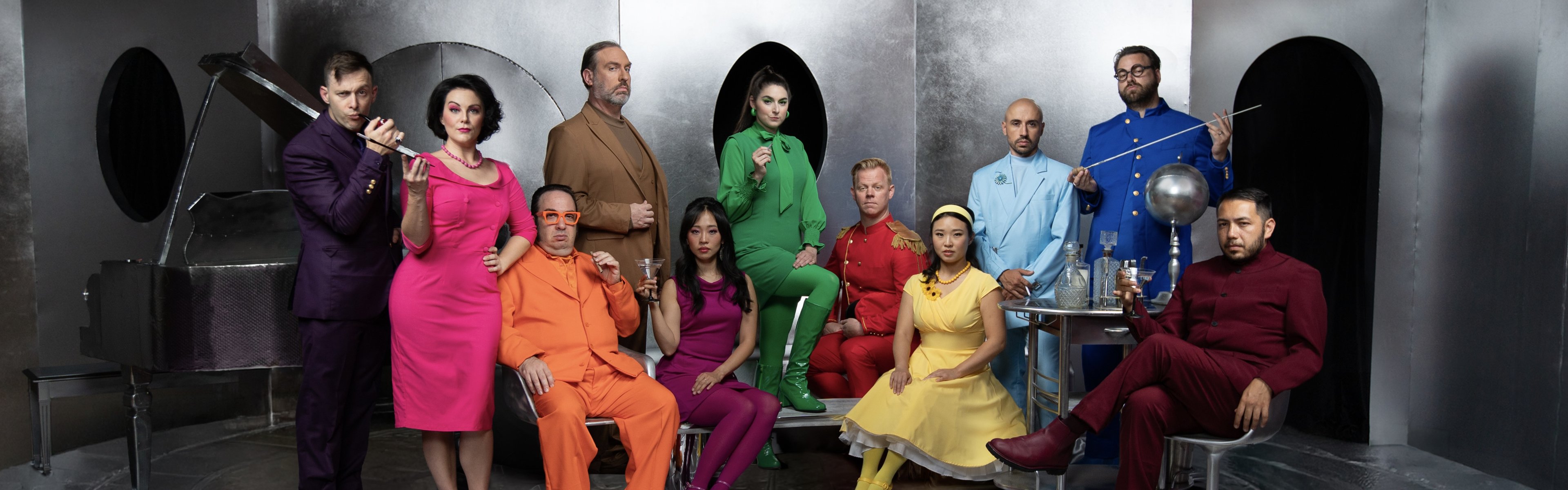
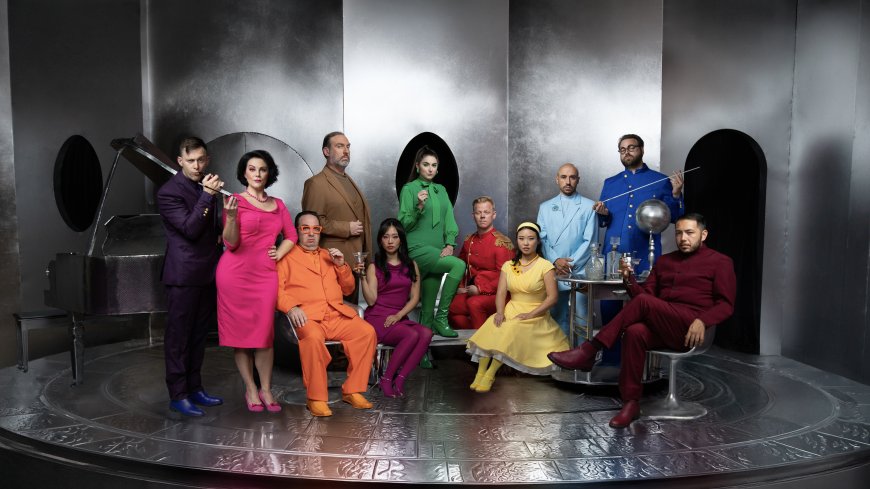
The Los Angeles-based company will present what is arguably the least-known opera by the great composer of Lucia di Lammermoor and Don Pasquale. The work will be fully staged and sung in Italian with English supertitles at the Garibaldina Society in Los Angeles from Sept. 4-13.
“I did not have any idea this piece existed,” said conductor Alexandra Enyart. “It’s not every day you get to do the American premiere of a work by one of the great opera composers!
“What’s interesting is you see the seeds of so many of his later works. There is some excellent writing in this — some really developed musical sounds, which is surprising considering how young he was when he wrote it. I believe he was 24.”
“I’m trying to make it as fun and light as possible,” said POP artistic director Josh Shaw, who is directing the production. “There’s hardly a serious moment in the entire opera. There is silly lighting, silly dancing, some gags. Everybody should have a good time. They won’t have to think too much.”
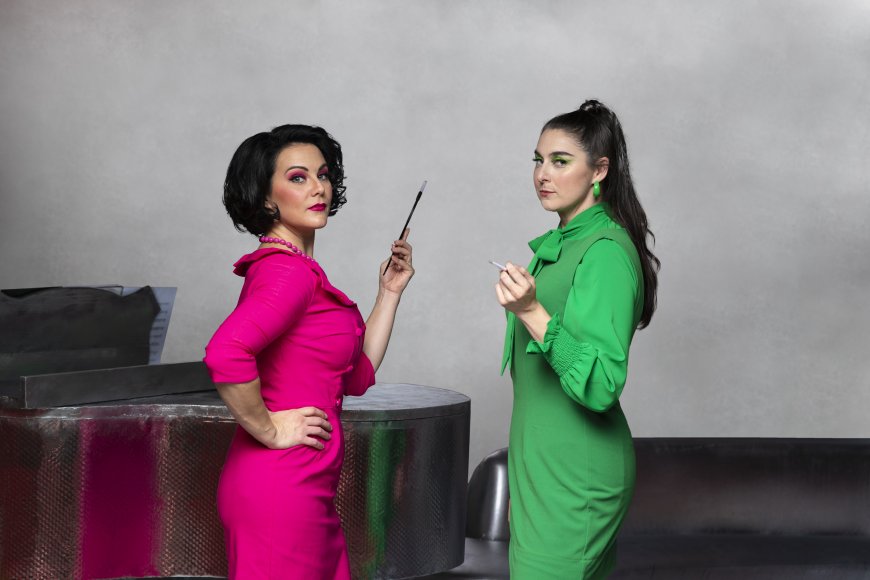
Why was the piece initially a flop? The answer is lost to history. The plot is a bit convoluted, but relies on tropes that are quite familiar from operas of its period.
The story centers an old man who tries to stop two young people from marrying, but his plot is foiled due to some clever trickery. Sound familiar, Barber of Seville fans?
The difference is the main characters are members of an opera troupe in Il fortunato, and they use their theatrical skills to stage the “happy deception.” So in a sense, it’s a show-within-a-show.
Despite these tried-and-true elements, audiences did not take to the work, which was shelved after three performances in its epoch. The young Donizetti presumably put it aside to concentrate on more promising material.
“He was cranking these things out pretty quickly,” said Shaw. “I guess it was similar to movies today. If a movie doesn’t take off, it’s gone pretty quickly.”
The work was unearthed in the late 1990s, and received its first modern production at a Swedish academy (sung in Swedish) in 1995. Three years later, a professional production took place at the Festival della Valle d’Itria in Italy. A commercial recording of that performance was released, but there have been no additional productions until now.
Shaw stumbled upon the piece during one of his periodic Google searches for “bel canto comedies.” Noting that “a lot of niche things work… at POP that don’t work in other places,” he decided to pursue it.
Shaw’s search for the score was an adventure in itself.
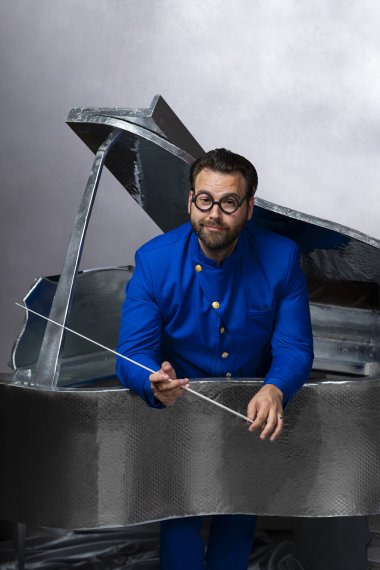
“I found the man who championed it in Sweden. He sent me a piano/vocal score, but the publisher would not return my calls.”
Having nearly given up on finding a full score, Shaw took a vacation to Italy and landed a few miles from the festival that produced the work in 1995.
“The fact I was so close seemed like a sign,” he said. “I e-mailed an administrator there, and within five minutes, someone wrote back to me.” That started a chain of events that provided him with the full score, at least, after he paid to have the single existing printed copy scanned and sent to him.
But the work was just beginning. Enyart had to cut down the orchestration from a full orchestra to 11 players, while Shaw had to cut down spoken dialogue from over a half-hour to nine minutes.
More challenging still, the opera was partly in Italian and partly in Neapolitan — a distinct language still spoken by about seven million people in southern Italy.
“Neapolitan is really hard to translate,” Shaw reported. “It’s idiomatic. For so much of what they are saying, if you translate it literally, you end up asking ‘What the hell does that mean?’”
POP’s venue holds 350 people, and Shaw is confident the show will draw sizable audiences in spite of its obscurity. He cites three reasons for his optimism.
“First, true opera lovers will come see the show, because it’s the only chance they will have to see it in their entire life,” he said. “That will get some people in the door that are new to us. Second, our people will come because they know it will be a silly, slapstick comedy, which is what we do best.
“Finally, as with every show we do, it’s about what works at the venue we are performing at. Il fortunato inganno is perfect for the Garibaldina Society. It’s exactly what you would expect a 1960s Italian social club to look like. It’s got mirrored walls, chandeliers, checkered tablecloths. It has been there since 1965, and it is the coolest place to be in northeast Los Angeles.”
So does the work have a future after this production? Shaw is highly doubtful.
“The chances of this being done again are slim to none,” Shaw said. “I would love it, but no one has picked up the other obscure operas we have produced. We’re in a unique situation where we can do anything we want, and people will come.”
Enyart is a bit more optimistic. “I think the music is delightful,” she said. “We’ve pared it down, made it tighter, and are presenting it in a way we think a modern audience will delight in.
“I hope this is the beginning of a second chance for it.”