Celebrating its 20th anniversary, Festival Napa Valley proved again that the vineyards are a fertile ground for both vintages and fresh artistic talent.
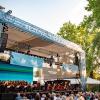
After a day that began with a music and wellness seminar led by soprano Reneé Fleming, and a display of classic cars, it was time for the orchestra to take over at Uytengsu Family Opening Night on Friday, July 10.
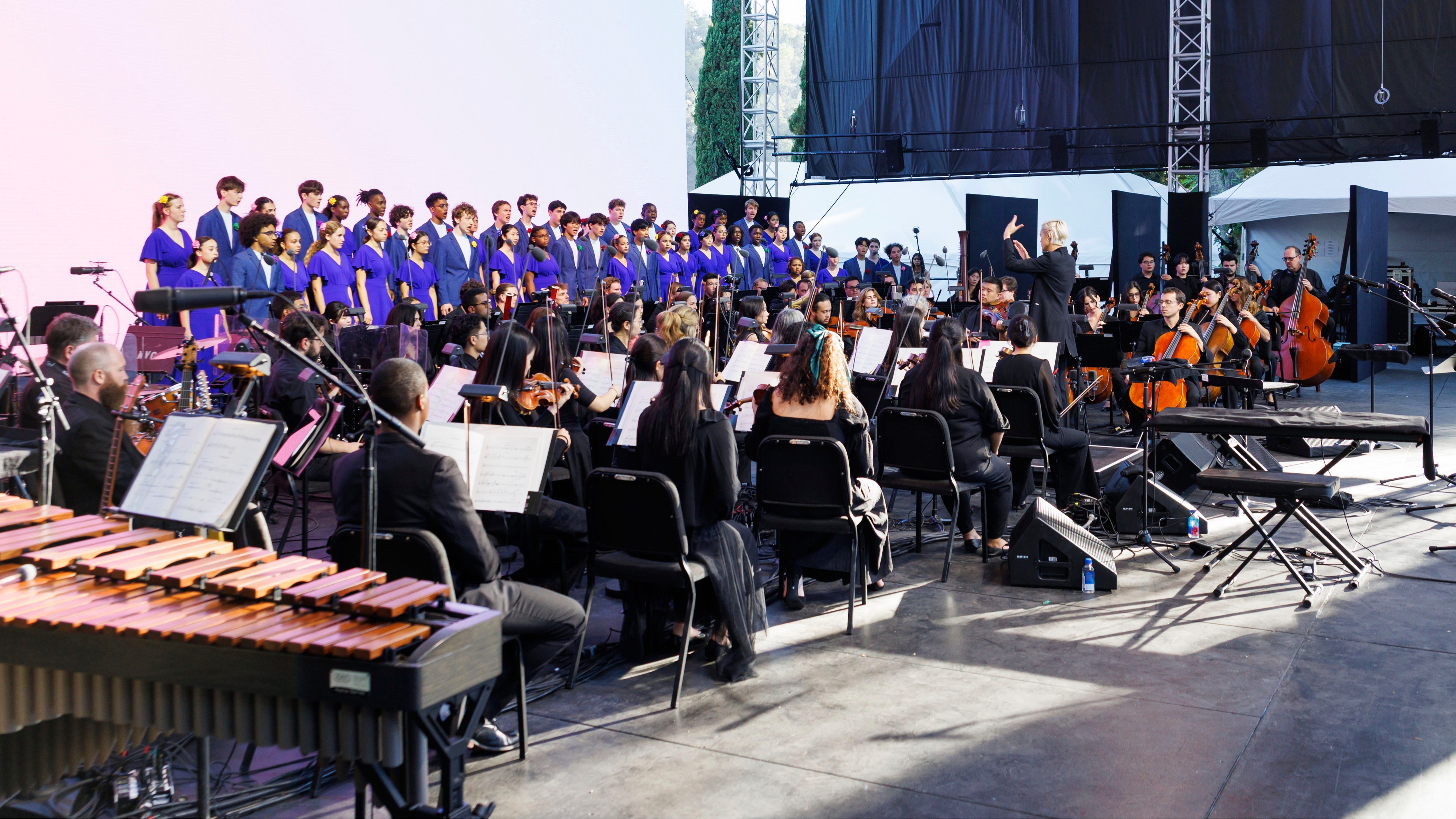
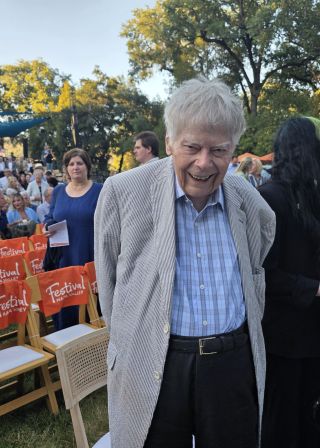
British conductor Stephanie Childress started the music at the venerated Charles Krug Winery in St. Helena with Beethoven’s Coriolan Overture. The performance was both lusty and majestic, if at times a bit rushed, and ended beautifully. Shouts of “bravi” were heard from philanthropist and composer Gordon Getty, whose Young America (2001), was up next.
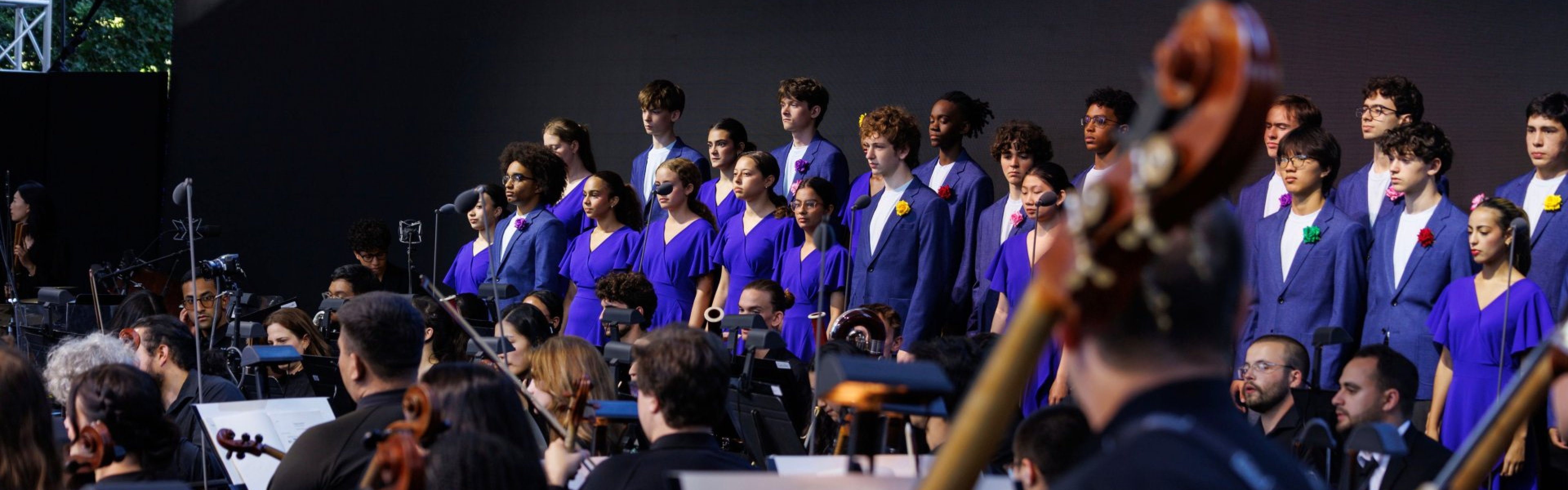
For his settings of poems by himself and 20th-century American poet Stephen Vincent Benét, the well-known Young People’s Chorus of New York City made its festival debut, arrayed in deep purple gowns. The ensemble has previously collaborated with Getty, and its ingenuous enthusiasm provided a natural support for Getty’s often romantic and sentimental verse and music.
Getty, a member of the San Francisco Symphony Board of Governors, dedicated the performance to the late Symphony music director Michael Tilson Thomas, a friend and supporter of his music.
The first song, “Hark the Homeland,” was preceded by a sylvan Brittenesque intro that led to an innovative choral conversation. The voices were more traditionally balanced in “Heather Mary,” while “My Uncle’s House” showcased orchestral power, Wagnerian in dramatic force but suited to Napa rather than Valhalla.
Getty moved alluringly through the scenes of “War Interlude,” from the moody minor mode beginning to a reassuring response in the major. Martial percussion gave way to an avian perspective, gorgeously intoned by Yumi Hwang-Williams, (concertmaster of the Colorado Symphony). Throughout “Daughter of Ashville” and “When Daniel Boone Goes by at Night,” Getty employed harmonic and rhythmic changes, many of them unexpected and convention-defying.
Overall, this music provided challenges that were well met by the choristers, prepared by their artistic director, Francisco J. Nuñez. The group credibly conveyed and illuminated Getty’s ability, familiar to Festival Napa Valley regulars and to fans of his operas, to evoke the moods and mystique of olden times. The composer stood to the crowd’s acclaim at the conclusion of this orchestral song cycle.
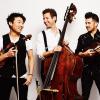
The benign audience and environment of Napa are suited to showcasing tangents from Western classical tradition. This was evidenced by the world premiere of “As I Breathe” by Michael Thurber, a composer credited with co-founding the YouTube collective CDZA. The concerto is curiously structured as four songs on inspirational themes, with soloists Charles Yang and Nicolas “Nick” Kendall (amplified violins and vocals) and Ranaan Meyer (amplified double bass and vocals) of the Americana-classical Time for Three.
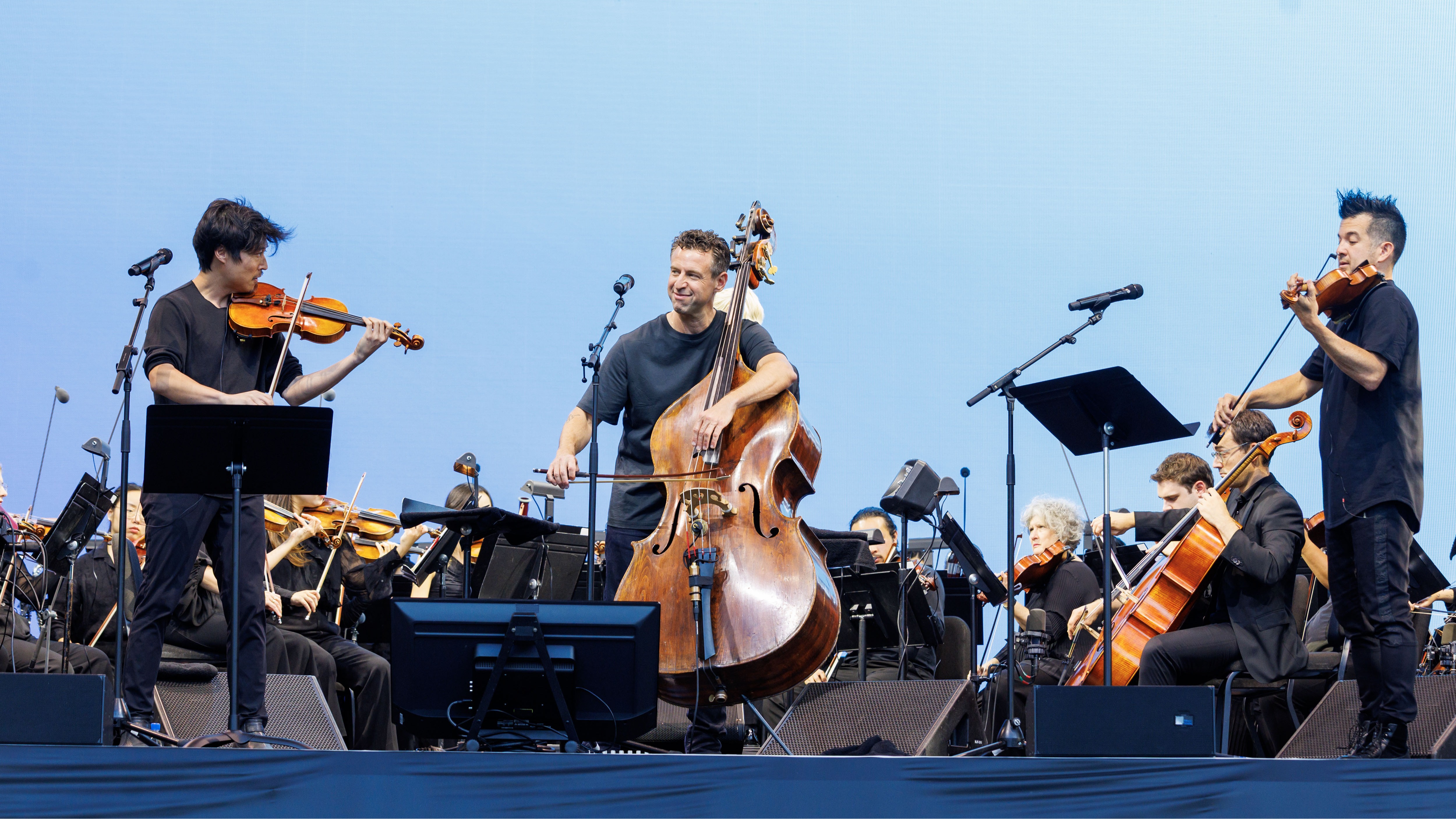
Thurber’s composition and the trio’s approach to vocals evoked alt-Broadway creations such as Rent and Hamilton in their pop urgency. Thurber’s lyrics, sometimes unclear and not included in the printed program, seemed sincere rather than snarky.
Instrumentally, the violinists in particular appealed with their pyrotechnics until they unplugged their instruments for the final song, daring in its complex time signatures and tricky syncopation.
“Have you ever heard anything like that?” Yang asked rhetorically.
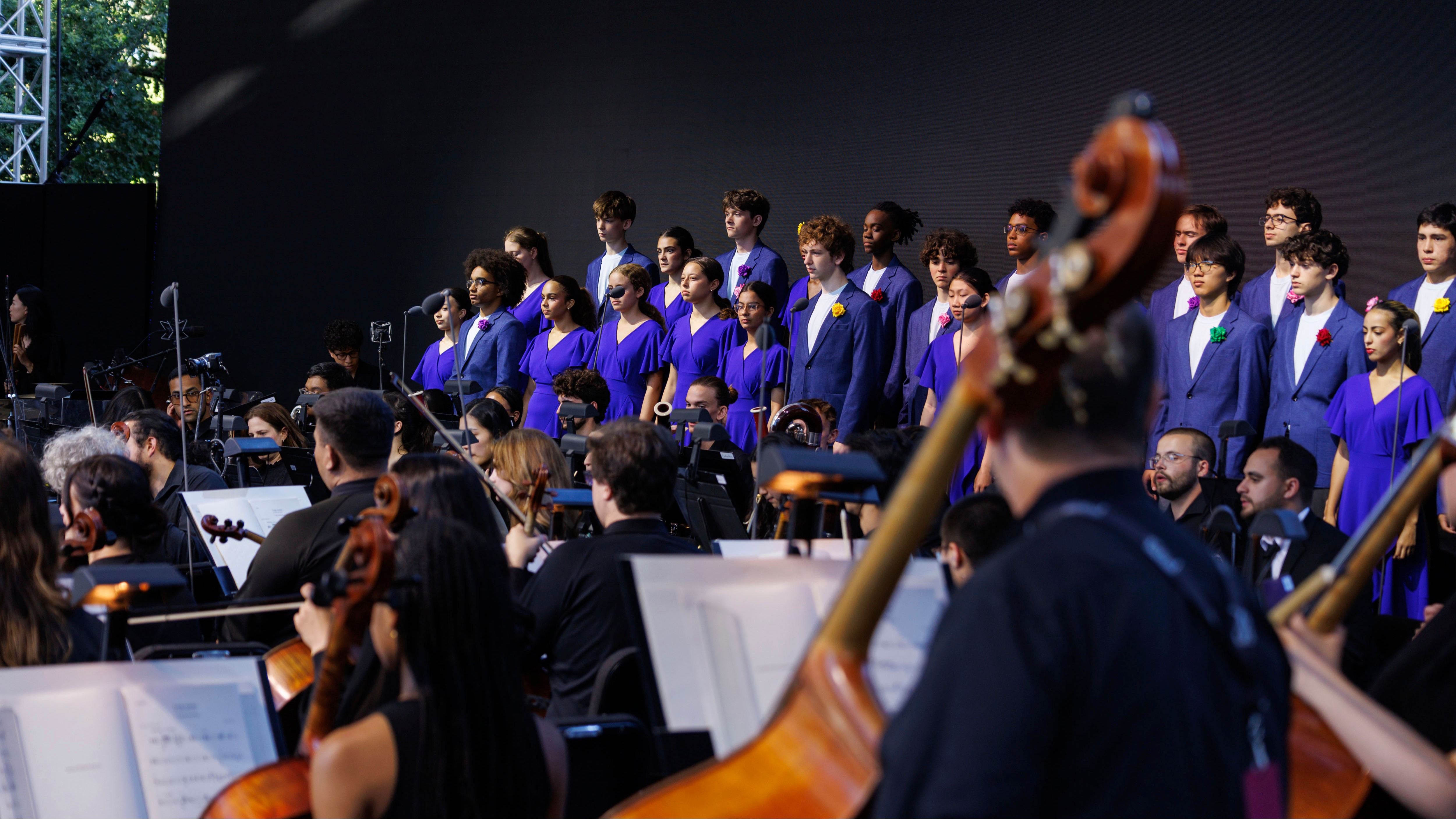
Then the Young People’s Chorus was summoned for Nuñez’s The Rhythm of Time, a good-natured medley of arrangements of songs by Bob Dylan, the Doobie Brothers, and the Bee Gees. The singers swayed in time, their voices backed by playful orchestrations gleefully effervescing the old standards.
As the evening darkened, Time for Three returned for the program’s finale. Yang switched from violin to electronic keyboard for his composition This Life, which also had the trio singing a cappella about “where the water takes me home.” The piece successfully expanded the craft of the singer-songwriter to the classical concert setting and sent the audience home with a blessing.
This story was published in partnership with the San Francisco Chronicle.