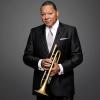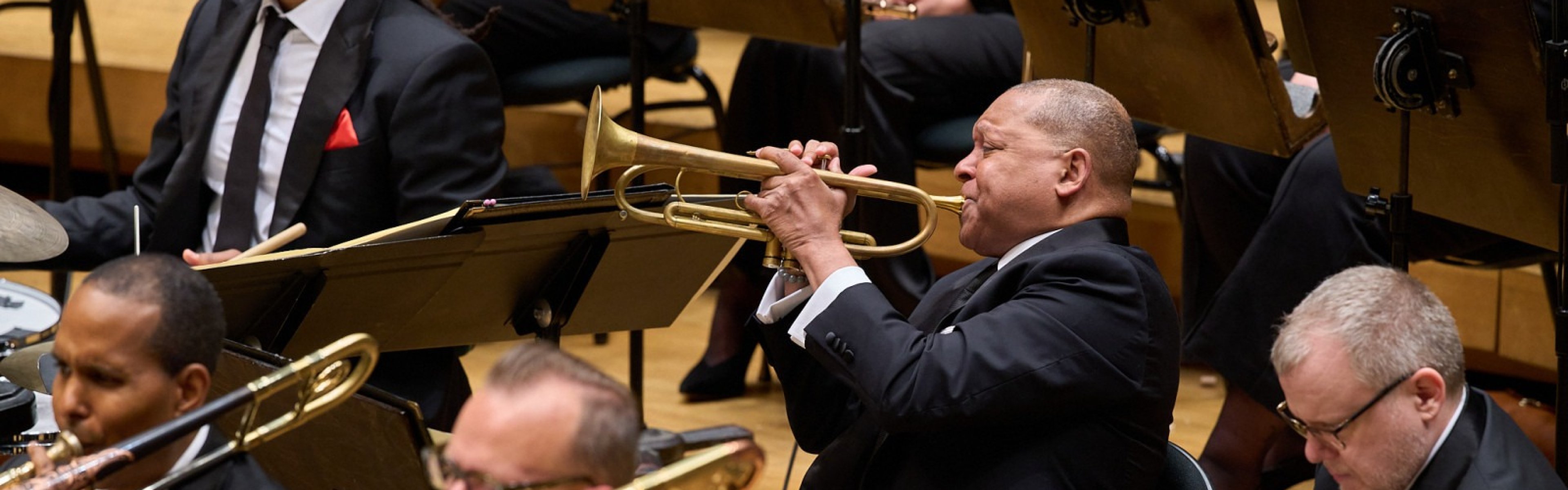
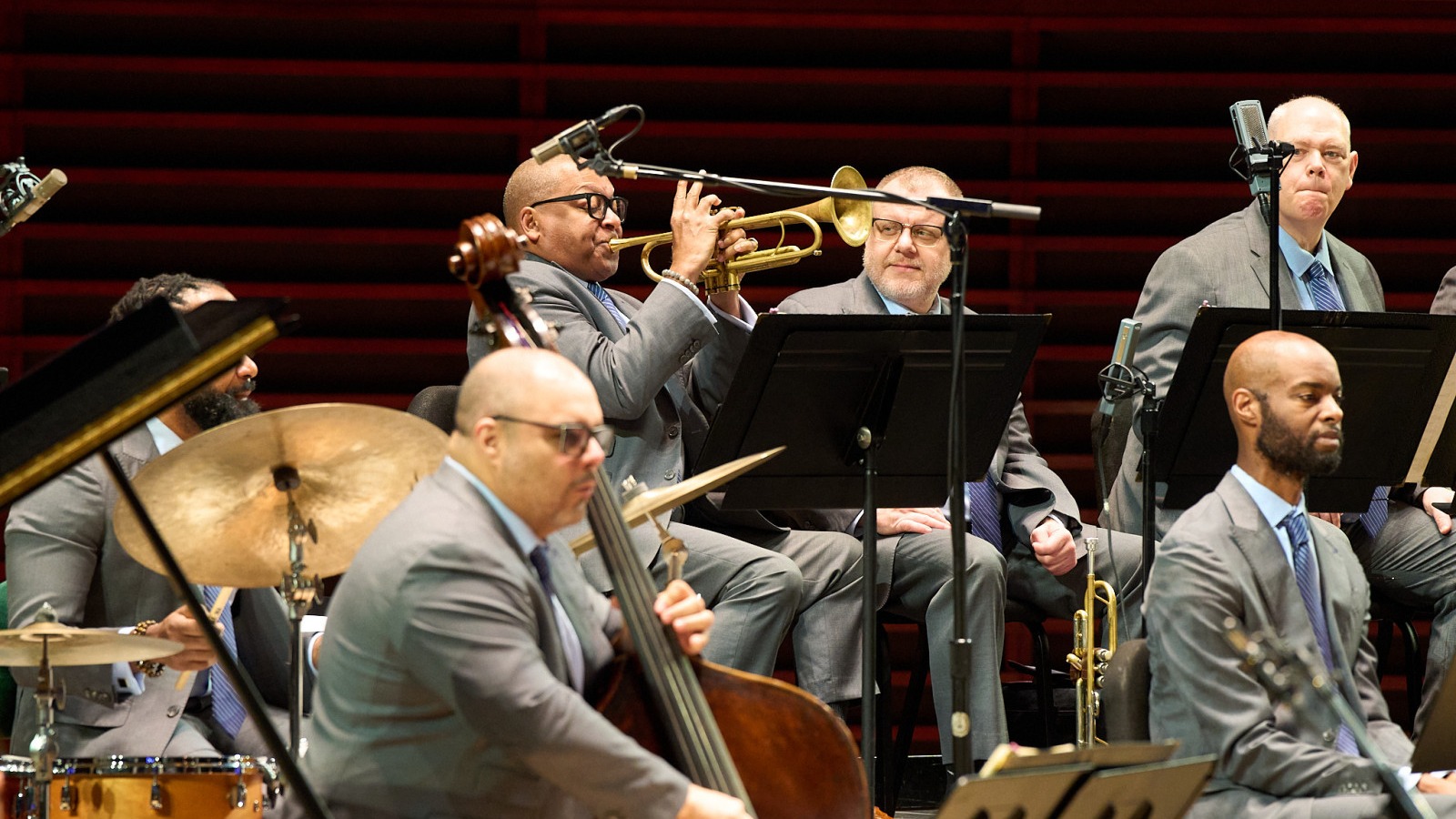
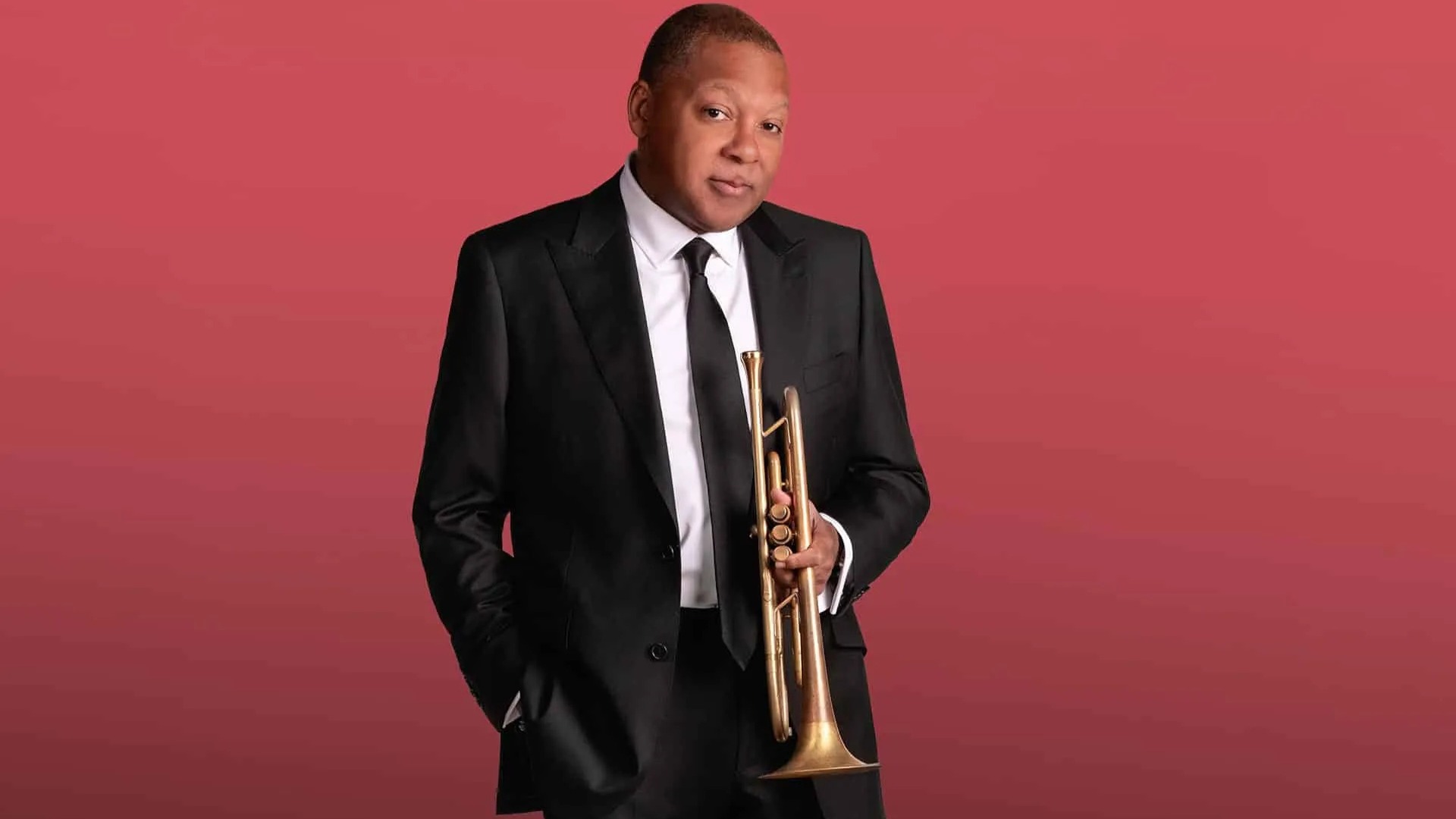
Later this month, following his appearances at Festival Napa Valley and SFJAZZ, Wynton Marsalis will start his last of 39 seasons as artistic director of Jazz at Lincoln Center. By no means is this anything like a retirement: the 64-year-old trumpeter, composer, and promoter, who in the past few years married Scottish violinist Nicola Benedetti and fathered their now two-year-old daughter Elise, is as musically active as ever.
Marsalis is himself the second of six sons of New Orleans pianist Ellis Marsalis and Dolores Ferdinand Marsalis. His father, an instructor at the New Orleans Center for Creative Arts, provided both jazz and classical training to Wynton and brothers Branford, Delfeayo, and Jason. Wynton began serious trumpet study at age 12 and while still a teen performed Haydn and Bach concertos with the New Orleans Civic Orchestra and studied at Tanglewood. He later enrolled at Northwestern University and The Juilliard School, where he focused on classical repertoire while also turning toward jazz as a member of Art Blakey’s Jazz Messengers.
Marsalis received the first Pulitzer Prize for a jazz composition (Blood on the Fields, 1997) and is the only person to win jazz and classical Grammys in the same year (in 1983 and 1984,) along with five more Grammys\. In total, he’s recorded over 110 albums and has continued to compose in both jazz and classical genres. A longtime resident of New York City, he’s led the Jazz at Lincoln Center Orchestra while serving as administrator there, and has been an educational and community outreach activist. SFCV chatted with Marsalis during his stop in Michigan earlier this year.
I’ll have seen both you and your older brother Branford perform in Northern California within a few weeks of each other. I remember an interview with your late father, Ellis. He distinguished Branford as right-brained and you as left-brained. Will your stepping back at Lincoln Center help free up your right brain creativity?
I don’t know, man. Most of my life, I’ve been one of the more disciplined people. And my brother actually became more disciplined as he got older, and now he plays with more integrity than he ever played with, he became more dedicated.
What do you want to effect during this season of transition at Lincoln Center?
I’ve been blessed to work with unbelievable people, to have had a long career of playing for people and their parents and kids and teaching and being a positive part of people’s lives, and articulating what I thought about things. Now it’s time for younger musicians to step into the space I was in, and I’m interested to see what they will do. I’ll be on the board [at Lincoln Center], with Marcus Printup and Carlos Henriquez [stepping into leadership roles].
What about the Juilliard Jazz program, which you and Aaron Flagg founded in 2001 and have been heading up since 2014?
I’ll remain at Juilliard if they want me to. Damian [Woetzel, president of the Juilliard School] and I have known each other for a long time, and I love the institution.
Will you stay president of the Louis Armstrong Educational Foundation?
Anything I can do to help Pops, yeah! Just to make sure Pops’s name, image, likeness remain out there, that we increase his earning potential, that we use his funds the way he and Lucille [Armstrong’s fourth and final wife] wanted them to be used, to affect jazz education. Pending a board vote, we’ll serve the entire world, spreading the joy of Louis Armstrong.
You’re really a multitasker. Was your dad the role model for you and your brothers in that regard?
For me, it was more my mother. She had six kids, with one who was autistic [Mboya Kenyatta Marsalis], back when they didn’t know what autism was. We had no real funding to speak of, aside from what my father could make playing, but she still managed to take care of everything. And she would go into the homes of other people who were really struggling and teach them how to cook and take care of their kids. And she would bring so much clarity and calm. So I have a lot more in common with her.
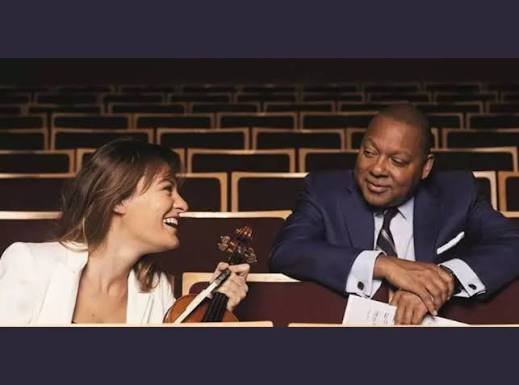
Your wife Nicola also has a lot going on. You’re living in New York, but does she still have her connection to the Edinburgh Festival?
Oh yeah, she’s the director.
So you’re part-time in the British Isles?
Yeah, we do. We work it out with our schedule. I’ve learned a lot from seeing how Nicola does things. I have a lot of respect for her artistry and her education and what she wants for the world of music. We have a lot of the same goals.
I’d like to know more about how music brought you and Nicola together. I know you wrote a violin concerto which won her a Grammy in 2020. A great testament to teamwork.
I’d actually known her for a long time, as a younger musician [Benedetti is almost 39]. I’d sent her a copy of what I was working on, and her critique of it was part of what made me fall in love with her. She had 70 or 80 comments, and they were insightful, like, that it would be easier to play if I [brought in] the violas on the downbeat instead of on beat two, or that measure 79 should have a sforzando on it. A lot of times, if a soloist doesn’t really know what you’re doing, they make comments that are reflective of insecurity more than anything else.
Branford was booked for the Healdsburg Jazz Festival, and you’ll be featured at Festival Napa Valley, at the Arts for All Gala and Auction on July 12, funding education in the arts.
I love the Festival and everything it represents. You know that education was my father’s mission, and what the Armstrong Foundation is about. And that’s not just in terms of musicians but also building fans for music. If you’re trying to get your kids into that, it’s important for us to maintain that connection with the art of listening. So I’m very happy to come in for that, I’m fortunate to be able to do things that align with my life mission.
The septet you’ll be with at Napa and then at SFJAZZ on July 14 and 15 is a scaled-down configuration of the Jazz at Lincoln Center Orchestra. What will you be playing?
When you have the septet, you have the ability to play the whole sweep of jazz, from New Orleans music to the music of Charles Mingus … and futuristic music like the Majesty of the Blues [Marsalis’s 1989 album]. You have the clarinet, the trombone, four horns, you have the three-part harmony, so you can use the close-knit voicings of the saxophone section of the big bands. We’ll play a suite I wrote, I don’t know, two years ago, called The Integrity Suite. We played it for the Supreme Court [before President Trump’s second term]. The movements are: “No Surrender,” “Point Counterpoint,” “Something About Belief,” and “The Struggle to Become Aware.”
We’re glad that you’re backing off some things may mean we’ll be hearing more of you out here.
I’ve been blessed to do what I wanted to do in my life. It makes being out there worth doing. If you don’t have that type of feeling, you’re just working a job.