
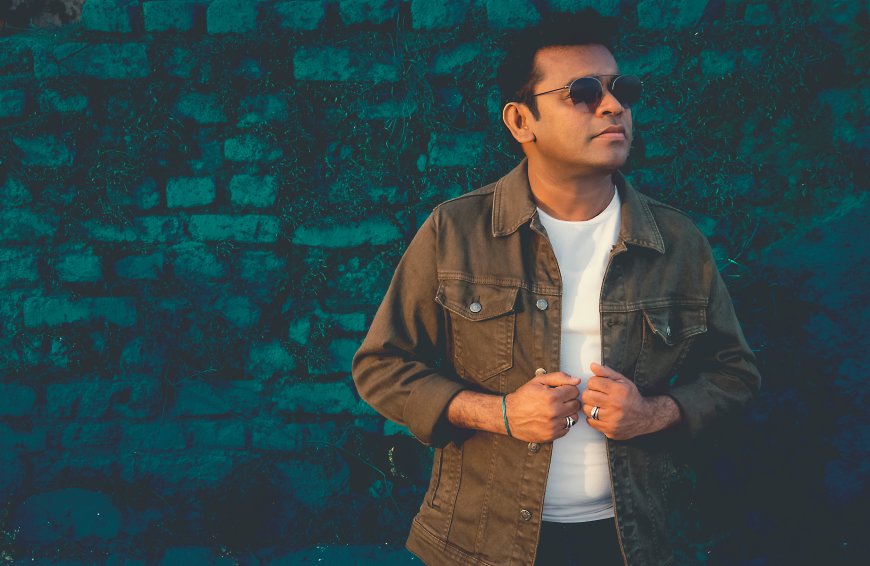
The mostly South Asian audience for last Thursday’s concert of the music of A.R. Rahman filled up Davies Hall with the excited expectation of familiar fun. They may not have cared that, unlike other San Francisco Symphony productions, the booklets disseminated by the ushers provided no details on what would be performed.
For a non-South Asian listener unfamiliar with the films Rahman scored — and with their languages — that information did matter. An SF Symphony publicist provided a list of the evening's 20 selections and their source films, but that was all there was to work with.
The concert’s offerings date from the soundtrack of the romantic film Roja, composed by Rahman in 1992 when he was still living in his hometown of Madras (later renamed Chennai), to this year’s Ramayana, an “unprecedented collaboration” with German composer Hans Zimmer for an epic filmed adaptation of the classic Hindu poem. During that period, the 59-year-old Rahman rose to unmatched superstar status.
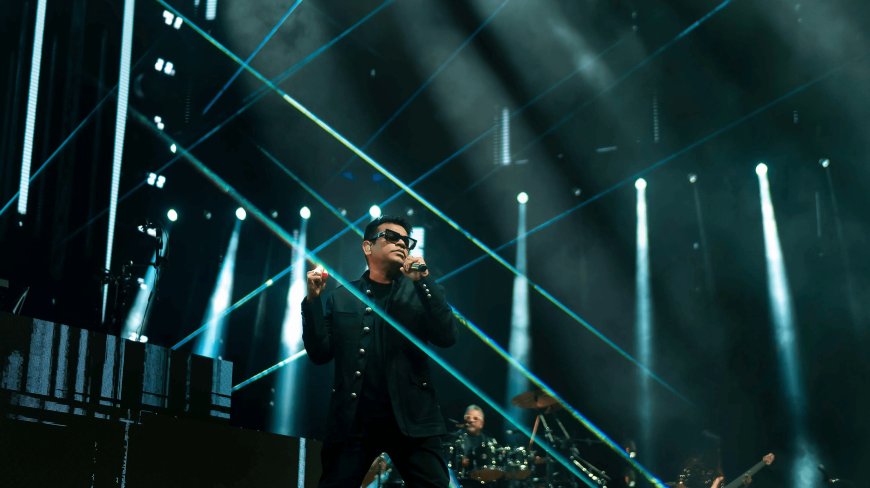
At Davies, it was obvious that this allure has been enhanced by Rahman’s personal involvement in concert presentations of his music as a singer, instrumentalist, and emcee. His several entrances on stage, in a long sherwani-style jacket and gazing out from dark-rimmed dark-tinted glasses, were wildly applauded.
Indian musical modes — Aeolian or Ionian, and often pentatonic — were prevalent from the outset of the Davies program but never manifested as alien to this orchestra’s instrumentation. (The only apparent Indian instrument was a bansuri flute, though a prerecorded tanpura figured briefly in one of the twoRamayana selections.)
Indian classical and folk traditions may also have influenced Rahman’s purposeful restriction of melodic development and his emphatic deployment of repeated musical phrases, at odds with the practices of film composers in the Western classical tradition. Despite these structures, most but not all his forthright outings proved impactful, powered by dynamic configuration of tempi and amplitude, eagerly and ably piloted by conductor Jonathan Taylor Rush.
Selections like “Homecoming” (from the 2020 film Shakira) and “Taal Se Taal” (from 1999’s Taal) showcased another, tenderer aspect of the composer, with Indian sentimentality finding commonality with the plaintive appeal of some other world musics. “The Canyons,” a Copland-esque number from 127 Hours (the only film on this program without an Indian connection) and “The Oracle” (an alluring cue from 99 Songs) typified what seemed an emotional Rahman trademark of stating a theme with solo or sectional instrumentation and building it towards a fortissimo tutti. The Davies audience was prompted to applaud every exciting section of a piece, before its actual conclusion.
The first of several medleys brought to the stage vocalists and dancers, whose online biographies identified as associated with the South Indian Carnatic tradition, more associated with storytelling and less improvisational than North Indian classical music. The two dancers, both Americans of Indian ethnicity garbed in black pantaloons with red drapes, made full use of the stage as well as the aisles of the auditorium, in what seemed a combination of Indian Bharatanatyam stylings, ballet, and modern dance.
The singers vocalized plainly and emotionally, without Western classical affect. Tenor Rohith Jayaraman, apparently Bay Area-based, conveyed the sweet “Taal Se Taal” with notable vibrant appeal. Pragathi Guruprasad, raised in Fremont, displayed the transcendent sort of high, airy, girlish voice that seems to abound in Bollywood cinema. It paired prettily and in similar range with Visveshwar Nagarajan’s artful offerings on bansuri flute. Occasionally, Rahman himself sang and made melodies on an electronic keyboard.
It was apparent that Rahman, partnered by a sympathetic conductor like Rush, holds the credentials of working any sort of soloist and every section of an orchestra to good dramatic effect. As evidenced by the selections before the intermission and before the evening’s end — both times including music from his double Oscar-winning Slumdog Millionaire score — Rahman is also a showman who knows how to populate a stage or a screen and keep both performers and audiences moving in time with his ecstatic musical expression.
Indian American actor, singer, and musician Manu Narayan — currently cast in the popular musical The Lunchbox at Berkeley Repertory Theatre, and a Broadway veteran of Rahman and Andrew Lloyd Webber's Bombay Dreams — offered perspective on Rahman's cultural impact. “Ravi Shankar did so much to provide us in the West a context for Indian music,” he said. “But Rahman has done that much and more, partly because the media have become more accessible for Bollywood and other film music from India. And he’s beloved worldwide.”