At its best, historically informed performance practice offers surprises. When you hear a familiar piece in an unfamiliar way, it creates an ear-opening sensation that often reorients what you thought you knew.
Nobody succeeds in that task more consistently than the Valley of the Moon Music Festival in Sonoma. Now in its 12th year, the festival has great musicians playing 19th-century classics “in an atmosphere of experimentation and collaboration, exploring the many interpretive options historical instruments inspire,” according to co-artistic directors Tanya Tomkins and Eric Zivian.
This year’s festival is titled “Postcards from Dvořák,” and each concert focuses on the music of a particular city that the composer visited.
On July 12, Valley of the Moon’s tour landed in Vienna. Though the Prague-based Antonín Dvořák visited the Austrian capital several times, Zivian and Tomkins were primarily thinking of his first trip to visit Johannes Brahms in 1878 when curating this program. Brahms had performed the invaluable service of connecting his younger colleague with his publisher, Simrock, which provided the rocket fuel for Dvořák’s speedy ascent to fame.
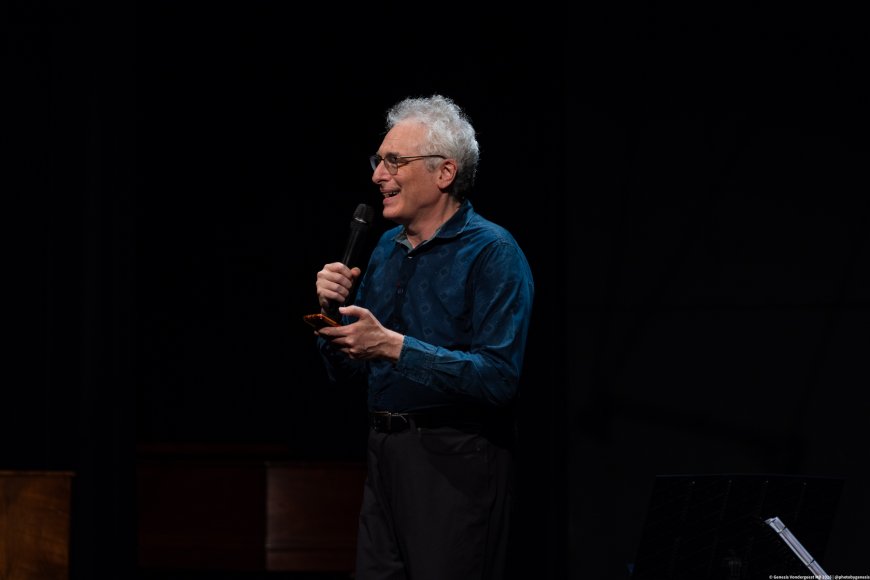
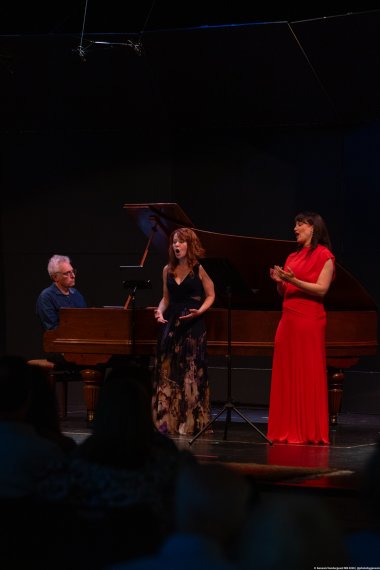
Since the Czech composer wrote a number of Polish mazurkas, it seemed fair to pair one of his with a couple by Frederic Chopin. Add in a couple of Slavonic Dances and Felix Mendelssohn’s Piano Trio in D Minor (1839), and it was a piano based first half. Two pianos were in attendance: an 1841 Viennese instrument and an 1890 Chickering from Boston, on loan from the UC Berkeley Music Department. Chickering & Sons introduced the first pianos with a full cast iron plate, an important waypoint on the journey to modern pianos.
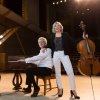
Zivian at the keyboard gives the impression of reverie-induced improvisation, emphasized by his faraway look, scattered exhalations and vocalizations, and a body that is often swaying.
But the mazurka is a lively dance with strong offbeat accents, so the reverie was broken by exertion. In the second theme of Chopin’s Op. 24, No. 2, in C Major, most interpreters on a modern instrument are circumspect about the sudden forte notes, preserving the line. Zivian, with his less powerful instrument, punched those notes hard, partly to coax the sound he wanted, but partly to lean into the contrasts in sound that earlier instruments invite.
The effect was even more marked in Op. 50, No. 3, in C-sharp Minor, which has a strongly chorded second strain played forte. Even in the legato passages, Zivian had to work to create the rise and fall in the line that seems so easy on a modern instrument.
Switching to the Chickering for Dvořák’s 1886 Slavonic Dances may have relieved some of that work, but Zivian still got his younger colleague, Christopher Goodpasture in on the act. Especially in the shepherd’s dance, “Odzemek” (Op. 72, No. 2), the sharp-elbowed accents were flying and the sudden dynamic changes and interestingly phrased melodic exchanges made the piece sound slightly demented.
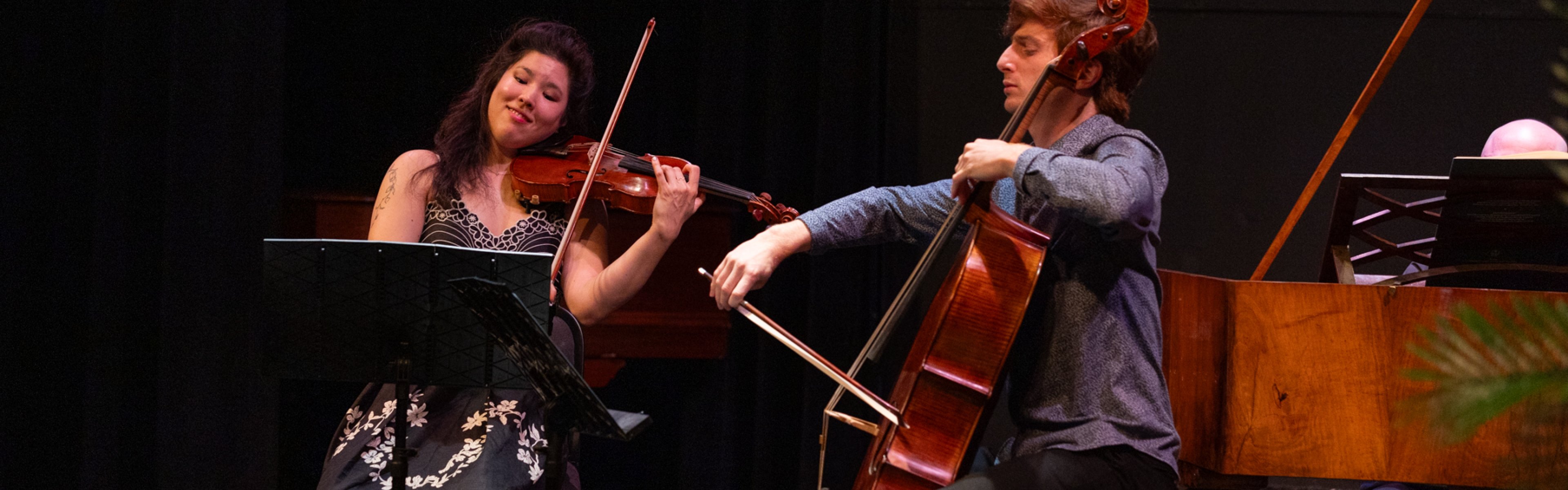
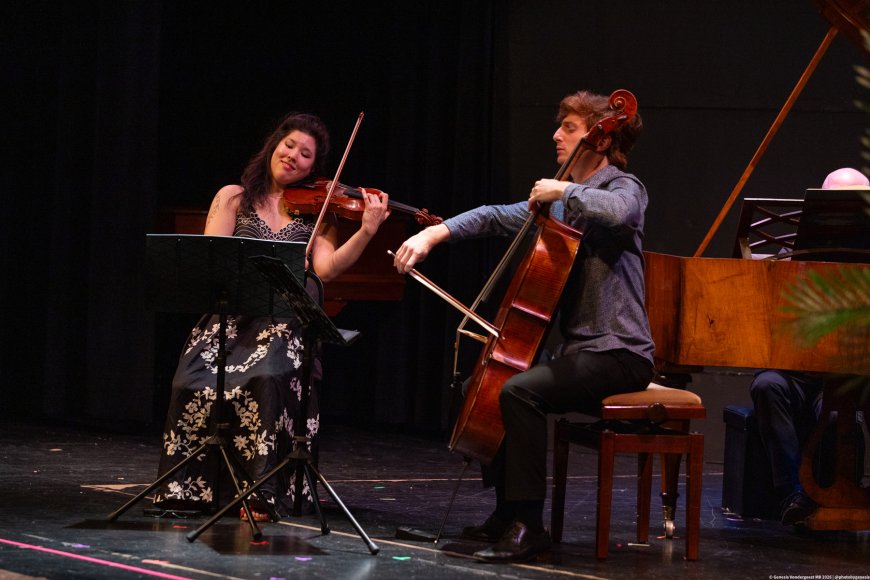
Goodpasture proved his worth on his own at the Chickering in Mendelssohn’s Piano Trio along with a superb cellist, Aaron Wolff, and the redoubtable Valley of the Moon regular Rachell Ellen Wong on violin. She and Wolff traded the opening phrases like old friends, with Goodpasture cutting off the long-breathed melody with a deft, trenchant close. As with the mazurkas, you noticed the rhythmic freedom most in the scherzo and finale, where once again the fast interplay and dynamic contrasts spun the piece off in constantly novel directions.
The second half opened with a movement from an 1878 violin sonata by the rarely performed composer Mathilde Kralik, a member of Brahms’s circle. It was delightful as performed by Wong and Zivian, making an excellent introduction to Brahms’s String Quintet in G Major, Op. 111 (1890).
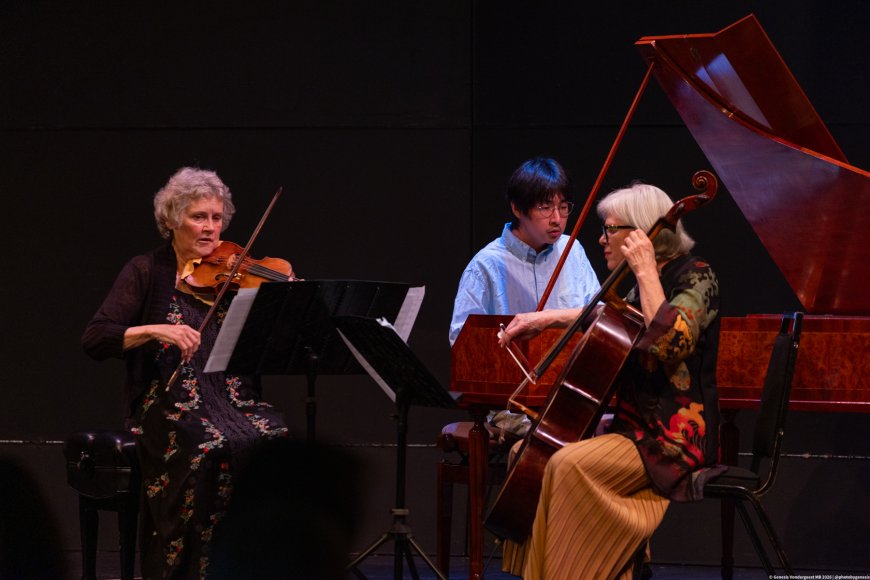
Performed on gut strings, as always at Valley of the Moon, the quintet was mellow. What you noticed most was the individuality of the players: Juliette Greer’s first violin was more biting and louder than Katya Moeller’s second, but Moeller’s soft-edged lines, when they came out, were highly characterized. Ramón Carrero-Martínez’s viola playing was assertive, but Rosemary Nelis matched him with her own tone. Wolff was the cellist in this sturdy, well-paced account.
There were no surprises, but that in itself was a surprise.