Most people know of the Santa Barbara County enclave of Montecito as residence of the rich and famous — including, of course, exiled British royals. But Montecito also hosts one of the country’s most venerable festivals of classical music, Music Academy of the West, going strong now for 79 seasons.
Opera singer Lotte Lehmann first came up with the idea of creating a music festival in Santa Barbara, where she lived for nearly 30 years. In 1947 the Academy came into being, supported by such luminaries as Otto Klemperer, Darius Milhaud, and Arnold Schoenberg, who taught at UCLA and became the festival’s first composer-in-residence.
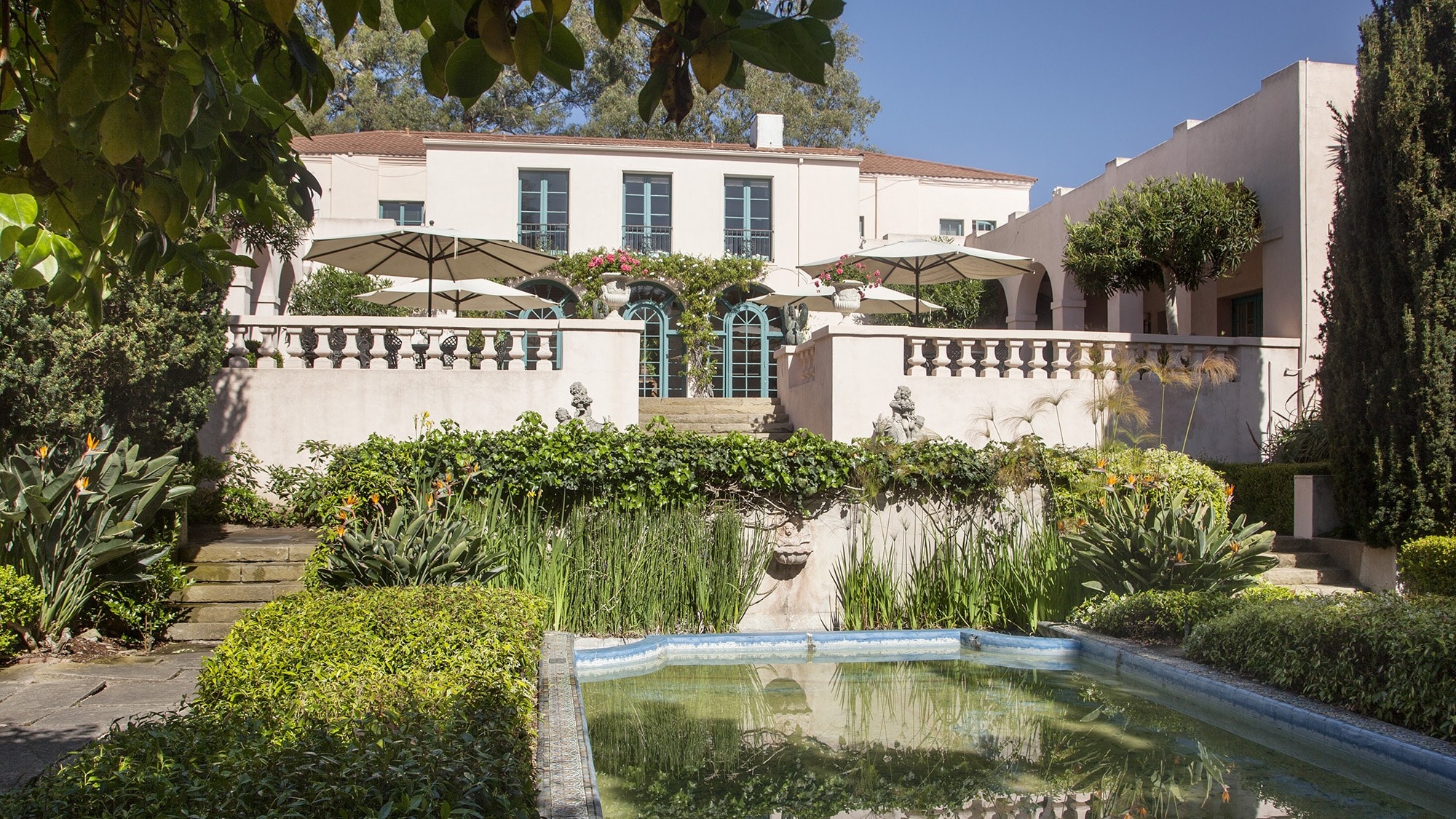
As a recent visit illustrated, Music Academy (the Festival’s official name) continues to fulfill a double mission of training promising young musicians and presenting a variety of performances on its lush garden-filled campus, the former Montecito Country Club. Pleasant ocean breezes greet concertgoers who can picnic in the gardens.
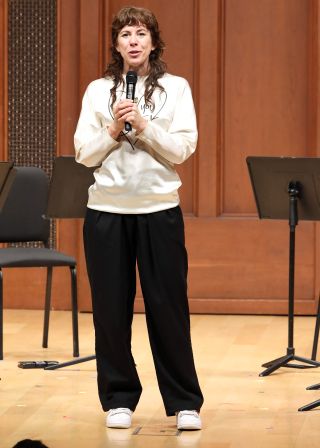
On July 10, prolific, award-winning composer Missy Mazzoli, one of this summer’s guest artists, curated a dense and challenging program of chamber music in Hahn Hall. An enthusiastic throng of students and new music lovers packed the place for what was billed as a “picnic concert.”
Entitled “In Her Words,” the concert focused on the concept of mentorship and featured Mazzoli’s own music and that of several other women composers. Among them were veteran rabble-rouser Meredith Monk, whom Mazzoli named as “one of my very biggest mentors in New York,” and 15-year-old Mia Turakhia, a Mazzoli-mentored rising talent.
But the music was hardly easy picnic fare. She is best known for her operas,but this program focused on her music for small ensembles and solo piano.
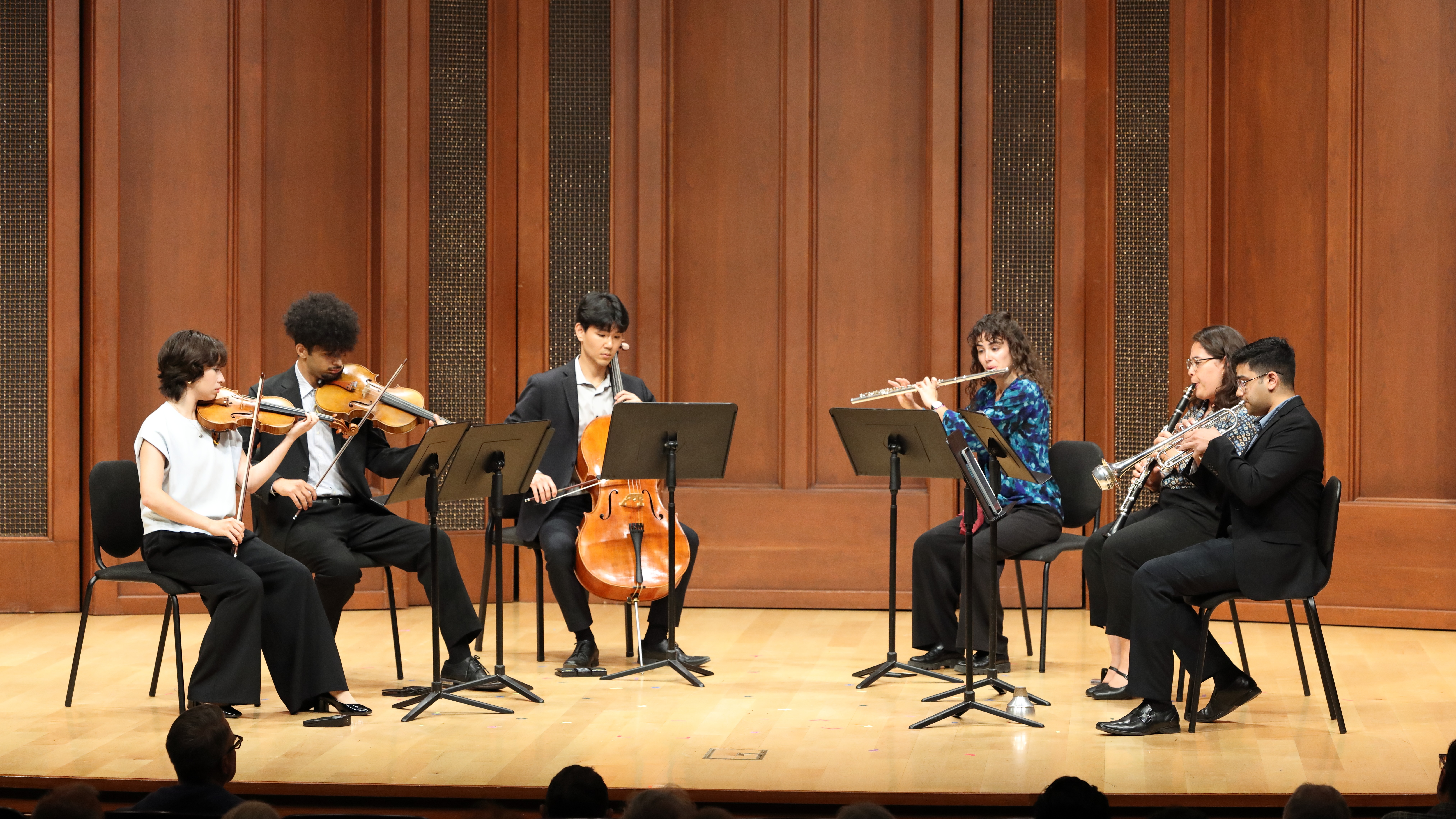
In the opening work, Ecstatic Science, premiered at Carnegie Hall in 2016, small motivic fragments appeared in many different guises, turned upside down and chopped and diced every which way. As Mazzoli wrote in a program note, “There’s a lot of math at play. The ‘science’ behind the notes provides a frame for a persistent, bubbling energy, a scaffold for the ecstatic gestures that eventually consume everything else.”
It wasn’t easy to catch all the intricate interconnections on a first hearing. What came across most strongly was a sense of nervous, propulsive forward motion, without detectable melodic contours.
Of the five Mazzoli pieces, her two for voice were among the most emotionally affecting. Soprano Tracy Lin Waagner and cellist Elliott Kim performed a simple and enchanting version (without the electronics included in the original 2021 version) of her arrangement of the Latin chant “O frondens virga” by 12th-century composer Hildegard von Bingen, whose work has inspired Mazzoli in her own career.
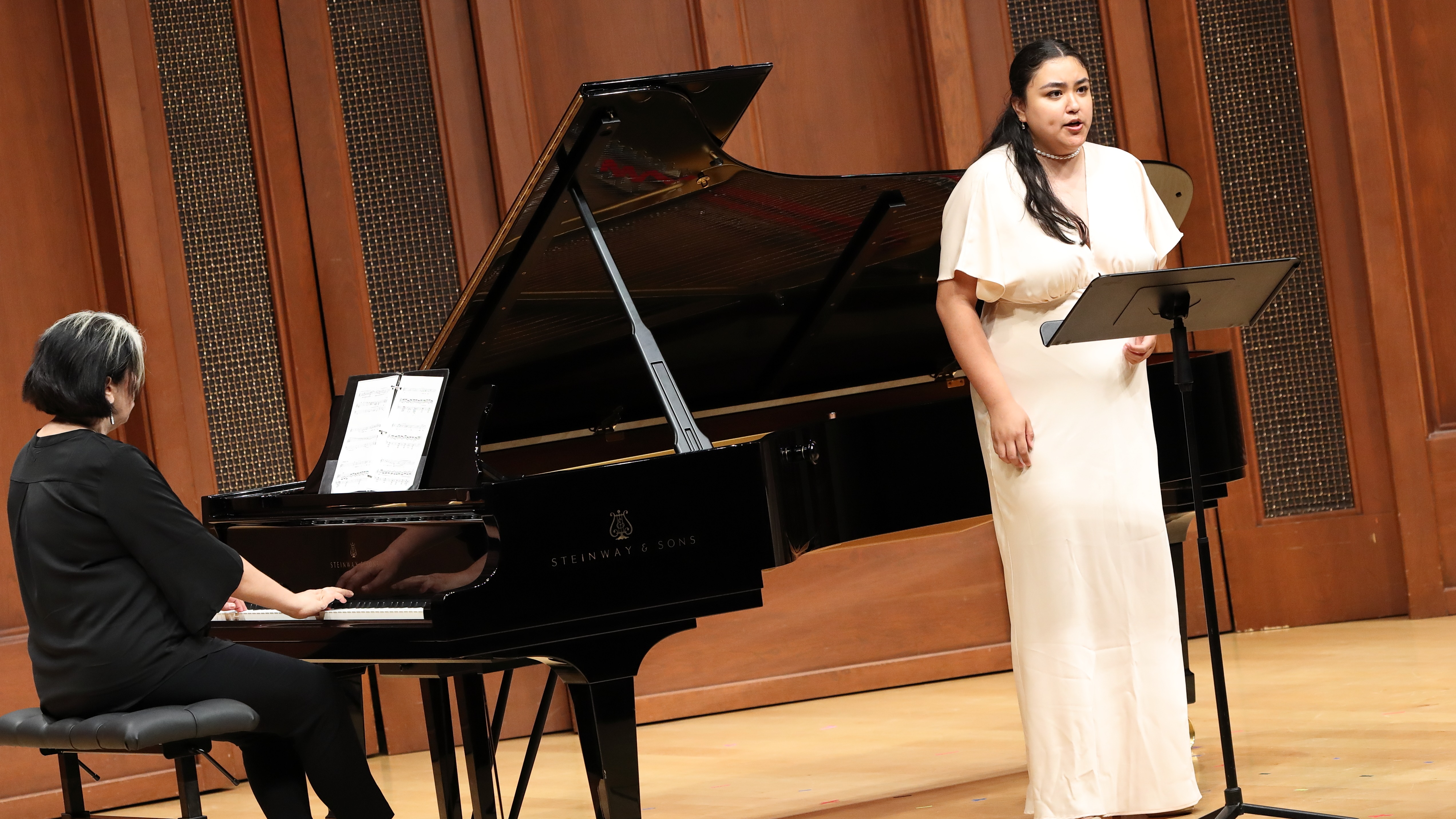
Waagner, a highly accomplished soloist with a glowing, fresh voice, returned later with pianist Nino Sanikidze in Self-Portrait with Disheveled Hair, commissioned in 2022 by mezzo-soprano Sasha Cooke, who is also co-director of the Lehrer Vocal Institute at the Academy. Setting a text by Roycee Vavrek, it responds with meditative and lyrical eloquence to a painting of the same name by Rembrandt.
For the world premiere of Mazzoli’s six Piano Études, six different student pianists (Rowan Sawarna-Small, Sehyeok Son, Yu-Wei Lee, Chih-Yun Hsiao, Jerry Hu, Adrian King) took turns at the keyboard. These disparate miniatures contained fleeting, distorted echoes of classical piano works, which passed by like frames of a film, without clear thematic unity.
Dark with Excessive Bright, a concerto for double bass, has become one of Mazzoli’s most popular works. Its title comes from a phrase in John Milton’s Paradise Lost that Mazzoli felt “was a strangely accurate way to describe the dark but heartrending sound of the double bass itself.”
Composed for string orchestra and soloist in 2018, it was performed here in a version for string quartet by the accomplished Maple Quartet and soloist Scott Pingel, who plumbed the depths of the lyrical and soulful writing, more deliberate and passionate than other Mazzoli pieces on the program.
The world premiere of A Cathedral of Rust and Birds by Mia Turakhia, who has already garnered a fistful of honors, injected welcome youthful vitality into the evening. Illustrating what she described as “two types of beauty,” the piece uses a quintet of strings to paint a meditative, accessible picture of nature growing inside an abandoned cathedral.
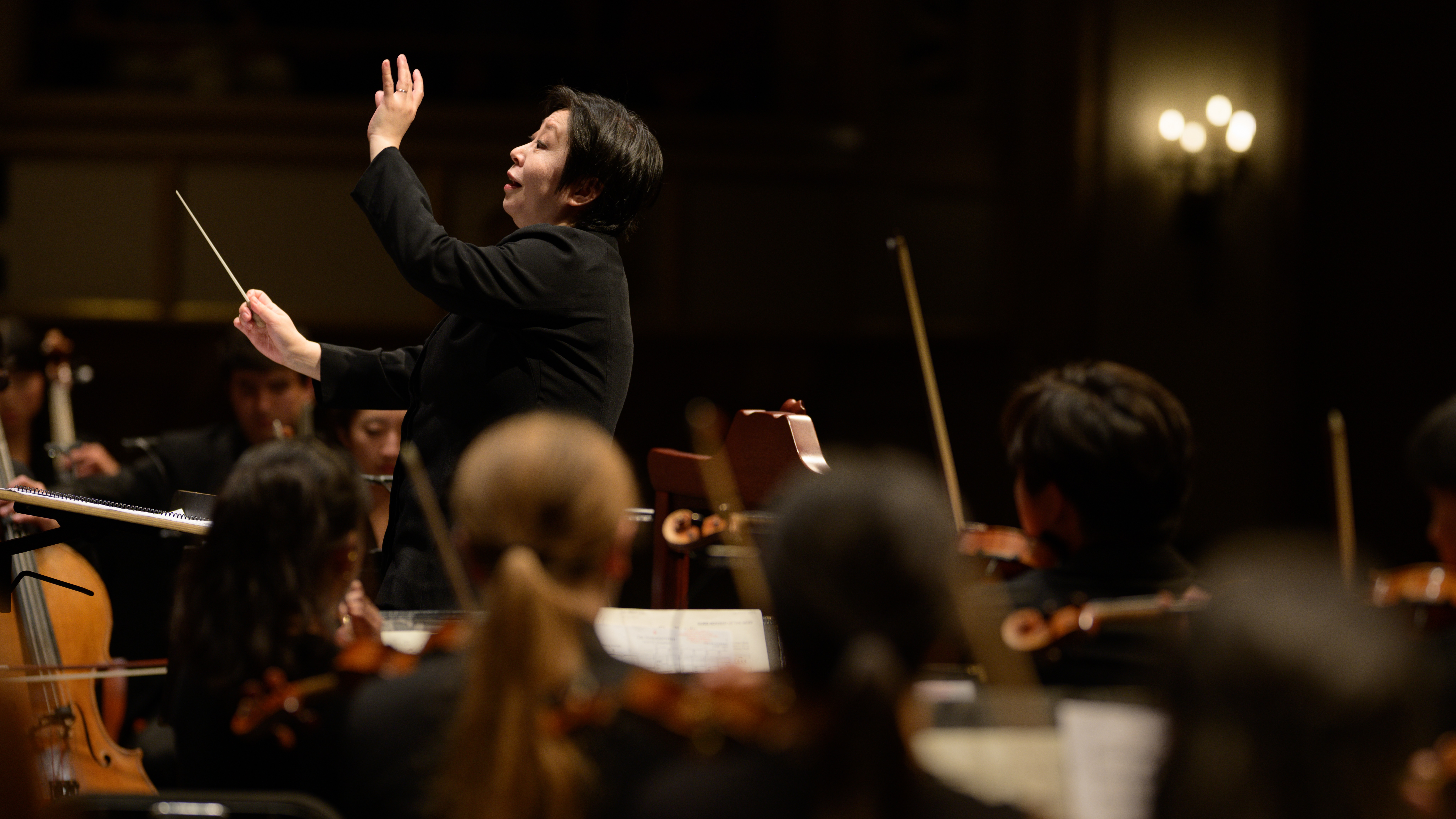
The repertoire was more traditional the following evening, July 11, in a concert by the Academy Festival Orchestra — comprised of Academy students — at the Granada Theatre in Santa Barbara. A former movie house, the Granada occupies a prominent spot on State Street, now a pedestrian mall lined with restaurants and cafes. Built in 1924, it was substantially renovated in the early 2000s to accommodate the city’s performing arts organizations, with mixed acoustical results.
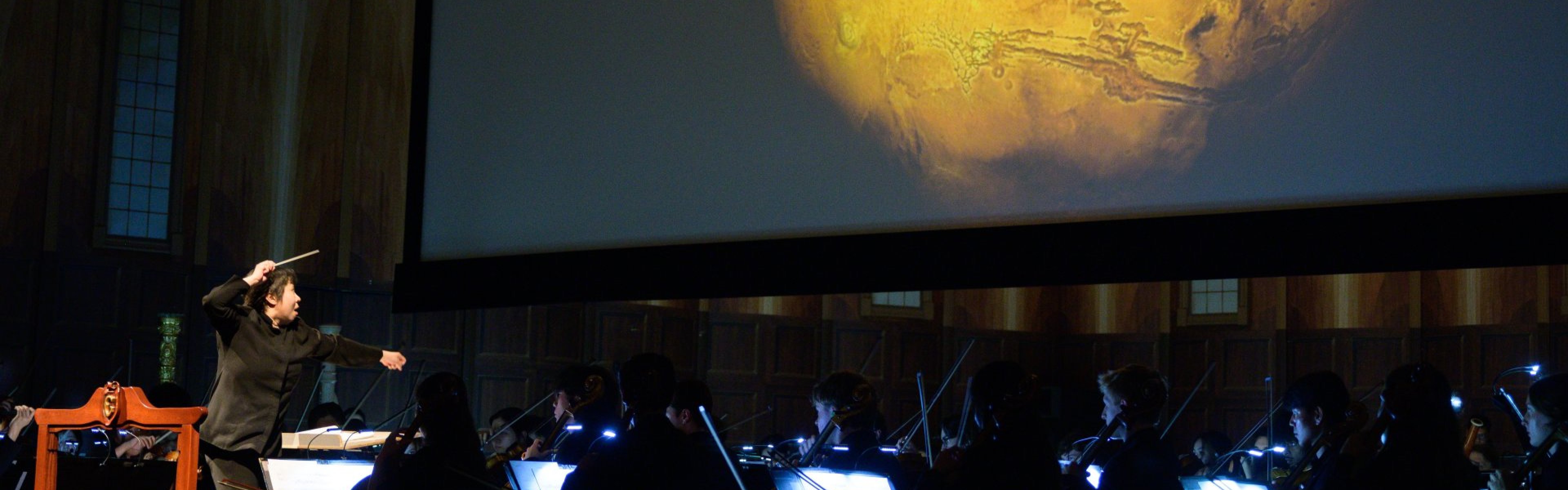
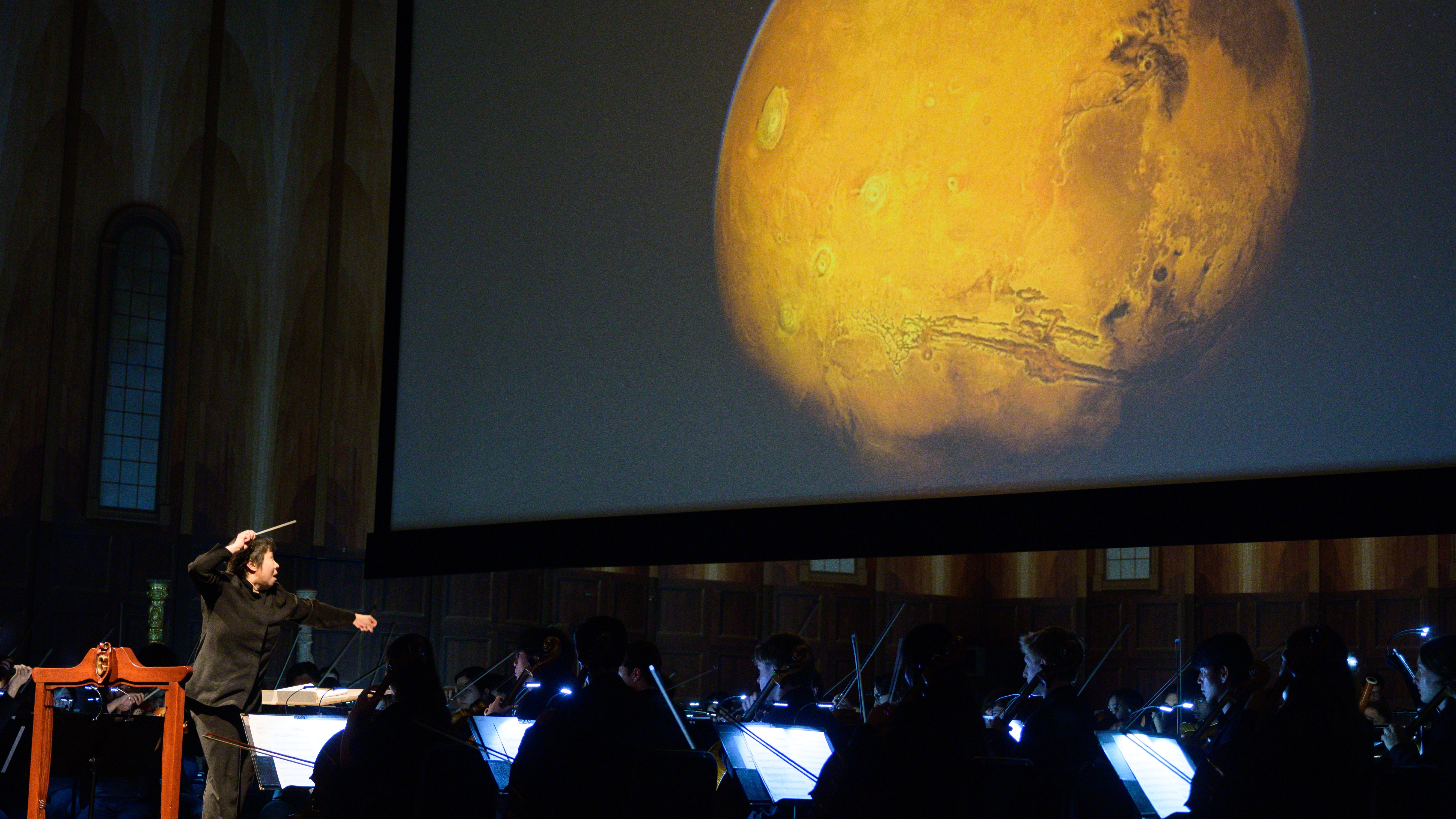
Xian Zhang, music director of the Seattle Symphony, conducted a program particularly appropriate for the venue. It culminated in a performance of Gustav Holst’s The Planets accompanied by an “HD Odyssey” of spectacular footage assembled by NASA from spacecraft imagery and planetary explorations, which was projected on a screen above the orchestra.
The opening work, Primal Message, also took us to outer space. A fantasia composed in 2018 by Nokuthula Ngwenyama (orchestral version, 2020), it is a message for other beings in the universe, using mathematical concepts of primal relationships. Yet the harmonic, tonal, and melodic language was surprisingly accessible and sweet.
Anton Webern’s early tone poem Im Sommerwind (1904) remained earthbound, but still cosmic, celebrating the ever-changing world of nature. In its lush sonorities, akin to the music of Richard Strauss, there is no hint of the composer’s later experiments with Schoenberg’s 12-tone theory.
In the performance of The Planets, NASA’s HD footage was a marvel. But the screen used for the projections descended to just above the players, muffling the sounds of the brass and woodwinds. And this was in a venue that at its best is not kind to orchestral sound. Zhang, conducting with the musicality and professionalism that has made her a sought-after artist, brought out the majesty and power of Holst’s score. The sound came through mostly unscathed, especially in the patriotic comfort of “Jupiter” and the warrior intensity of “Mars.”