Spreading underground, unseen by the vast majority of humans, an expansive mycorrhizal network symbiotically connects much of the botanical realm.
Largely working under the radar of the mainstream entertainment industry, California’s creative music scene thrives on a similar model with a web of grassroots hubs, collectives, venues and labels nurturing artists across the state. But every once in a while this music surges to the surface, manifesting gloriously on an out-of-the-way stage, like the Finnish Hall in Berkeley.
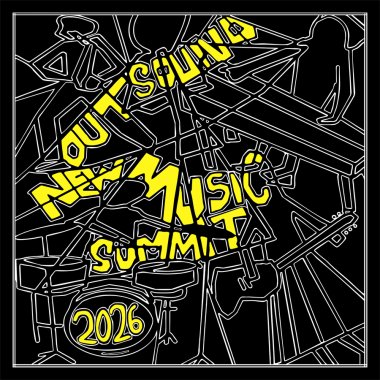
From July 31 - Aug. 2, the 23rd OutSound New Music Summit will take place at the venue. The three-day festival encompasses an improbably diverse constellation of artists exploring a multitude of musical traditions and practices, starting with a plugged-in “Fusion vs Fission” double bill featuring saxophonist Sam Morrison’s Cosmic Trip with E. Doctor Smith and an opening set by the instrumental fusion trio Farallon. Morrison, who quietly moved to San Francisco in 2023, is best known for a brief but incendiary stint with Miles Davis in 1975, just before the trumpet legend went on a self-imposed six-year hiatus.
Last year Morrison released a kinetic, electronics-steeped solo project with producer Bill Laswell, Cosmic Trip. At OutSound the soprano saxophonist focuses on music from the album, but rendered by a quintet with keyboardist Amanda Chaudhary, bassist Brett Warren, Jason Berry on synth and EWI, and Smith, a well-traveled drummer who collaborated with Madonna and Brian Eno early in his career.
The festival builds to a grand climax Aug. 2, when a program will celebrate the 80th birthday of Vinny Golia, a wind player who embodies the term “multi-instrumentalist.” In marking the milestone, OutSound curator and producer saxophonist Rent Romus, is gathering 80 musicians to perform a set of Golia’s new music, modeling the far-flung community of artists that the Los Angeles composer has cultivated over the decades as a player, educator, producer and record label owner. The participating players could power half a dozen festivals, and range from 15-year-old violinist Asher Wrobel to Golia’s fellow octogenarian multi-instrumentalist Heikki Koskinen, a Finnish-born jazz master who’s been a key collaborator in Romus’s folklore-inspired Life’s Blood Ensemble.
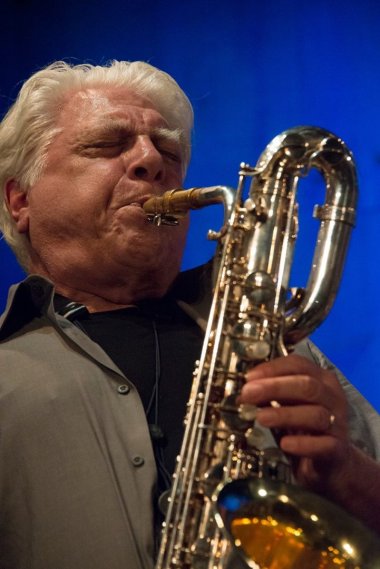
“Vinny is an integral part of the improv, jazz, or creative music scene, whatever you want to call it,” Romus said, noting that Golia connects LA’s mid-century flowering of experimental jazz to its thriving present. “He represents the development of West Coast new music, and he’s really about community.”
Golia got his start in the 1960s as a visual artist in New York City who spent a lot of time around jazz innovators. Rubbing shoulders with musicians led to work creating cover art for albums, including Chick Corea’s classic 1971 Blue Note debut The Song of Singing. He’d been thinking about delving into music himself, and used the Blue Note fee to procure a soprano saxophone.
By 1973 Golia had relocated to L.A., gravitating to cutting-edge masters such as clarinetist John Carter and cornetist Bobby Bradford, pianist and Arkestra bandleader Horace Tapscott, and bassist Roberto Miranda, as well as rising young artists like the brothers Nels and Alex Cline (on guitar and percussion, respectively), “who were all instrumental in my development,” Golia said. “I had some limited skills and I was playing with people much better.”
As he got more serious, a good friend from New York, pioneering avant-garde pianist Paul Bley, suggested that Golia create his own record label to maintain control of his music. Thus was born 9 Winds, a label that played a key role in building ties across the West Coast. While Golia started out releasing recordings of his own multifarious projects, by the early 1980s “it became in a weird way an artist collective,” he recalled.
“Some of the artists helped out and we had mailing parties to package and send out new albums. We started sending them all over the world, and drew attention to the West Coast. The whole point was to get more and more people involved. I mean, Carter and Bradford were making space-age bebop. Horace Tapscott’s music was so deep and spiritual you could taste it. Playing with those people was an incredible gift.”
Romus credits Golia’s 9 Winds with inspiring him to launch Edgetone Records, one of several musician-run labels created by musicians following in his footsteps, like saxophonist Phillip Greenlief’s Evander Music and violinist Jeff Gauthier’s Cryptogramophone. Much like its predecessor, Edgetone has played a key role in bringing visibility to a stylistically elastic array of indie artists involved in musical endeavors that resist easy categorization.

Meanwhile, Golia has been a steady, albeit underground presence on the Northern California scene, whether performing at Beanbender’s, the 1990s new music outpost in Berkeley, or the Golden Lion Arts series produced by guitarist Ross Hammond in Sacramento. He’s also provided some epic performances at the OutSound Summit.
A decade ago, Romus assembled a 70-piece ensemble for Golia’s 70th birthday. The plan to corral a similar ensemble for his 75th was scotched by the pandemic (and ended up taking place three years ago). Several months back Romus approached Golia about celebrating his impending octogenarian status.
“I had to really think about what to do with 80 people,” Golia said. “They’re all really fine improvisers and you can’t have everyone playing all the time and they can’t just be sitting there. I like those kind of challenges. I don’t want it to be something that people have heard before.”
Josh Allen opens the Aug. 2 concert with a set of solo saxophone, providing the kind of contrast that OutSound eagerly embraces. But the bulk of the festival’s action takes place Aug. 1 with two jam-packed quadruple bills.
Saturday afternoon’s program takes places in the intimate confines of the Finnish Hall’s basement Ski Lodge Room, with a solo set by experimental musical instrument builder Sung Kim and the debut of a portmanteau trio Normalways featuring Fred Frith and Sudhu Tewary on inventions and Jordan Glenn on percussion and inventions. The program also features Hook & Wire, a new music quintet founded by bassoonist Dana Jessen with oboist and English horn expert Kyle Bruckmann. In an intentional echo of Golia’s visual arts background, the afternoon concludes with Gino Robair's Radical Divination, a project with Robair and Michelle Wilson creating paper art in conjunction with a texturally capacious five-piece ensemble that includes Bruckmann, Tom Djll on trumpet and electronics and Cheryl Leonard on natural-object instruments.
If the afternoon sessions stretch the very concept of what makes a musical instrument, the evening program finds the lopsided roll in “The Art of Rocks II.” The four-band bill in the main auditorium features Kenneth Atchley’s occult solo electronics project greensatan and a one-man set by Brian Kenney Fresno on the hybrid 12-string Warr guitar, drums and vocals.
Rounding out the program are the jazz-laced prog rock band Inner Ear Brigade, which focuses on songs by guitarist Bill Wolter and vocals by Madeline Tasquin, and the young quartet Mommy Mommy, an Oakland band that promiscuously blends psych rock, metal, pop and jazz.
“I’ve got the new generation on board now, Gen Z musicians who I’ve met through the art rock scene,” Romus said. “Mommy Mommy’s music is very wide and diverse. I’ve played jazz with the bassist Autumn Salvo at the Little Hill Lounge, and then she’ll switch gears and be rocking out.”
If OutSound presents Golia’s music in maximalist bloom, the multi-wind player sends tendrils back to the Bay Area in the fall with two solo sets Oct. 2-3 presented by Palo Alto impresario Mark Weiss’s Earthwise Productions at the Mitchell Park Community Center, opening for a quartet led by New York bassist Hannah Marks.