Mary, Queen of Scots is back.
Thea Musgrave’s 1977 opera received its U.S. premiere at Virginia Opera in March 1978 and its West Coast premiere almost exactly a year later at Spring Opera Theater, an affiliate of San Francisco Opera, at the Curran Theatre.
This month, San Francisco Opera revives Mary, in a co-production with English National Opera, directed and designed by Musgrave’s fellow Scot, Stewart Laing. It hasn't been seen in full in the United States since revivals at New York City Opera (NYCO) in 1981 and the University of Kansas in 1982. Six performances run Sept. 20 through Oct. 4 at the War Memorial Opera House, with Clelia Cafiero conducting in her company debut; the Sept. 26 performance will be livestreamed.
Matthew Shilvock, Tad and Dianne Taube General Director of the company, told SFCV how Mary returned to San Francisco. “We heard that ENO was planning a production of Mary, Queen of Scots and we immediately started exploring the possibility of a co-production with them,” he said by email. “Thea Musgrave was both the first female composer and conductor hired at San Francisco Opera back in 1979.
“We felt it a wonderful opportunity to showcase Thea on the War Memorial stage and, as we got to know the opera, [we] became fascinated by the dramatic incisiveness, extraordinary orchestral writing, and moments of exquisite lyricism in Thea’s music. Thea writes with such powerful drama, layering on conflicting emotions and situations to represent the multi-faceted dynamics of a situation. It’s been thrilling to hear it come to life.”
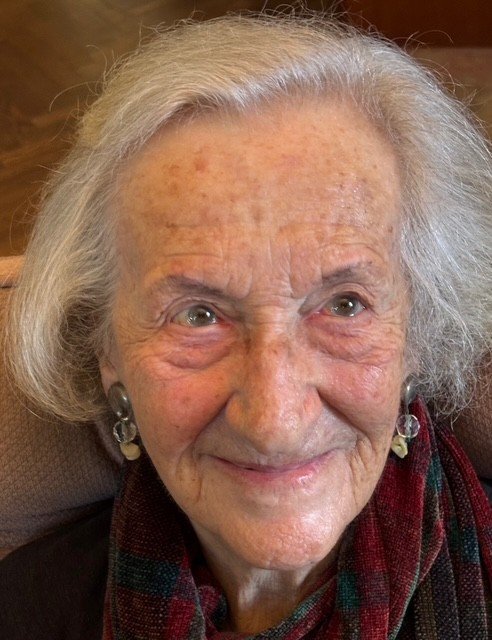
It’s an exciting time for Musgrave, who’s still actively composing at 98. In August, her new bassoon concerto, Out of the Darkness, had its world premiere at the BBC Proms, with soloist Amy Harman and the Academy of St Martin in the Fields. (You can hear it on the Proms website.) Next year, Buxton International Festival will present her new chamber opera Orlando – An Escapade, based on Virginia Woolf’s novel Orlando.
Musgrave has had a prolific career, composing some 200 works for all manner of soloists and ensembles. Her catalog includes orchestral music, electronic music, concertos, chamber music for small and large groups, solo instrumental pieces, chorus, keyboard music, opera, and small-scale dramatic works. Even her instrumental works can be highly dramatic, sometimes calling for concerto soloists to wander around the orchestra interacting with other players, or for whole sections to leave the orchestra entirely.
~~
Musgrave started her musical studies as so many do, with childhood piano lessons. She was composing by her teens. “But I also wanted to become a doctor,” she told SFCV, “not to directly treat patients, but to discover cures for all the diseases. After doing one term at Edinburgh University, I realized this would very probably never happen and I returned to my other love, which was of course music.”
In Scotland, she studied with Hans Gál, a Jewish composer from Austria who had fled the Nazis. She went on to study in Paris with the famed pedagogue Nadia Boulanger and at Tanglewood with Aaron Copland. (The composer also cites Donald Francis Tovey, whom she never met or studied with, as a significant influence.)
After her studies with Boulanger, she settled in London, where she first had access to electronic music equipment. In 1970, she became a guest professor at the University of California, Santa Barbara. It was there that she met the violist and conductor Peter Mark. They married in 1971 and have been professional colleagues as well as life partners.
Musgrave wrote her 1973 viola concerto for Mark, and she conducted its premiere. The chamber work Elegy, for viola and cello, was written for Mark and the late Geoffrey Rutkowski. She used Elegy as the basis of From One to Another I, for Mark on viola with pre-recorded electronic tape background.
In 1975 Mark was appointed as conductor and as artistic and general director of Virginia Opera, a position he held for thirty-five years. Musgrave and Mark told SFCV that she was already working on Mary, Queen of Scots when she arrived at Santa Barbara. Scottish Opera gave the world premiere at the 1977 Edinburgh International Festival, with the composer conducting; the following spring, Mark led the American premiere at Virginia Opera.
David Farrar, the founding stage director of Virginia Opera, also came from UC Santa Barbara. He was instrumental in Mark’s appointment at Virginia and directed the U.S. premiere of Mary. His production was subsequently revived at NYCO and Spring Opera Theater.
The eminent American soprano Ashley Putnam starred as Mary in both the Virginia Opera and NYCO productions. Just 25 at the time — about Mary’s age at the end of the opera — Putnam had won the Metropolitan Opera National Council Auditions two years earlier and made her professional debut at Virginia Opera. She was good friends with Mark and Musgrave and told SFCV that she credits Peter with the beginning of her career.
“[Mary] is hair-raising, dramatically harrowing,” said Putnam. “The tension never lets up. It wasn’t easy to learn — there are sevenths [the musical interval] all over the place. It was an exciting time. [Peter and I] both had strong opinions in our collaboration.” She remembers Musgrave, who rewrote some phrases to better suit her high register, as both calm and calming.
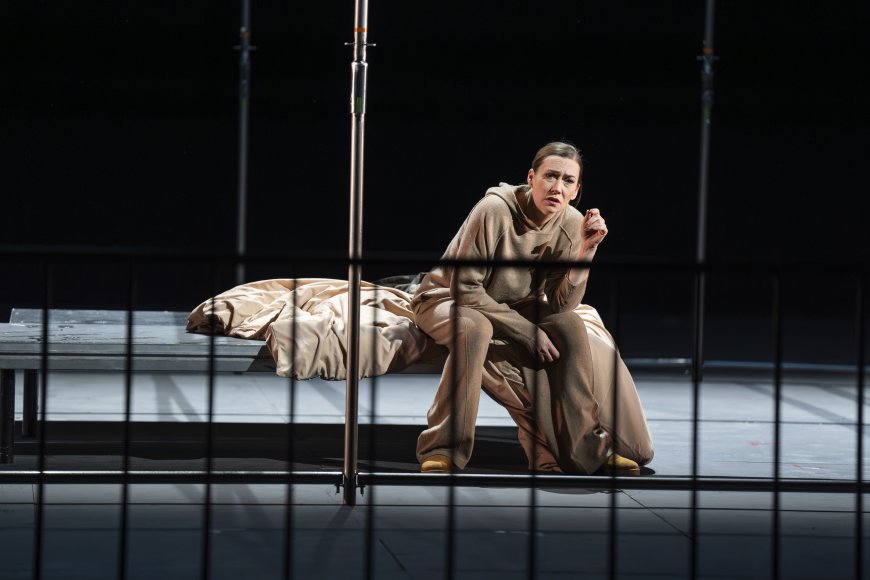
Both Putnam and Heidi Stober, who sings Mary here this month, commented on how isolated Mary is. Betrothed as a child to the future King François II of France, she was raised in France, then returned to Scotland at 18, widowed after two and a half years of marriage.
Laing pointed out that she found a “desperately poor, cold, and wet” Scotland that was in the midst of a civil war between the Catholics and Protestants. And she was surrounded by three men who all wanted to control the country by controlling her: her illegitimate half-brother James Stewart, first Earl of Moray; her husband, the handsome, womanizing Lord Darnley; and the Earl of Bothwell, a military hero.
The libretto, which Musgrave herself wrote, basing it on the unpublished play Moray, by Amalia Elguera, makes Mary’s isolation explicit. She pleads with her brother “Do not leave me alone! / There’s no one, no one, to help me,” but moments later, they are “irrevocably estranged.”
The scene closes with Mary singing eloquently about her isolation: “Alone, alone, I stand alone. / Where can I turn for I cannot stand alone.” Said Stober, “Her resolve at the end of the aria is, ‘I can. I’m going to rule alone. I’m going to reign.’ And that’s probably one of my favorite moments dramatically, musically, vocally in the whole score.”
Stober sang Mary at English National Opera last year, and she has sung more than a dozen roles at San Francisco Opera, including a page, younger sisters of the central female character, and a nun. She’s grateful to be singing Mary and related the opera to women’s lives in the here and now. “What is going on between the dynamics of characters we can all pull from in our lives in one way or another. And to have the chance to play a woman like this after all the various either girls or boys or women I've played, it is a real gift to get to play a woman like this who has such vulnerability and unbelievable strength. And then the mother side, which is something that means a lot to me.” (Mary’s son with Darnley grew up to be James VI of Scotland and I of England, and in the opera, Mary sings a poignant lullaby to the infant James.)
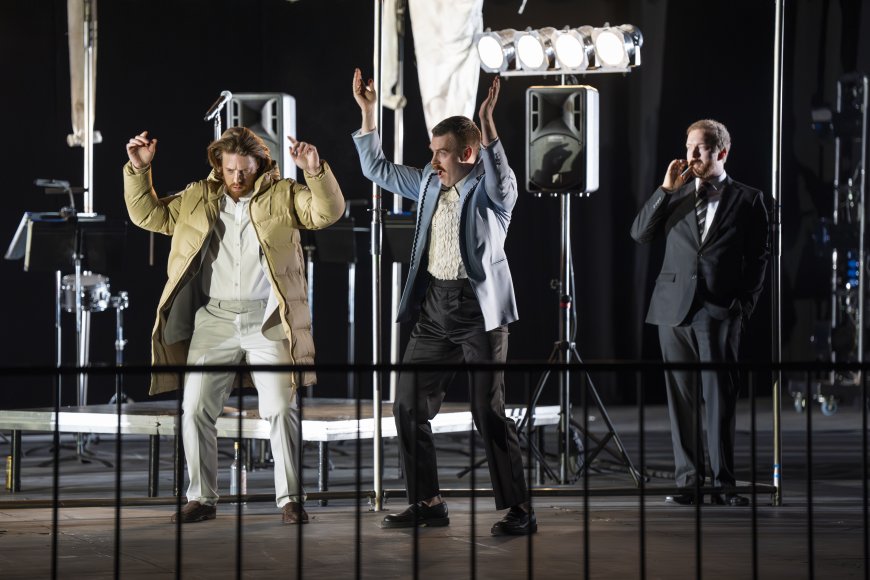
English National Opera’s production, part of a program to present neglected works, received only 13 days of rehearsal, and Laing is grateful for what SF Opera has been able to provide: six weeks of rehearsal time, plus support that includes a fight director and an intimacy director. He called the rehearsal time luxurious; it has let him work with the performers in far more detail — including the chorus, which carries a significant role in the opera.
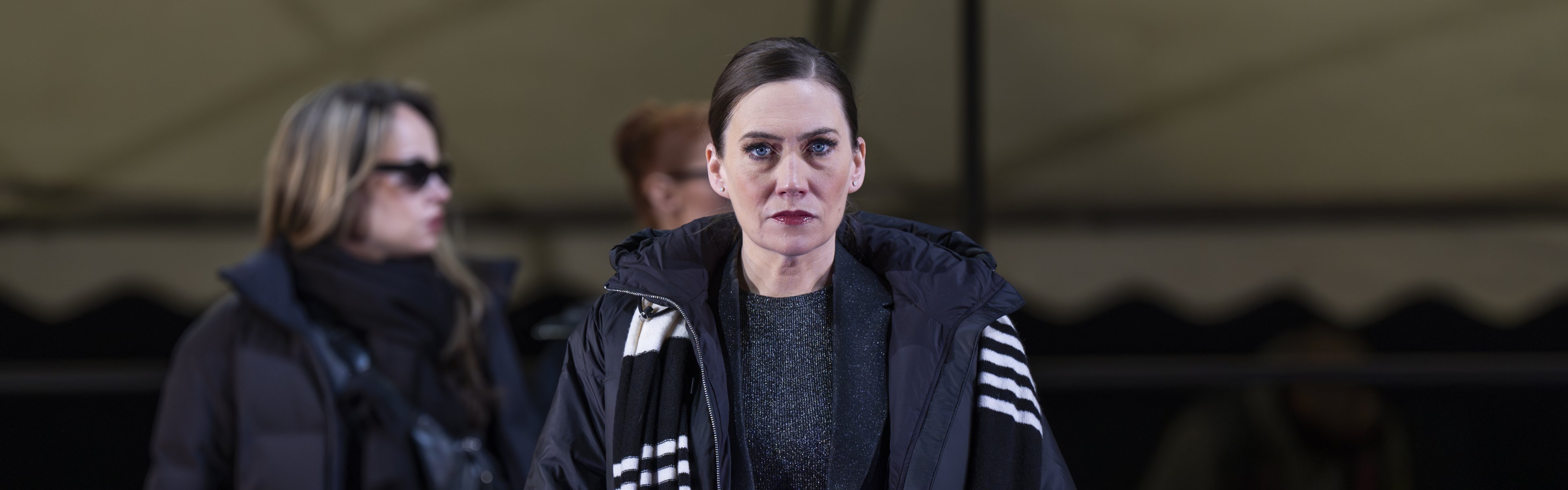
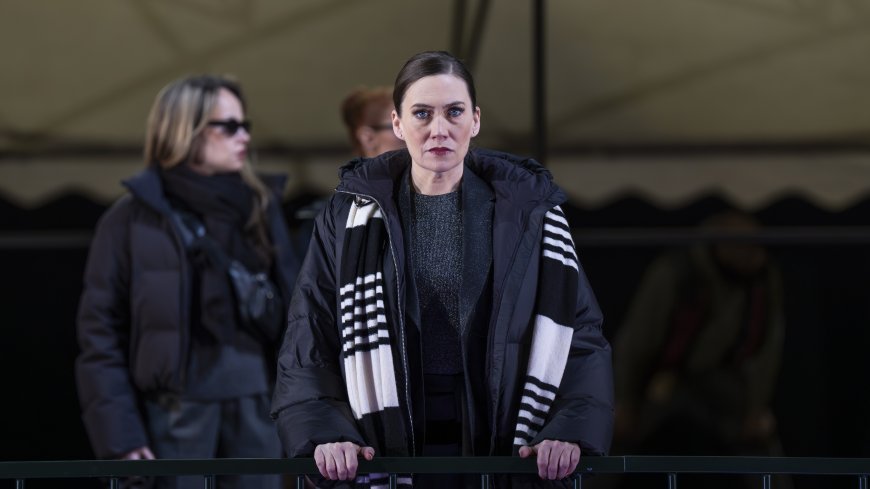
Laing’s production of Mary, unlike Farrar’s, is in modern dress. Of this decision, Laing said, “She's a very strong female character, but I wanted to liberate that character from the formality of Elizabethan dress…. I think that women in politics, women as leaders, feels like a very current theme. Elizabethan costume is just so big and uncomfortable and formal. I just thought, I don't want an oil painting walking on stage. I want a human being who the audience might empathize with.”
Listening to Musgrave
SFCV asked Musgrave to recommend representative works for listeners who’d like to get to know her music. The composer suggested these:
- Clarinet Concerto (1968). There’s a wonderful description of how the concerto works in this interview with the composer.
- An Occurrence at Owl Creek Bridge (1981)
- Song of the Enchanter (1990)
- Horn Concerto (1971)
- Trumpet Concerto (2019)
You can find details about these works at Musgrave’s website, theamusgrave.com, where each work has links to her publisher’s website. And a recording of the 1978 U.S. premiere of Mary, Queen of Scots — Virginia Opera, with Peter Mark conducting and Ashley Putnam in the title role — is available on CD from Lyrita.
Left Coast Chamber Ensemble joins in the celebration of Musgrave by performing several of her works across its 2026-27 season. The first concert, given twice — Saturday, Sept. 19 at 7:30 p.m. at Noe Valley Ministry in San Francisco and Sunday, Sept. 20 at 4 p.m. at the Berkeley Piano Club — is the same weekend that Mary, Queen of Scots opens.