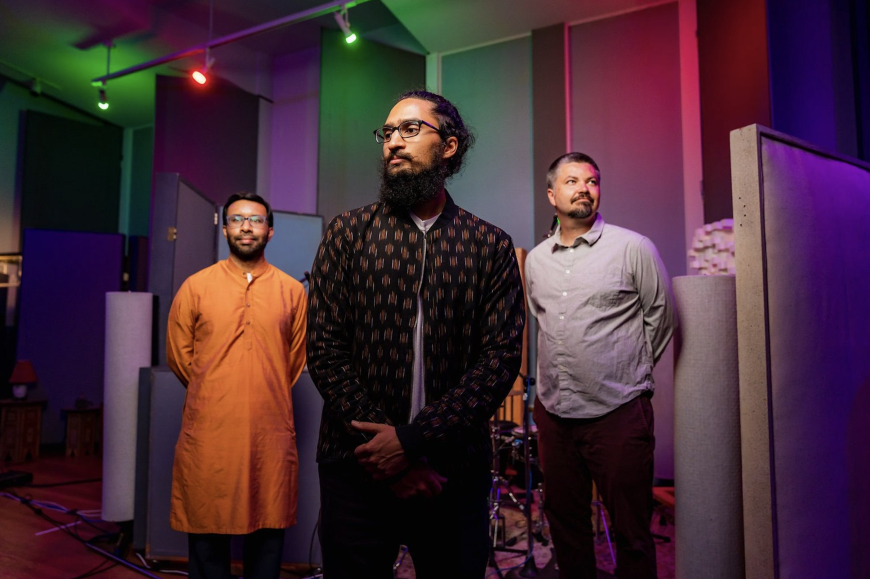
The first time the three musicians who make up the Alaya Project performed together at the UC Theatre, they did a Beatles tune. In 2017, UnderCover Presents founder Lyz Luke (now the cultural affairs manager for the city of Oakland) had asked percussionist Rohan Krishnamurthy to join in celebrating the 50th anniversary of the Beatles’ album Sgt. Pepper’s Lonely Hearts Club Band. Krishnamurthy expected her to ask for “Within You Without You,” the Indian-inflected track George Harrison wrote after studying sitar with Ravi Shankar.
But instead, Luke suggested a version of “Being for the Benefit of Mr. Kite!” For years, Krishnamurthy and his friends — saxophonist and composer Prasant Radhakrishnan and keyboardist Colin Hogan — had talked about combining the South Indian classical music, jazz, and funk they all loved. This seemed like the time to do it.
“I immediately hit up Prasant and Colin and I said, ‘I think there’s something fun we can do with this tune,’” Krishnamurthy recounted at an Oakland café, where the three East Bay musicians had gathered. “That was actually the first time we came together as the Alaya Project.”
Krishnamurthy has always been interested in different musical traditions, studying Western classical, pop, and Indonesian gamelan when he was at the Eastman School of Music in Rochester, New York, where he received his Ph.D. in musicology. That first time performing together at the UC Theatre convinced him the Alaya Project’s combination of rhythms could work.
“That was a real kind of an aha moment for me. I was like, ‘Wow, this is great sound,’” he said. “I think it resonated at so many levels, right? What I really try to do with the Alaya Project is create many points of access. There’s the Indian classical thing, there’s the jazz thing, there’s the funk thing, there’s the Beatles thing, and it was inspiring to me to see such a diverse audience being moved by that.”
The group spent the following year getting together and trying out ideas, and presenters took notice. They played widely in 2019, including the San José Jazz Summer Fest, before COVID-19 shut things down.
Jazz has always been part of Radhakrishnan’s musical landscape.
“I grew up listening to all the great jazz masters and played in jazz ensembles in school and in college,” he said. “I did a minor in jazz studies in college, so it was just part of what I was listening to and learning. Carnatic music, I probably studied more intensely, but they were both part of my palette and what I was interested in doing. I just started hearing music together that combined those concepts organically early on, and it was kind of a natural evolution.”
Radhakrishnan and Krishnamurthy have been friends and musical collaborators since meeting at an Indian music festival when they were kids. Radhakrishnan, who formed VidyA, another group combining jazz and Carnatic music, said both genres enhance one another by bringing in elements the other doesn’t have, like harmony in jazz and the rich melodies of classical Indian ragas.
Hogan grew up in the East Bay and went to Berkeley High School, where he played in the school’s renowned jazz ensemble. He performs with his siblings as the Hogan Brothers and with other groups like the Jazz Mafia. Indian music was familiar to him because he grew up hearing his father play the tabla, but he said adapting Indian classical concepts is still relatively new to him.
“Luckily, these guys are open for me to kind of interpret that, and as Prasant was saying, the whole concept of harmony is not really present in traditional Indian classical music, so that’s something I’m bringing my jazz background to,” Hogan said. “But I think for me, the main thing is the ragas, the specific Indian scales that are so unique, and we don’t really see that in jazz. It’s been ear opening to play around with those concepts and bring some of my jazz phrasing sensibility into how to play those.”
Asked about how funk comes into what they do, Krishnamurthy said the patterns and the way rhythms are built in Carnatic music are similar to those in funk. Hogan added that where jazz moves through complex harmonies quickly, funk might sit on one or two chords — which, he said, connects to the pedal points in Indian classical music.
Audience members often come up after the shows to say they enjoy the diversity of the music, Radhakrishnan said.
“One thing that’s unique about this group is even though it’s sort of one genre, there are a wide variety of styles of tunes inside of that,” he said. “Colin’s even got a tango-inspired tune. We have stuff ranging from very Indian classical to very funky or groove oriented.”
This year, the Alaya Project played the Nitya Nritya Festival in Salt Lake City and the Chicago Tyagaraja Utsavam, which is celebrating its 50th anniversary. The group’s Sept. 26 and 27 dates in SFJAZZ’s Joe Henderson Lab will be its third run at the venue.
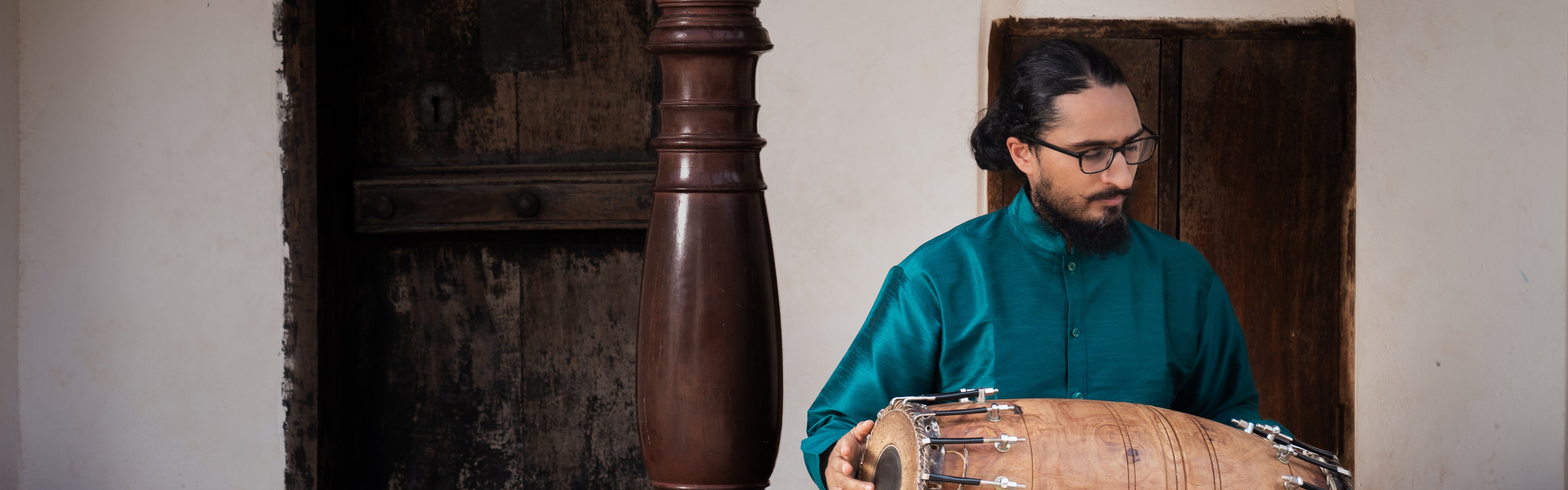
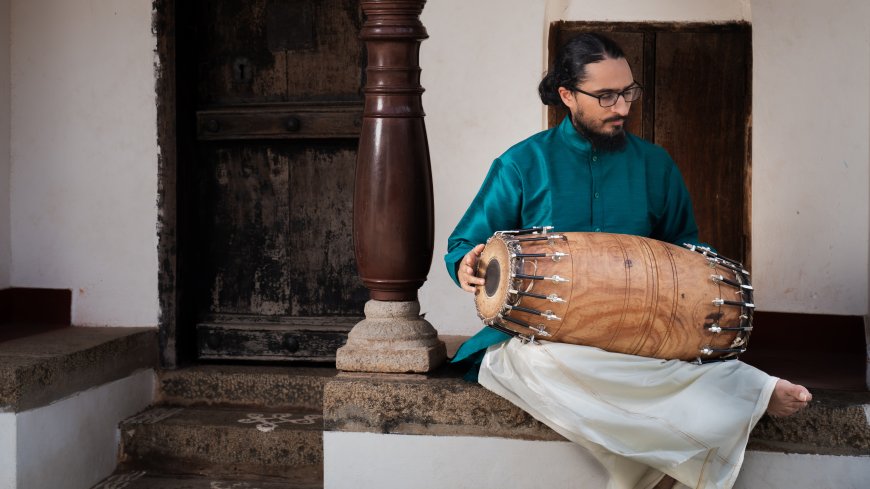
For Krishnamurthy, Chicago was a return. He grew up in Kalamazoo, Michigan, started on the mridangam — a double-headed hand drum — at 8, and was touring the Midwest by 10, playing the same Indian classical music and dance festivals he now headlines. Performing there again, he said, was a full-circle moment.
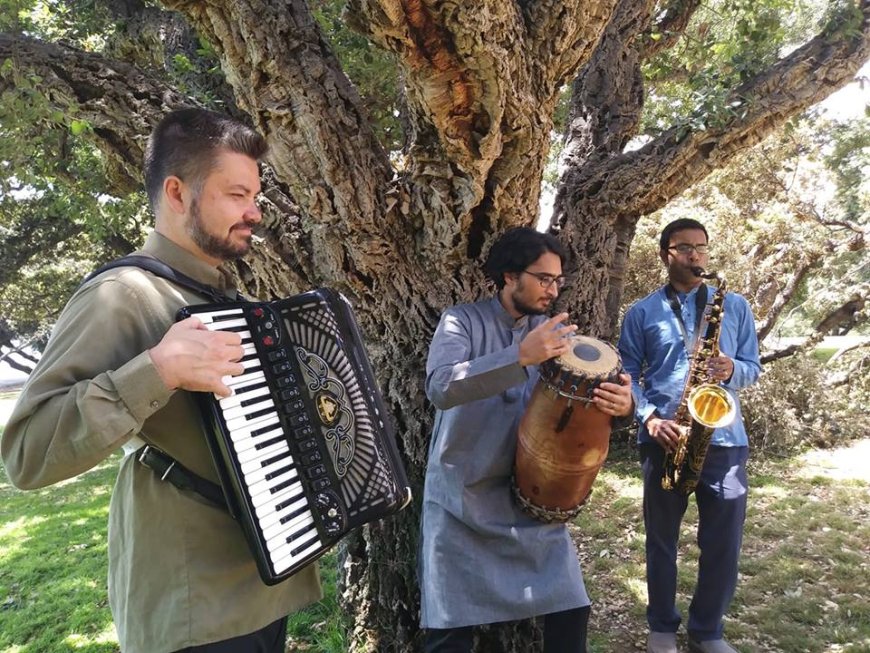
The trio likes performing in new spaces for new audiences. This summer, Krishnamurthy was the percussionist for The Lunchbox, the wildly popular musical at Berkeley Repertory Theatre that was extended twice. They hope to tour India in the next year or two.
Along with expanding their audiences, Hogan hopes to keep working with collaborators, as he will at the upcoming SFJAZZ shows.
“Cory Combs is going to be playing bass with us, and Roopa [Mahadevan] will be singing with us as well,” he said. “Roopa has background in Indian classical and in pop and jazz, and then Cory comes more from the jazz space. So, each person brings their own element to it and their own flavor. I think that’d be fun to continue doing that and collaborate with other artists, keeping our core identity and then adding more elements on top.”