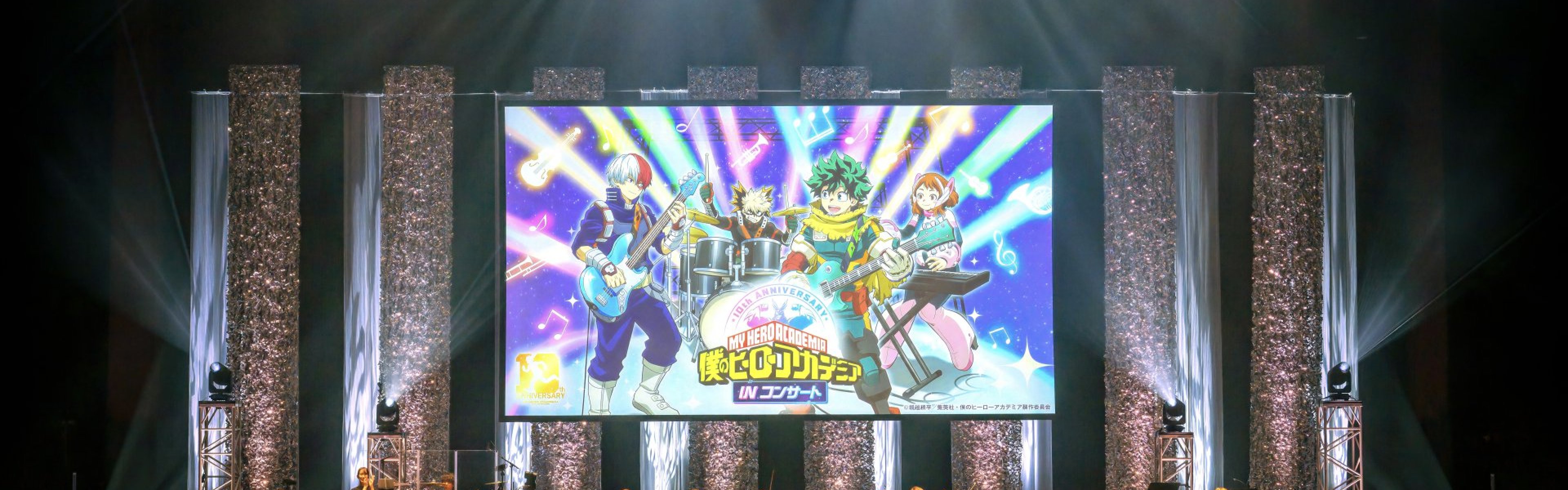
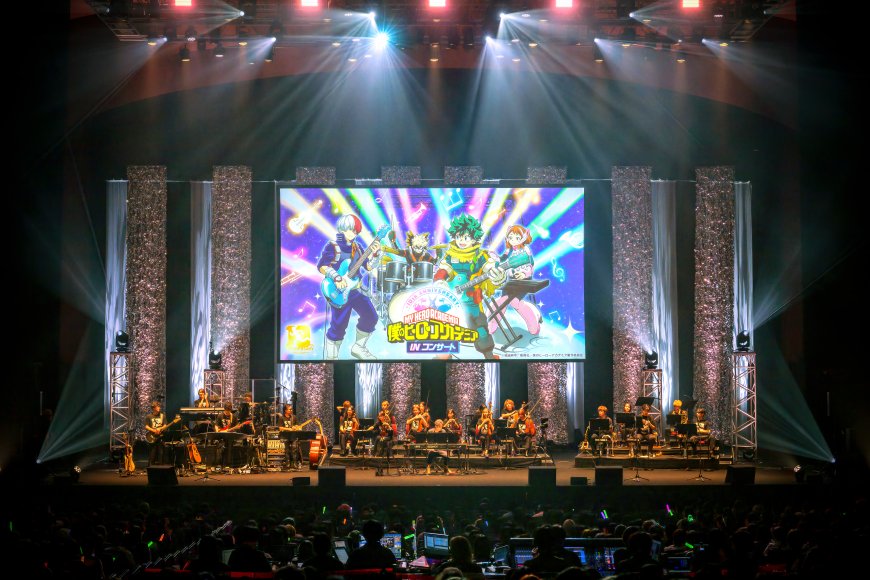
Anime is hitting the concert stage in a big way.
“My Hero Academia In Concert” is a live experience celebrating the 10th anniversary of the hit anime TV show, based on the manga series of the same name. The concert features the greatest hits from the show’s uplifting score by composer Yūki Hayashi.
Currently on a world tour, the concert runs in the U.S. through Oct. 25. It landed at San Francisco’s Golden Gate Theatre last Thursday.
Hayashi is an accomplished Japanese composer working across cinema, live action TV, and anime with numerous credits to his name. A former competitive gymnast who was initially self-taught, he got his start creating background music for gymnastics competitions while at university. After graduation, he apprenticed under composer Hideo Kobayashi, studying beat-making.
His first big score was a collaboration with superstar anime and film composer, Hiroyuki Sawano (who scored the enormously popular anime Attack on Titan) on the music for a show called Triangle. Hayashi worked his way up, scoring many other shows before creating his breakout hit with his music for My Hero Academia, a show that has become a global phenomenon, dominating screens for a decade and reaching its thrilling conclusion last year.
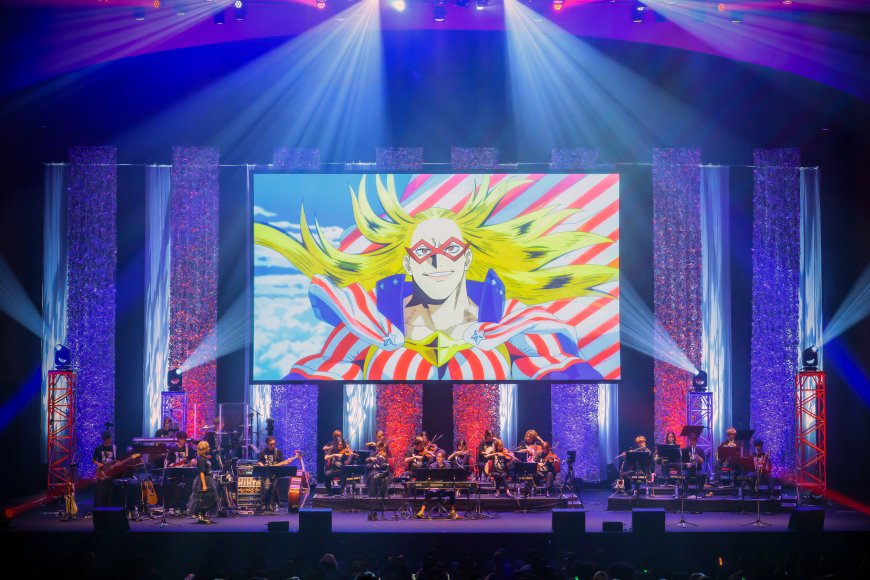
Simply put: The story of My Hero Academia is Harry Potter, but with superheroes instead of magic. It tells the story of Izuku Midoriya, a young boy born without superpowers — called Quirks — in a world in which the overwhelming majority of people have them. He struggles with social ostracism as a result, yet his most fervent dream is to become a hero surpassing All Might — Japan’s #1 superhero, and the country’s symbol of hope. In a chance encounter, Midoriya is scouted by All Might, who hears of Midoriya’s plight and, upon learning of his upstanding character and heroic ambitions, reveals a secret: that he, too, was born Quirkless. All Might entrusts him with the unique superpower that has been passed to him from several other users across generations, called One for All, and gives Midoriya a new lease on life. Midoriya enrolls in Japan’s most prestigious hero academy, U.A. High School, and embarks on a journey that will culminate in his becoming the nation’s greatest hero.
The concert presented the show’s biggest moments from each season, in order. The first song was a floating, ambient track, set to scenes of Midoriya’s hopelessness at being Quirkless, and his subsequent reinvigoration at being given a chance by his idol, All Might. Hayashi, whose music shares strong similarities with his contemporary, Sawano, writes an infectious, genre-fluid blend of cinematic classical, rock and metal, and hip-hop, featuring strong melodies and frequent vocals.
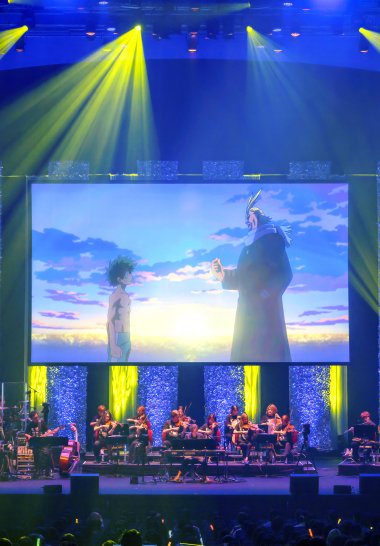
This somber opening built up to the show’s iconic battle theme, “You Say Run,” which features metal guitar chugs, soaring string melodies, and a joyful drum groove exemplifying Hayashi’s roots in dancesport. This garnered immense cheers from the audience, which were consistent throughout the night.
Several other songs stood out: All Might’s theme, with its triplet motif nodding to John Williams’s Superman theme, had electrifying singing from rapper McGwire, who also contributed raps on other tracks. The song underscoring Midoriya’s fight with his rival, Bakugō, was enriched by beautiful operatic vocals from singer Lauryn Alexandria Hobbs. A ballad accompanying the show’s much-lauded tournament arc allowed the string section to shine, and the pit band, which was amplified, was surprisingly well-mixed throughout, never competing with the projection audio. In a couple of tracks, even the flute was quite audible. Other standouts include the jazzy and incredibly titled “Weeee Are Fu*king Super Star!!”, evocative of Yoko Kanno’s score for Cowboy Bebop, two duets between McGwire and Hobbs, a powerful brass moment from the fight between characters Uraraka and Himiko, and the night’s unmistakable highlight: an incredible ballad reimagining “You Say Run” titled “Might*U,” sung by Hobbs. This track showed Hayashi’s ability to build tension to an incredible climax when given the space to write a longer cue, and demonstrated the sensational synergy between the band, the vocalists, the projections, and even the audio engineers.
Almost more significant than the genuinely fantastic music was the audience: intergenerational, racially diverse, and occasionally clad in impressive cosplay, they were a force to be reckoned with. Cheers were heard that would rival those at a stadium show. People were deeply invested in the show’s narrative and the music underpinning it, cheering whenever a beloved character appeared, or a satisfying blow was dealt against a villain. Most would scarcely imagine people literally screaming for a pit band playing mostly instrumental music, but with this crowd, the enthusiasm was organic and undeniable.
Let this be a lesson to concert programmers everywhere: Film, TV, and game music are fine and good. But get the anime fans to come to the show and you’ll have the most loyal crowd you’ve ever seen.