What’s Basque is known to most of us as food, deployed family-style in multiple generous servings at numerous restaurants in California, Nevada, and other areas of the Basque diaspora. Now the Basque Educational Organization will be serving up music as a way into one of the oldest, most distinct, and best-preserved among European cultures.
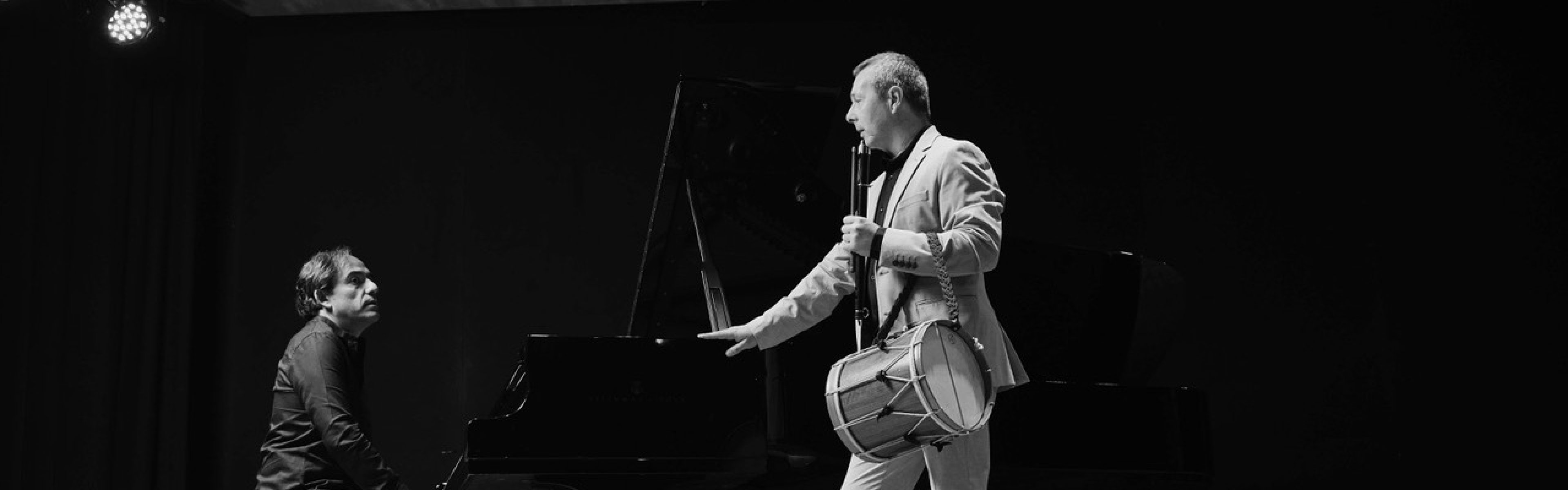
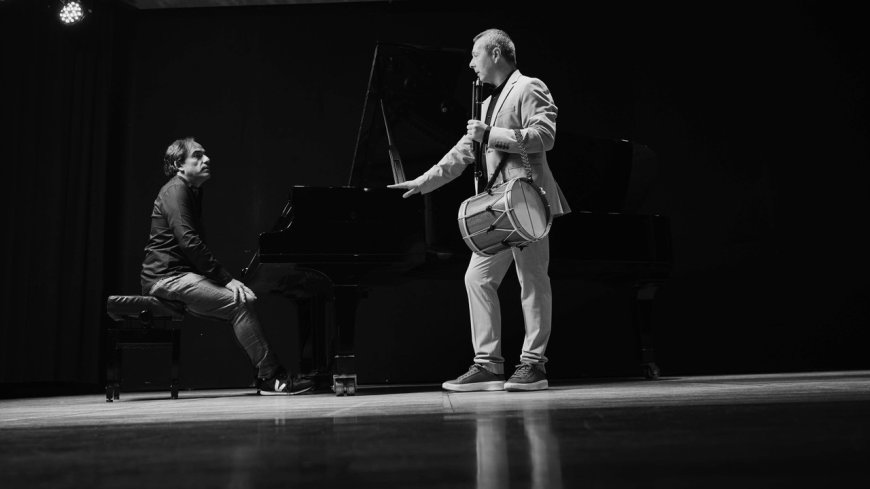
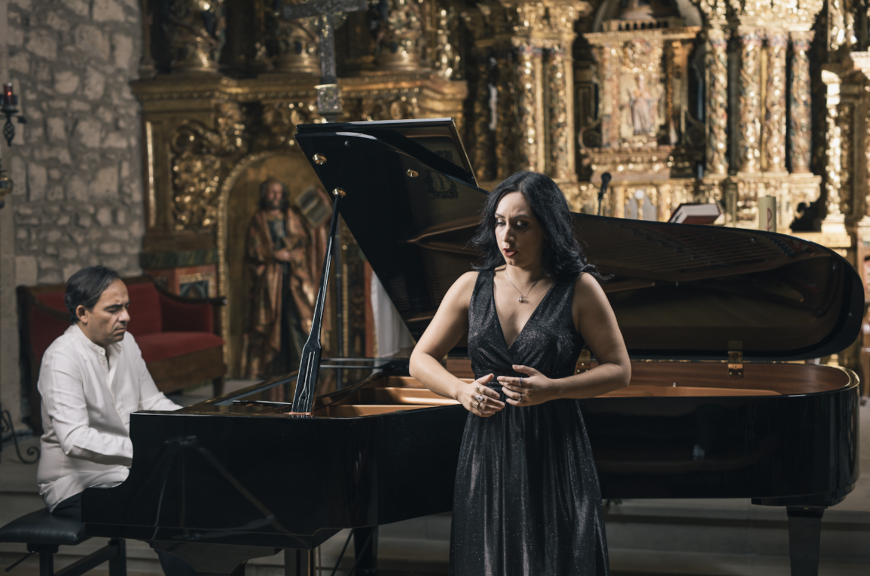
The program at the Presidio Theatre on Saturday, Sept. 26, will bring three musicians from the region centered in the western Pyrenees Mountains between Spain and France, called Euskal Herria in the Basque language. Concert pianist Josu Okiñena will present music by Basque composers and will also serve as the event’s narrator. He’ll be partnered by mezzo-soprano Noelia Ibáñez and by Garikoitz Mendizabal, a virtuoso on the txistu [pronounced ‘chees-too’], a three-hole flute familiar in Basque folk festivals and even as a part of Catholic church services.
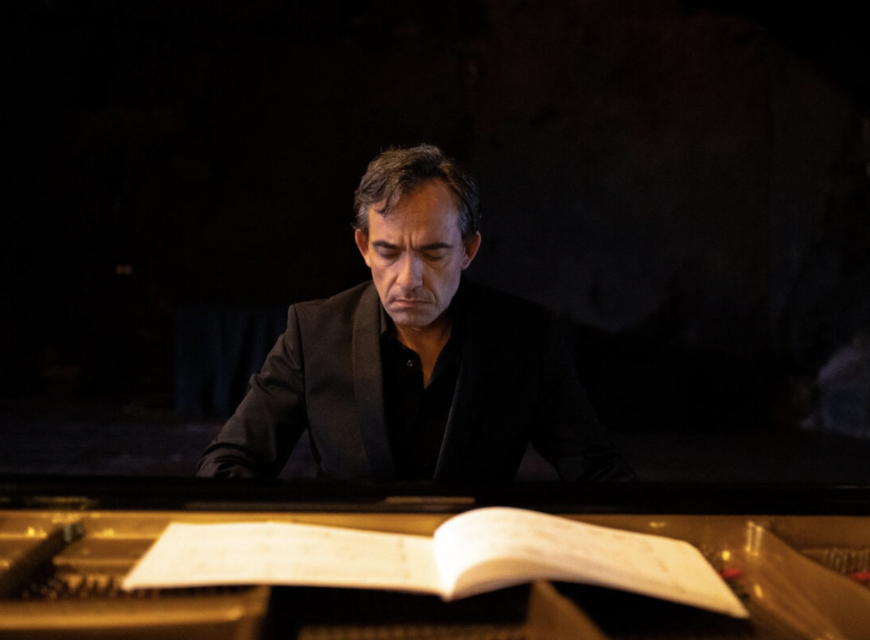
Okiñena got his early musical training in San Sebastián, located in the Basque Autonomous Community of Spain. (Basque nationalists have claimed nationhood since the 1890s, but the Basque Country has never been an independent state.) He went on to studies in Madrid with Navarrese pianist Félix Lavilla, who acquainted his student with the legacy of Aita Donostia (1886–1956), the composer to be featured prominently in the Presidio program.

Donostia was a Capuchin monk and music teacher who became a vital Basque musicologist, traveling to farms throughout the region and notating the folk music shared with him. “It was an obsession with him,” says Okiñena, Zooming from his San Sebastián home. “He discovered that the music he found was the most important source of elements for his own compositions.” Donostia, who taught Okiñena’s father at a Capuchin college in Navarre, is best known outside his native region for his Preludios vascos (Basque Preludes), a set of 21 piano pieces written between 1912 and 1918, evocative of his homeland and of the Romantic nationalist approach of Grieg.
Ibáñez, the Presidio program’s vocalist, has classical training and performance experience across Spain and the rest of Europe, but will be performing here in Basque and English, drawing on the region’s traditional song. “The Basque way of singing is not as legato as it can be in Italian or in Spanish,” Okiñena points out. “It’s much more staccato, because of the movement of the consonants in the Basque language.”
Okiñena and Mendizabal, who has also taken his folk instrument into jazz settings, arrived at the unusual pairing of piano and txistu through experimentation, on this program and on several recordings. “All our festivals and holidays are celebrated with dancing to the txistu, it’s part of the life of our society,” Okiñena points out. “So our new idea was to position the txistu in the chamber music repertoire.”
Alongside renditions of Donostia’s music, Okiñena notes that the Presidio program will “show a little bit how the evolution was since the 16th century. And it will include those who have composed Basque music in the Americas and other places of the diaspora.” Among the latter are Hilario Olazarán de Estella, who was expelled from Spain in the wake of the Civil War and spent 27 years in Chile, as the Franco regime suppressed the Basque language and public Basque cultural expression, and Emiliana de Zubeldía, who lived in New York and Mexico. Before emigrating, both these composers were friends of Donostia.
Maurice Ravel will be highlighted in the program as a composer whose Basque origins are little known but personally vital. His Basque mother raised him with her language and music, and he returned frequently to the French Basque Country, eventually keeping a summer house at Saint-Jean-de-Luz, across the harbor from his birthplace in Ciboure.
“Ravel’s letters are full of information about the Basque motifs and inspiration in his music,” says Okiñena. “There are connections with the zortziko dance, which is written in 5/8. It’s not a regular rhythm, but it gives this feeling of joyness.” Ravel began a piano concerto based on Basque themes, but abandoned it under the pressure of the First World War. He returned to the material that same summer in the Piano Trio in A minor, whose opening movement recasts the zortziko in a broader 8/8.
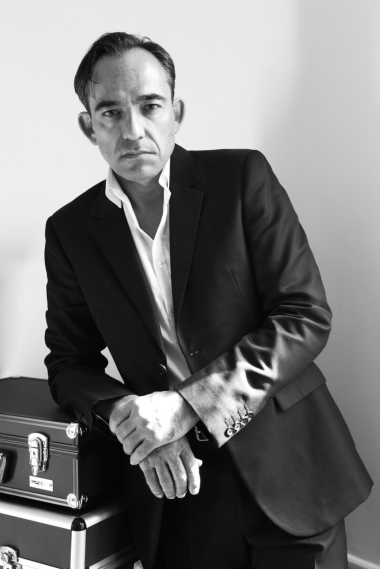
“The passion that we are putting into this project in San Francisco is really unique,” says Okiñena. Titled The History of Basque Music: A Living Portrait of an Ancient Land, the program is being presented by the Basque Educational Organization, based in the San Francisco home of its chairwoman, Anna Marie Etcheverria, a second-generation Basque raised in Southern California. “It just feels like we’re really a small group of people in this big wide world, even compared to the Irish,” says Etcheverria, who’s married to an Irishman and envies the greater attention paid to Irish music and culture. “But the Basque are a very proud group,” she asserts.
In promoting the Presidio program, Etcheverria has been wary of calling it a concert, in the hopes of drawing those local Basques for whom “classical music could feel intimidating.” She points out that Josu “will be speaking throughout this, so it will be a form of storytelling, and it’s a way to kind of open the door a little wider. If you’re Basque, you’re going to recognize elements of music you’ve heard probably all your life.” For non-Basques, “my expectation is that they’ll learn about the history of Basque music and how it has manifested in the classical repertoire.”
On trips like this throughout the Basque diaspora, Okiñena is ever watchful for new compositions he can bring home to San Sebastián. Integration of classical and Basque musical study continues in that city’s Musikene, a conservatory that Okiñena helped design in 2001, and where he currently serves as a researcher and professor. For more information on the Presidio program and other cultural events, go to https://www.basqueeducational.org/