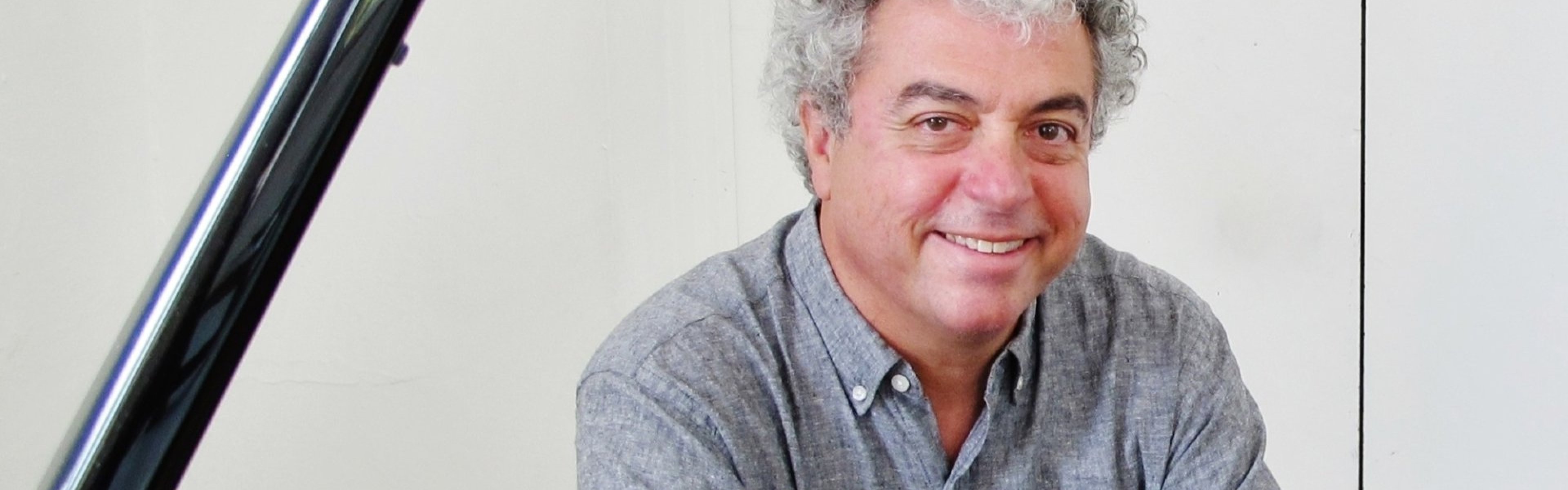
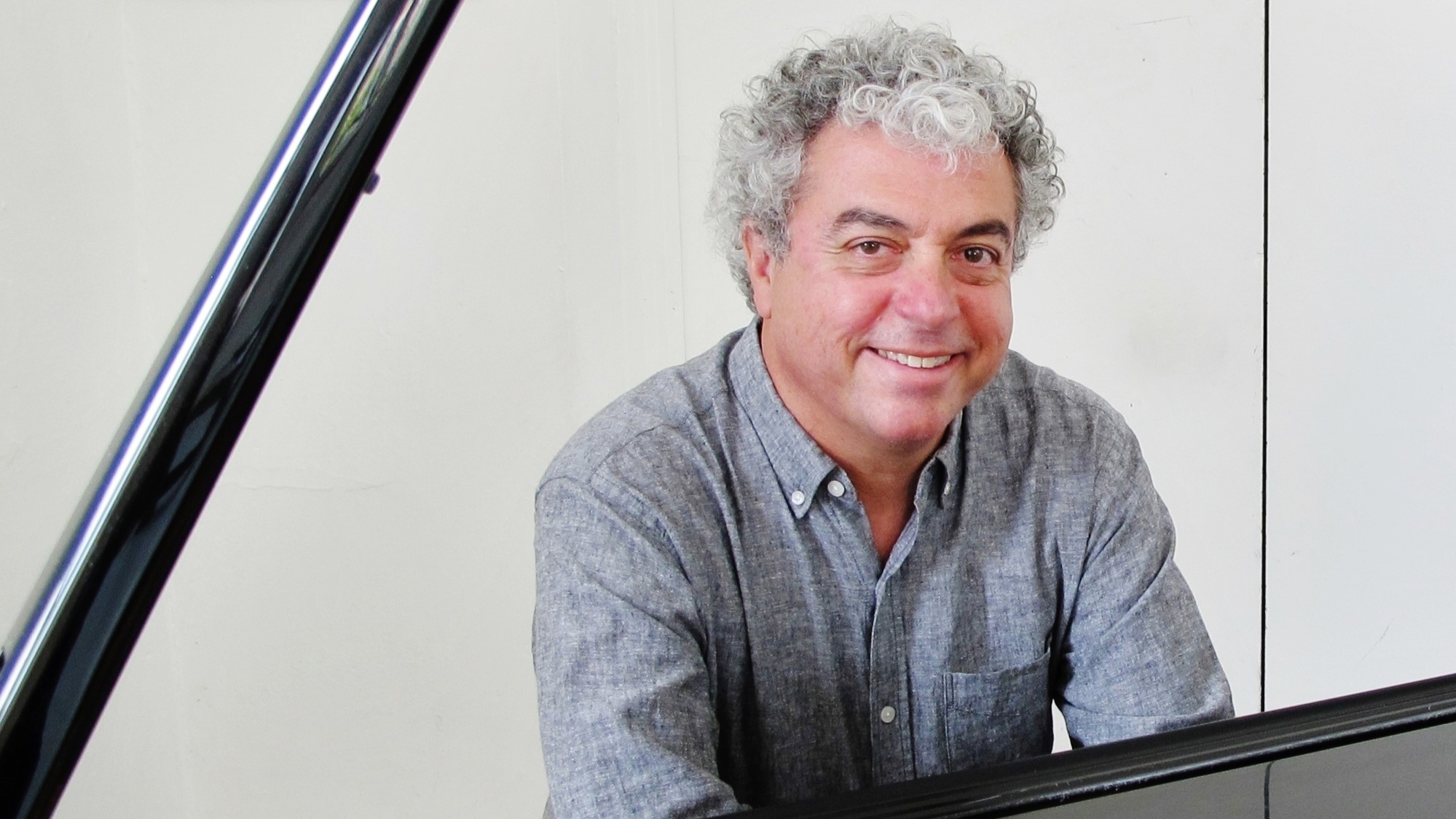
Tending to the archives of a beloved composer is a major endeavor under any circumstances, but Jovino Santos Neto has taken on a task nearly as vast and verdant as the Amazon rainforest.
The Rio de Janeiro-raised, Seattle-based pianist is a renowned composer in his own right, known for an expansive discography that captures his kaleidoscopic array of approaches to Brazilian jazz. While utterly distinctive, his music is inextricably linked to the work of Hermeto Pascoal, the legendary multi-instrumentalist who died last September at the age of 89. In returning to the Bay Area for trio performances at Oakland’s Piedmont Piano Company May 29, The 222 gallery in Healdsburg May 30, and Mazza Castle in Pacifica May 31, Santos Neto has embraced the responsibility that comes from his long adventure with the man affectionately known as “O Bruxo” (The sorcerer).
He spent 15 formative years in Pascoal’s band, from 1977 to 1992. Long after leaving its immediate orbit, Santos Neto has been known as one of the leading champions of Pascoal’s oeuvre, a fantastical realm where folkloric Brazilian styles like frevo, samba, xaxado, and forró flow into jazz, free improvisation, and new music. It’s a world where unlikely objects and implements — say, a hubcap or a glass of water — get transformed into musical vehicles.
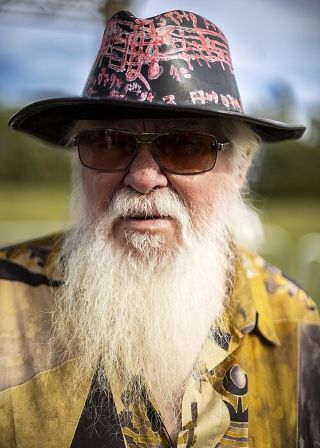
With Pascoal’s departure, Santos Neto has redoubled his efforts to make his treasure trove of the Sorcerer’s music available. The movable feast came with him when he relocated to Seattle in 1993, arriving with “a couple of suitcases of music he’d written up to that point,” Santos Neto said. “Because of his calligraphy, his personal way of writing chord symbols, many pieces have to be interpreted, so I’ve been the archivist for this work. It’s a mission, though I don’t have all of it. He made thousands more since I left his band.”
Pascoal was born in a rural, underdeveloped corner of the northeastern Brazilian state of Alagoas. An albino, he had to stay inside or in the shade in the sunbaked climate. First smitten with the button accordion, he taught himself a variety of instruments, often imitating the sounds of nature around him.
Pascoal became a key figure on the Brazilian jazz scene in the early 1960s through his work on piano and flute in Sambrasa Trio with future percussion star Airto Moreira and bassist Humberto Clayber. But it was trumpet great Miles Davis who catapulted Pascoal to international renown when he incorporated him (and Airto) into the dense fusion soundscapes of his 1970 band, which was captured on the 1971 album Live-Evil. Davis included three of Pascoal’s tunes on that album: “Little Church,” “Selim,” and “Nem Um Talvez,” brief tracks that serve as a welcoming oasis amid the swirling, kinetic fray.
Several years later, after Pascoal had returned to Brazil, Santos Neto met him while on his way to the Amazon Basin to begin graduate studies in biology. The initial meeting was so intriguing that Santos Neto decided to forgo biology to become the pianist in Pascoal’s new group. He’d played in several rock bands while growing up in Rio and became fascinated by jazz while studying at McGill University in Montreal.
“The funny thing is that I thought I was leaving biology and that whole love of nature behind, and here I ended up playing with a guy who’s Mr. Natural,” Santos Neto said. “His whole musical concept comes from nature, encompassing all the sounds of the universe. This is something I learned from Hermeto, how to combine all these different sounds we have in our mind into one thing.”
Santos Neto first came to the U.S. to study at Cornish College of the Arts. Within a year, he’d been hired as a professor, a position he held until retiring at the advent of the COVID-19 pandemic (when he launched the Substack “Writing From the Heart of Music,” brimming with stories and tunes). He’s released a sumptuous body of work on record, mostly with a close cadre of Seattle musicians, though he’s also forged deep ties to the Bay Area scene via his longtime involvement with Jazz Camp West and California Brazil Camp.
He’s inspired several generations of Bay Area musicians, including Oakland vibraphonist and drummer Dillon Vado, who first encountered Santos Neto at 19 years old amid the redwoods of La Honda while attending Jazz Camp West. Known for presiding over epic al fresco jam sessions, Santos Neto introduced the young drummer to a path that has made Vado the accompanist of choice for an impressive array of Brazilian jazz masters and fellow U.S.-born acolytes. He initiated Vado into a world ruled by ear — Vado’s “first real experience of participating in an oral tradition,” Vado said.
“It’s this magical hang that Jovino takes charge of, and I experienced all these people playing Brazilian songs I didn’t know by composers I didn’t know, including a lot of Jovino originals. I never saw someone teach music that complex by ear. It was absolutely magical, and I was invited into the fold. ‘Can you play in 7? Yes, okay, I’ve got the perfect groove.’ That’s Jovino’s trademark.”
Vado held down the drum chair on Santos Neto’s last Bay Area tour, and for this Bay Area run, the pianist is performing with drummer David Flores, a Latin jazz expert, and bassist Scott Thompson, who has toured widely with a crowded constellation of Brazilian jazz stars, including Chico Pinheiro, Romero Lubambo, Marcos Silva, Helio Alves, Toninho Horta, and Leny Andrade.
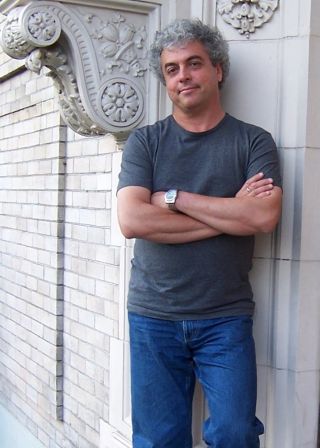
Like many musicians who settle away from their homeland, Santos Neto has found that his connection to Brazilian music seems to grow deeper the longer he’s away from the country. He sees this partly as a matter of perspective he has gained on Brazil from living outside the country, but also as a result of his exposure to other cultures. He’s collaborated with Indian classical musicians, Native American musicians in Minnesota, a Chinese musician in Vancouver, “playing choro music with the pipa, a Chinese lute, and my own way of harmonizing traditional Chinese melodies, which are beautiful,” he said.
The roots of Santos Neto’s expansive musical vision go back to his association with Pascoal. While he comes across as more professorial than wild man, Santos Neto has absorbed Pascoal’s key aesthetic insight: that divisions between musical styles, as between people, are more a matter of perception than underlying reality.
“Hermeto always said that music is a universal force, and he meant it seriously,” Santos Neto said. “But you have to find your own voice. I grew up in a different generation. I listened to the Beatles and rock, which he never did. But at the same time, I drank so much of his music, it’s always part of me.”