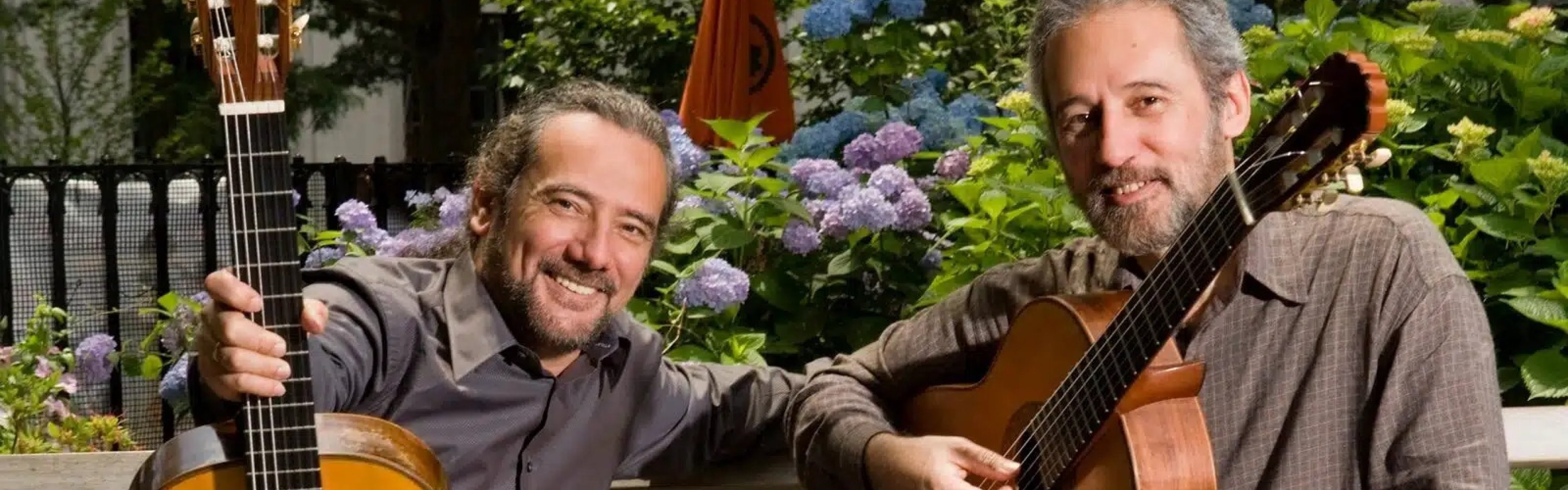
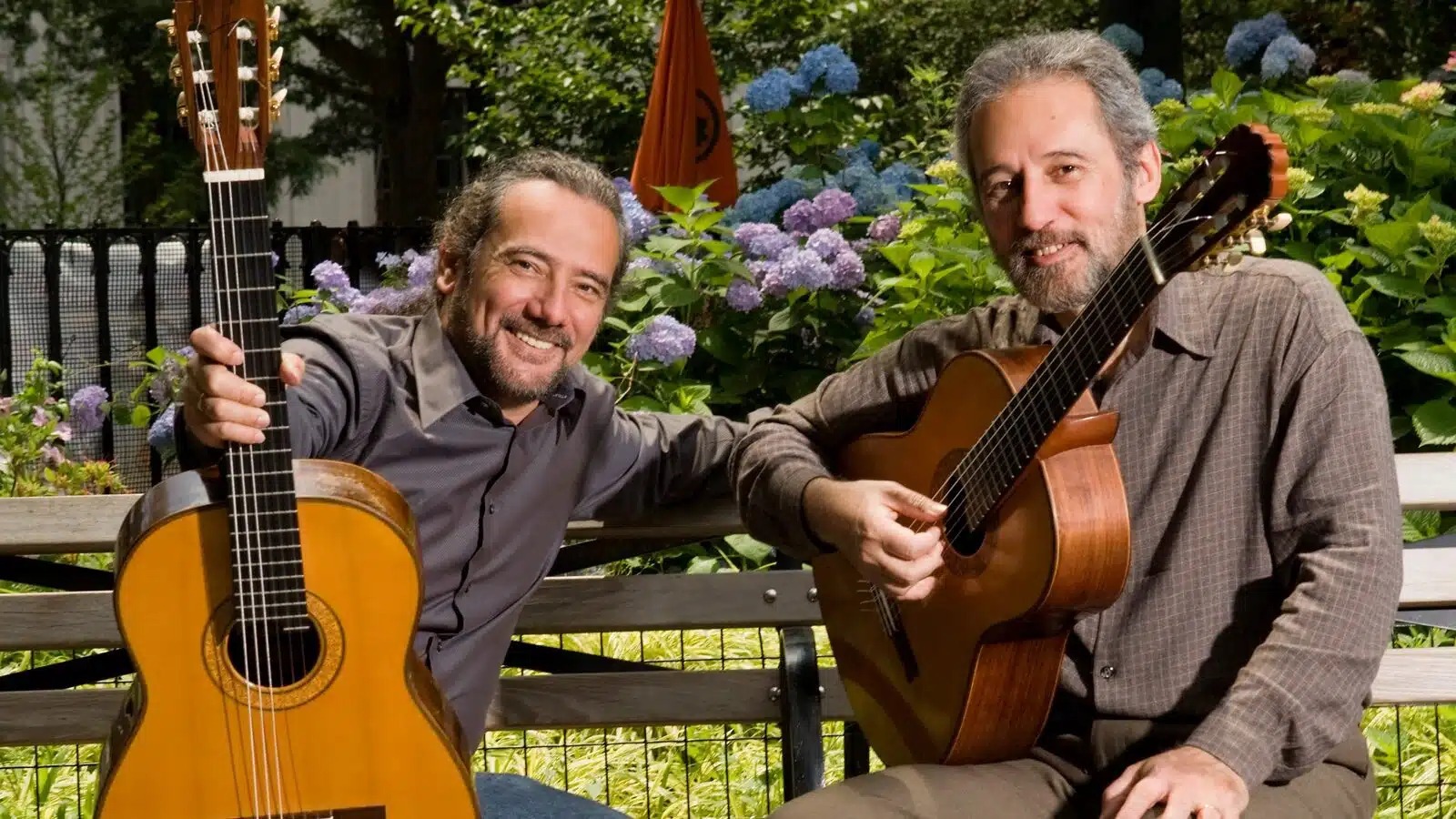
If Andrés Segovia put classical guitar on the international map, then Sérgio and Odair Assad reconfigured the entire musical atlas to reflect their far-flung passions.
To celebrate 60 years of performing together, classical music’s preeminent guitar duo is touring the world over the next year in a farewell sojourn that is set to bring them to California for a run of performances. Among the Golden State destinations are Sonoma State’s Green Music Center, Feb. 27, and an Omni Foundation concert at Herbst Theatre, Feb. 28. The California leg of the tour is scheduled to conclude at the Soka Performing Arts Center in Aliso Viejo on March 1.
“We have been planning on stopping for a while, but we’re committed to places around the globe,” said Sérgio Assad, 73, from his home in New York City. His younger brother, Odair, has lived in Brussels for many years, and hasn’t crossed the Atlantic since before the pandemic. “This was the perfect time to come to the U.S., and he’s probably not coming back again.”
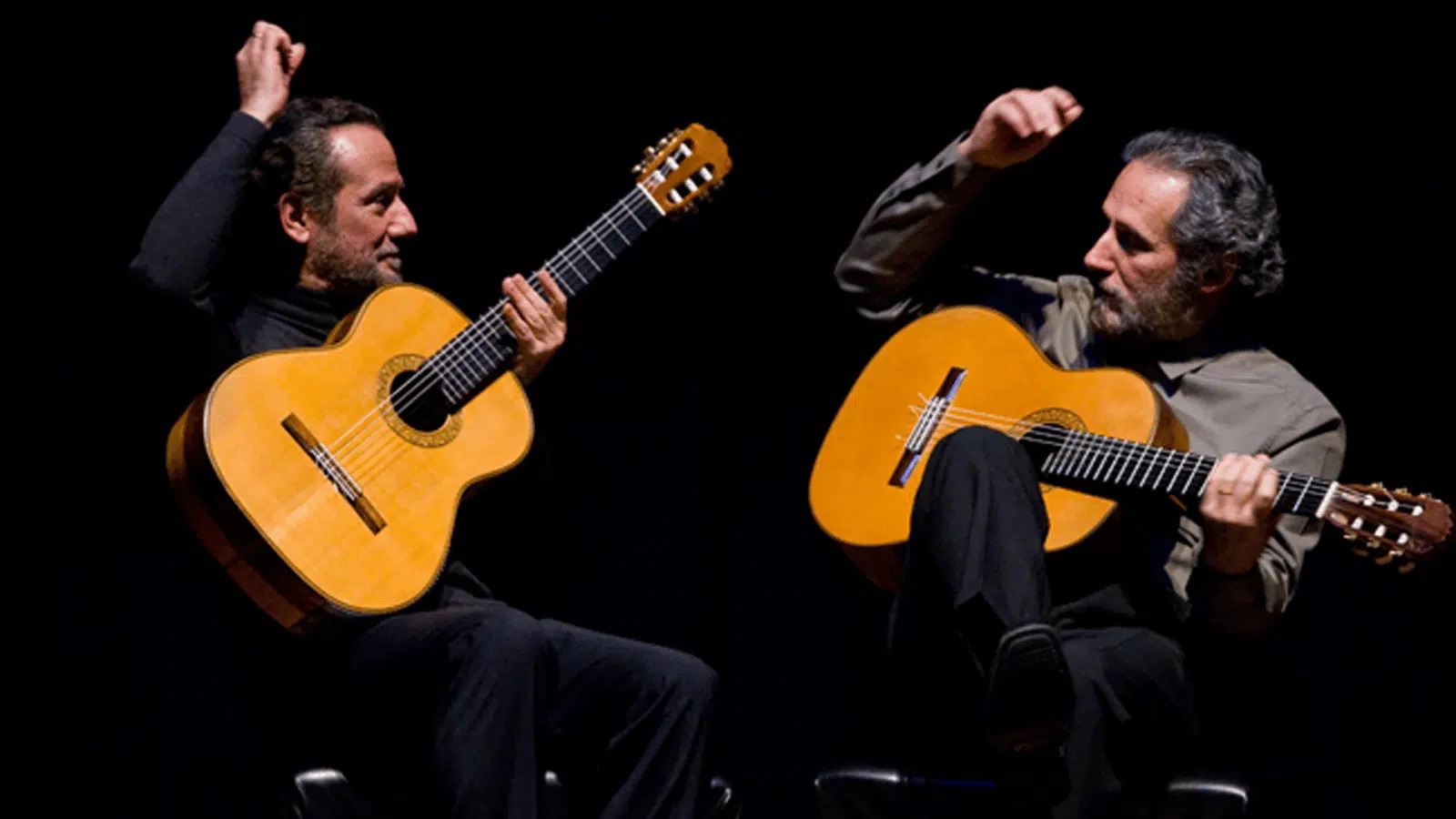
Hailing from a passionately musical family in São Paulo, Brazil, the prodigiously gifted brothers studied under Argentine guitarist Monina Távora after the Assads moved to Rio de Janeiro to facilitate their musical education. One of Segovia’s many disciples and a celebrated performer, she was also a dedicated teacher with stringent ideas about the canon. Though the brothers had grown up playing choro and other Brazilian styles with their father, “she would say, ‘you shouldn’t play traditional music,’” Assad recalled.
“We had to trust her,” he continued. “She was Argentine, but when we got interested in [the music of] Astor Piazzolla, she said this is not music for you. The only Brazilian composer she allowed was [Heitor] Villa-Lobos.”
In many ways, the Assads have spent their adult lives breaking out of Távora’s box. Coming of age in the late 1960s, they kept their ears open to a wide spectrum of music, particularly from leading Latin American composers. While Odair was the ostentatiously virtuosic brother, Sérgio leaned into composing and arranging. It wasn’t until Távora returned to Buenos Aires in the early 1970s that he arranged several Piazzolla pieces for the duo.
“I thought it was valid and very good music,” Sérgio said. “We took a risk and put it in the program and realized that was the most interesting material for the audience.”
In the succeeding decades they’ve expanded the repertoire in every direction, mostly via a series of revelatory recordings for Nonesuch. From their deep dive into Baroque keyboard literature on 1993’s critically hailed Sergio and Odair Assad Play Rameau; Scarlatti; Couperin; Bach through their journey across the Roma trail on 2000’s Nadja Salerno-Sonnenberg Sérgio and Odair Assad, the brothers treat the guitar duo as an ensemble with infinite orchestral and rhythmic potential.
They’ve made a point of showcasing the work of Latin American composers like Piazzolla, Cuban guitarist Leo Brouwer, and fellow Brazilians Egberto Gismonte and Pixinguinha. Some of the leading composers of the era have composed music for them, including Piazzolla, Terry Riley, Dusan Bogdanovic, Radamés Gnatalli, Marlos Nobre, Nikita Koshin, Roland Dyens, and Jorge Morel. And Sérgio is a prolific composer himself within and outside of the duo, often drawing inspiration from the wealth of Brazilian music he heard and played while growing up.
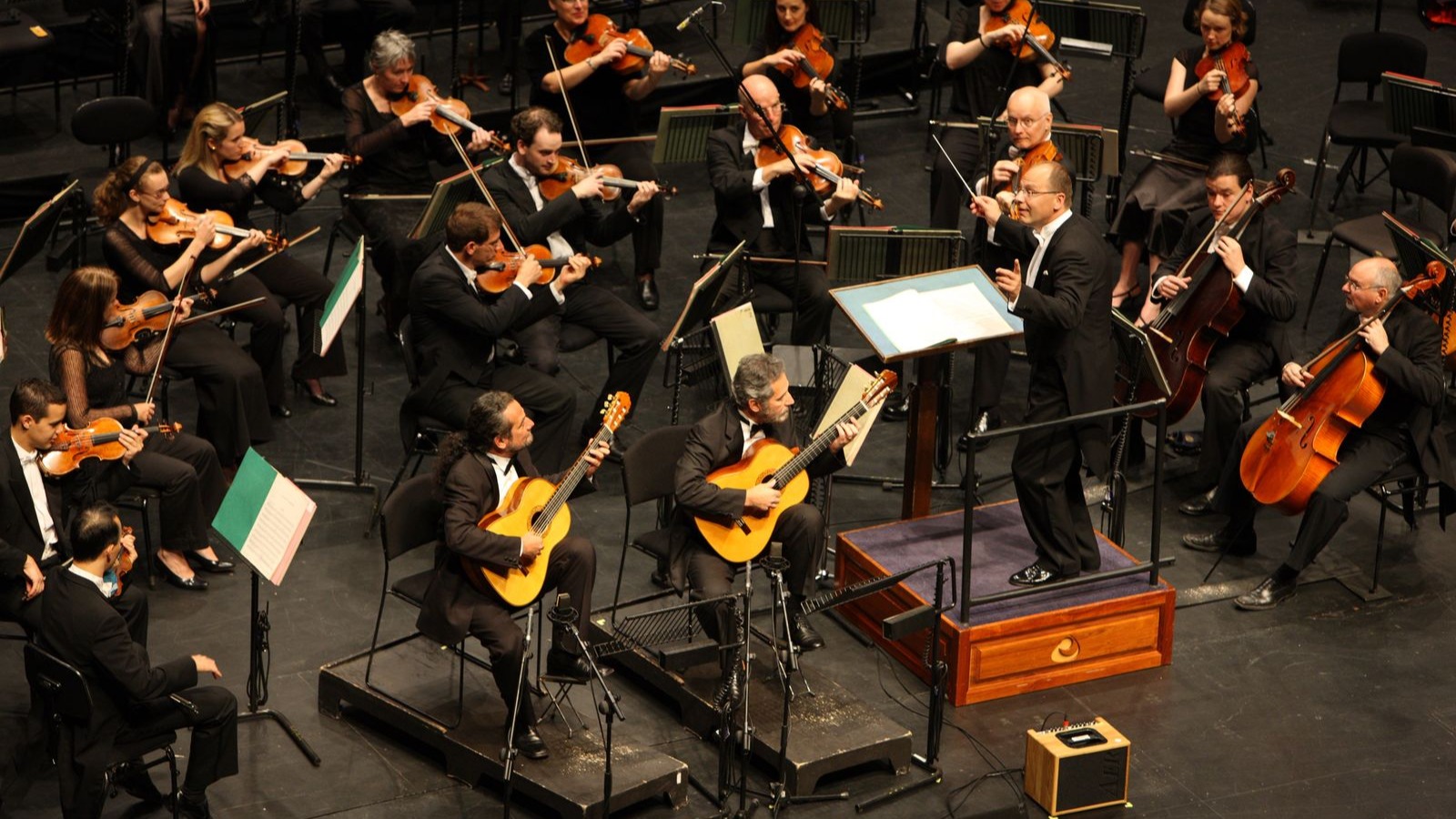
For these California performance dates, the Assads are focusing on “the biggest hits,” Sérgio said with a wry chuckle. “We’ll play the things that are more significant, but at the same time, put out some new pieces.”
Even as the brothers prepare to bid farewell to North American audiences, the Assad dynasty stands strong. Their younger sister, Badi Assad, has blazed her own brilliant trail by infusing cadences of flamenco, jazz and fingerstyle technique to an already verdant palette of Brazilian rhythms and melodies. And Sérgio’s daughter, pianist and vocalist Clarice Assad, is a prolific Grammy Award-nominated composer who has been commissioned by a bevy of leading ensembles.
Last Saturday, Takács Quartet premiered her string quartet piece Nexus at the University of California, Berkeley’s Zellerbach Hall. And in the coming weeks Sphinx Virtuosi, an 18-piece conductor-less chamber orchestra of top Black and Latino musicians, performs her work “Impressions” across the state, starting at the UC Davis’s Mondavi Center March 5 and finishing at the Colburn School in Los Angeles March 15.
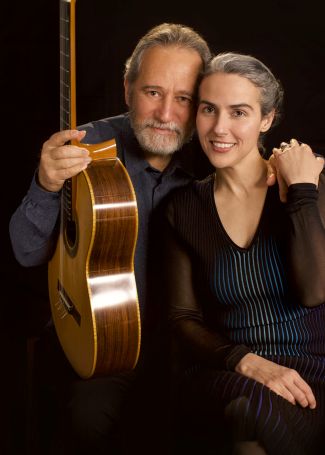
Clarice started collaborating widely with Sérgio after she moved to Chicago about a decade ago. He’d joined his wife, astrophysicist Angela Olinto, in the Windy City, where she was a professor at the University of Chicago. When Olinto was appointed Columbia University Provost in 2024, they relocated to New York City, though his deep ties to the Bay Area, forged during his tenure on faculty at the San Francisco Conservatory of Music, remain strong. Returning to the Bay Area with Odair marks a beginning as well as an ending.
Even after all these years, the Assads are breaking new ground. They’ve recorded their first album focusing exclusively on Sérgio’s original compositions, including several pieces written during the first two years of the pandemic.
“I wrote a good deal of music,” he said. “A lot of people have been attracted to music I write. It’s been played by many people, and that’s encouraged me to write more. Recently the image of myself writing music, that’s becoming more predominant.”
For the tour, the duo plans to present several recent works, including One Week In Rio, which is made up of seven short pieces capturing the feel of different locales, and a three-movement homage to the late French guitar genius Roland Dyens featuring a mélange of his musical calling cards, from jazz standards to French songs.
For the Assads, saying goodbye wouldn’t feel right without offering something new.