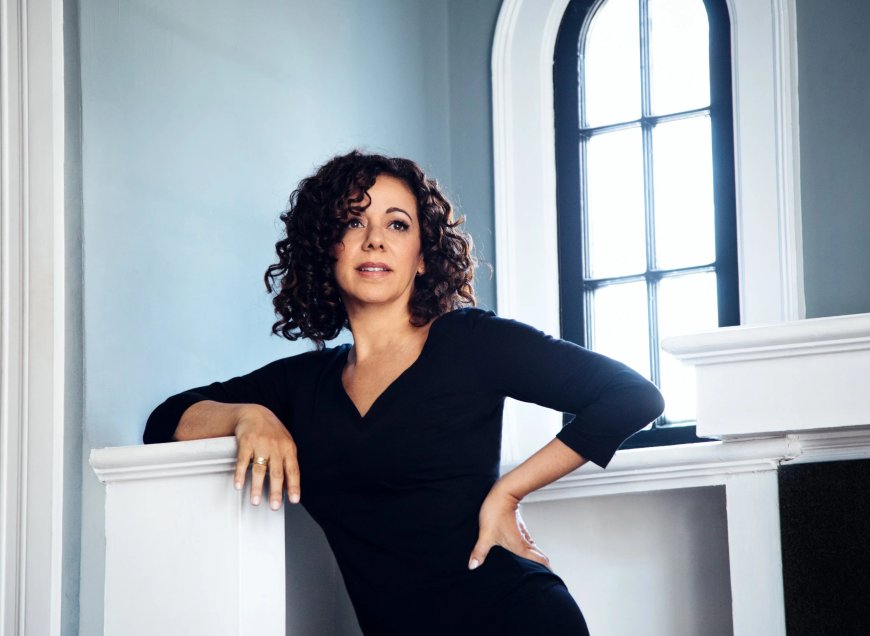
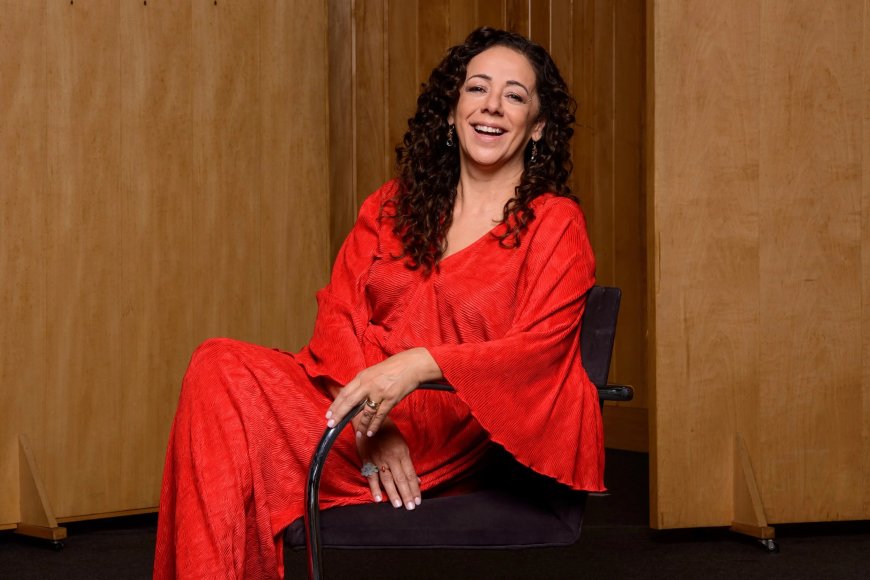
Luciana Souza is an artist who thrives in extreme settings.
Since moving from São Paulo to study jazz at Berklee College of Music in 1985, the Brazilian-born jazz vocalist has earned international renown.
She won a Grammy for her contribution on Herbie Hancock’s 2007 album of the year, River: The Joni Letters, and received seven additional Grammy nominations.
As a composer, she created an expansive catalog of songs by setting works by a far-flung constellation of poets to music. In performance, she is drawn to intimate duo settings with celebrated Brazilian guitar greats, including Romero Lubambo, Toninho Horta, and Chico Pinheiro.
But Souza, who earned a master’s degree from New England Conservatory, is equally at home in orchestral settings. She performed two monumental works by acclaimed Argentine composer Osvaldo Golijov with both the Los Angeles Philharmonic and Brooklyn Philharmonic orchestras. She has also sung Manuel de Falla's El Amor Brujo with the Atlanta Symphony under Robert Spano, and with the New York Philharmonic under Roberto Minczuk.
The singer’s most recent Bay Area appearance was at Stanford Live in 2023. She collaborated with a big band and composer-arranger Vince Mendoza, presenting music from their 2020 album “Storytellers,” a ballad-centric project that gleans some of the most ravishing melodies from the Brazilian songbook.
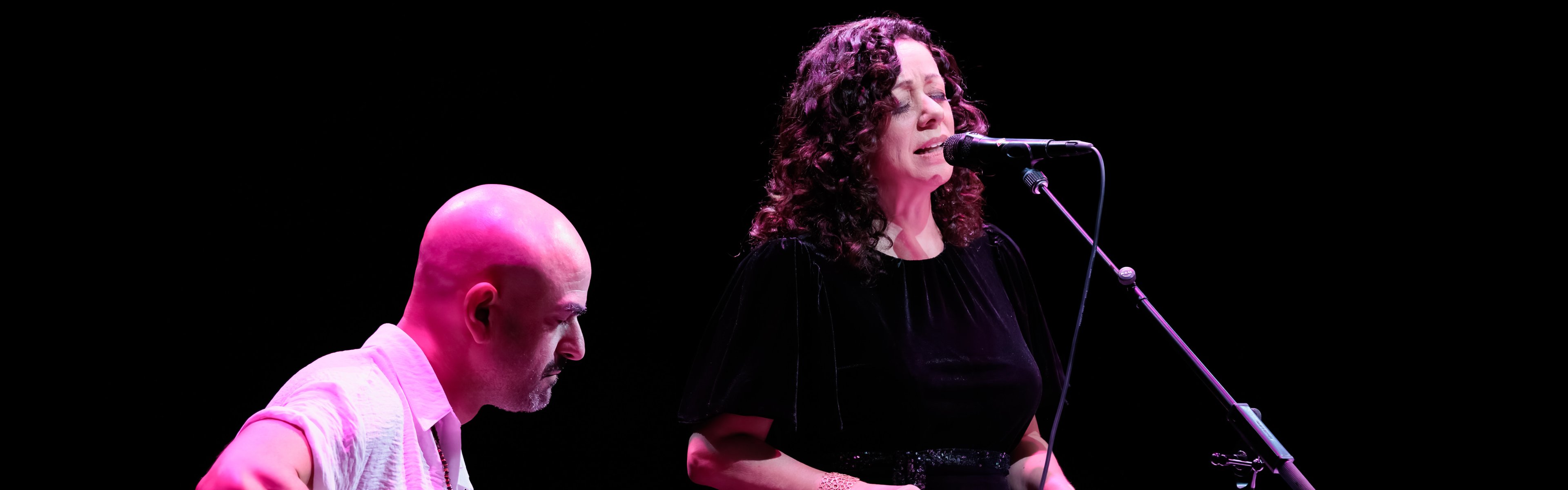
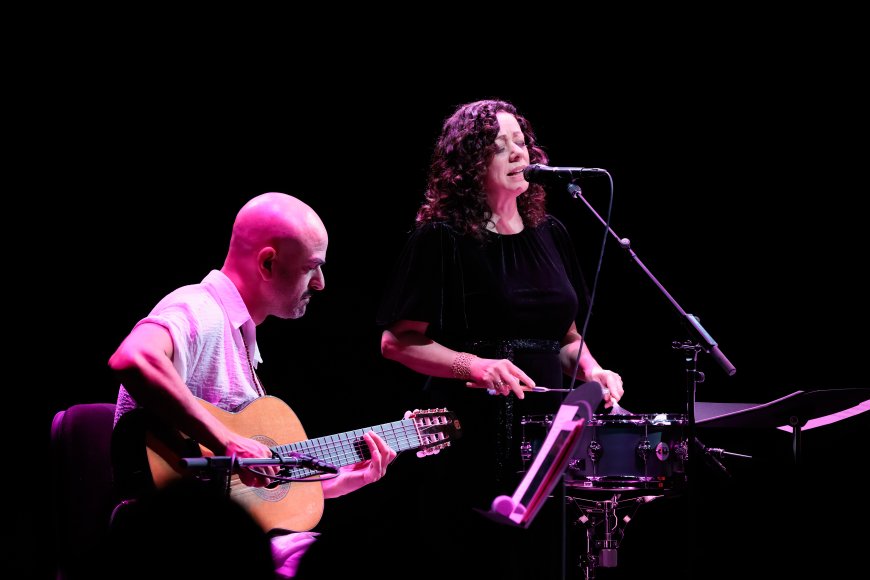
Souza’s latest project “New Moon” lives in a sweet-spot between her duo work and orchestral collaborations. Surrounded by a string quartet and nylon-string guitar by Marcelo Camargo (who, like Souza, is a Paulista living in L.A.), Souza’s lithe, fine-grained soprano shines.
She and Camargo are set to present “New Moon” on June 28 at Dinkelspiel Auditorium as part of the Stanford Jazz Festival. They will also perform on June 29 at Santa Cruz’s Kuumbwa Jazz Center.
The strings are led by Livia Sohn, an internationally acclaimed violinist who’s been on faculty of the Music Department at Stanford University since 2005. Souza brought her into the project after a year of exchanging voice memos and phone messages with Camargo across the L.A. basin.
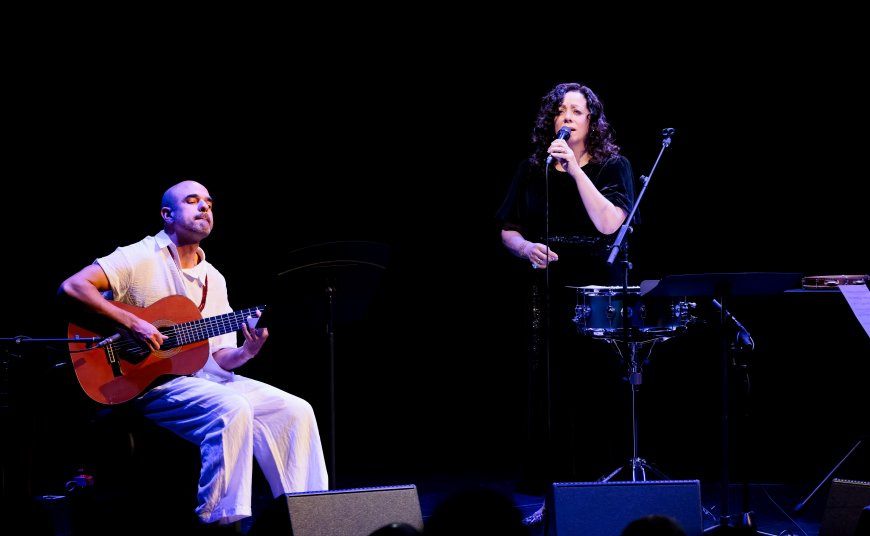
“He has this incredible connection to jazz and improvisation, but [also] this infusion of Brazilian rhythm and culture,” Souza said of Camargo. “We connected on this thing that moves us the most, Brazilian music.
“[On] three or four pieces that Marcel arranged, the strings are really playing as the band. It’s a very chamber-like project, but not in a classical music sense. It’s just the nature of strings, and you’re wrapped in these gorgeous sounds.
Camargo has carved out a fascinating career in L.A. as an accompanist, songwriter, and arranger for artists like Michael Bublé and Gretchen Parlato — he co-produced and arranged Parlato’s Grammy-nominated 2021 album Flor.
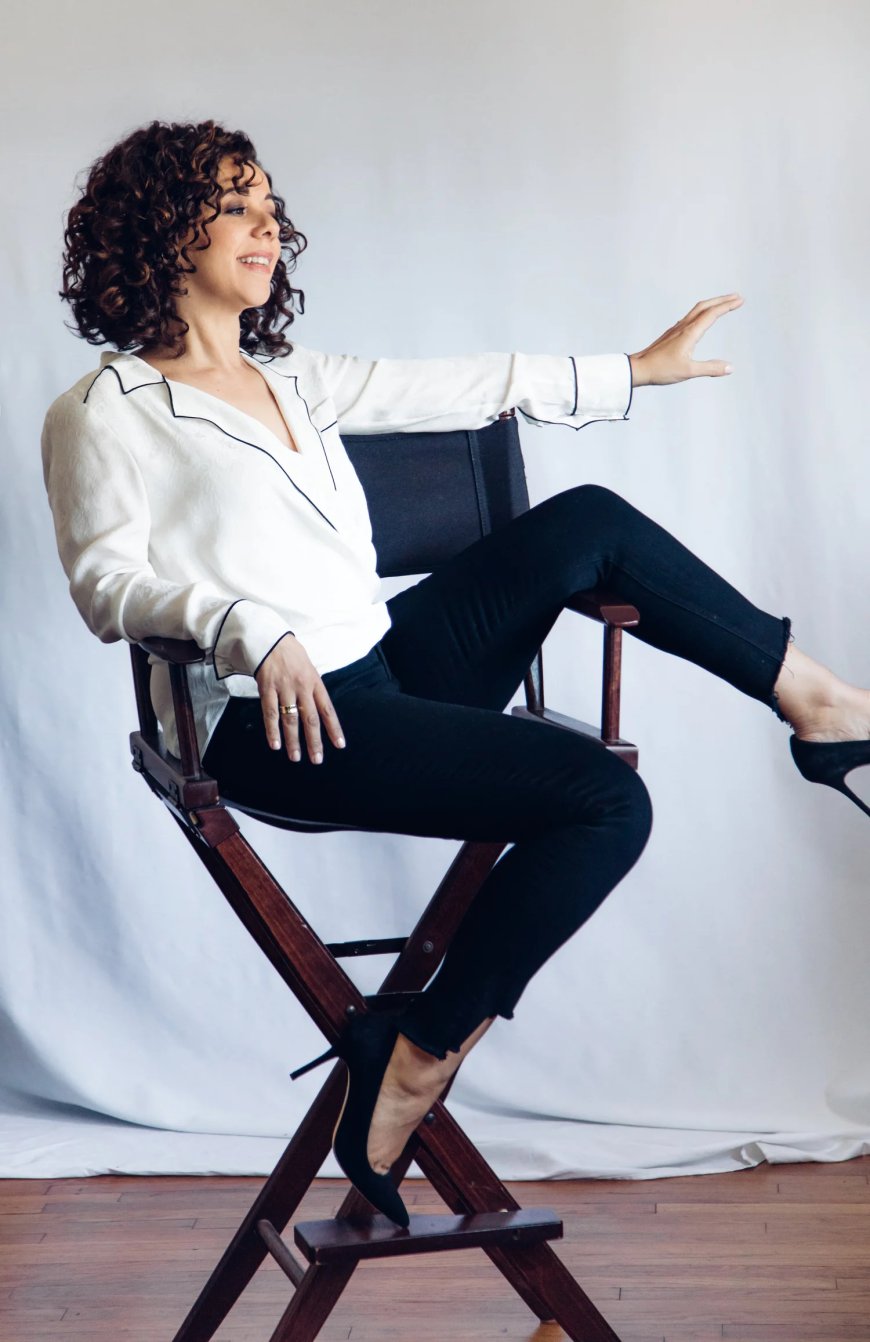
Born in São Paulo, he moved with his family to San José in the early 1990s and graduated from Lynbrook High School. He studied classical guitar with John McCrea, “who was super influential early on, in terms of introducing me to the Bach Sonatas and Partitas that I still work on today,” he said.
During his first years in San Jose, Camargo avoided listening to Brazilian music because “it made me miss home too much,” he recalled. But he found solace and stimulation under the wing of South Bay pianist Smith Dobson.
The late, beloved jazz patriarch invited him to sit in regularly at Garden City, where he directed a lively jazz series for two decades, “encouraging me to not play the fake book and use my ear,” Camargo said. “Smith made a huge impact on me.”
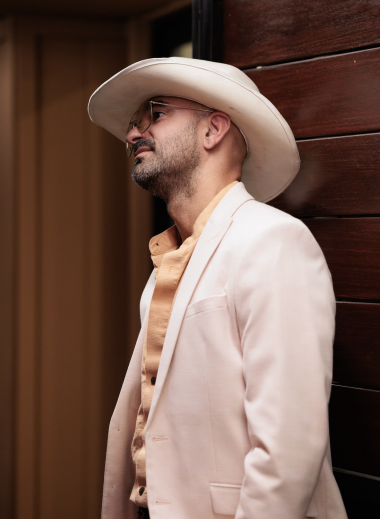
He went on to study jazz at UCLA with Kenny Burrell, Gerald Wilson, and Anthony Wilson. After relocating to New York City in 2002, Camargo spent a year working with trumpet great Tom Harrell and contributed to his 2003 album Wise Children.
He vividly recalls seeing Souza perform with Romero Lubambo in New York. Years later, after Camargo moved to LA, he reached out to the singer on Facebook, hoping to arrange strings for her. But it wasn’t until they met face to face in 2023 at Sam First — a leading L.A. jazz club — for a series of concerts celebrating the legacy of Wayne Shorter that a collaboration was born.
Their repertoire reflects Souza and Camargo’s shared love of MPB — an umbrella term for experimental popular Brazilian music of the 1960s. Their catalogue includes arrangements of songs by Caetano Veloso, Gilberto Gil, and João Donato, and pieces by Brazilian jazz great Hermeto Pascoal and Jobim. The duo also have several original songs that they composed together.
Emotional transparency has long been a hallmark of Souza’s music, both as a composer and a curator of lyrics drawn from a fascinating array of poets. It’s a practice that reached an apotheosis on her 2018 album The Book of Longing (Sunnyside), which borrows its name from Leonard Cohen’s 2006 book. A strikingly beautiful session of ballads and bossa novas, the project features Souza’s settings for verse by Cohen, Edna St. Vincent Millay, Emily Dickinson and others, building her previous verse-centric projects like 2000’s The Poems of Elizabeth Bishop and Other Songs and 2004’s Neruda (both on Sunnyside).
As the daughter of poet and songwriter Tereza Souza, and foundational bossa nova guitarist, singer, and composer Walter Santos, she was weaned on poetry and music. However, the singer was slow to realize she was pursuing the family business. It was only in her early 50s that she came “to see the foundation and roots buried very deeply in me,” Souza said.
With “New Moon,” Souza and Camargo tap into a related creative wellspring, reimagining and expanding the shimmering skyscape of Brazilian melodies.