The best jazz festivals take full advantage of a setting, drawing on and focusing the music’s creative energy by putting artists and audiences in a landscape that amplifies the possibilities for connection. It can be urban, like San José’s Summer Fest, which activates the bustling venues and open spaces around downtown’s central plaza, or bucolic, like the way the Monterey Jazz Festival inhabits the oak-shaded Monterey County Fairgrounds.
The crackling synergy between the artists and venues helps make the Healdsburg Jazz Festival one of Wine Country’s flagship cultural events. Now in its 28th year, Healdsburg’s lineups have consistently lifted it into the top ranks of the nation’s jazz festivals. Catching the final weekend of the 10-day series, which ran June 12–21, offered up one intoxicating set after another.
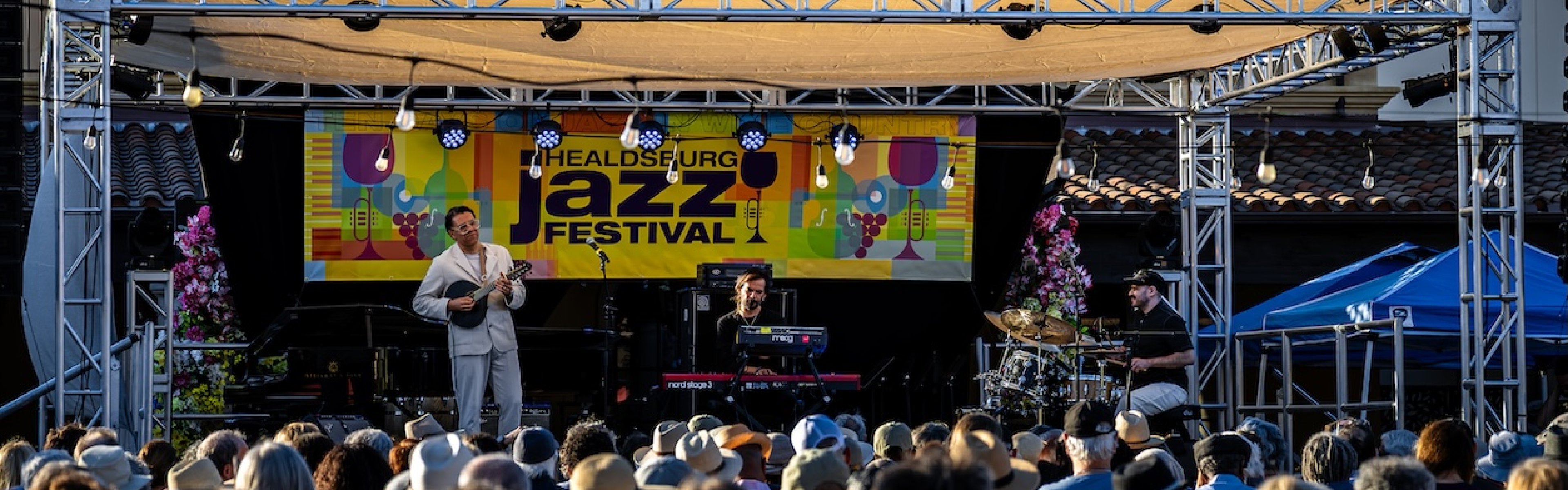
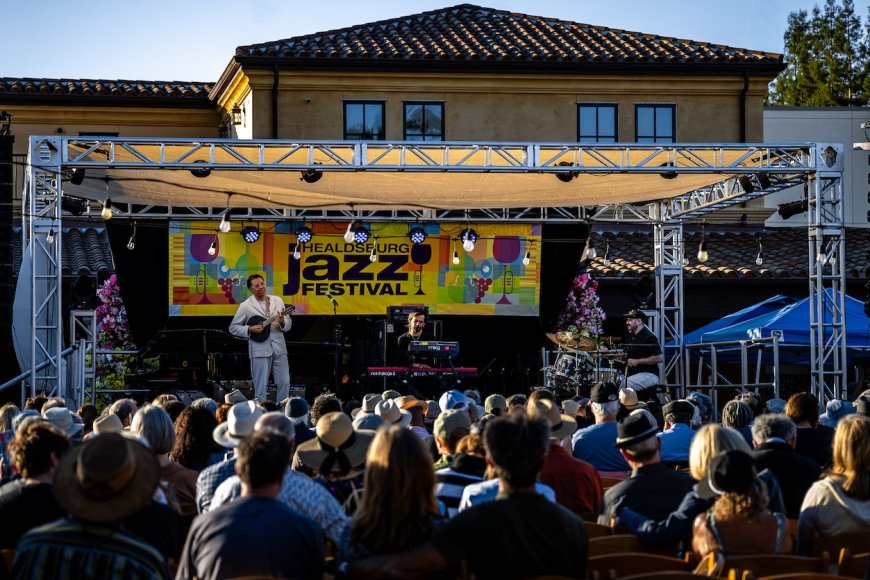
KCSM DJ Greg Bridges presided over the stages with relaxed authority while the festival’s artistic director, bassist-composer Marcus Shelby, gave frequent and effusive shoutouts to Healdsburg Jazz’s founder Jessica Felix. The afternoon shows took place in the Paul Mahder Gallery while the evening programs were held outdoors at Bacchus Landing, a plaza surrounded by a half-dozen tasting rooms run by local wineries.
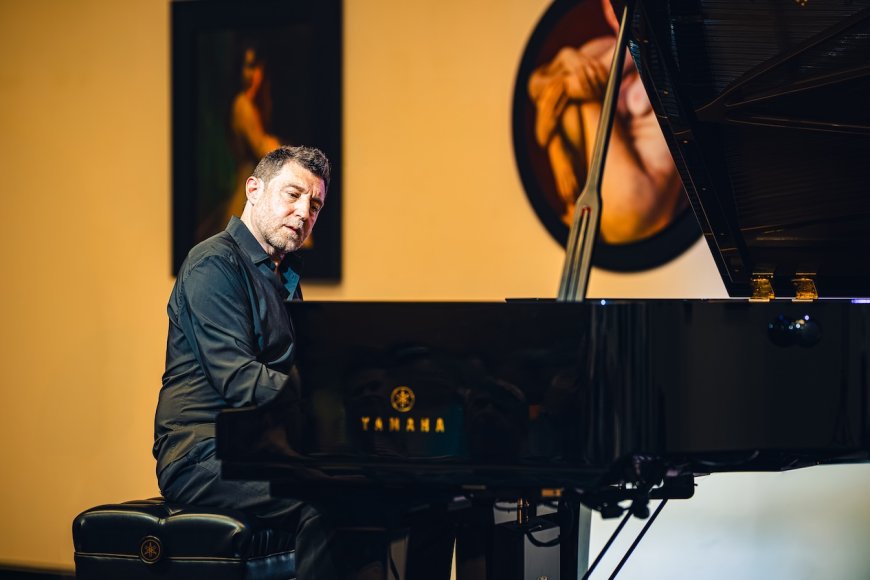
Pianist Benny Green’s solo recital Saturday afternoon provided an ideal entry point, delivered with his typically ebullient virtuosity. Alternating between original pieces dedicated to his mentors and deep cuts by masters like Horace Silver (a blazing romp through “Virgo”) and Oscar Peterson (a soulfully elegiac take on “The Fallen Warrior” that he dedicated to the late guitarist Russell Malone), Green again showed that he’s at his most rakishly individual when referencing the idiosyncrasies layered into jazz’s modernist mainstream.
His piece “Cedar Would” for the late pianist-composer Cedar Walton viscerally evoked his fellow Art Blakey graduate’s warm harmonic language and effortless-sounding swing. He introduced Tadd Dameron’s languorous “If You Could See Me Now,” by noting that it was Blakey’s favorite ballad.
Closing the set with Duke Ellington’s “Love You Madly,” proclaimed with resounding block chords, Green made jazz feel as contemporary and urgent as the expertly curated works in the gallery.
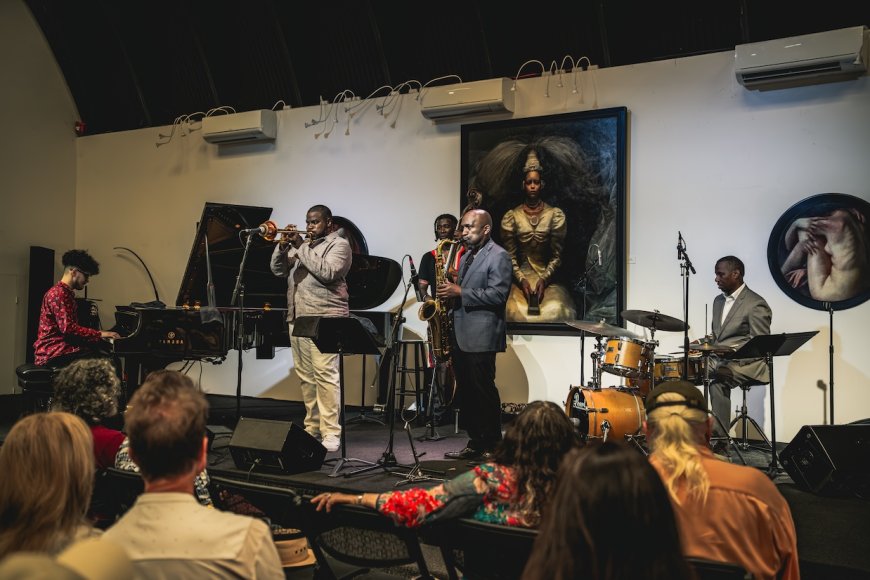
The Paul Mahder Gallery, an expansive space that serves as something of a mini-performing arts center where Jessica Felix presents jazz concerts throughout the year, also hosted Sunday afternoon’s tribute to Miles Davis, which was led by New York drummer Willie Jones III. His quintet reunited him for the first time in three decades with Shelby and tenor saxophonist James Mahone, bandmates from the Los Angeles hard-bop combo that launched their careers, Black Note. The combination of nostalgia and exquisitely calibrated hard bop made for a walloping performance.
Tyler Bullock, an impressive young player who graduated from Juilliard last year, held down the piano chair with brio. Trumpeter Jeremy Pelt, the featured soloist, sounded magnificent playing open horn and, a la Miles, making expert use of his Harmon mute. It was a tight, concise set opening with a punchy arrangement of Tadd Dameron’s “Tadd’s Delight.” With the muted bell of his horn pressed right up against the microphone, Pelt distilled the Tin Pan Alley standard “Bye Bye Blackbird” (first recorded a century ago) with taut lines, more steely than Davis’s famously eggshell tone.
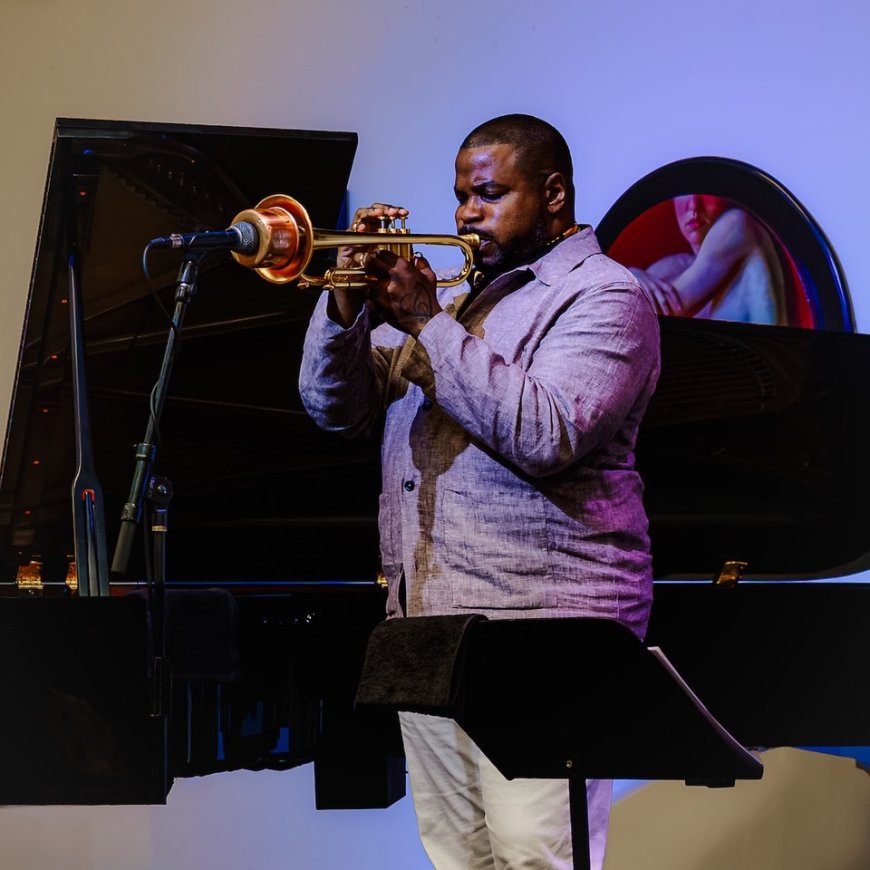
Three of the band’s six tunes were by alto saxophonist Jackie McLean, whose formative relationship with Davis from 1951–55 introduced a bevy of steeplechase standards. On his own gigs, Pelt plays mostly original compositions, and it was revelatory to hear his fat, emotive tone on scorching pieces like “Little Melonae” and the closer, “Dr. Jackle,” taken at the breakneck tempo Davis took on his classic 1958 album Milestones.
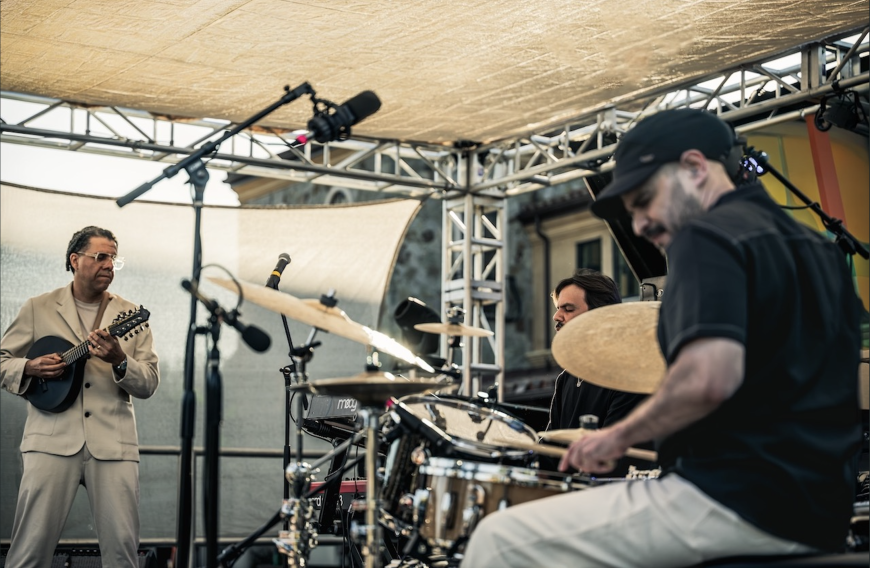
Bacchus Landing hosted an expansive double bill on Saturday evening, starting with a set by Brazilian bandolim master Hamilton de Holanda’s trio featuring keyboardist and Moog player Salomão Soares and drummer Thiago “Big” Rabello. Focusing on de Holanda’s originals, the trio played a richly orchestrated program of Brazilian jazz that offered a kaleidoscopic spectrum of textures, grooves and idioms. Often referencing roots styles, like forró and choro, de Holanda’s playing was spectacularly fluid, whether evoking longing with “Saudade de Rio,” or joyous dance with “Afro Choro.”
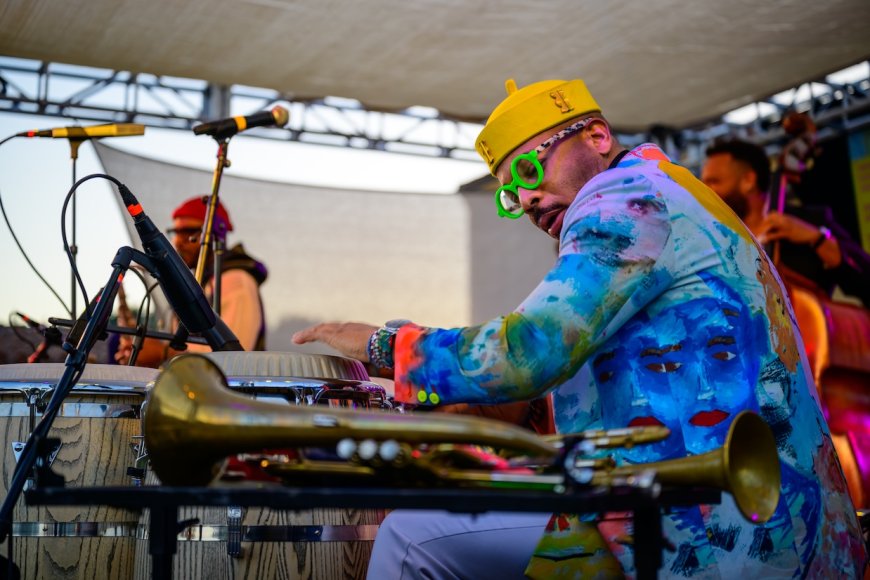
If de Holanda’s trio wove a seamless garment of Brazilian soul, Trinidadian trumpeter Etienne Charles followed with an eclectic program that covered the Caribbean waterfront. From Puerto Rican composer Rafael Hernández’s aching bolero “Silencio,” rendered with poise and precision on flugelhorn, to several pieces from his recent album Gullah Roots, Charles foregrounded jazz’s essentially creole nature. Joined by guitarist Alex Wintz, tenor saxophonist Tivon Pennicott, Congolese/Haitian drummer Harvel Nakundi, Cuban bassist Lino Piquero Bueno and Havana-reared pianist Axel Tosca, Charles was determined to rouse the relaxed-but-attentive audience.
Part of what makes Charles so effective is his embrace of the musician’s role as entertainer, a trumpet lineage that runs through Louis Armstrong, Dizzy Gillespie and Clark Terry. On the great calypsonian Lord Kitchener’s hilarious “Love In the Cemetery” he turned the audience into his emphatic chorus. By the time he delivered an arrangement of Bell Biv DeVoe’s 1990 new jack hip-hop hit “Poison,” most of the audience was on their feet.
The festival closed at Bacchus Landing Sunday night with Cécile McLorin Salvant, a savvy move — pity the act tasked with following an artist who keeps expanding her creative purview in breathtaking style. Accompanied by pianist/keyboardist Sullivan Fortner (another generational talent), bassist Yasushi Nakamura, and drummer Kyle Poole, she opened with her confessional “I Am a Volcano,” one of many pieces in her repertoire that wrestle with her outsize emotions.
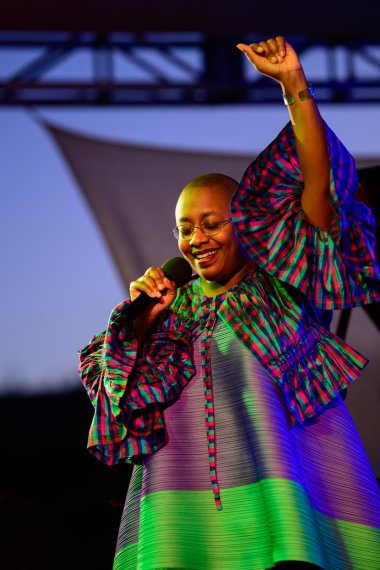
No singer has made better use of Cy Coleman’s songbook, turning “With Every Breath I Take” into a master class on generating tension with dynamics. Similarly, she sang the first verse of “If My Friends Could See Me Now” unaccompanied, leaning into Dorothy Fields’s slangy lyrics and making each phrase pop with Broadway razzle-dazzle. On the baroque arrangement of the Elizabethan “Can She Excuse My Wrongs?” Salvant navigated the coruscating lines with supreme dexterity. Just as she tames the most intricate pieces, she can transform a ditty like Bob Dorough’s zesty “Devil May Care” into an elaborate excursion.
The set’s — indeed the weekend’s — pinnacle was her sweeping version of Paul Simon’s “American Tune,” which felt excruciatingly tailored to the current moment (including Simon’s updated couplet recasting the Mayflower). As the piece ended, the audience was on their feet. Responding to a shouted request, Salvant ended the concert with the title track from her recent album, “Oh Snap,” which segued into the Donna Summer anthem “I Feel Love.” From a meditation on national calamity to an ecstatic disco dance party in the space of a few minutes, Salvant made it seem like anything and everything is possible when a singular artist takes over the right setting.