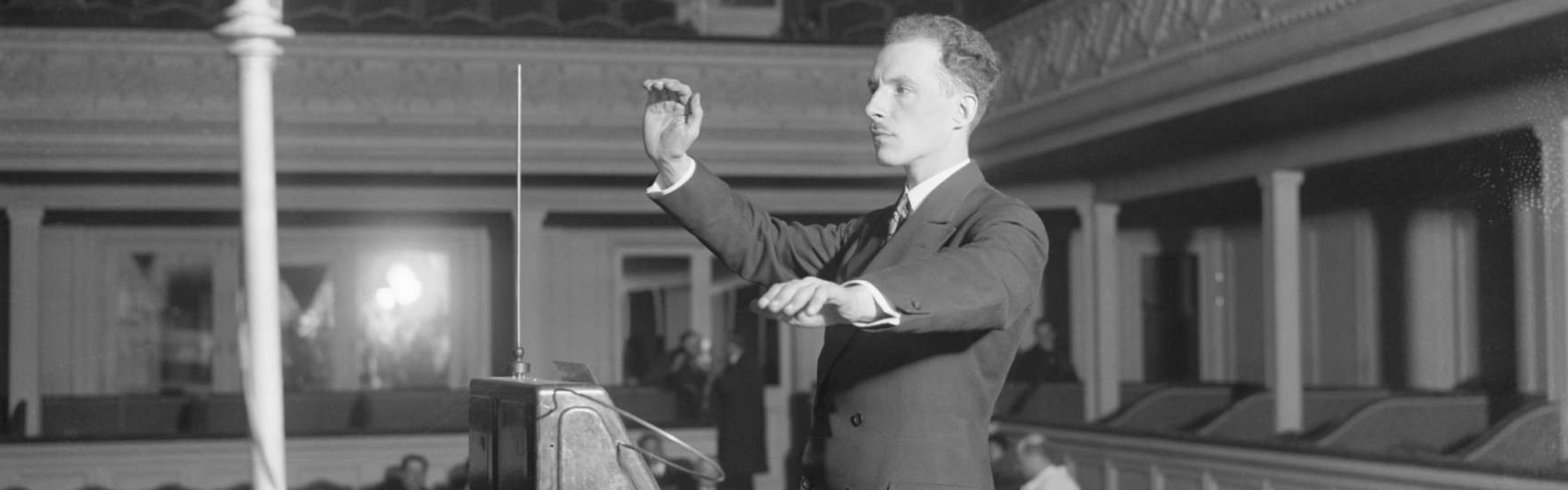
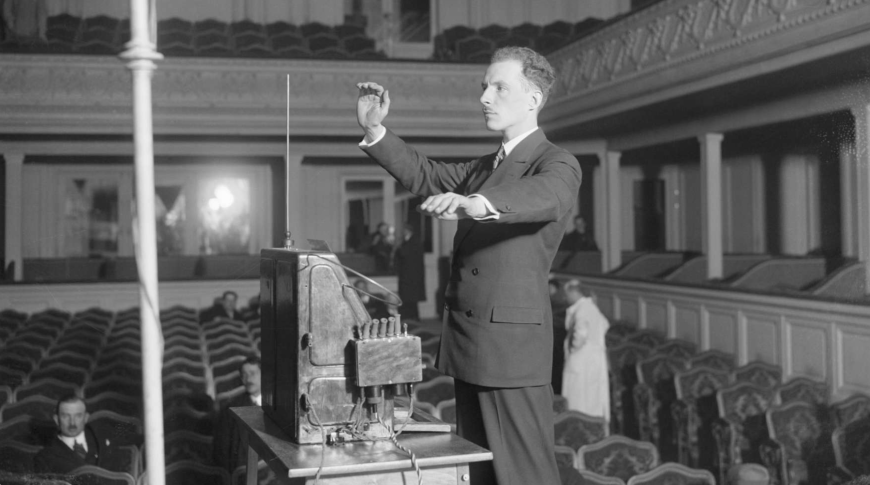
Leon Theremin — inventor of the world’s first electronic instrument — has fans around the world, but what of Mrs. Theremin?
On July 11, you can get to know her story through a piano workshop presentation of the new opera, Madame Theremin, at the SF Conservatory of Music.
Conductor Mary Chun describes the story as one of “race, secret police, women’s rights... timely, yes?” Admission is free, but reservations are required by emailing cablalock@gmail.com.
Kennedy Verrett is the composer and George Kopp is the librettist — the duo received the Opera America New Works Exploration Grant in 2022. The piece has received workshop presentations by Latitude 45 and West Edge Opera.
The opera’s music is described by Chun as “a fascinating Afro-futurist mix of classical grand opera vocalism, Vodou-inspired chants, Afro-Caribbean traditional rhythms, experimental electronics, and cosmic jazz all rolled into one.”
The July 11 presentation, Chun says, is a vocal workshop with piano accompaniment, “but you can get an idea of Kennedy’s sonic world.” Verrett usually orchestrates for a larger orchestra, including the theremin, other electronics, and traditional Haitian drums.
The libretto is based on the true story of Lavinia Williams, a young Black dancer in 1930s Harlem who marries the older, white, Russian inventor, Leon Theremin.
“Their love is strained by a racist society, precarious politics, and artistic frustration,” said the producers, “the unfinished dream of the terpsitone, Leon’s new electronic creation that would allow dancers to make music with their bodies.
“One night at the Waldorf-Astoria, an ugly, racist confrontation with drunken revelers sends Lavinia and actor Noble Washington fleeing into the underground sanctuary of a Vodou priestess, Mama Augustine.
“There, in a powerful ritual, Lavinia is drawn into the spirit world of the ancestors who arrived as chattel on the slave ships. Through trance and dream she witnesses confused visions of the Haitian Revolution — the rebellious slaves, oppressive colonizers, vodou dancers, even a mysterious spaceman who foretells the Blacks' victory.”
That’s just the beginning, near the end of the opera Leon is in Russia, Lavinia dances and fights… and we’ll stop before getting to a spoiler.
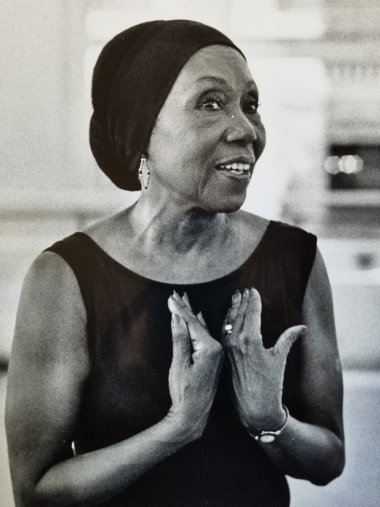
Librettist Kopp told SF Classical Voice:
“What Lavinia Williams and Leon Theremin had in common was an immense curiosity, and a belief that the forces of nature not only could be harnessed creatively, but actually existed for that purpose. ‘The universe has found her voice,’ Leon sings about his mysterious electronic instrument.
“At the same time Leon and Lavinia live in the real world, where racism is rife and war a constant threat. I chose to focus on the excitement of the creative process, the risk-taking, the discovery, and the joy. As our Vodou priestess calls upon the audience at the start of the opera, ‘Loose the knot that binds your being to the certain. Gaze in the mirror, part the curtain.’”
Composer Verrett posted on Facebook:
“Madame Theremin spans three worlds: the real, the unreal, and the surreal. The real: Leon Theremin, the Russian inventor of an electronic musical instrument played without touching it, lived in New York for a decade and married Lavinia Williams, an African American dancer.
“He was ordered back to Russia and then sent to the gulag, while Lavinia went on to open a school of dance in Haiti. The opera takes place on the night of Leon's arrest in 1938.
“The unreal is Lavinia’s imagined journey that night, from a near lynching to an underground sanctuary of ancient African music, art, and religion. Here we encounter the surreal: a vodou priestess descended from personages invented by the artist Frohawk Two Feathers (Umar Rashid), whose critically acclaimed practice depicts an alternate history of colonialism.
“Powerful forces set Lavinia on a new path, but she is unable to save her husband, a victim of ‘progress.’ Through a real and imagined past, this work is a dramatic commentary on our present.”