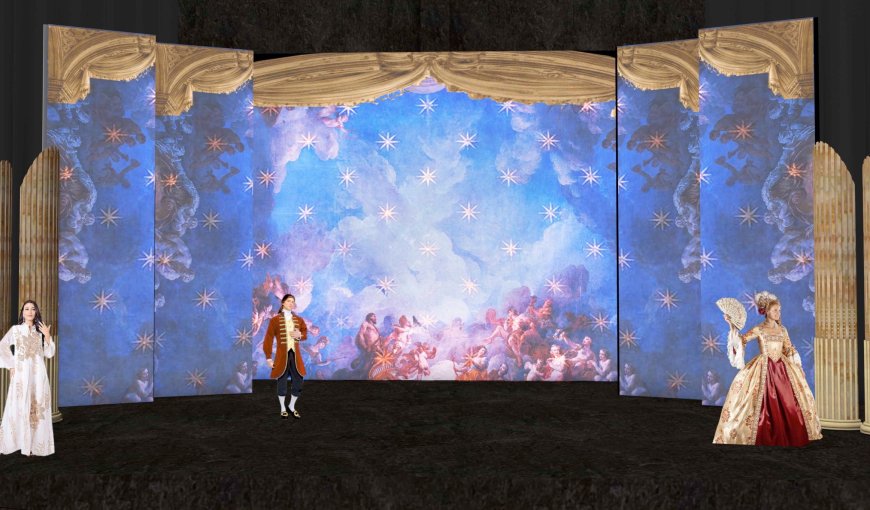
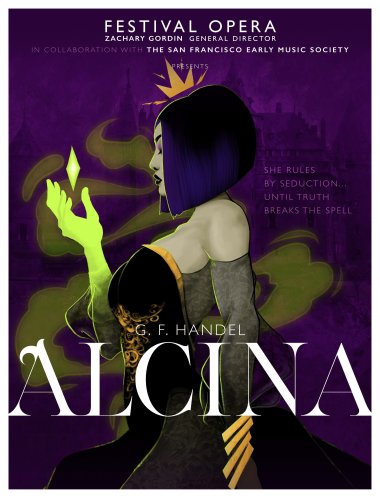
In a first-time collaboration between Festival Opera and The San Francisco Early Music Society, Handel’s Alcina will appear on two magical islands, aka performance spaces.
The production will run from June 13-14 at the University of California, Berkeley’s Hertz Hall, and then travel to the Lesher Center for the Arts in Walnut Creek on June 19 and 21.
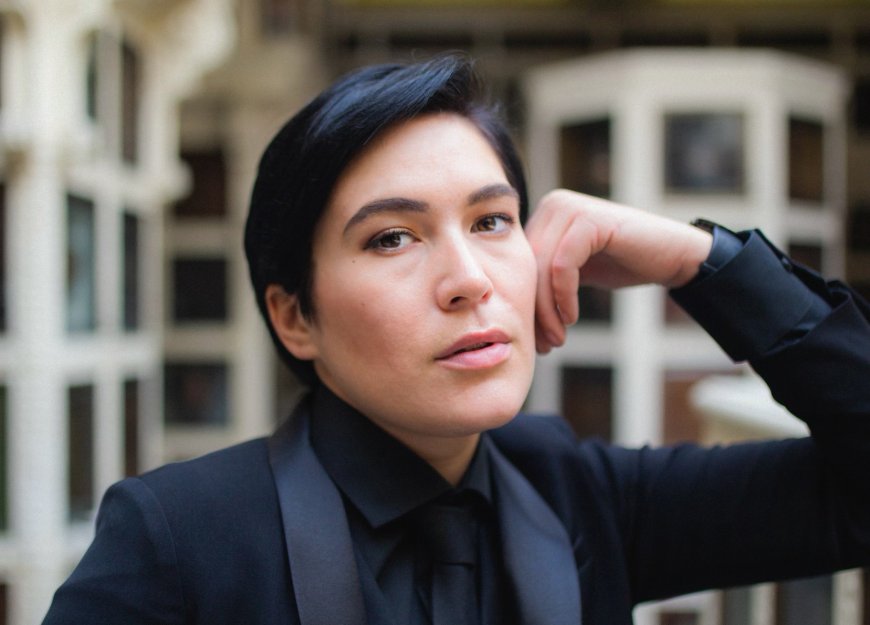
“Inspiration for the operas I produce comes from the sensational artists I work with,” said Zachary Gordin, producer with Festival Opera. His collaboration with SFEMS has been two years in the making. “Casting [mezzo-soprano] Nikola [Printz] in the role of Alcina was obvious. Their vocal abilities and temperament are a perfect fit for what I want this opera to feel and sound like. The entire cast is as good as it gets in their respective roles.”
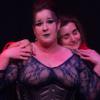
Printz will play Alcina. Mezzo-soprano Courtney Miller will play Ruggiero, a knight under Alcina’s spell, soprano Shawnette Sulker will play Alcina’s sister, Morgana, and contralto Sara Couden will play Bradamante, Ruggiero’s fiancée. Other roles will be sung by tenor Spencer Greene, mezzo-soprano Nina Jones, and bass Isaiah Musik-Ayala.
“The entire cast is singing with their full vocal range, outside of what is usually expected, adding to the musical excitement in this production,” said Gordin.
The just over-20-piece Baroque orchestra is composed of Bay Area and far-flung early music instrumental artists. The pit holds two harpsichords; a theorbo, or long-necked lute; period winds, here oboes and bassoons that sound different than their modern counterparts; and strings, violin, viola, cello, and bass. The strings will also have a different tone because they will be strung with gut strings.
In addition, players will use Baroque bows that are convex in shape and arch outward slightly, rather than arch inwards like modern bows. When such bows are drawn on gut strings, they produce a sound that is warmer and brighter than sounds for modern strings.
As the vocalists sing their arias, audiences should be aware of the ornamentation. These are the notes the singers add to the written score to make the music their own and highlight their special talents.
“Especially look for the cadenzas, which typically come at the end of a movement and add to the climax. They are part of the Baroque tradition of improvisation,” said Derek Tam, conductor for Alcina and executive and artistic director of The San Francisco Early Music Society.
Gordin held coaching sessions with the cast to help tailor ornamentation and interpretation to highlight each artist’s strengths.
“Ideally, the ornamentation should underscore the meaning of the text. That way, each singer can find their character’s individuality, strength, and language,” said Gordin.
Printz said they are excited for this production because of the freedom the vocalists are given.
“We ornament and trill and use the music to show character and gesture in such fun and interesting ways. Alcina is such a fantastic role I never thought I would sing,” Printz said.
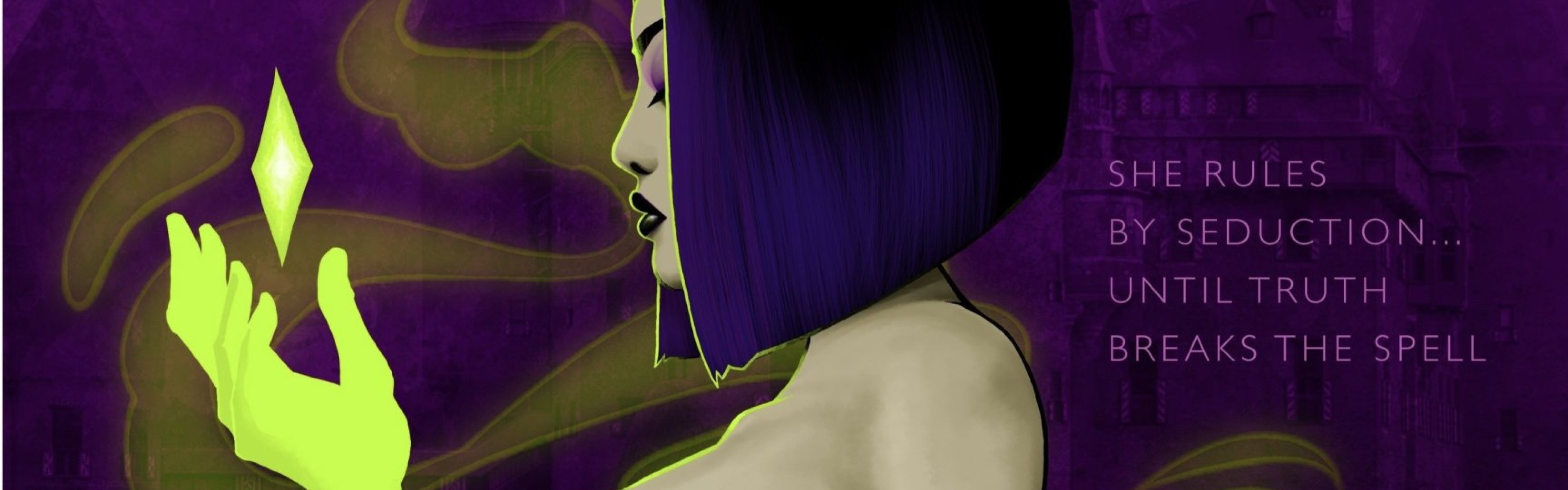
They added that Alcina is a capital “S” soprano role, who is “so tortured, complex, and best of all” a witch.
“She is often modeled after the great Goddess/Nymph/Witch Circe. She manipulates and guards herself so much. When it all falls beneath her, she crumbles. For me she is the protagonist and the anti-hero that the audience wants to root for by the end,” Printz continued.
Tam described the story of Alcina as “quite fantastical,” but not so different from modern superhero stories like those in the Marvel universe.
“There are people in disguise who seek true love and break evil spells. Handel wrote for each singer, to bring out the best in their art,” Tam said.
Tam added that he and Gordin, through their direction, aim to bring Handel’s singers from the 18th century back to life.
“We do so with the recognition and understanding of the personalities and talents of our current cast members. That allows them to make the parts their own,” Tam said.