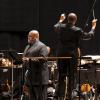

Not long after his arrival in 2024, Oakland Symphony Music Director Kedrick Armstrong got a repertoire suggestion from the symphony’s marketing consultant, Christopher Stager. It was an oratorio, The Ordering of Moses, composed by R. Nathaniel Dett, a virtually unknown Black Canadian American composer.
The 1937 piece caught Armstrong’s attention immediately. He had studied some of Dett’s choral compositions and arrangements in college but had never heard of the oratorio. “How could I not know about this piece?” Armstrong recalls saying. “When are we doing it?”
What Armstrong saw in the score was a 50-minute dramatic work on the biblical story of Moses leading the Israelites from their Egyptian bondage to freedom. Dett’s score for orchestra, chorus, and soloists includes three spirituals: “Go Down, Moses,” “And When Moses Smote the Water,” and “He Is King of Kings.”
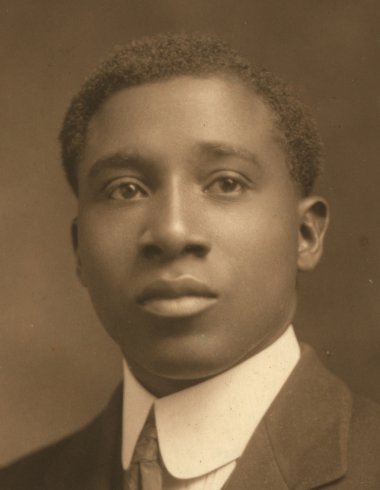
It was no accident that Dett chose a story of slavery to set to music in his largest work. “What the story of Moses meant to African Americans in this country was people needing to be rescued from oppression,” said Armstrong. “It’s the perfect choice for a composer who was trying to reconcile the African American spiritual tradition with European classical music.”
Dett was born in 1882 in Drummondville, Ontario, Canada, and his parents moved the family to the U.S. in 1893. The first Black American graduate of the Oberlin Conservatory, Dett was a pioneer. Besides his skills as a virtuoso pianist, arranger, and composer, Dett also taught at the Hampton Institute in Virginia for 20 years. As a composer, he published more than 200 works, including choral pieces, songs, and four piano suites. He also published a book of arrangements of spirituals.
Dett labored over The Ordering of Moses, his magnum opus, for 10 years and submitted it as his master’s thesis at the Eastman School of Music in 1932. He should have commanded respect with his resume, but was confronted with the reality of racism, most notably during the oratorio’s premiere at Cincinnati’s May Festival in 1937. The festival wouldn’t allow Black musicians to be part of the chorus, which led to the awkwardness of an all-white chorus and soloists singing music about slavery. But things got worse.
During the oratorio’s live premiere on NBC national radio, the broadcast was abruptly cut off 10 minutes before Moses ended. The incomplete broadcast was rumored to be due to censorship, though official reasons cited a scheduling conflict.
Despite this experience, Dett believed in the unifying power of music. In the 1930s, Dett toured with his choirs; in 1943, he became a USO musical adviser, worked with a Women’s Army Corps chorus in Battle Creek, Michigan, and died after a heart attack that October. His oratorio, though, fell into obscurity. In 2014, a live radio performance and recording at Cincinnati’s May Festival and a performance at Carnegie Hall sparked renewed interest in the work.

The Oakland Symphony performance on May 15 will be its Bay Area premiere, and Armstrong believes audiences will take to it. He’s particularly enamored of an orchestral interlude: “It’s some of the most stunning orchestral writing of the 20th century,” he said. The performance will feature soprano Shawnette Sulker, mezzo-soprano Krysty Swann, tenor Terrence Chin-Loy, and bass Kenneth Kellogg as soloists.
Armstrong said the story of Dett’s career and his oratorio is a common one, and so restoring works like this to the repertoire is a special duty. “I take ownership of these works and connecting people today to them,” said Armstrong. “It’s special for me to be able to bring this work to Oakland.”