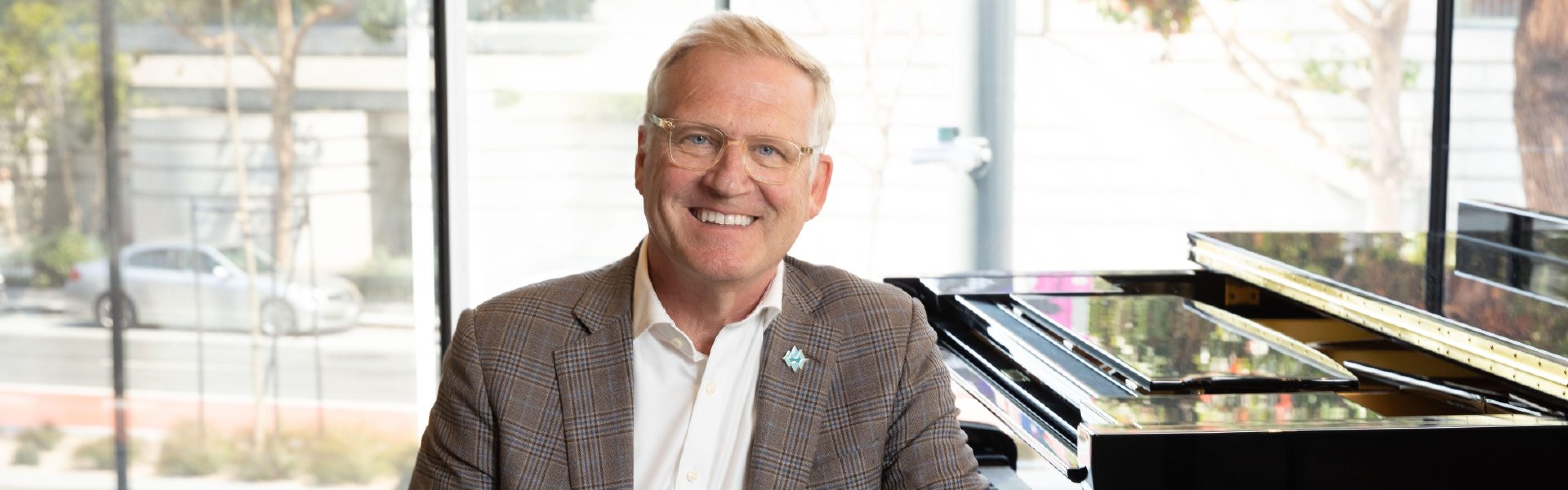
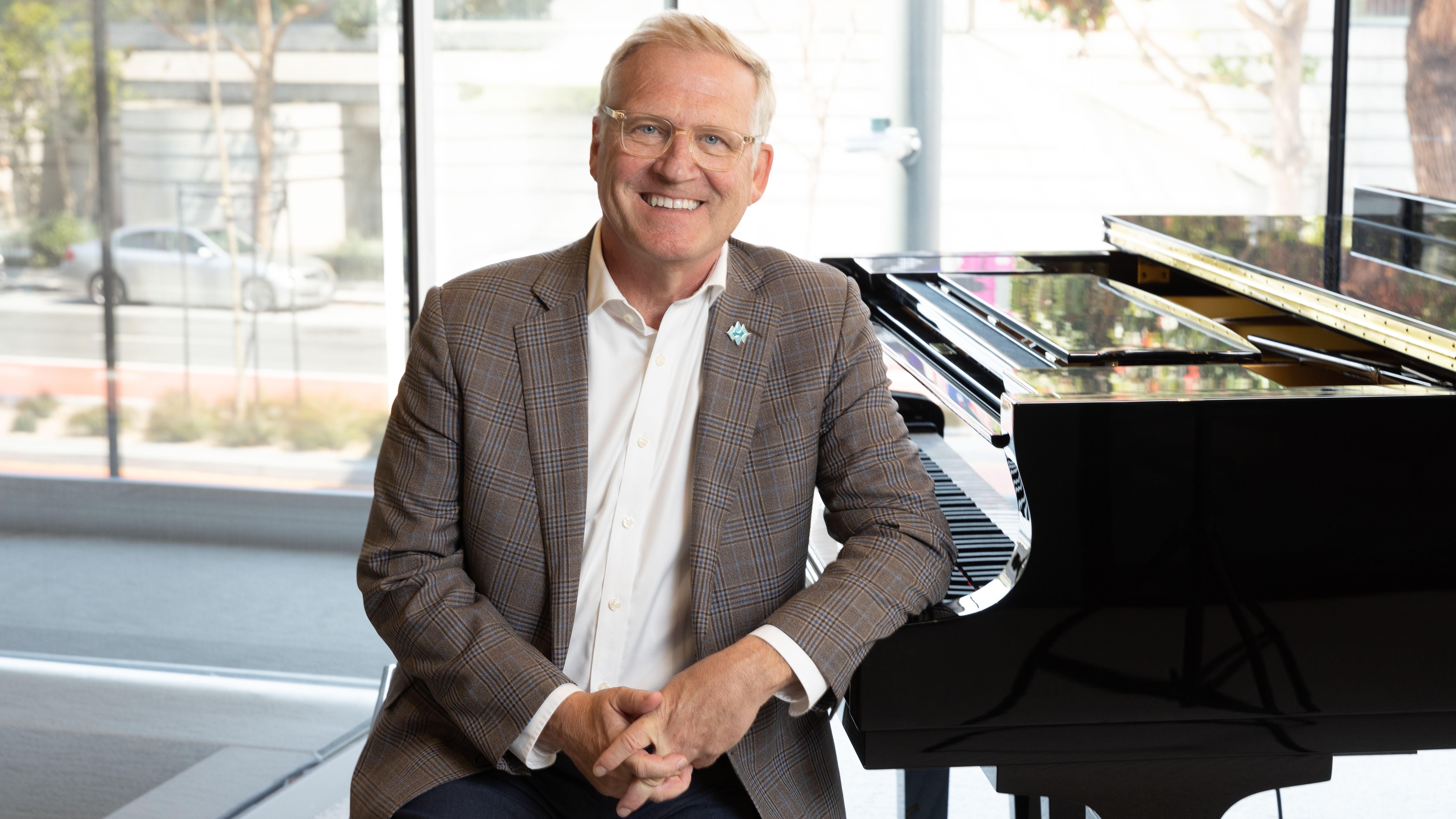
This week, the Classical California network announced the retirement of its president, Bill Lueth, crediting him in large part for its evolution to “the largest classical music radio service in the country,” reaching more than two million listeners.
With colleagues and friends long familiar with his affable humor, Lueth shared this from his Danville home: “I’ve accepted a new position: Mayor of Leisuretown.”
The 64-year-old Lueth has a 38-year history of making hard work in radio look like a long, breezy love affair with music and the media. He played trumpet as a kid and earned a Master’s in Opera Performance at the University of Nebraska while launching his on-air and administrative career at public station KUCV FM in Lincoln.
Lueth continued those roles in 1989 at the studios of erstwhile classical station KKHI FM, in the St. Francis Hotel in downtown San Francisco. When the station got sold to Westinghouse Broadcasting in 1994, Lueth worked as news anchor on that company’s KPIX FM. He joined classical KDFC FM in 1997, helping the station transition from automated to live hosting, and serving owner Bonneville International as vice president of operations and director of innovation and strategic creativity.
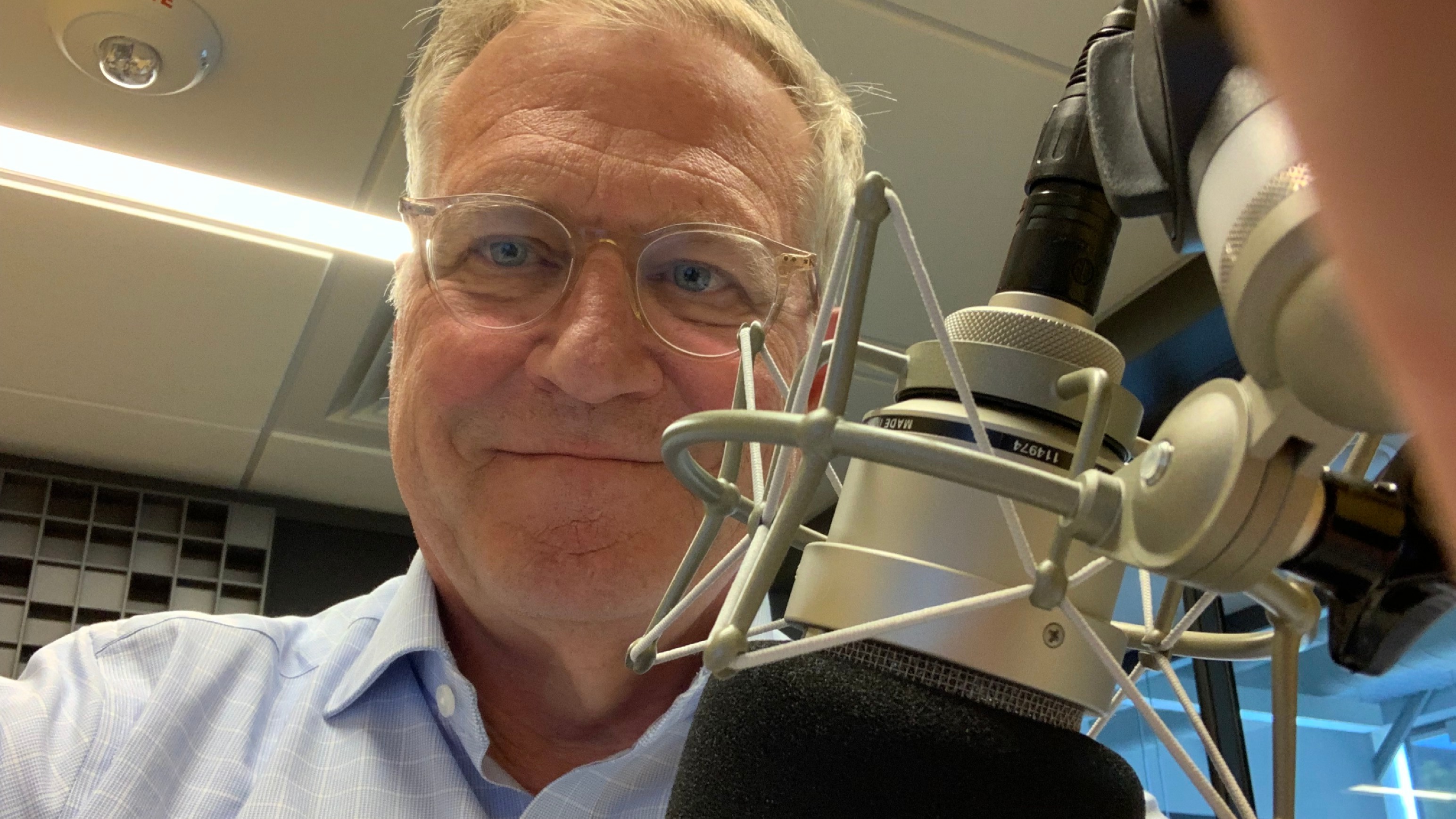
He joined classical KDFC FM as program director in 1997, helping the station transition from automated to live hosting, and serving owner Bonneville International as vice president of operations and director of innovation and strategic creativity. Also the familiar, warmly modulated morning voice of KDFC, Lueth fostered connections with the San Francisco Symphony and San Francisco Opera’s “Opera in the Ballpark” project. In 2008, ownership of the station passed to Entercom Communications, which in 2011 sold KDFC to the University of Southern California, changing its status from commercial to public. “The first feeling you have,” Lueth told SFCV at that time, “is that ‘Your girlfriend doesn’t like you anymore.’”
Lueth was named vice president of the USC Radio Group (which had been operating station KUSC) and president of KDFC, and he characteristically turned a challenge to an advantage over the next 15 years. Absent advertising, revenues were soon in the black, and underwriting grew in both markets, as did support from the public subscription base. Lueth led a $7.5 million fundraising campaign to expand KDFC’s sometimes spotty signal into San Jose and the Silicon Valley. In Southern California, he fostered outreach to youth, some in inner city schools.
By February of this year, with what Lueth describes as “an incredible team effort” under his leadership, KDFC and KUSC were completely integrated, conjointly rebranded as Classical California. The two stations share hosts and programming, expanding beyond broadcast to several streaming channels. Studios and administrative offices are located on the second floor of the San Francisco Conservatory of Music’s Bowes Center, which also hosts the organization’s live concert series.
Reflecting on his listener-friendly legacy in classical programming, Lueth notes, “When KDFC became the number one music station in San Francisco, my friend Joshua Kosman wrote a piece in the Chronicle headlined, “Popularity at a Price.” But we learned that a more welcoming, mainstream approach didn’t shrink our audience, it grew it. Our vision is simple: make every day more harmonious, through the beauty, inspiration, and calm of this music. And keep it free, curated by people, not algorithms.”
“I’ve had the best kind of radio life,” Lueth sighs. “And now, I’m off to enjoy a little more leisure time and fun with my wife Wendy, who’s already retired, two years ago.”
Correction: An earlier version of this article incorrectly stated the beginning of Bill Lueth's employment as KDFC program director, which was 1997.