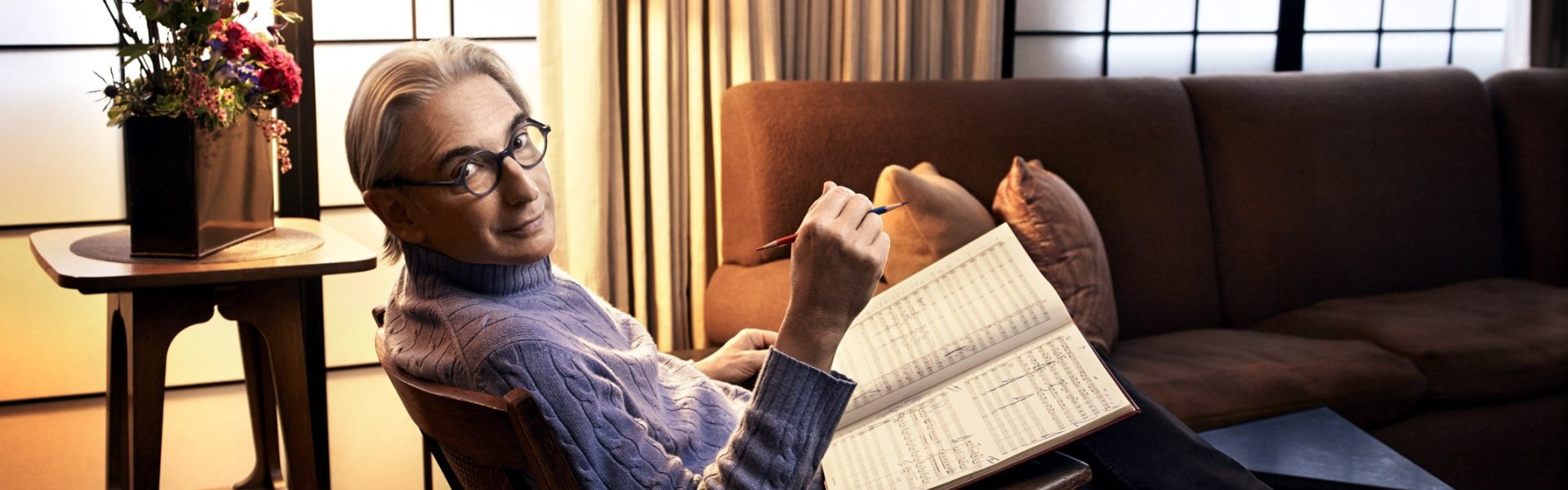
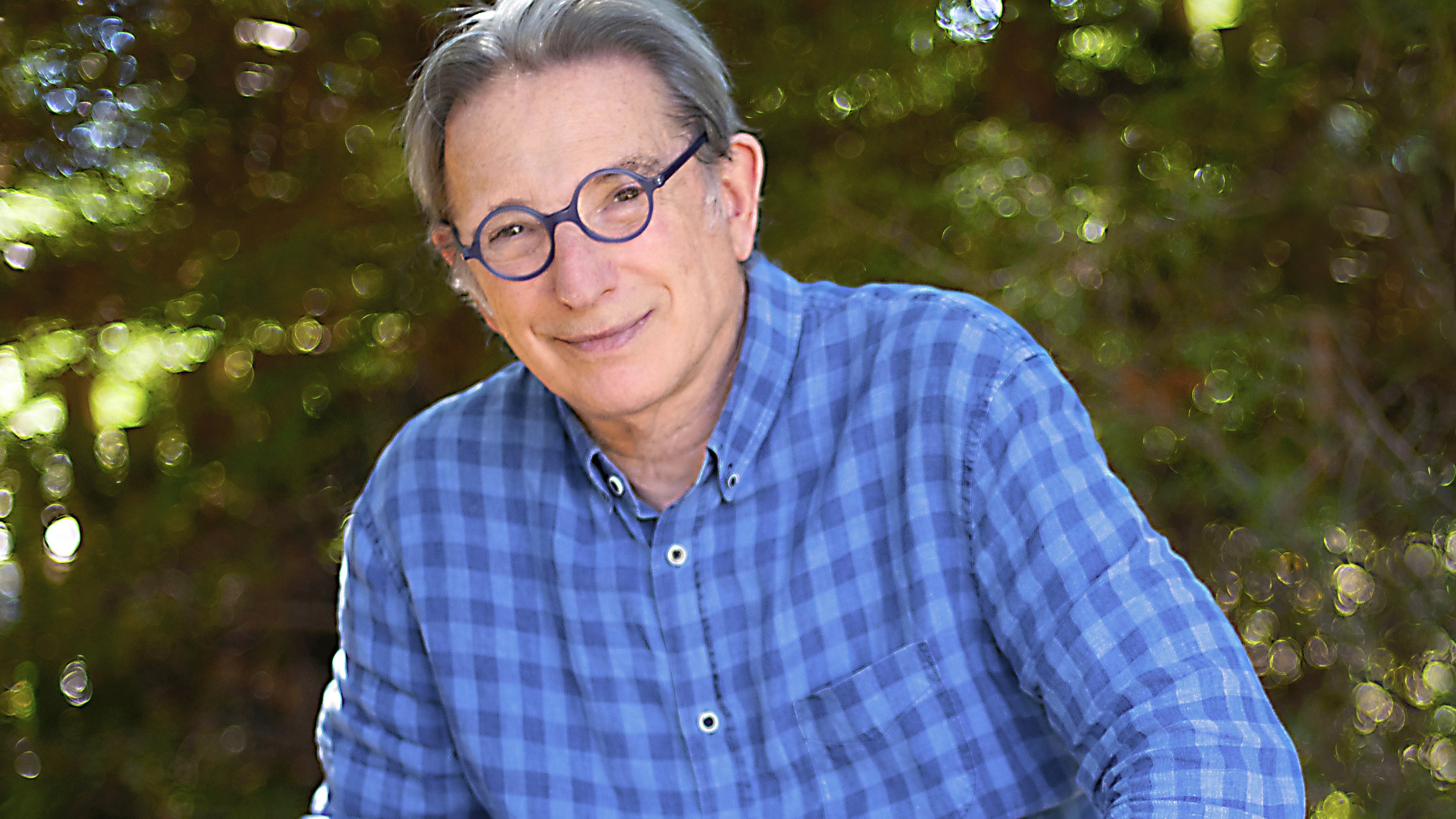
Among the distinguished music directors in the 114-year history of the San Francisco Symphony, Michael Tilson Thomas occupied a special place. Few conductors in recent history had matched his 25-year tenure with a major orchestra or put their distinctive stamp on an organization the way he did.
MTT (as he preferred to be called) died at home on Wednesday, April 22 at age 81, surrounded by family and friends. His death came close to five years after being diagnosed with incurable brain cancer and two months after his husband, Joshua Robison passed away. Defying all odds, he continued conducting during this period of medical treatment, which included surgeries.
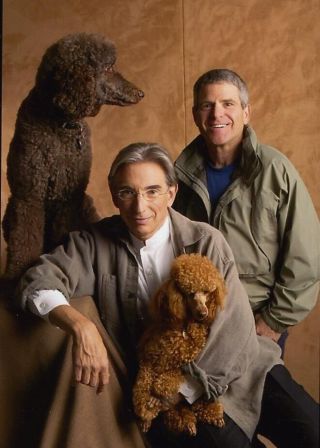
When he finally announced, in 2025, his retirement from the podium, he wrote: “A ‘coda’ is a musical element at the end of a composition that brings the whole piece to a conclusion. A coda can vary greatly in length. My life’s coda is generous and rich.”
His final subscription concerts with the orchestra were in January 2024, when he conducted performances of Mahler’s Fifth Symphony. He then took part in an 80th birthday celebration on April 26, 2025, when he conducted Benjamin Britten’s A Young Person’s Guide to the Orchestra, commemorating his first gala performance as music director, in 1995, and Ottorino Respighi’s Roman Festivals.
The orchestra’s leadership and musicians responded to the news of his death. Sakurako Fisher, a good friend of the conductor, longtime member of the orchestra’s Board of Governors, and its chair from 2012-2020, said:
“Michael had me at the Mavericks Festival. He exploded my brain with the music he presented, sharing his passion and deep pleasure in rewiring my concept of what great music could be. His joy in bringing music and people together, anywhere and at any time influenced and infused multiple generations of listeners and practitioners. I especially loved his impromptu music-fests that could happen anytime he was near a piano and Joshua was near him. His curiosity was bottomless, his joy boundless and his smile stretched from San Francisco to Miami."
Cellist Barbara Bogatin wrote: “His commitment to reaching deep into the hearts and minds of his musician colleagues and his listeners up to the very last row of the balcony will always be present in those of us lucky enough to have shared the stage with him. When I visited Michael several weeks ago at his home he didn’t say much, but greeted me with a quiet ‘Hey, Barb’ — and that was enough.”
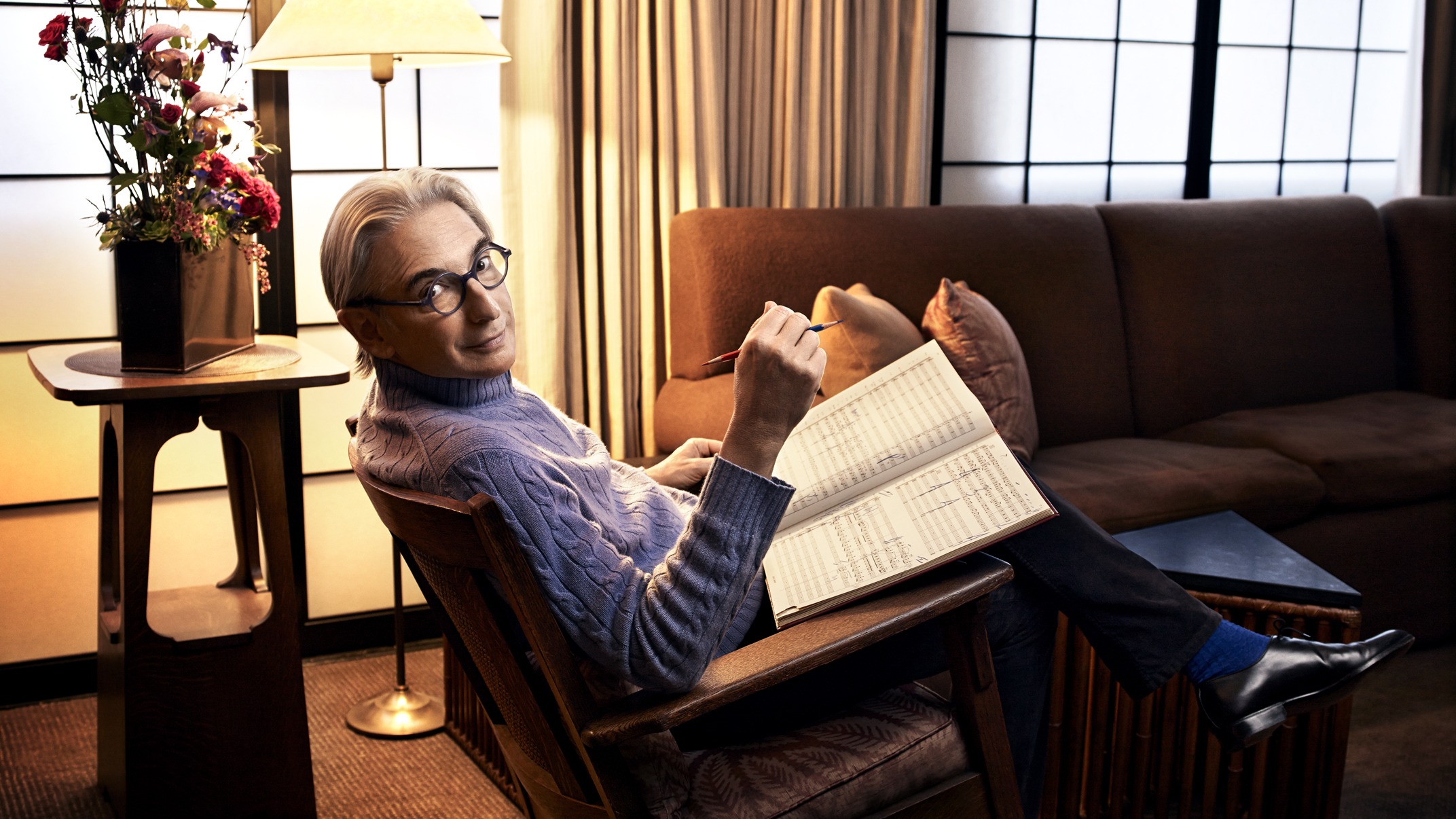
Another member of the orchestra’s board of governors during MTT’s tenure, and its president from 2001-2012, John Goldman, said, “I knew Michael for over 30 years, and I am certain that his legacy for the San Francisco Symphony, for our community, and for all lovers of music, will last in perpetuity. He changed the American orchestra, and we are fortunate that we celebrated his impact for these many years.”
SFS current CEO Matthew Spivey remembered, “When we first met during my job interview, we spent the entire conversation on a single piece of music — Ligeti’s Violin Concerto — and that was how he came to know people and came to know the world. He was a brilliant conductor, a generous teacher, and a deeply original human being, and he reimagined what this orchestra — and classical music in a city like ours — could be.”
In announcing his death, the San Francisco Symphony shared that it would dedicate the June 18, 20, and 21 performances of Beethoven’s Ninth Symphony to Tilson Thomas. A memorial concert will be given; its date is yet to be determined.
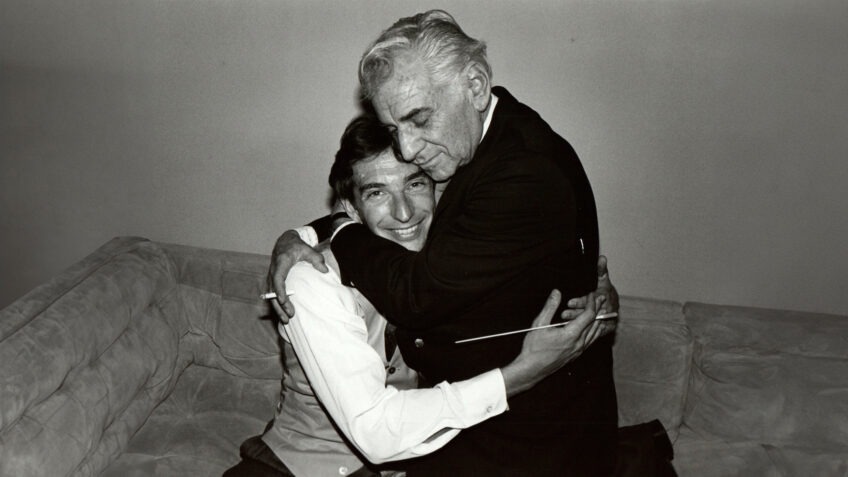
Coming from an illustrious family of Ukrainian Jewish refugees who founded and headed the American Yiddish theater in New York City, MTT was a musical prodigy, who made his conducting debut while still a teenager, with the Los Angeles Debut Orchestra.
Long before the 1993 announcement — the faraway year when Bill Clinton became the 42nd President of the United States — that MTT would become the SF Symphony’s 11th music director in 1995, he already had acclaimed experience in the U.S. and Europe, and later important appointments:
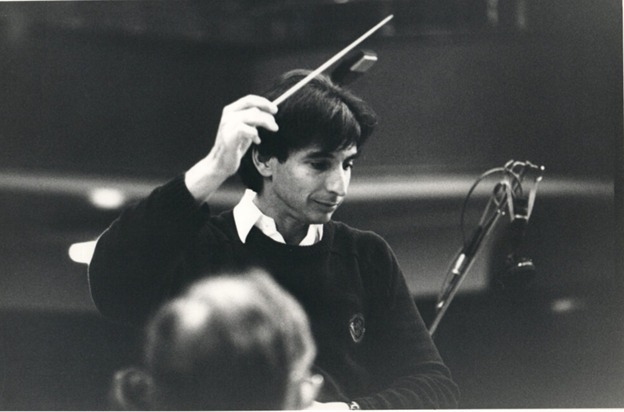
In 1969, after winning the Koussevitzky Prize at Tanglewood, MTT was appointed assistant conductor and pianist of the Boston Symphony Orchestra. That year he also made his New York debut with the BSO and gained international recognition after replacing Music Director William Steinberg mid-concert.
(In an interesting parallel 1983, Esa-Pekka Salonen was 25 years old when he got a call to replace the indisposed MTT with the Philharmonia Orchestra to conduct Mahler’s Third Symphony. Never having heard the work or seen the score, Salonen responded to the three-day notice with a performance that created his relationship with the Philharmonia, becoming its principal conductor and holding that position for 13 years.)
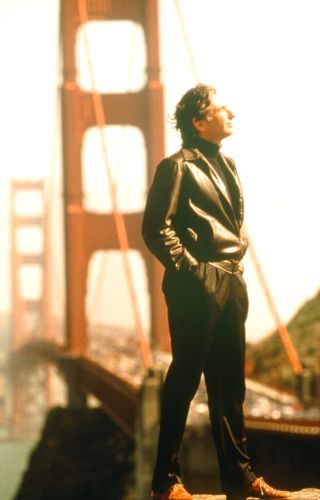
MTT was appointed principal guest conductor of the Boston Symphony Orchestra, a position he held until 1974. He was music director of the Buffalo Philharmonic from 1971 to 1979, and a principal guest conductor of the Los Angeles Philharmonic from 1981 to 1985. In 1987, he co-founded and became artistic director of the New World Symphony, an “orchestral academy” dedicated to preparing young musicians of diverse backgrounds for leadership roles in classical music. That same year, he was appointed principal conductor of the London Symphony Orchestra and served in that role until 1995.
MTT brought variety, novelty, and rediscovered classics everywhere all through his career. “He’s regarded as a Russian specialist, an American specialist, prime mover for the music of [Charles] Ives and [Carl] Ruggles, champion of Gershwin, keeper of the Bernstein legacy; he is a natural Mahlerian, a devoted Francophile, a willing activist in the cause of new music,” wrote Edward Seckerson in Viva Voce.
MTT’s self-described “insatiable curiosity” was demonstrated at his 1994 press conference in Davies Hall as he was shaping his first season as music director:
The man succeeding Herbert Blomstedt, a “very European” music director, served notice that it will be up with the new, in with the little-known, and a greater role for American composers than any time since the beginning of Edo de Waart’s stewardship more than two decades ago.
With two of the Bay Area's best-known composers in attendance at the press conference, MTT both figuratively and physically embraced Lou Harrison whom he commissioned to write the very first work to be performed when he opens his first season on Sept. 6 [1995]. MTT also had warm words for John Adams whose works will be featured as well and who is also asked to write for the orchestra.
“America is the place where barriers broke down between classical and popular music,” he said, “and the next season, we will reacquaint ourselves with the excitement and diversity of our own musical tradition.”
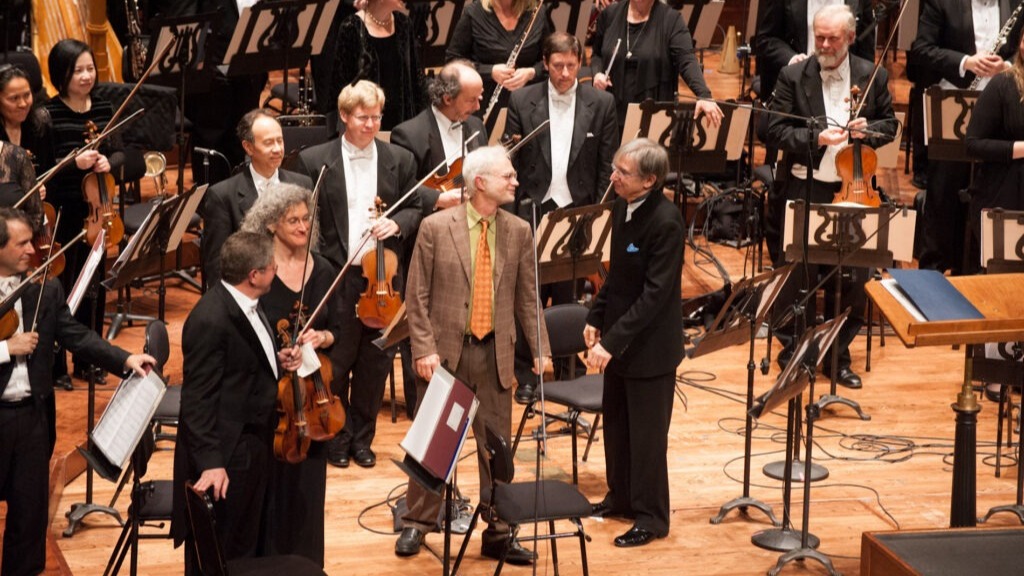
That first season included 26 premieres, 14 works by Americans, and nine works by living composers. As he explained his programming: “Optimally, I want to have three elements for each concert — something diverting, something challenging, something affirming. I plan to build contact with the audience to strengthen the position of new music, new performances of old music.”
MTT bolstered SF Symphony’s status at home, in the country, and — with many acclaimed tours — in Europe and Asia. MTT-SFS recordings received 12 Grammy Awards. The discography includes The Mahler Project, a collection of the composer’s complete symphonies and works for voice and orchestra, as well as pioneering recordings of music by Charles Ives, Carl Ruggles, Steve Reich, John Cage, Ingolf Dahl, Morton Feldman, George Gershwin, John McLaughlin, and Elvis Costello.
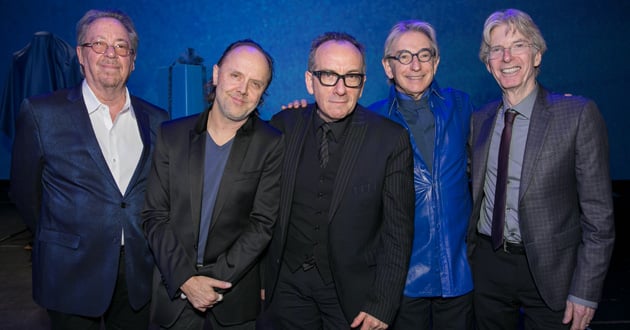
His recordings span repertoire from Bach and Beethoven to Claude Debussy and Igor Stravinsky and include collaborations with artists ranging from Sarah Vaughan to Metallica. With the great Mahler expert Henry-Louis de La Grange and Marina Mahler, granddaughter of the composer, MTT led unique celebrations of Mahler at San Francisco festivals and on tour to Europe. He also scripted and presented the groundbreaking TV series Keeping Score, featuring the SF Symphony.
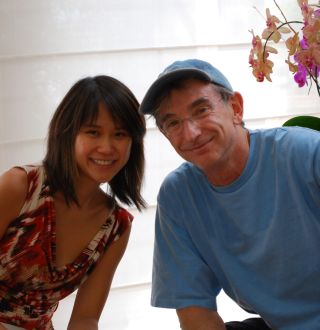
Remaining music director laureate of SF Symphony and conductor laureate of the London Symphony to his death, MTT was named an Officier de l’Ordre des Arts et des Lettres en France, was a member of the American Academy of Arts and Sciences, Musical America’s Musician of the Year and Conductor of the Year, an Gramophone magazine’s Artist of the Year.
He has been profiled on CBS’s 60 Minutes, ABC’s Nightline, and PBS’s American Masters. He was awarded the National Medal of Arts, was inducted into the American Academy of Arts and Letters, and named a member of the California Hall of Fame.
A respected composer, many of his works have been recorded with the SF Symphony and often performed. In 1991, MTT and the New World Symphony were presented in a series of benefit concerts for UNICEF in the United States, featuring Audrey Hepburn as narrator in performances of MTT’s From the Diary of Anne Frank, which has since been translated and performed in many languages worldwide. In 1995, he led the Pacific Music Festival Orchestra in the premiere of his Shówa/Shoáh, commemorating the 50th anniversary of the bombing of Hiroshima.
In 2023, Yuja Wang and Teddy Abrams released a recording on DG that included Tilson Thomas’s You Come Here Often?, which won a Grammy Award in 2024 for Best Classical Instrumental Solo.
During his 80th birthday year in 2024, MTT saw three recordings of his compositions released: GRACE: The Music of Michael Tilson Thomas, a four-disc box set of Tilson Thomas’s compositions on Pentatone; The Complete Columbia, CBS and RCA Recordings on Sony Classical, and The Complete Deutsche Grammophon & Argo Recordings on DG Eloquence.
In 2020, he led the SF Symphony in the world premiere of his six-part song cycle Meditations on Rilke; he conducted the New York premiere of this work with the New York Philharmonic in March 2023.
Having recovered from a heart operation in 2019, MTT returned to work ahead of a long-planned grand exit as Esa-Pekka Salonen was about to succeed him. But early in 2020, a few months ahead of that final season, COVID-19 ravaged the world and the entire season was canceled. The orchestra celebrated him instead with a 25-day free streaming series, one program for each year of his leadership.
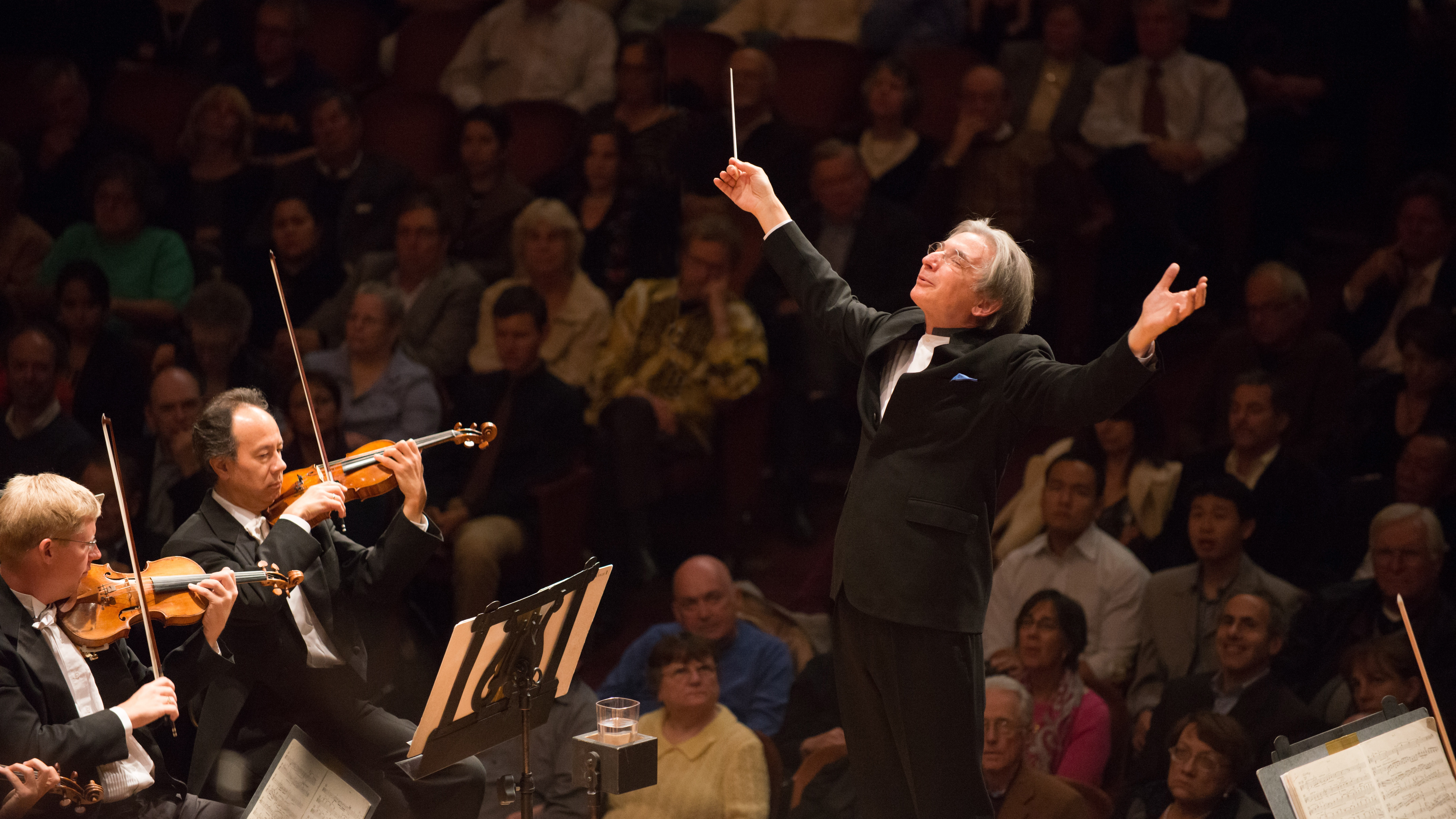
During these multiple crises of his health and of the devastating pandemic, MTT spoke frankly and bravely of the challenge: “It takes strength to meet the demands of the music and to collaborate on the highest level with the remarkable musicians who so generously welcomed me. I now see that it is time for me to consider what level of work and responsibilities I can sustain in the future.”
Of the future, he said: “I intend to stick around for a bit. Creating and collaborating to make great music is what it’s all about for me. Every moment on stage with my colleagues is memorable.” It was for musicians and audiences everywhere as well.
As an artistic visionary, a dedicated collaborator and musical genius, San Francisco Symphony's most influential leader, and a friend to many, MTT's legacy will be long and treasured.