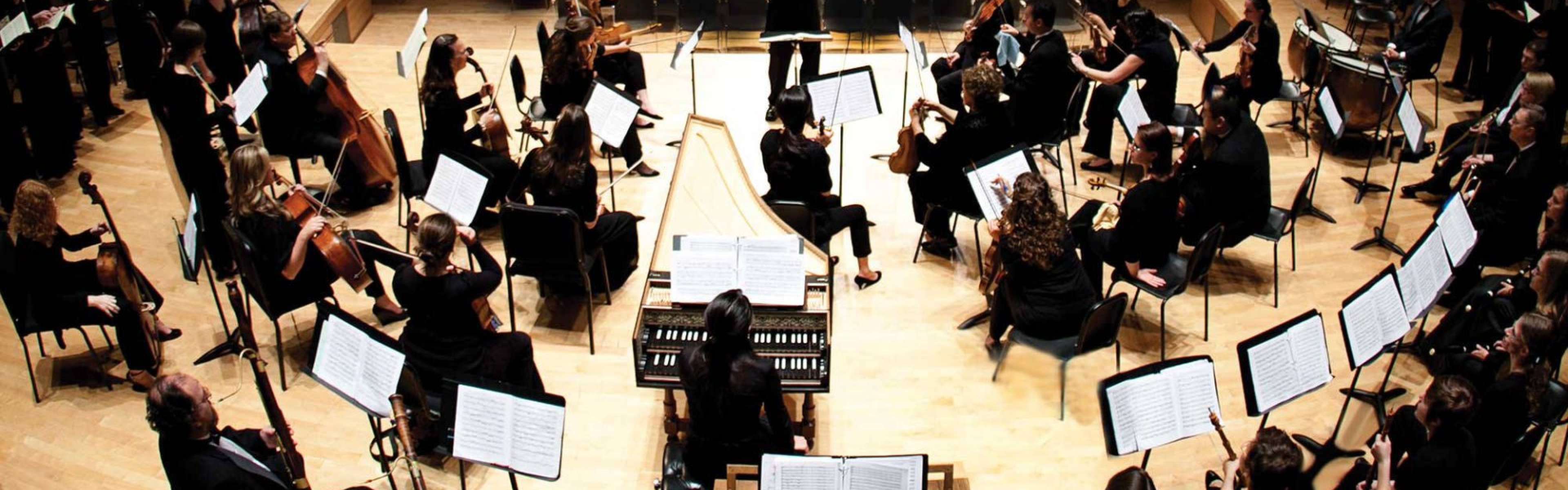
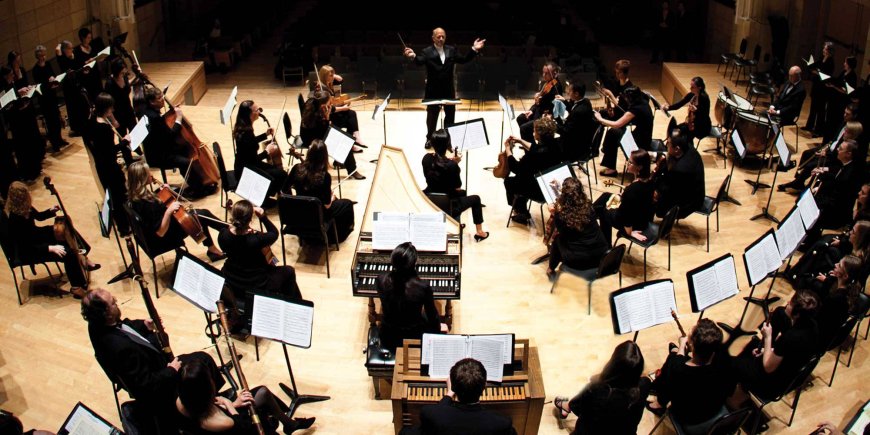
American Bach Soloists presented concerts billed as “The Harmonic Labyrinth” last weekend, but most of the music had little to do with that title, which is taken from a virtuosic 18th-century violin concerto. In fact, it was the other music that captured the heart, especially Domenico Scarlatti’s seldom-heard Salve Regina and the more famous Stabat Mater by Giovanni Battista Pergolesi.
Neither work was “labyrinthine.” Rather, these prayerful works were direct and passionate about human anxieties “in this valley of tears” — so appropriate for the state of the world now.
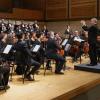
Scarlatti is best known for his exuberant harpsichord sonatas, but in his last year of life, he wrote the beautiful Salve Regina for soprano and string orchestra. Within a rich soundscape, mezzo-soprano Sarah Coit’s supple and compelling voice captured the varying moods of this prayer, supported by American Bach’s exceptional string players and the sensitive leadership of conductor Jeffrey Thomas. Especially memorable was Coit’s quietly emotional delivery of the ancient attributes of the Virgin Mary: O clemens, o pia, o dulcis (“O merciful, O pious, O sweet”).
Pergolesi’s setting of Stabat Mater, a 13th-century devotional poem, has inspired composers from Josquin to Arvo Pärt. In American Bach’s performance, Coit was joined by soprano Maya Kherani, whose pinpoint clarity and no-holds-barred declamation contrasted beautifully with the mezzo-soprano’s dark urgency. Kherani gave direct, human meaning to the daring metaphors of the text — for example, the grief that stabs her like a sword. When Kherani and Coit sang together in their frequent duets, the effect was little short of miraculous.
The concert opened with Johann Sebastian Bach’s secular Cantata BWV 209, Non sa che sia dolore (“He does not know what sorrow is”). The cantata both laments and celebrates the departure of an unnamed friend. This quirky farewell — which doesn’t take itself too seriously — begins with an extended sinfonia. It’s essentially a flute concerto, played in this concert by flutist Bethanne Walker with elegant attention to Bach’s intricate textures. In the arias, soprano Kherani complemented Walker in expressing the varying colors of the warm and genial text. Unfortunately, the flute was often hard to hear distinctly in the large sound of the string orchestra; a smaller ensemble would have helped.
Pietro Locatelli’s concerto “The Harmonic Labyrinth” (the title work of the program) is arguably one of the most daunting works in the early violin repertoire, written as a showpiece for the virtuoso violinist-composer. Simple arpeggios, scales, and harmonic progressions served as a quasi-minimalist basis for the soloist’s flamboyant performances, involving double, triple, and quadruple stops (two, three, and four notes played at once, respectively) on the highest reaches of the fingerboard.
Unfortunately, the “Labyrinth” is musically thin: one listens in vain for melodic and harmonic connection between the fireworks and the rest of the music. Locatelli has simply inserted difficult and musically irrelevant “caprices,” sometimes longer than the concerto movements themselves.
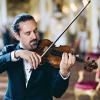
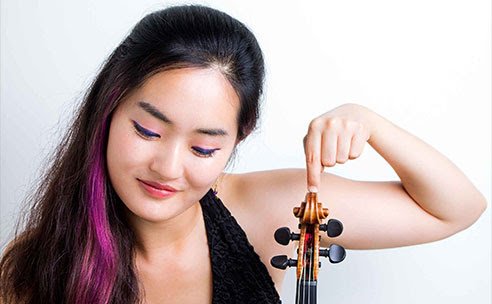
The excellent soloist for this Locatelli piece at the American Bach concert was YuEun Gemma Kim, who played with brilliant sound and flying fingers. Despite some intonation problems in the dog-whistle range (which is almost inevitable given how tightly the fingers must be placed), Kim delivered this odd piece with as much Olympic panache and style as anyone could hope for.
But now that she’s won this gold medal, I look forward to her performances in which musical athleticism doesn’t outshine the substance.
As usual, the concert featured alumni of the American Bach Academy, both as soloists and as players in the orchestra. The program continues to foster such excellent young performers — ensuring the future of early music performance.