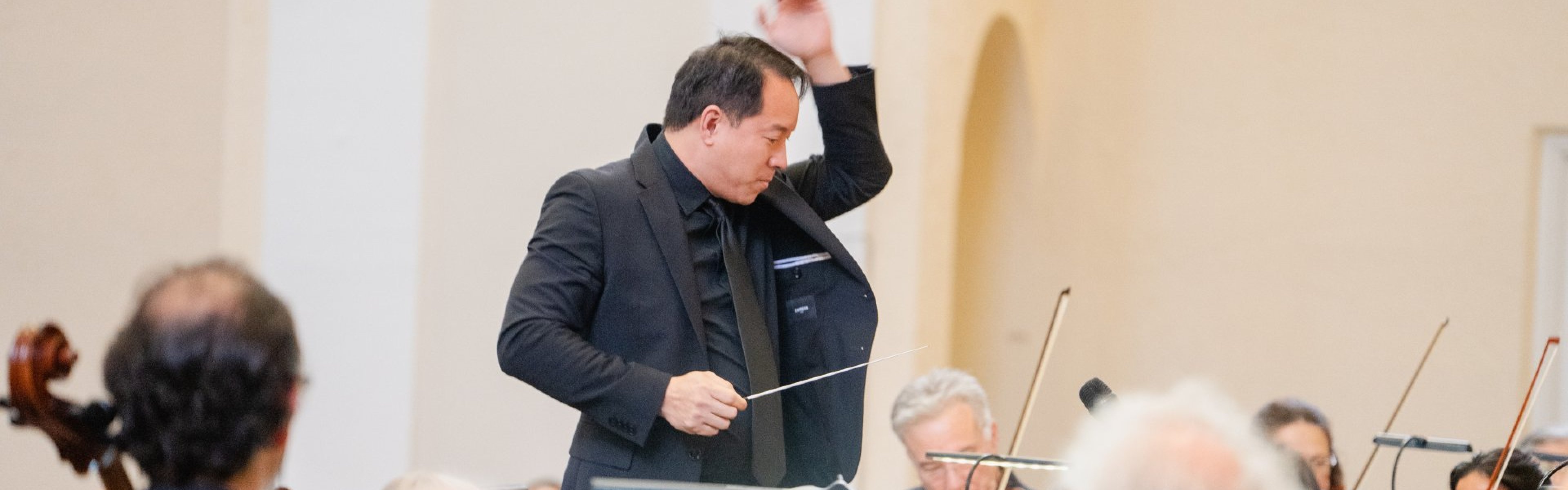
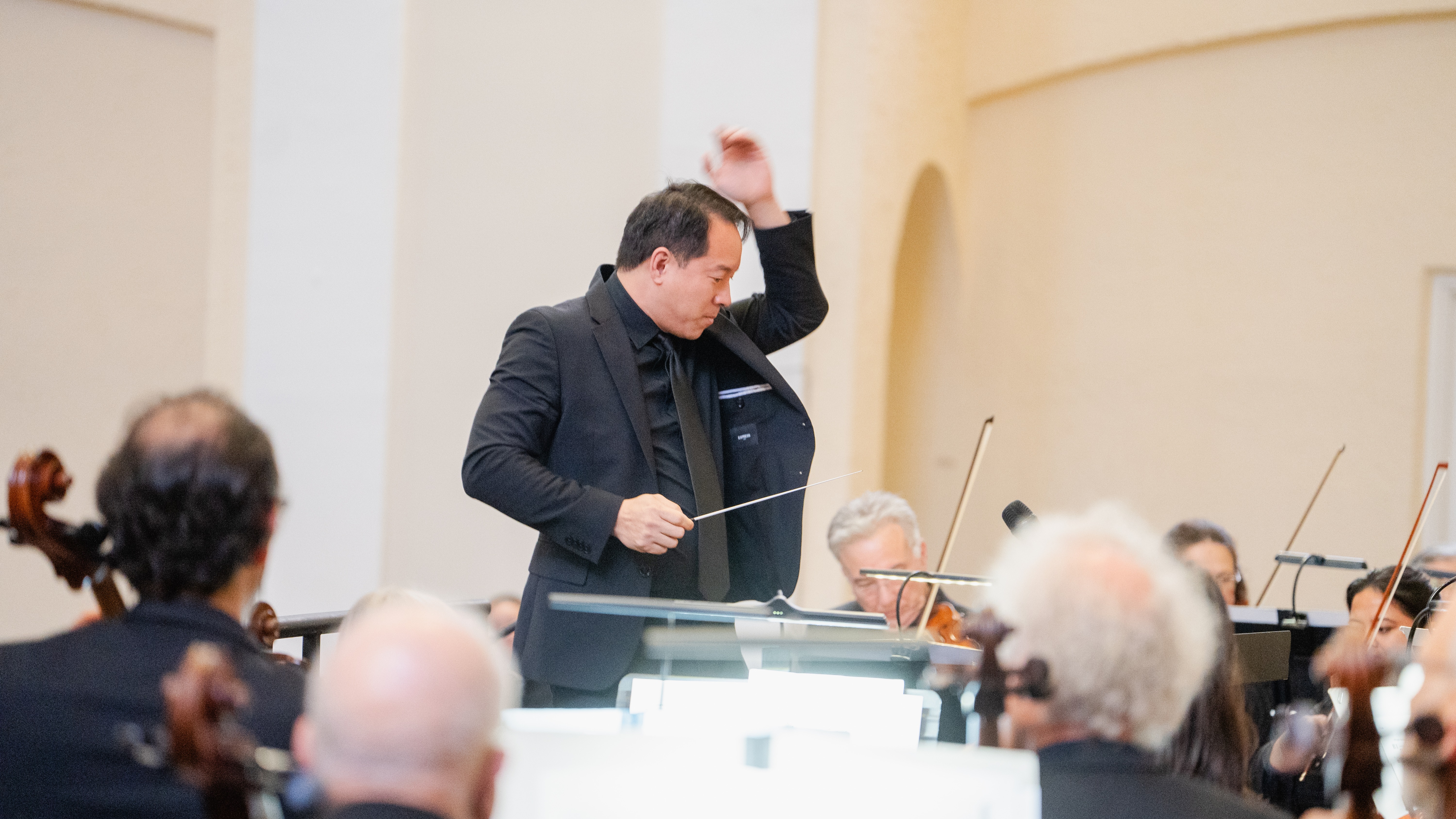
Berkeley Symphony's recent concert had the apt tagline "Worlds Beyond"— offering journeys of change into other ways of living and thinking. The orchestra itself is in a year of change following the departure of former Music Director Joseph Young. Four young guest conductors are taking the podium, including, for this concert, the orchestra's education director Ming Luke. Berkeley Symphony's commitment to new works was evident at the outset of the performance at the First Congregational Church in Berkeley, on Sunday, Nov. 16.
Mexican composer Juan Pablo Contreras’s delightful Alma Monarca (“Monarch Soul”), co-commissioned by the BSO, takes place during Día de los Muertos, the day when the living commune with the dead. The piece is serious but never solemn: snippets of brass bands collide and a melancholy horn solo, played by Craig Hansen, represents a small boat crossing a lake. At the work’s climax, monarch butterflies flutter into the midnight sky, perhaps as transfigured forms of the dead.
A second contemporary piece, Sinfonia (for Orbiting Spheres) by the prolific, New York-based Missy Mazzoli, imagines musical imitation (repeating, overlapping phrases) as a metaphor for planets and satellites in orbit around a sun. Its shimmering texture, full of flash and variety, had a loopy recklessness, as if some NASA rocket launch had been taken out of the hands of engineers and given to a group of avant-garde poets.
Richard Strauss's Four Last Songs represents a different kind of transformation. This song cycle, one of the composer’s last works, was written in the wake of World War II and deals with loss and death in a profoundly moving and highly complex musical and poetic language. Soprano Laquita Mitchell, whose long, storied career includes singing Bess in Gershwin's Porgy and Bess at San Francisco Opera in 2009, brought an aching beauty to her interpretation. With finely focused intensity, she confidently poured out Strauss's challenging melodies, which rise from the singer's lowest range and in the blink of an eye soar to startling heights.
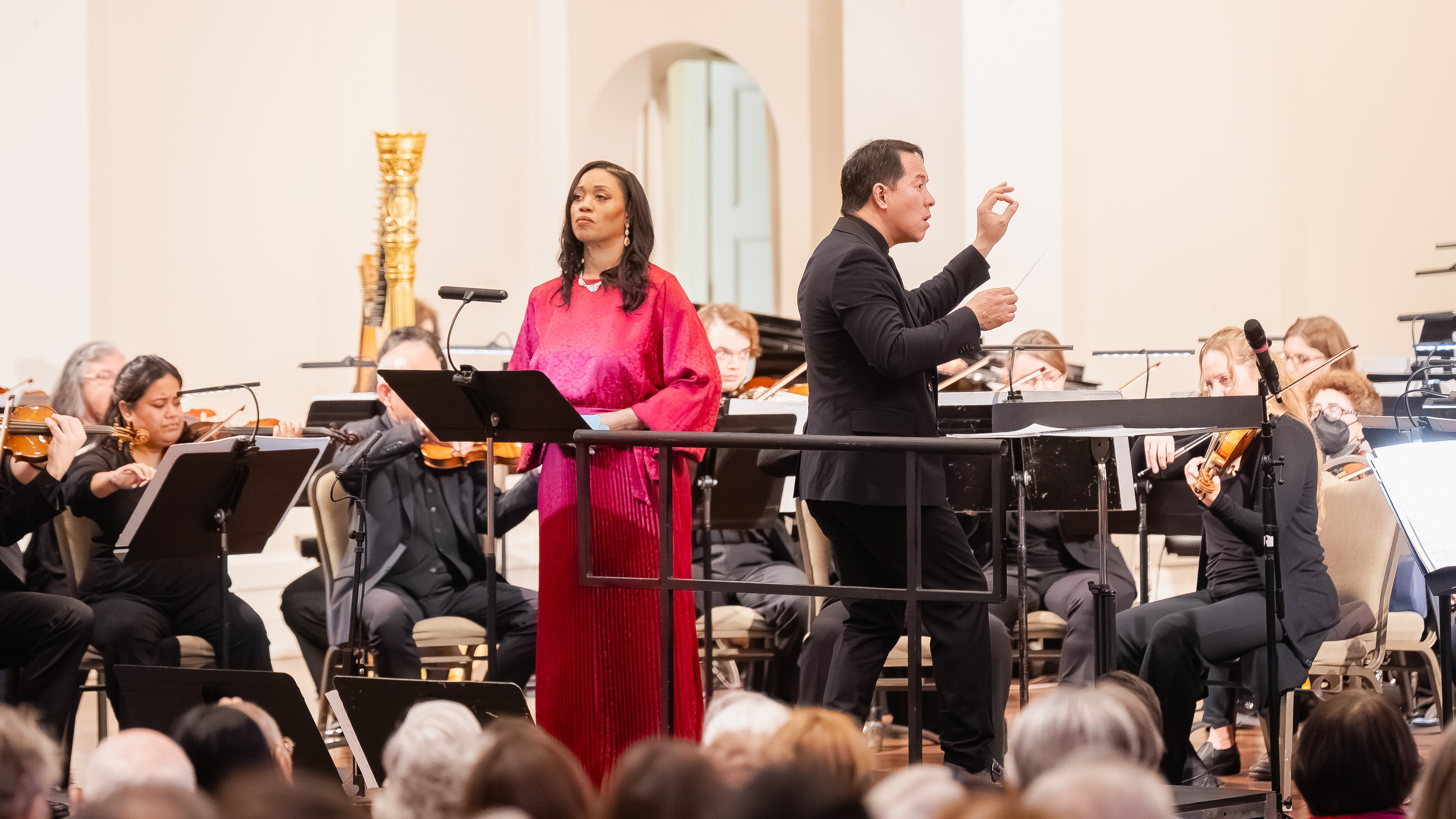
Throughout the concert, Berkeley Symphony's fine musicians played with commitment and ensemble, responsive to Ming Luke's expressive, clear conducting. At several key moments in Strauss’s songs, the orchestra was too loud, covering the singer in her lower ranges.
The program concluded with Dmitri Shostakovich's Ninth Symphony, written, like Strauss’s songs, just after the close of World War II. The Ninth is a "world apart" from the grand and gloomy composer of popular imagination. It begins with Haydnesque wit and goes on to explore a litany of sarcastic and surprising musical ideas. The BSO gave it a virtuosic reading.
The program was beautifully curated, with four complicated works that added up to a whole greater than the parts. But I wonder whether the two-hour, four-work concert may have outlived its time, in these days of diminishing attention spans?
Berkeley Symphony Executive Director Marion Atherton explained to me after the concert that the orchestra, like so many other arts organizations, has found many of its funding sources running dry. It is a sobering thought that such an innovative group, which supports local musicians, brings music into the schools and students into the concert hall, and commissions new works should face financial distress. May we find the courage as a nation to insist on funding arts organizations of all types.