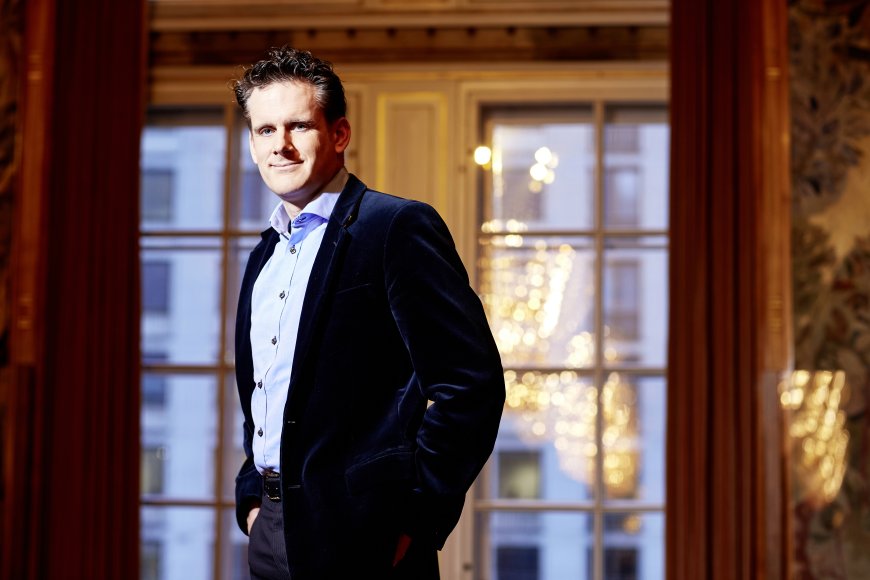
The all-French program conductor Philippe Jordan brought to the San Francisco Symphony was pure escapism — exotic, mythologic, psychedelic.
First, though, the music had to get off the ground.
Cellphones and sneezes delayed the start of the concert on Thursday, March 26, at Davies Symphony Hall. After his second or third attempt to begin Claude Debussy’s “Prelude to the Afternoon of a Faun,” Jordan affably waved the white flag — his handkerchief.
It was minutes before the audience was settled enough to soak in the veiled textures and subtle color changes Jordan drew out of the orchestra, not least Stan Muncy and Marty Thenell’s exceptionally delicate playing on the antique cymbals. Flutist Seth Morris handled the distractions well in his solo.
But the audience wasn’t the only issue during this matinee. The acoustics of Davies Symphony Hall tend to muddy concertos, and next on the program was Camille Saint-Saëns’s Piano Concerto No. 5, “Egyptian.” Judging from this performance, Jordan (here with the Symphony for the third time) still has work to do. The calibration got better as the piece progressed, but the orchestra often sounded ever so slightly behind the piano soloist, French virtuoso Jean-Yves Thibaudet.
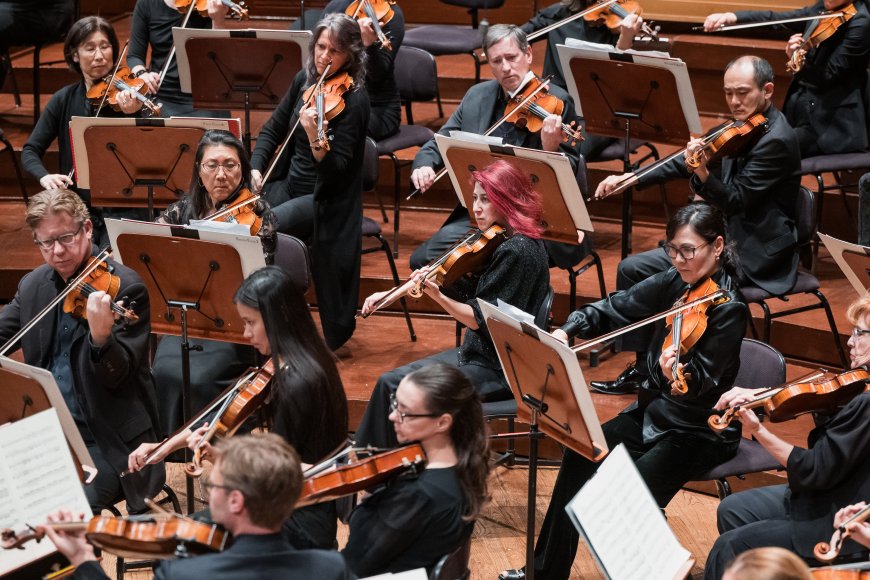
Another conductor might fine-tune this score for clarity by demanding sharper staccatos or quicker decays of sustained chords. Not Jordan. On Thursday, he largely favored a hands-off approach. It was as if he wanted the music to speak for itself — as Hector Berlioz made a statement with “Symphonie fantastique,” this program’s second half.
The oddly shaped 1830 work portrays an artist, hopelessly in love, who ultimately wilts into an opium-induced nightmare. The music was shocking in its time, but it takes commitment to achieve that same effect today. Jordan’s attempt, though played by a world-class orchestra, wasn’t that.
Still, there were moments. The second movement’s waltz, which expands in its closing verses before dashing off, was wonderfully gentle. Oboist James Button and English horn player Russ de Luna, imitating shepherds’ pipes, played a lovely duet in the slow movement’s sprawling pastoral. In the final two movements, Berlioz’s special effects — groaning wind glissandi, belches in the low brass, bone-rattling string col legno — were sufficiently ghastly.
In the end, the program’s most shallow piece, the Saint-Saëns concerto, had the most depth.
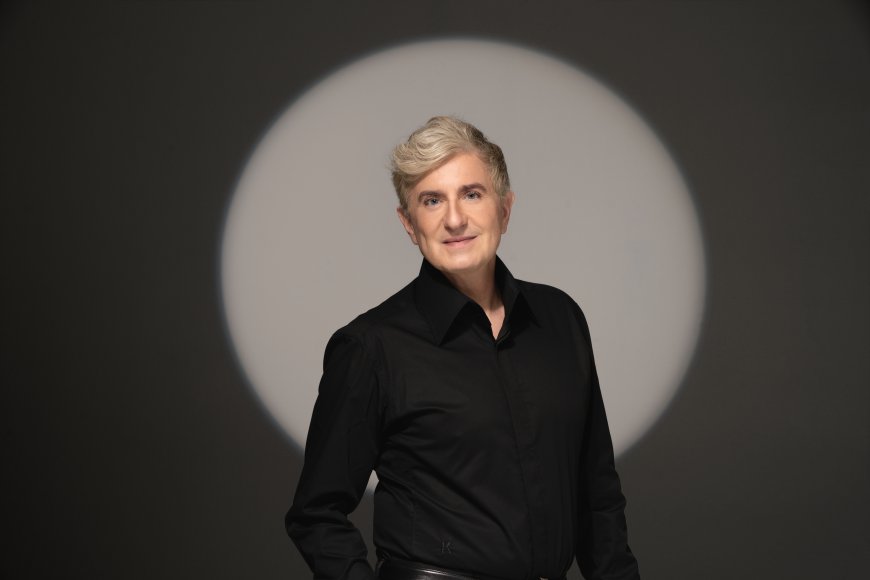
Thibaudet phrased the first movement’s naïve progressions and heaving swells with utmost elegance. In the hushed coda, the orchestra’s chords positively glowed. As for the so-called “Nubian love song” that comes midway through the slow movement, one the composer claimed to have heard on the Nile, Thibaudet imbued its simple strains with tenderness and dignity.
One passage leaves listeners doubting their ears. Through a trick of voicing — combined overtones create the impression of added notes — the piano’s sound transforms into something more like bells. It’s sonically stunning, and Thibaudet’s dexterous pedaling in this performance added a certain je ne sais quoi.
For an instant, nothing else mattered.
Rebecca Wishnia is a freelance writer. This review is provided in partnership with San Francisco Chronicle.