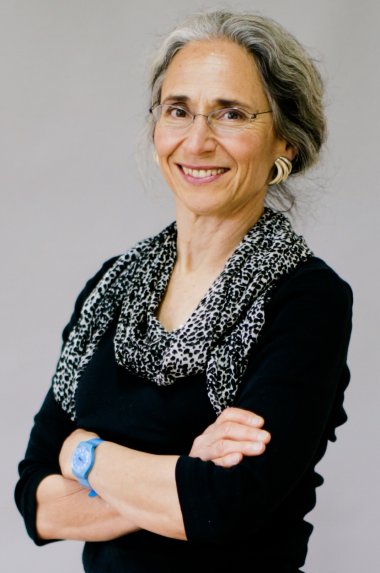
Magen Solomon is one of a handful of top choral conductors in the Bay Area. When working with a chorus, she inspires the group and instills an attention to detail that brings them closer to the music.
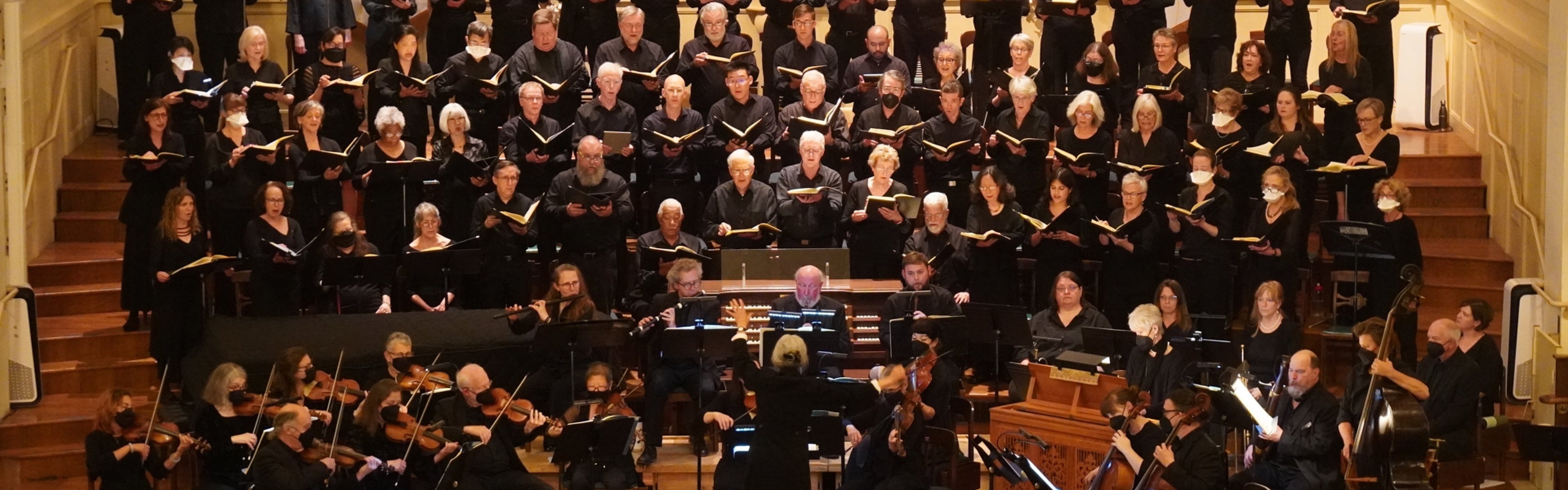
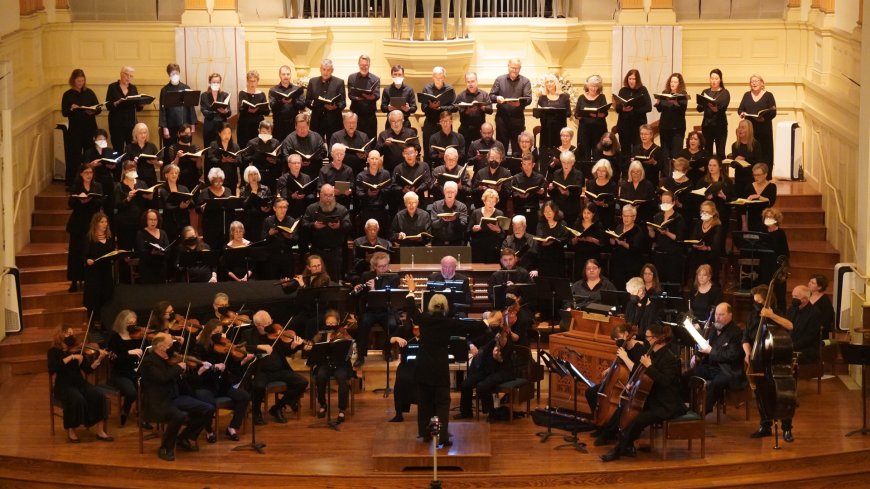
So, when the San Francisco Bach Choir capped its 90th season with J.S. Bach’s Mass in B Minor, performing at a level that nonprofessional choirs rarely reach, it was a triumph for Solomon as well as the choristers, the fine soloists, and the Jubilate Baroque Orchestra.
The full house at Calvary Presbyterian Church on Sunday, May 10 — some of them former singers with the Choir—, were expecting this, perhaps. I was duly impressed and left determined to hear this group again soon.
It’s probably unfair to call the San Francisco Bach Choir entirely nonprofessional. There are quality voices and quite a bit of experience on display here. You won’t find any tentative entrances, mismatched voices, or wavering pitches. Diction was perfect. The women do outnumber the men (what else is new?) and that caused an occasional balance problem. But the lower voices began several of the Mass’s numbers and they sang clearly and confidently, with open sound.
Bach’s vocal writing, especially in this massive work, poses a few challenges that would throw a lot of choruses off their game. There are the many fugues, to begin with. It’s not easy, but doable, to start them off right, with the serried entrances of the subject. But the spinning-out of the subject often includes long sequences of running eighth notes in the midrange. These are hard to project and it’s easy to miss a pitch here and there, given how twisty the lines can become.
It’s here that Solomon’s work was most apparent. The fugues didn’t lose steam after the expositions: the choir continued to phrase the music expertly, swelling and ebbing, keeping hold of the thread, and producing the melding of independent and equal lines that distinguishes a really good performance of the Mass.
And they gave the music emotional character as well as drive. The shadowed, penitential Kyrie, the massive opening chorus, had a somber hue that perfectly set up the progression of the whole work. By contrast, the closing chorus of the Gloria, “Cum sancto spiritu” had a joyous bounce that was truly uplifting.
“Et incarnatus est” had the depth of feeling of a great mystery. Right afterward, the chorus passed the “Crucifixus” test, a movement whose chromatic wandering has derailed many a choir. And the a cappella “Confiteor unum baptisma” fugue, written around a Gregorian chant melody in strict canon in the men’s voices, was clear and musical in its presentation.
Having scaled those summits, you might think that the rest of the Mass would be smooth sailing. But the Sanctus section involves further intricate counterpoint. It takes an hour and 55 minutes of sustained concentration to present this masterwork and this chorus brought it. The finale, “Dona nobis pacem,” was as fresh as the opening.
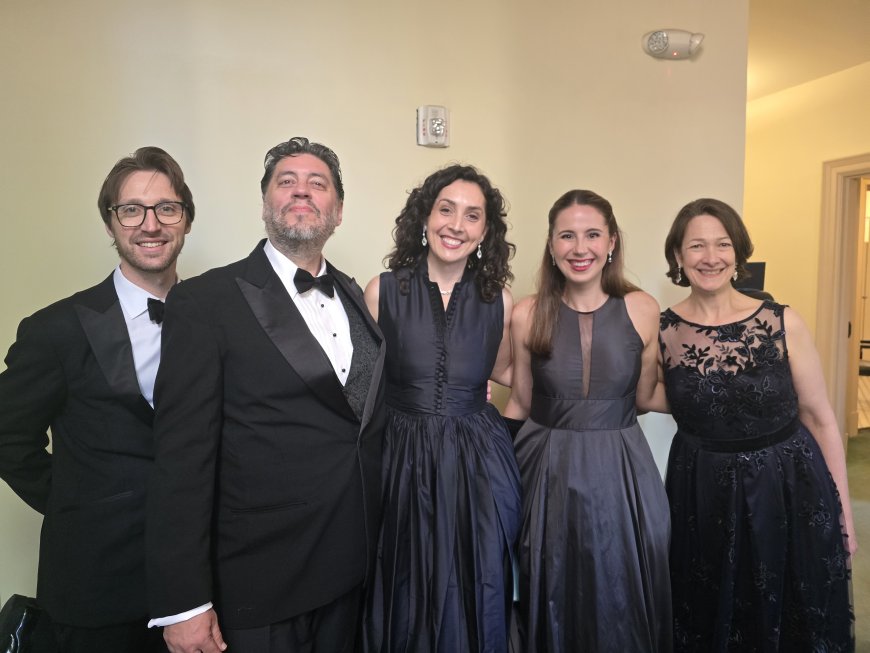
The professional soloists were all top grade: first soprano Clarissa Lyons was brilliantly paired with alto Heidi Waterman in “Et in terra pax,” and again in “Et in unam dominum” later on. Second soprano Morgan Balfour gave a gorgeous rendition of “Laudamus te,” and tenor Sam Faustine showed off his light, open voice to advantage in the Benedictus solo. Bass Curtis Streetman sang forcefully and intelligently in his two arias.
The Jubilate Baroque Orchestra, composed of a number of local period instrument professionals, gave strong support. Among the soloists, the three trumpeters who handled Bach’s torturously high licks (Dominic Favia, Leonard Ott, and Charles Ryan) acquitted themselves well. Kudos are due as well to flutists Vicki Melin and Alissa Roedig, oboists Kristin Olson and Emily Ostrom, and continuo cellist David Morris.
Correction: This article originally misspelled oboist Emily Ostrom's name. We apologize for the error.