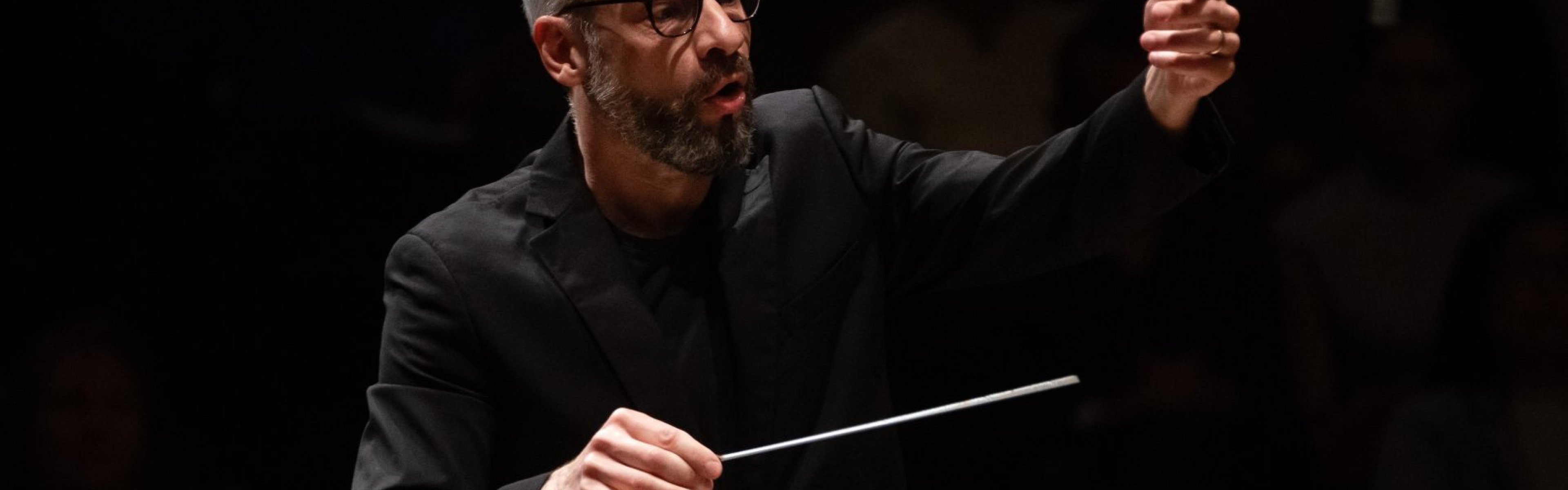
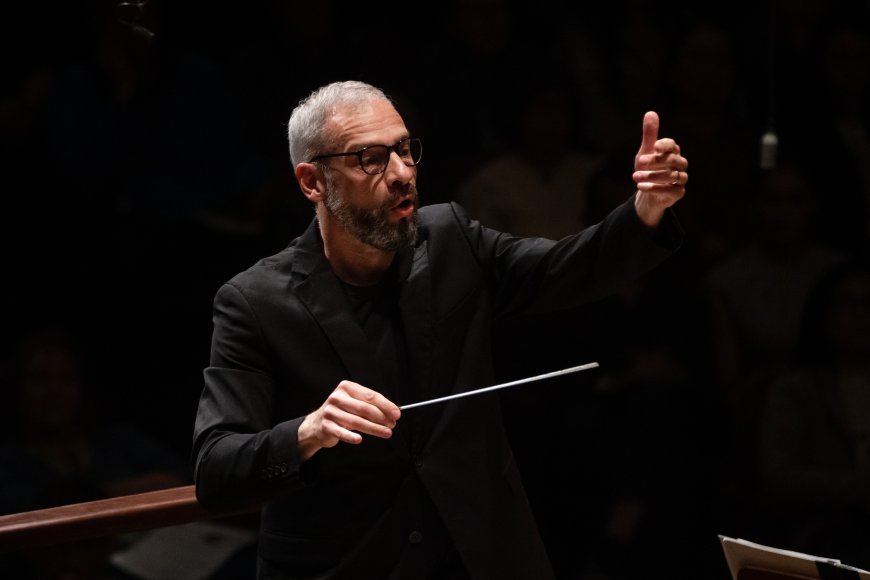
In an absorbing, stirring, and altogether spectacular concert by the San Francisco Symphony, three distinct works formed a textured, multicolored orchestral tapestry. The compelling Finnish conductor Dima Slobodeniouk was the master weaver, attentive to both detail and overall design. Even at two hours and 15 minutes — longer than most SFS performances — the evening sped by at Davies Hall on Friday, May 8.
The concert began with the intricate clockwork of Henri Dutilleux’s Métaboles and ended with a fervent and fully committed reading of Tchaikovsky’s Symphony No. 4. In between came the hometown heroics of Principal Flute Yubeen Kim, in a gracefully dazzling turn in Jacques Ibert’s Flute Concerto.
A collation of five suggestively titled short sections played here with only one pause early on, Dutilleux’s 1964 piece toyed with brief melodic and rhythmic cells to produce a work at once witty and progressively powerful, reminiscent in its range and expressive effects of Béla Bartók’s Concerto for Orchestra.
In “Incantatoire,” the musicians deftly tossed a short melodic figure around, with trumpet calls, woodwind answers, and string pizzicati dancing through sudden slashing chords brightened by the xylophone. The woodwinds posed a quizzical riff, with a softly brushed cymbal in the background. Orchestral color blossomed.
In “Linéaire, marked “Lento moderato,” the strings lumbered into motion, like weary beasts, then came perking to life with an almost tactilely viscous sonority and sky-high harmonics. The bassoons picked up the syncopated beat of the double basses. The rhythms turned infectious, as the exciting “Obsessionnel” enlisted the tuba, timpani, and chattering brasses. The aptly titled “Torpide” brought the strangled cries of muted trombones and the faint, spacious clicks and clangs of a percussion section that seemed bent on expiring. The “Flamboyant” closer tapped with a ferocious dark energy.
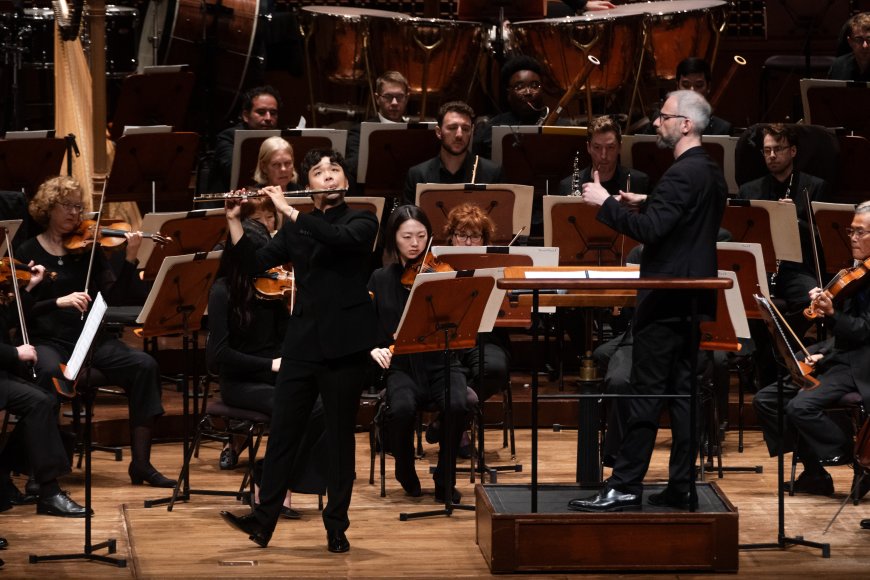
Slobodeniouk, who made some charming opening remarks about his return to the Davies podium six years after his previous visit, conducted here, as he did all night. with a big, clear beat, articulate gestures, and full-body exchange with the musicians and the music.
Ibert’s Concerto, composed in 1932 and last performed here 43 years ago, is a pleasant work full of liquid runs, pensive interludes, elaborate fingerwork, and the occasional sharp edge. Though it goes down easily for listeners, there are plenty of challenges for the soloist. Kim met and mastered them all. With his smooth tone. full sound, and seemingly effortless breath control, he made the first movement a warbling meander, set off by an attention-grabbing shriek at the end.
The middle movement took on a pliant reverence, broken by a chromatic crisis before order was restored and sealed with a remarkably sustained last note. The closing Allegro was a jazz-inflected scamper with multiple short cadenzas, some breathy exhales, and dynamic vigor. From start to finish Kim held his own. Beaming and visibly sweating, he appeared slightly astonished at occupying the spotlight in front of his fellow musicians – “the greatest in the world,” he said. Summoned back for an encore, he played Debussy’s Syrinx.
Maybe nobody planned it this way, but the performance of Tchaikovsky’s Fourth came a day after the 186th anniversary of the composer’s birth. The music was fully alive and electrically present from the work’s blazing, ominous opening. The horns deserve special mention for their brilliant early measures, as bright and dramatic as the instruments themselves.
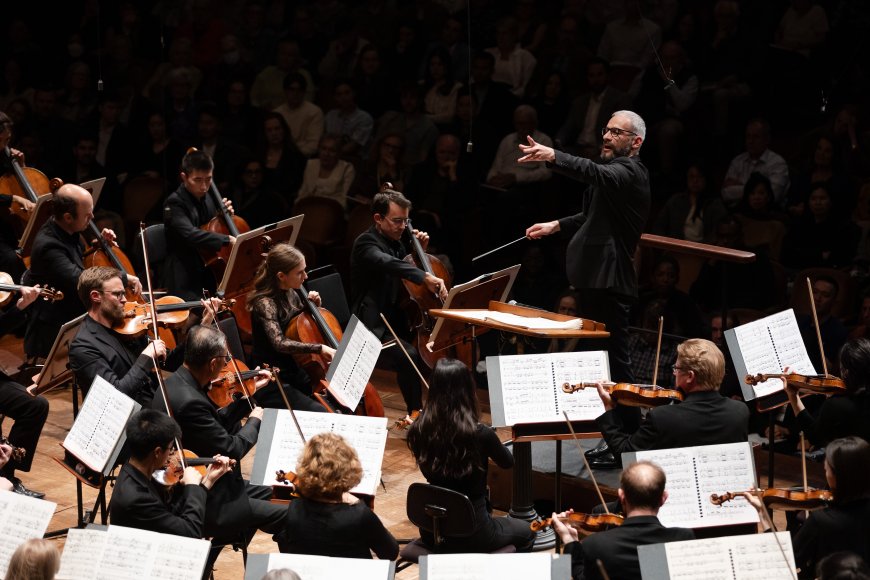
Soon enough the woodwinds had their own thoughts to contribute, with the disarming simple descents that turn up through the symphony, subtly modified or rising instead of falling, like a malleable motif. The conductor’s feel for balance and dynamic control delivered every calorie of this convulsive first movement and then the swaying asymmetric phrases of the Andante that followed.
The pizzicati dominating the third movement can come off as so much busy plucking, but it had urgency and purpose here. The crisp trombone staccati underscored the effect. If the closing movement lapsed into some perfunctory passages, the fireworks went off in gripping fashion, highlighted by knife-edged entrances and cut-offs.
In a telling moment during a thunderous ovation, the musicians declined to rise at one point, giving Slobodeniouk the honor of a solo bow. He’d earned it, as had everyone else onstage.