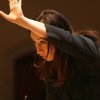
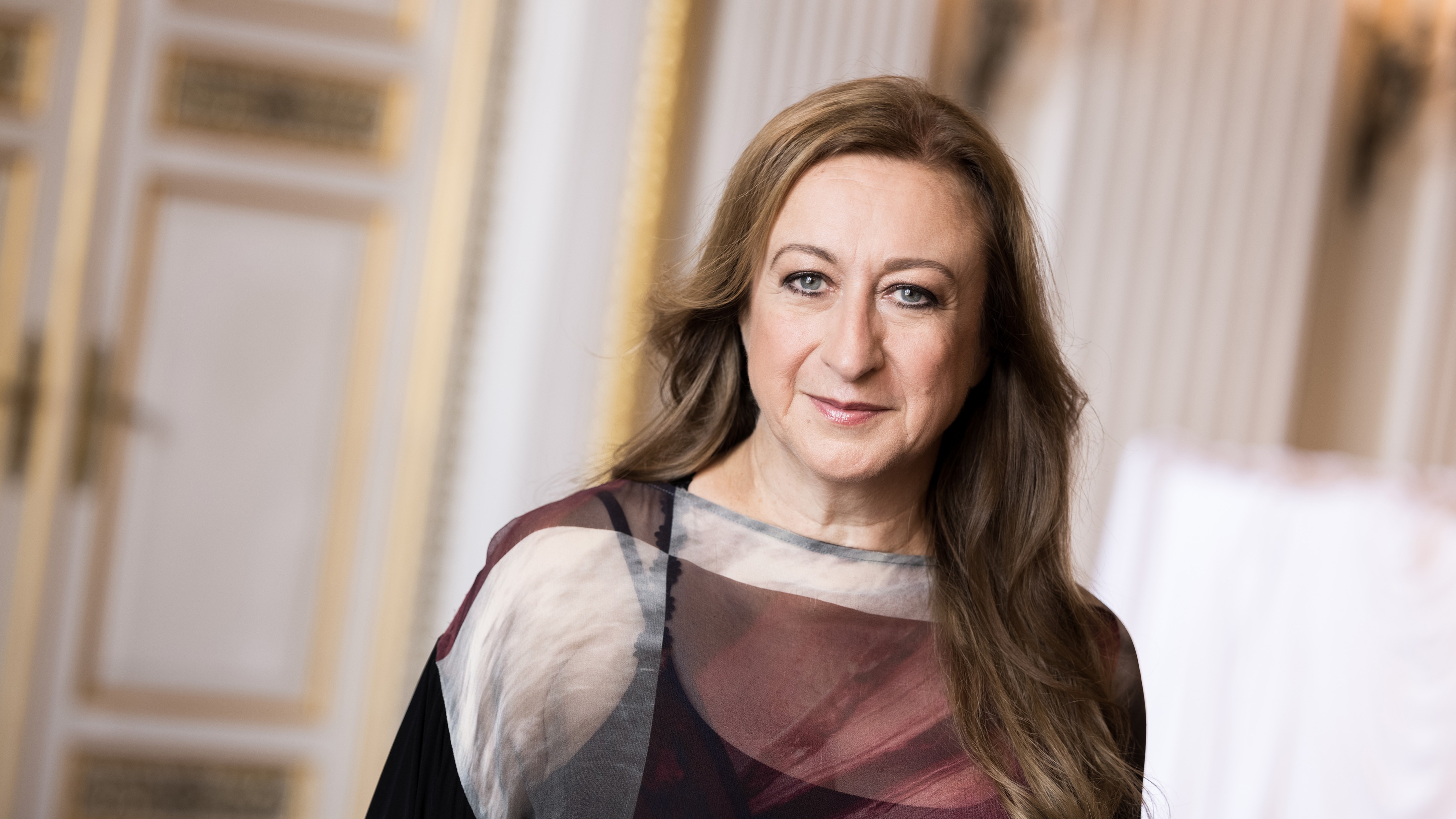
When it comes to Richard Wagner’s Ring of the Nibelung, Simone Young knows no bounds.
The Australian conductor was in her 30s when she initially saw — from standing room at the famous Bayreuth Festival — the German Romantic composer’s epic four-opera cycle. A couple decades later, in 2024, she led the work from that same podium, becoming the first female conductor ever to do so. She’s also since become the first female conductor to record the tetralogy.
At the San Francisco Symphony on Friday, April 17, she brought that experience to bear in a distilled, hourlong Ring compilation. With Young on the podium, this rare concert synthesis of Wagner’s 15-hour epic, even if not unprecedented, felt newly significant.
For starters, there’s the novelty of not just hearing but seeing Wagner’s orchestral writing. Sure, a few of these passages have been adapted for concert performances (along with the Siegfried Idyll, a related Wagner work that Young interpolates here), but it’s still impressive. In an opera house, the players are in the pit, and so the audience is rarely privy to the challenges inherent in this score. On Friday, with the Symphony onstage, it was thrilling to watch those exposed brass chords and the endless noodles in the strings.
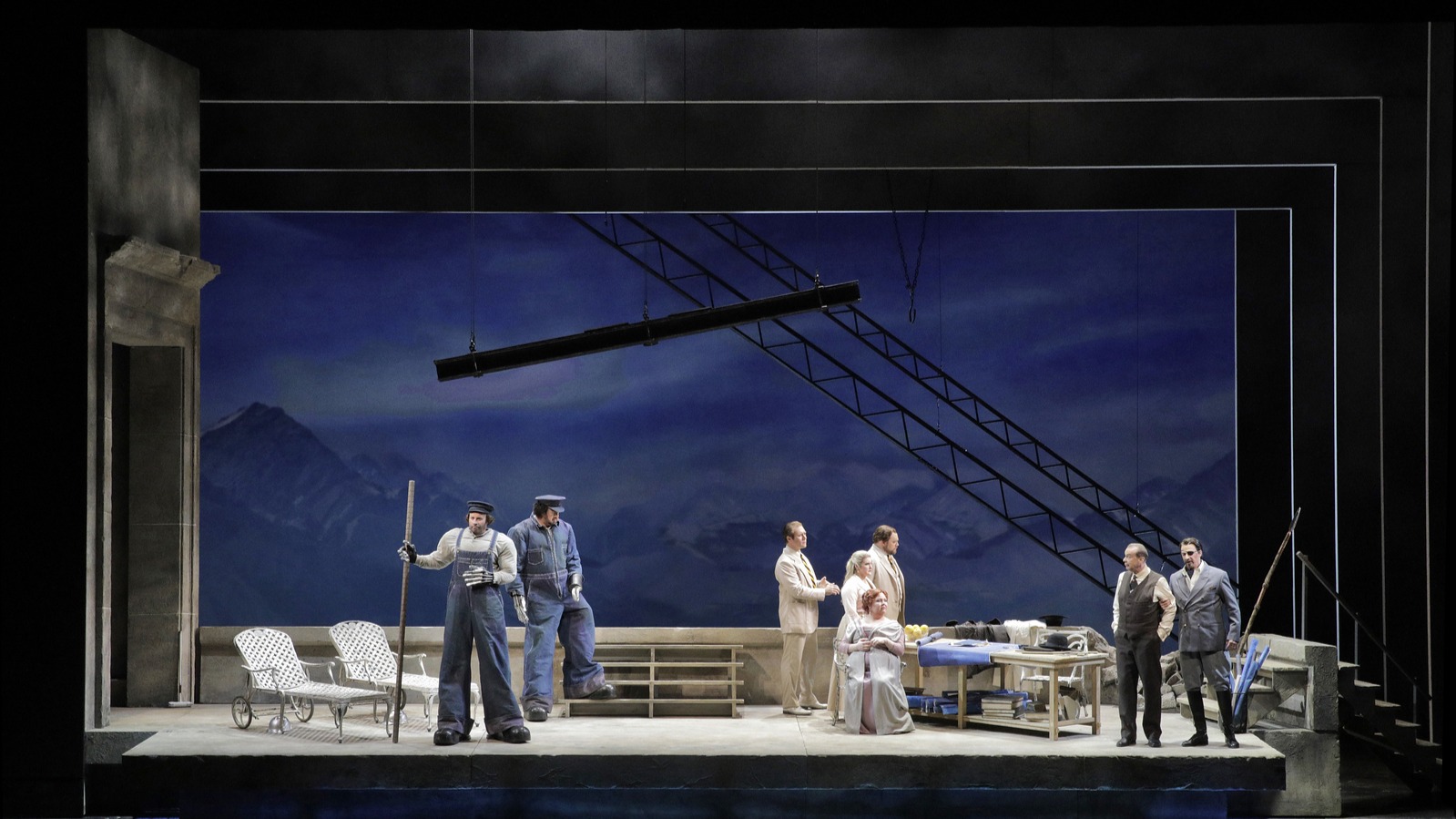
Then, there’s the story. Young’s suite does include the “Ride of the Valkyries” (“Kill the Wabbit,” to those who grew up watching “Looney Tunes”), which on Friday sounded both muscular and refined. But this wordless Ring is light on Nibelungen (dwarves), giants, and even gods. Instead, Young puts the mortal Siegfried front and center. She also wrangles longer excerpts of music into a four-movement structure, one with the heft and dramatic arc of a real symphony, rather than dashing through the highlights like some other suites.
Friday’s performance started off a tad skittish with the Prelude to Das Rheingold. But soon enough, the music took flight. Young conducted big — as opera conductors tend to do — and yet with nuance.
The scene of the Rhinemaidens was effervescent, the beginning of “Siegfried’s Rhine Journey” gratifyingly light. Even in the most rousing passages, the sound was never brash, but rounded and balanced. The pacing was excellent, especially in the ceremonious processional of the gods to Valhalla and in the blooming dawn sequence.
Fortunately, the Wagner suite came last on the program; it’s hard to compete with music of this scale. Still, there was an unexpected throughline from the concert’s first half in a 2017 work by Ella Macens, an Australian composer with whom Young has worked. In swelling chords and yawning brass glissandi Macens’s The Space Between Stars contemplates a subject no less vast than the heavens. The result is a sprawling and cinematic sonic smear — one with several gorgeous moments, if the overall trajectory occasionally seems to go adrift.
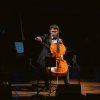
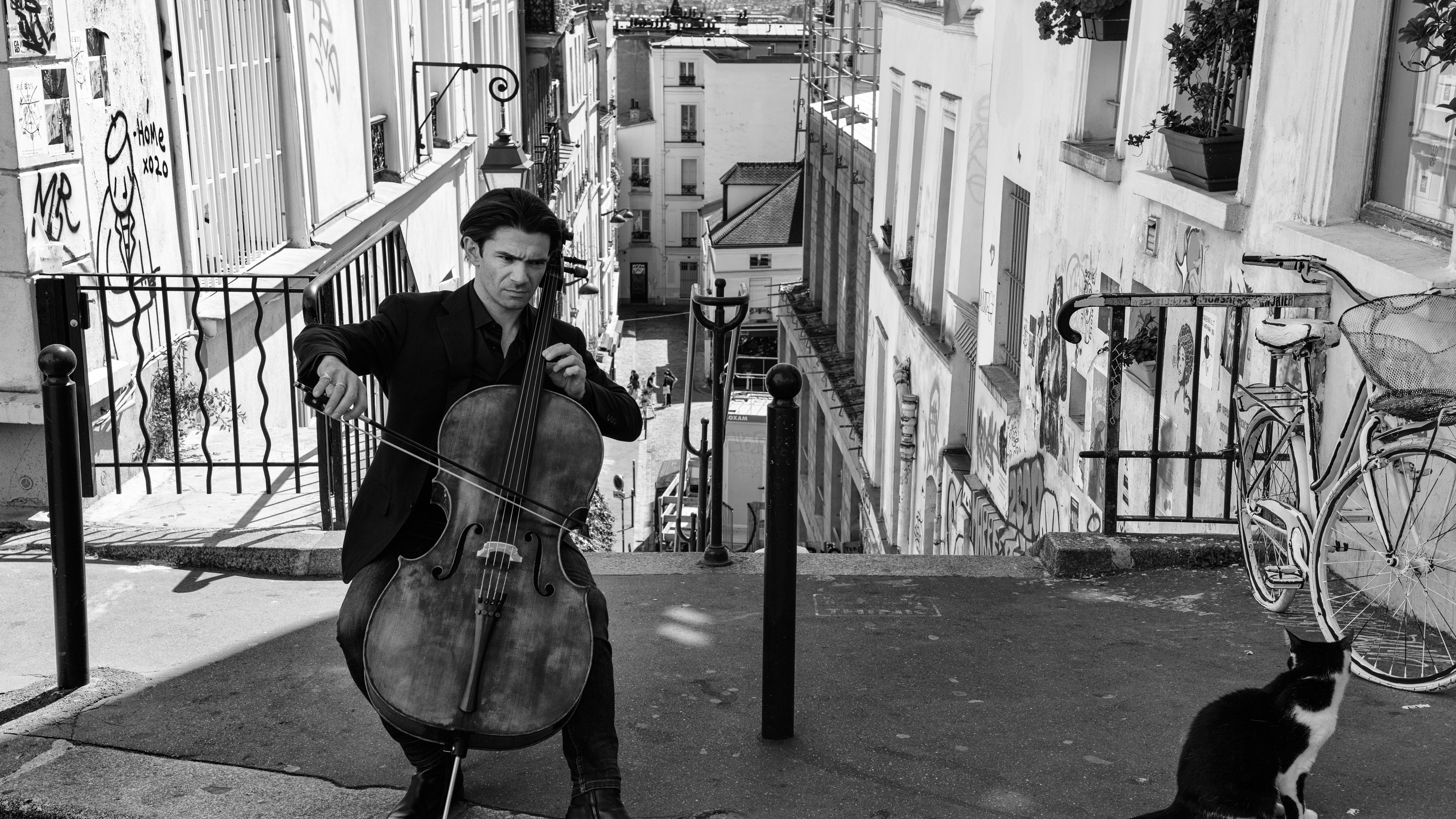
Tucked between that work and Wagner was Camille Saint-Saëns’s Cello Concerto in a characteristically elegant performance by French cellist Gautier Capuçon.
He’s long imbued this ubiquitous music with an impressive sense of line and an almost uncanny clarity. In recent years, his interpretation has only deepened. The opening Allegro has grown more urgent, the slow movement’s tender minuet ever so much finer. On Friday, the orchestra, too, was especially responsive.
Wagner couldn’t help but steal the spotlight this time, but on any other day the headliner would have been Capuçon.
This story is published in partnership with the San Francisco Chronicle