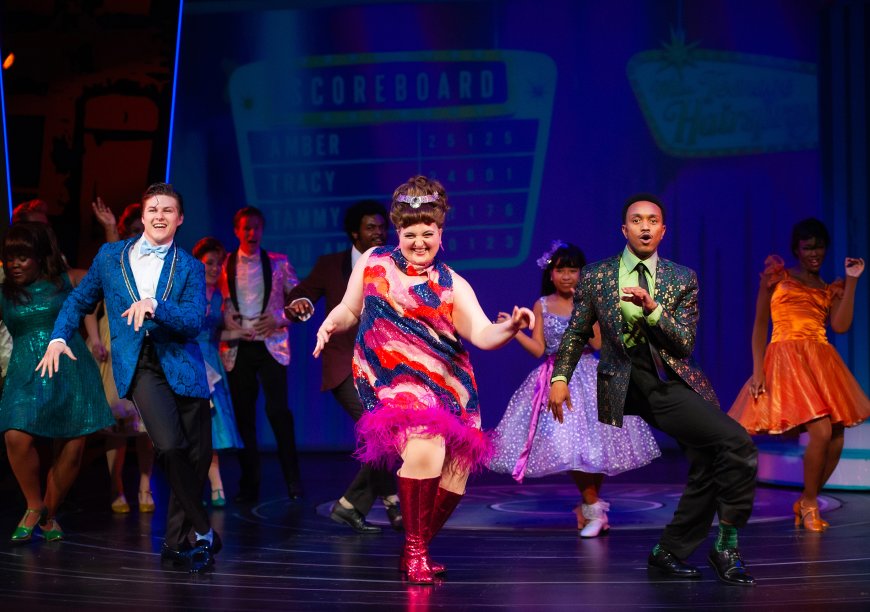
John Waters has described Hairspray as his “gift that keeps on giving.” While the director presided over the punk-inflected Mosswood Meltdown festival in Oakland, the Broadway smash musical delivered another uproarious triumph with San Francisco Playhouse’s winning production.
Based on Waters’s 1988 film of the same name, Hairspray is a locomotive that draws power from Marc Shaiman’s irresistible score. Running through Sept. 12, SF Playhouse’s production boasts a cast brimming with talent equal to the demands of a musical in constant motion.
Even with a last-minute substitution in a major role, the July 21 performance was polished and punchy. Barely contained by the intimate Union Square-adjacent theater, Director Bill English and Choreographer Phoenyx Rose effectively stage the major numbers with brio and commitment, starting in the first moments with the giddy opening “Good Morning, Baltimore.”
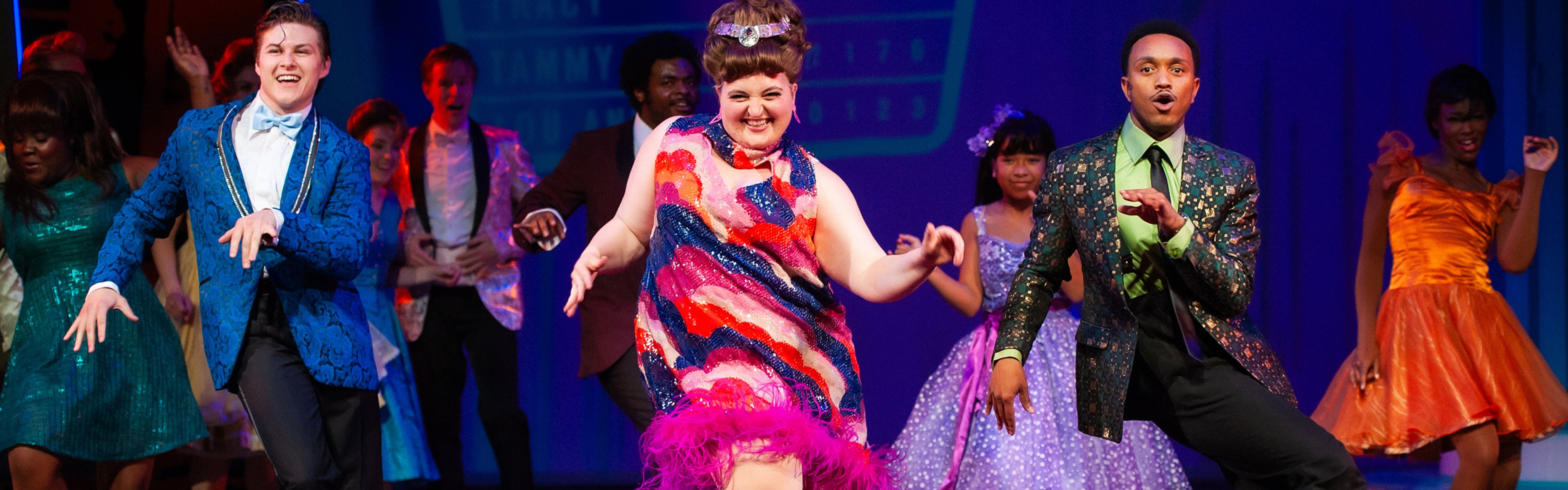
Set in Waters’s beloved hometown in 1962, Hairspray tells the story of the dauntless and zaftig teen Tracy Turnblad — played by Playhouse newcomer Ella Ruth Francis with all the requisite heart, moxie, pipes, and dance moves required — seeking to join the dance troupe on the local Corny Collins Show. Her personal campaign quickly grows into a civil rights struggle to integrate the broadcast, which has relegated Black dancers to a monthly “Negro day.”
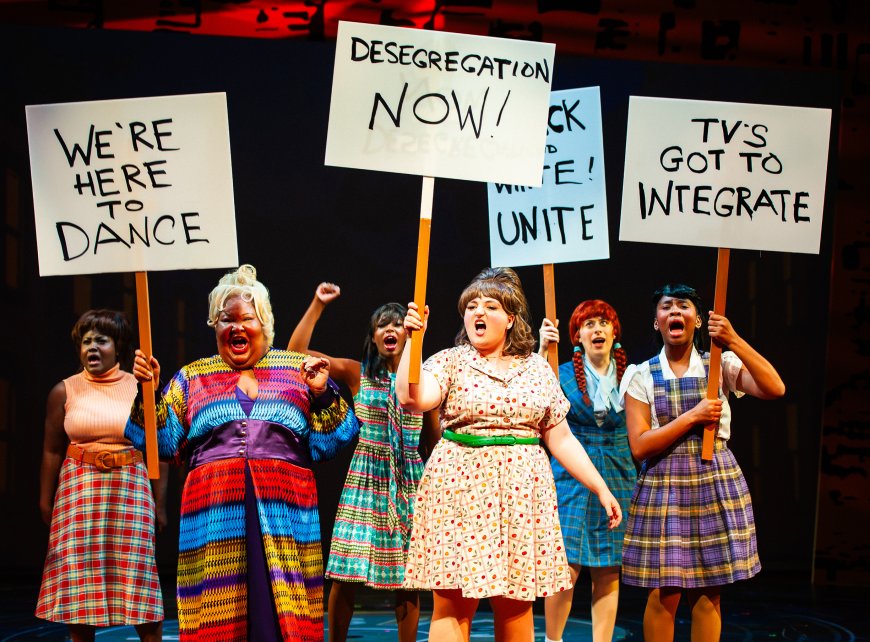
Waters’s genius for marrying corn and camp to genuine affection for outsiders and underdogs comes through brightly in the musical version, which avidly promotes Black liberation, and allyship, through music and protest.
This cast is fully committed to celebrating this liberation. There really wasn’t a dull passage in the production, but some pieces like “Mama, I’m a Big Girl Now” soared above the rest. Sexual liberation is in the air during this song, as Tracy and her loyal but dim sidekick Penny Pingleton (expertly played by Samantha Rich), and the scheming Amber Von Tussle, a queen-bee role featuring the well-cast Mackenzie MacDonald, stomp down on the gas in the face of their mothers’ red-light refrain “Stop! Don’t! No!”
There might be a generation gap, but the score gives equal time to the better and worse parents. Alison Ewing’s villainous Velma Von Tussle is Cruella de Vil-level scary as the racist Corny Collins Show producer who longs for past glory in “(The Legend of) Miss Baltimore Crabs.”
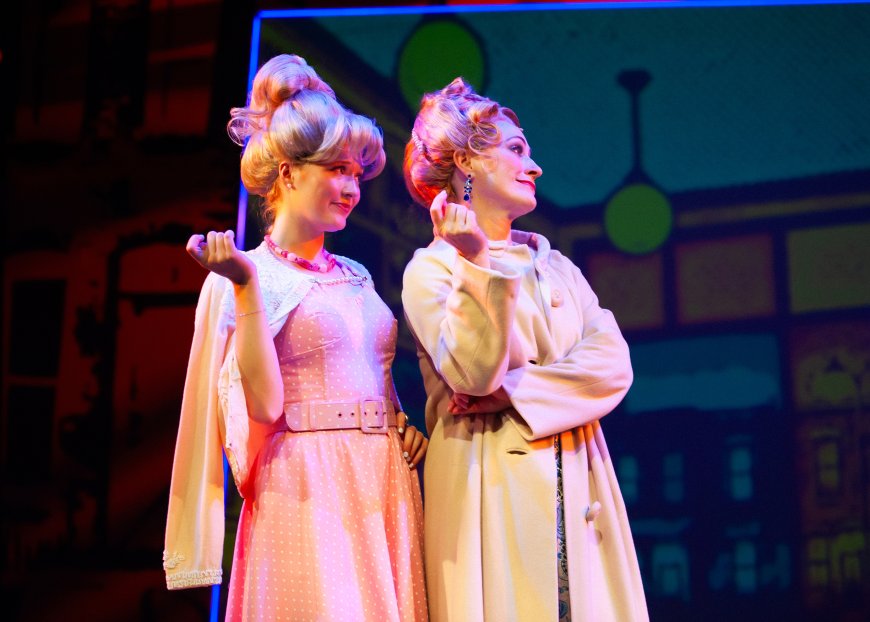
“(You're) Timeless to Me,” the topsy-turvy Cole Porter-ish duet between Tracy’s affable but zany father Wilbur Turnblad and his bedraggled housewife Edna Turnblad was another gem, revealing Ken Brill as a light-toned crooner. As Edna, Jonathan Chisholm is the twinned matriarchal heart of the show, taking up lots of space and making the most of the zippy lines.
A showtime substitution put associate director Phaedra Tillery-Broughton on stage in the key role of Edna’s momma-bear counterpart Motormouth Maybelle. Powerhouse soprano Jeannine Anderson is back for the run, but her understudy infused the catalytic “I Know Where I’ve Been” with righteous, gospel-inflected fervor.
Another understudy, Sanaiya Johnson, ably handled the role of Motormouth’s daughter, Little Inez. And Jordan Covington was smooth, simmering and athletic in the key role of Motormouth’s son, the dance-trend sparking Seaweed J. Stubbs.
Mark O’Donnell’s and Thomas Meehan’s book, ripe with winking double entendres and snappy one-liners, didn’t always hit. Amber Von Tussle’s retort to her wandering boyfriend Link Larkin (played with easygoing charm by Trevor March) “What happened to the bland and spineless boy I fell in love with?” should land with a lash, not a whine.
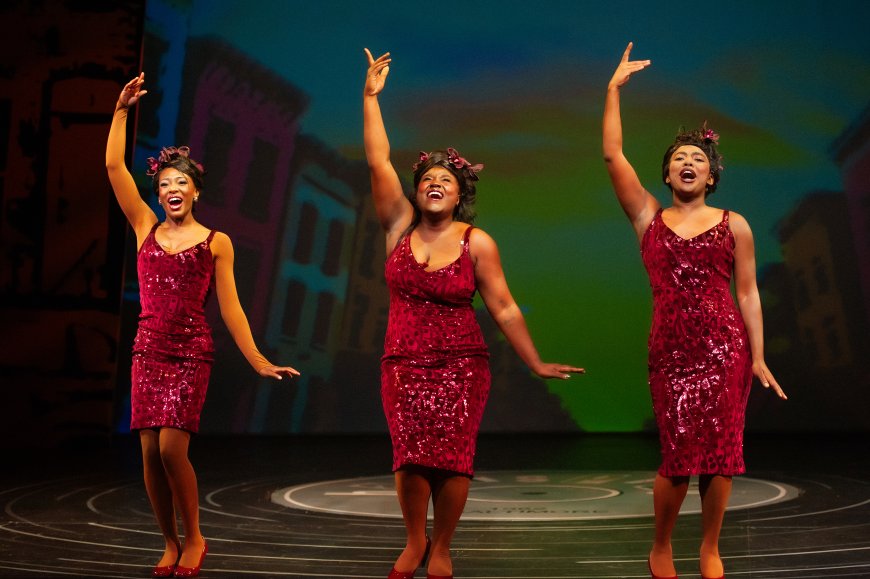
But Hairspray isn’t defined by the dialogue. Just about everything important happens via bodies in motion and voices in song.
By the celebratory finale, “You Can’t Stop the Beat,” the integration of the Corny Collins show is complete as the moral triumph fuels the pop apogee. There’s plenty of credit to go around for the production’s success, but the bullied yet undaunted Tracy is the heroine of Hairspray and Ella Ruth Francis brings her triumph gloriously to life.