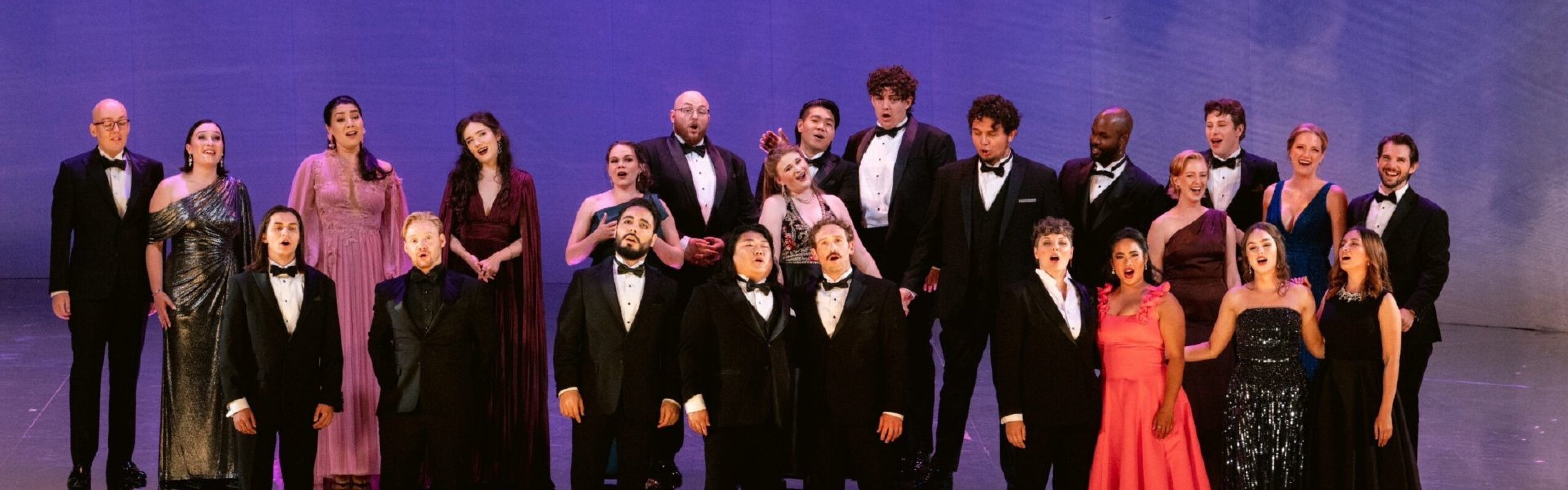
At the annual Merola Grand Finale, a little can reveal a lot. A single aria or duet, a glittering patch of coloratura or even a singer’s first few notes can be enough to make a strong impression.
That happened right after intermission on Saturday, Aug. 15, at the War Memorial Opera House, when soprano Anna Thompson delivered the climactic prayer in Charles Gounod’s Faust with a broad beam of lustrous vocal light: “Shining angels, lift up my soul.” Four bars in, she’d achieved artistic liftoff.
Thompson, as one of this year’s 28 Merolini chosen to take part in the prestigious Merola Opera Program, has appeared with her cohort in two fully staged productions at the San Francisco Conservatory of Music: an indifferent La Tragédie de Carmen and a spectacular Ariadne auf Naxos.
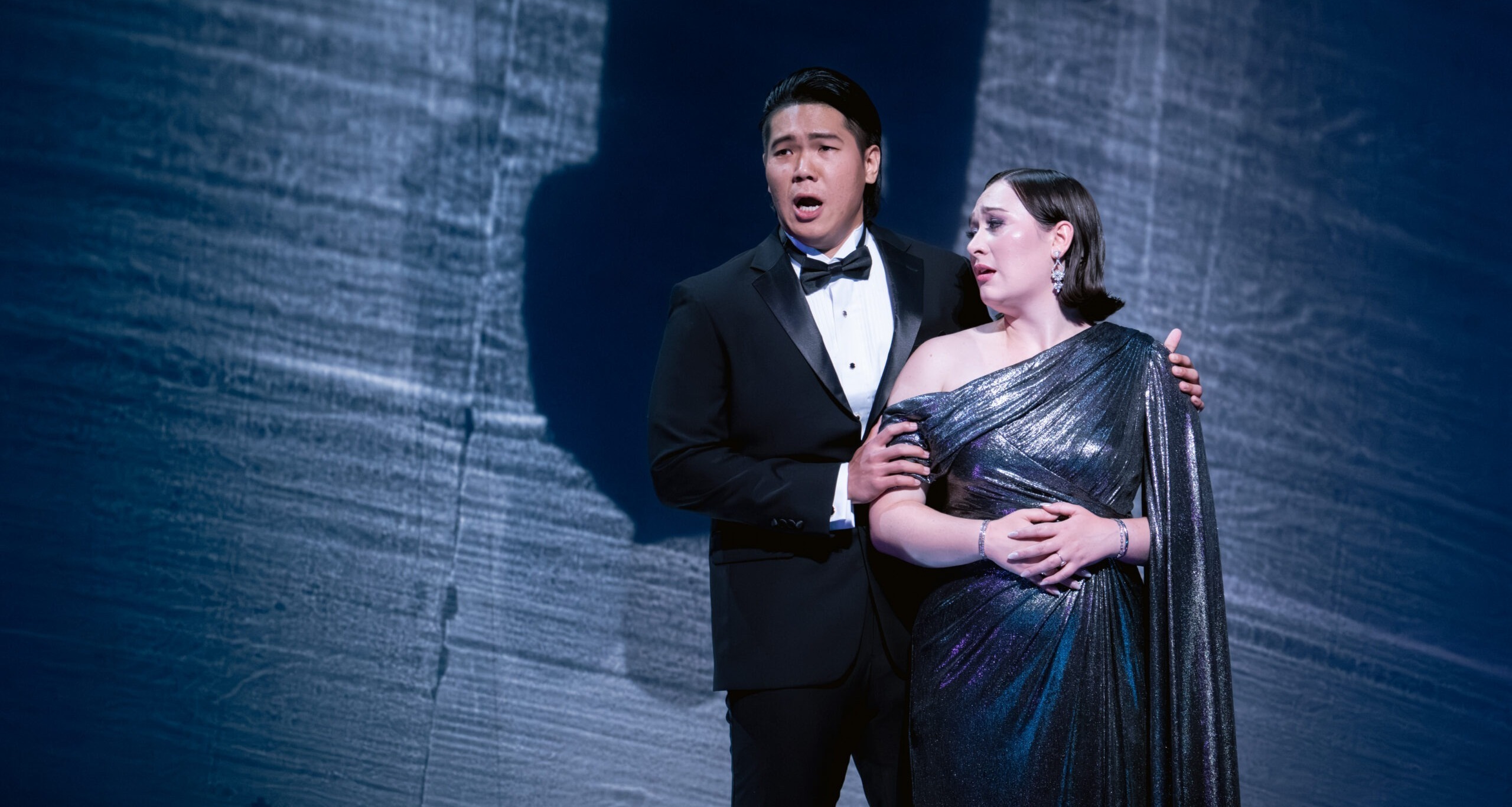
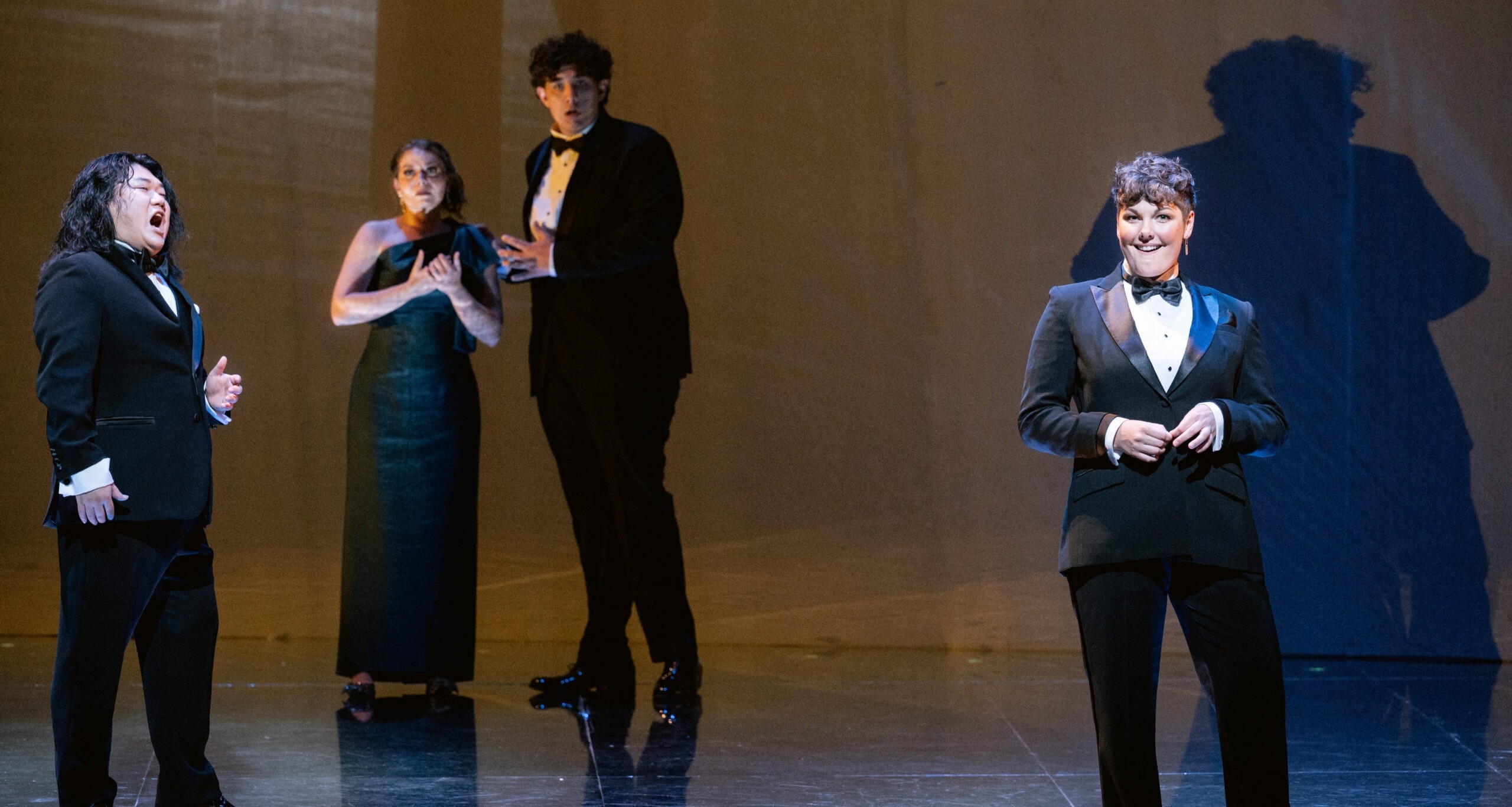
For the Grand Finale, as they always do, she and the other singers dressed up in gowns and tuxes and tested out their voices and stage presence in the more demanding dimensions of the Opera House. The swooping curves of the set from San Francisco Opera’s forthcoming “Manon” added a sense of dramatic occasion as well as some peculiar lighting effects that gave the singers inverted shadows. Wiliam Long led an excellent, keenly attentive performance by the Grand Finale Orchestra.
While the concert is a feel-good celebration, it’s almost irresistible to handicap the program of 23 excerpts, picking out favorites. For one night, everyone’s a self-appointed talent scout.
While nothing lasts very long onstage, several of the more substantial scenes made notable vivid and nuanced impressions. Soprano Charlotte Kelso and tenor Chester Seungyup Han exposed the absorbing approach-avoidance relationship between Minnie, a fragile but flinty saloon owner, and her suitor with a secret in Puccini’s La Fanciulla del West. Their singing and acting rippled with shifting emotional currents.
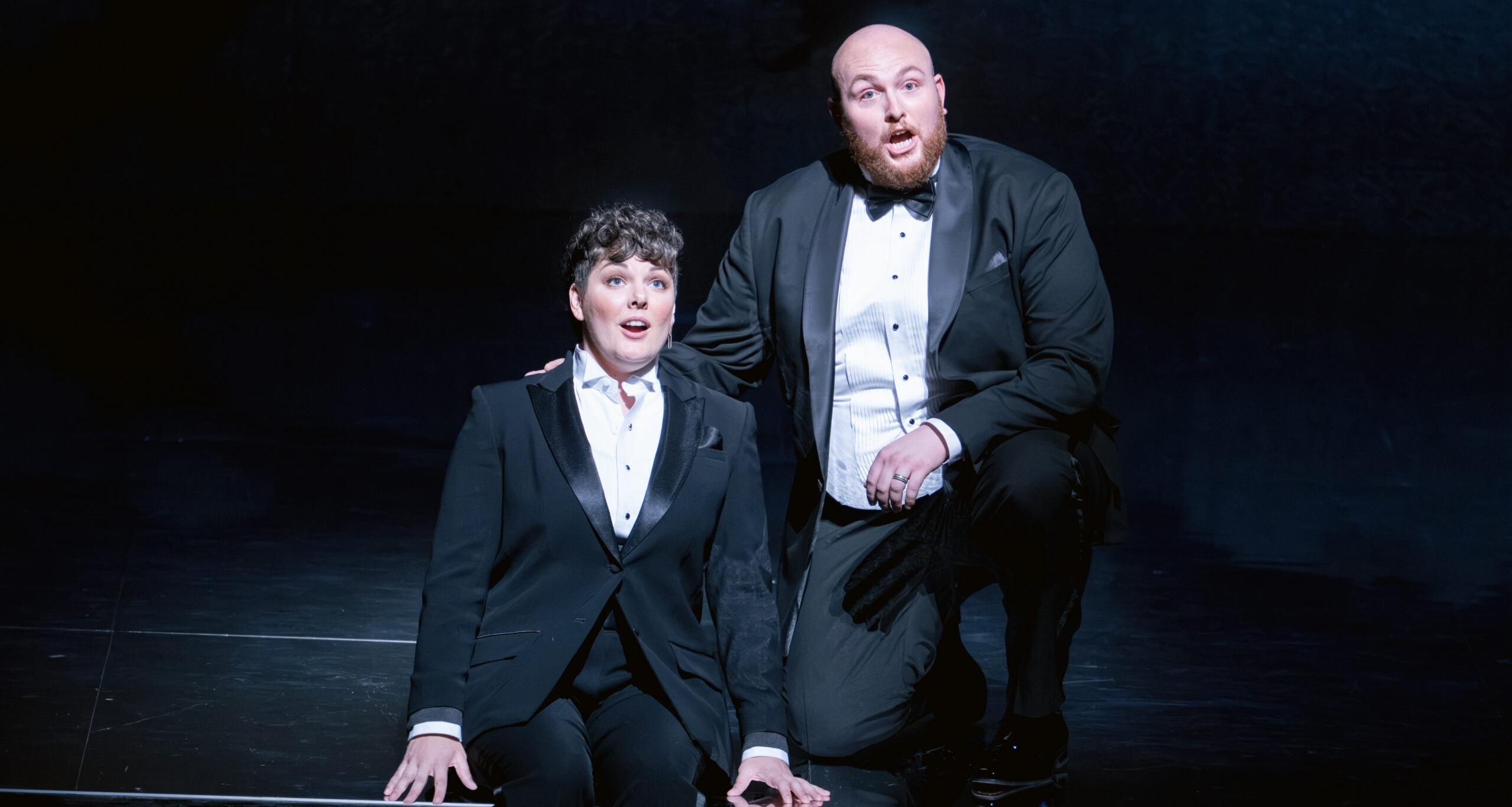
Thompson and baritone Paul Jang generated combustible energy in a scene of love on the precipice in Ruggero Leoncavallo’s Pagliacci. Mezzo-soprano Theo Claveles and tenor Matthew Sink sounded glorious together in a duet from Hector Berlioz’s Les Troyens.
Baritone Enes Petkas’s troubled Dane and soprano Jennifer Robinson’s Ophelia acted and sounded tentative in Ambroise Thomas’ Hamlet, but then uncertainty and thwarted feeling are essential to those characters.
The abundance of the Grand Finale kept yielding unexpected pleasures. Mezzo-soprano Katherine Dobbs’ took a bubbly turn in a song from Fritz Lehár’s The Merry Widow, and the program featured a ferocious aria from Carl Maria von Weber’s Die Freischütz, sung by the imposing and demonically cackling bass John Mburu.
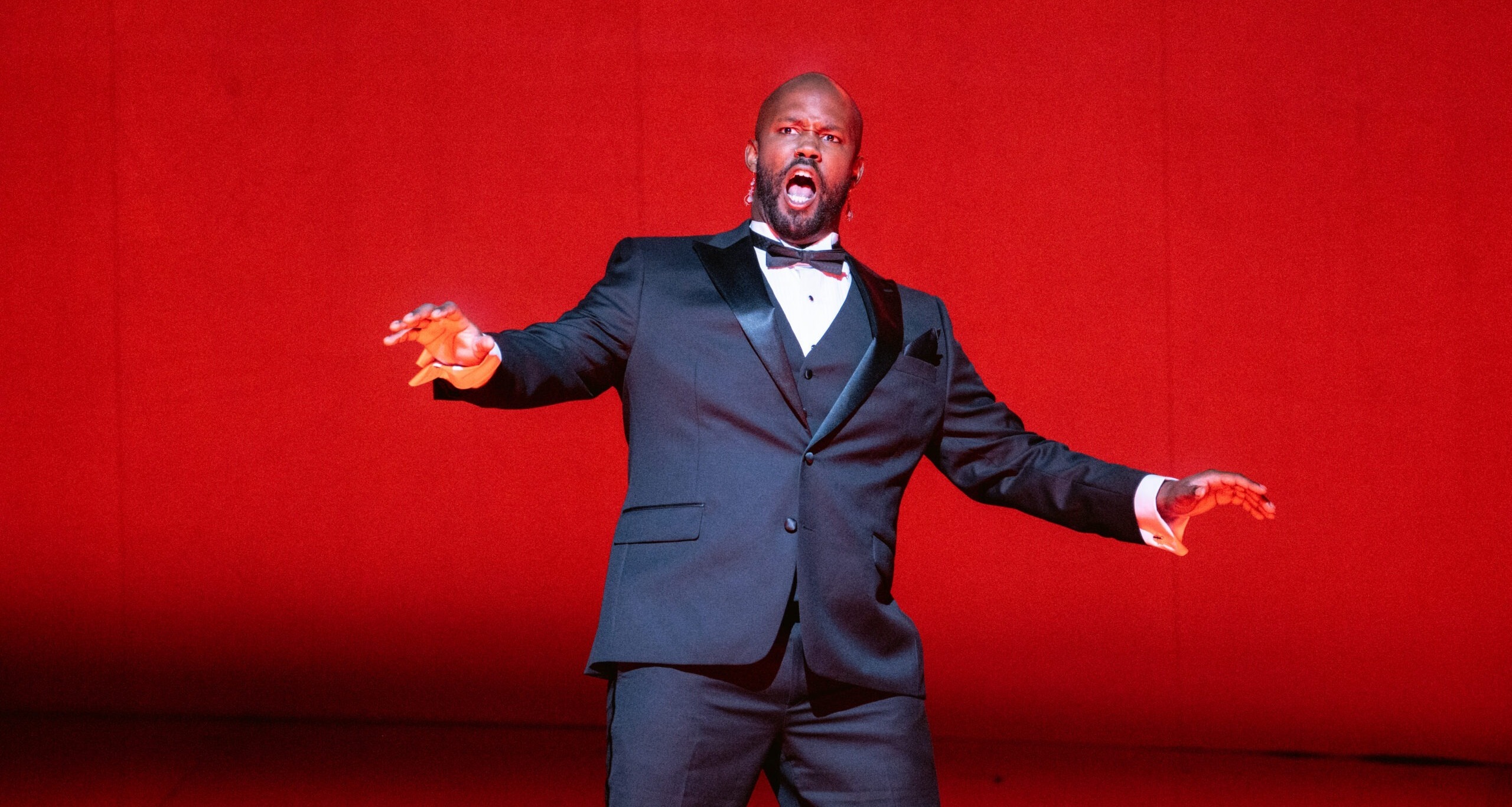
A string of male solos powered the concert toward its conclusion. Tenor Ryan Bryce Johnson performed the feverish “Aria of the Worm” from John Corigliano’s The Ghosts of Versailles. His hell-bent, raw performance peaked when he grabbed the jacket he’d flung off and strangled it in his fist, singing, “Long live the worm.” It was shiver-inducing.
Two engaging curiosities followed. Petkas used his booming baritone to tap the rock band roots of Turkish composer Murat Cern Orhan’s “Seyh Bedriddin Destani” (“The Epic of Sheikh Bedriddin,” based on Nâzım Hikmet's 1936 poem). Then Jang gave “Yearning,” a Korean art song with music by DongHwan Kim and lyrics by KiChul Lee, a warm glow.
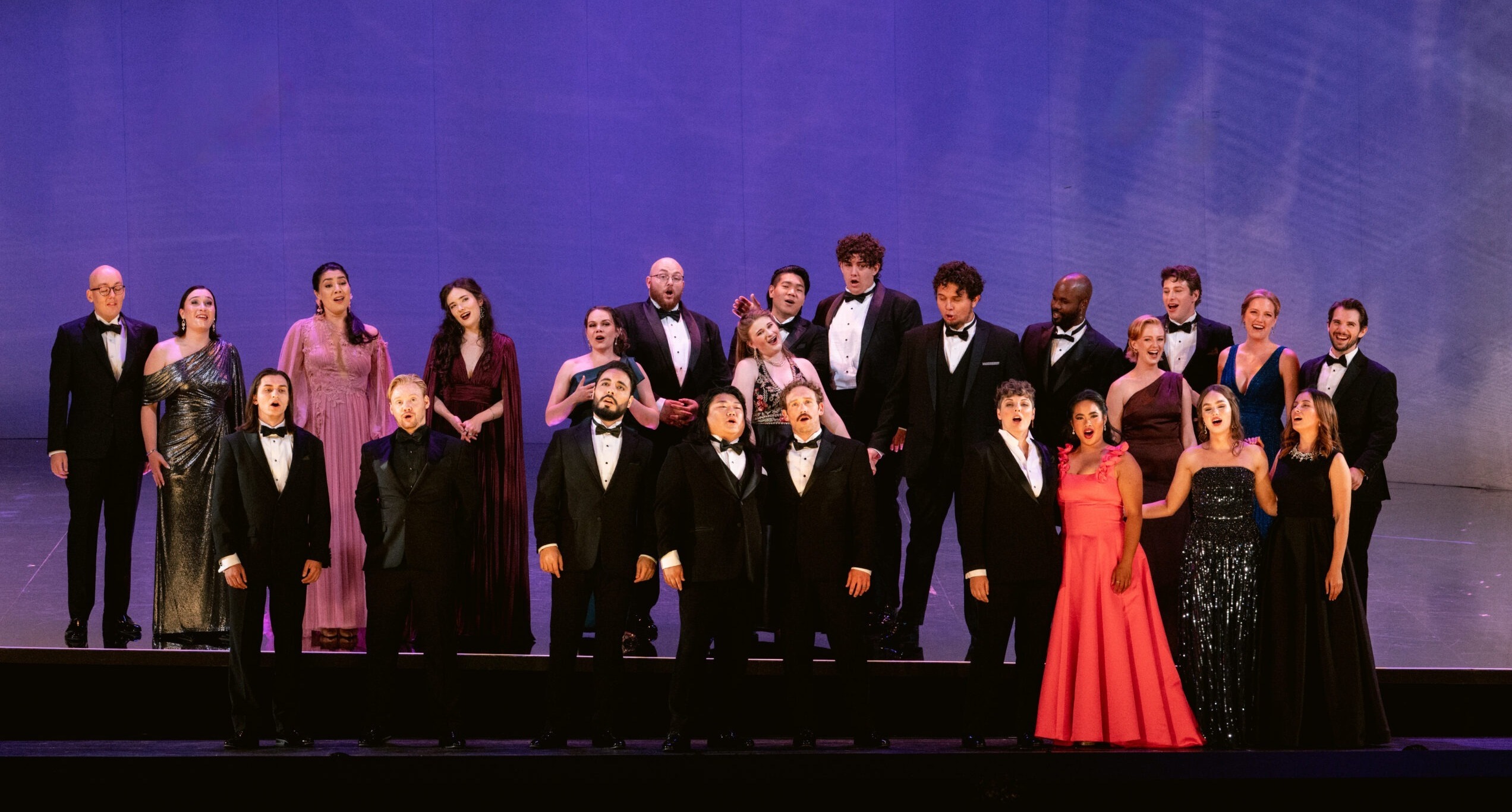
On the lighter side, tenor Logan Wagner’s “On the Street Where You Live,” from the musical My Fair Lady, was delightful. Full ensemble performances of the Spaniard Manuel Penella’s ode to sherry (“Sherry, this is the wine of my country,” from the zarzuela Don Gil de Alcalá, 1932) and his “The World Is Mine Tonight,” from the 1936 Hollywood film The Gay Desperado, brought the evening to a close, with hugs all around.
This story was first published in Datebook in partnership with the San Francisco Chronicle.