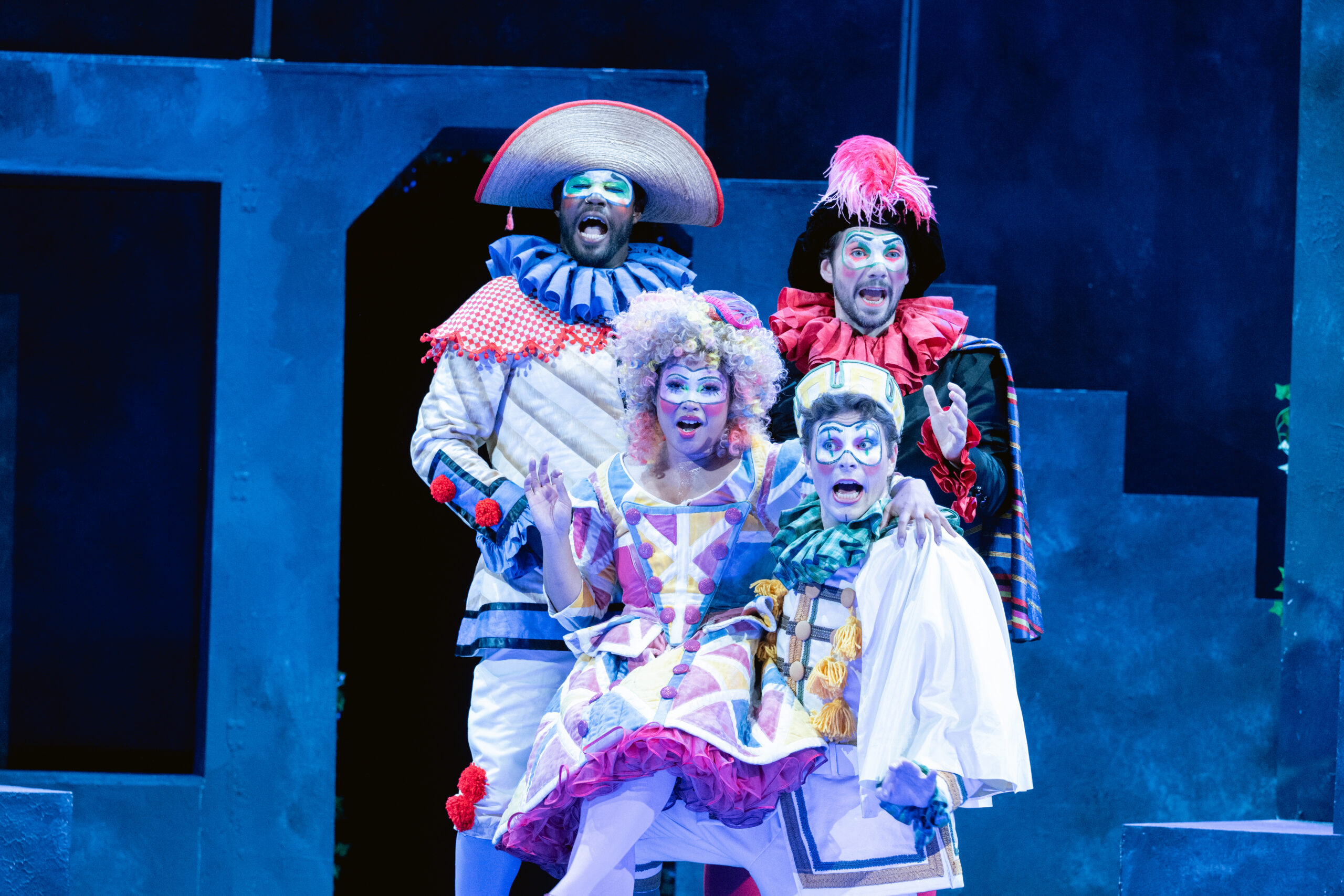
When Stephen Sondheim asks to “Send in the Clowns,” in his ironic number from A Little Night Music, it’s a rueful ode to lost love. The commedia dell’arte troupe that bursts into Richard Strauss’ opera Ariadne auf Naxos, by contrast, offers a puckish, ebullient take on the subject.
Love, as they demonstrate to the haunted title character through glorious song, playful dance, and a dash of slapstick, can ignite even the most frozen heart.
In a vital production by the Merola Opera Program, music, performance, and stagecraft are blissfully fused. The show, which opened on Thursday, July 30, at the Caroline H. Hume Concert Hall at the San Francisco Conservatory of Music, featured bravura singing, a vibrantly colorful and responsive orchestra under the direction of Ann-Katrin Stöcker, inventive stage direction by Omer Ben Seadia and expert, evocative design.
The opera, first produced in 1912 and reconceived with librettist Hugo von Hofmannsthal in 1916, is a delicious layer cake of structure and effects. The masterful Merola student forces captured the sweet and the satiric, the playful and the somber, topped off by the dazzling spun sugar of Emilie Kealani’s coloratura soprano in the bravura role of Zerbinetta.
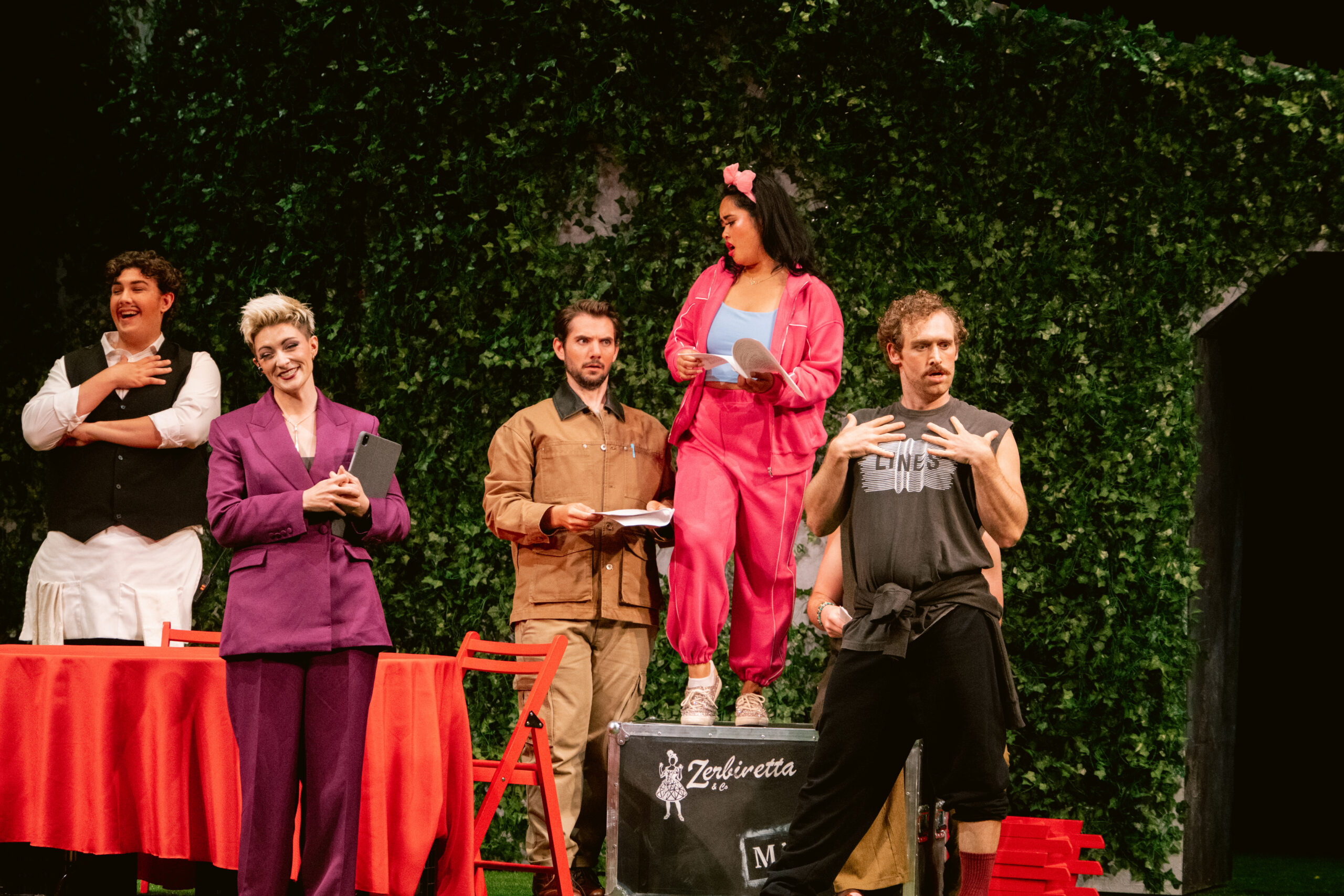
An opera within the opera, Ariadne opens with a backstage comedy, albeit one with serious overtones. A moneyed patron, the story goes, has commissioned two short pieces to be performed back-to-back. The opera seria (the eponymous “Ariadne”) is to be followed by a larky buffa and — even worse — will have to be performed simultaneously, to leave time for a fireworks show afterward.
The “Ariadne” composer (mezzo-soprano Theo Claveles in a feat of passionate and propulsively sung desperation) rages against the degradation of high art, but money talks.
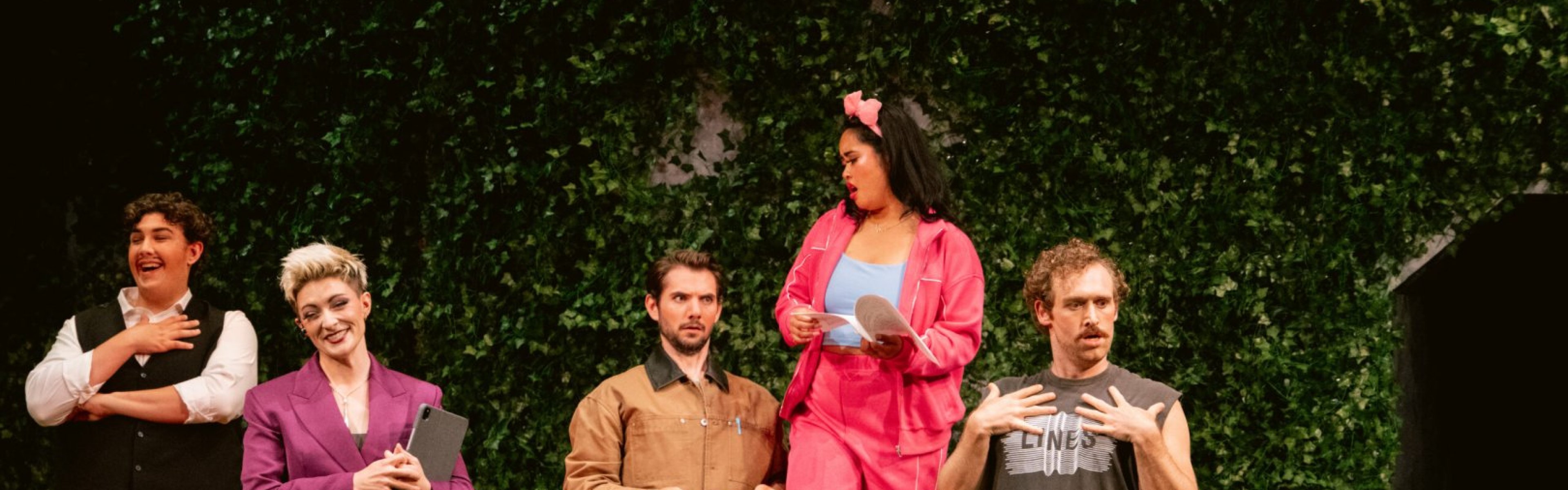
With deft touches — a cartwheeling choreographer (tenor Ryan Bryce Johnson) and prima donna preening (soprano Adia Evans) — the madcap backstage business reached its peak when the traveling commedia troupe stood atop a wall tearing out pages of the “Ariadne“ score and flinging them about.
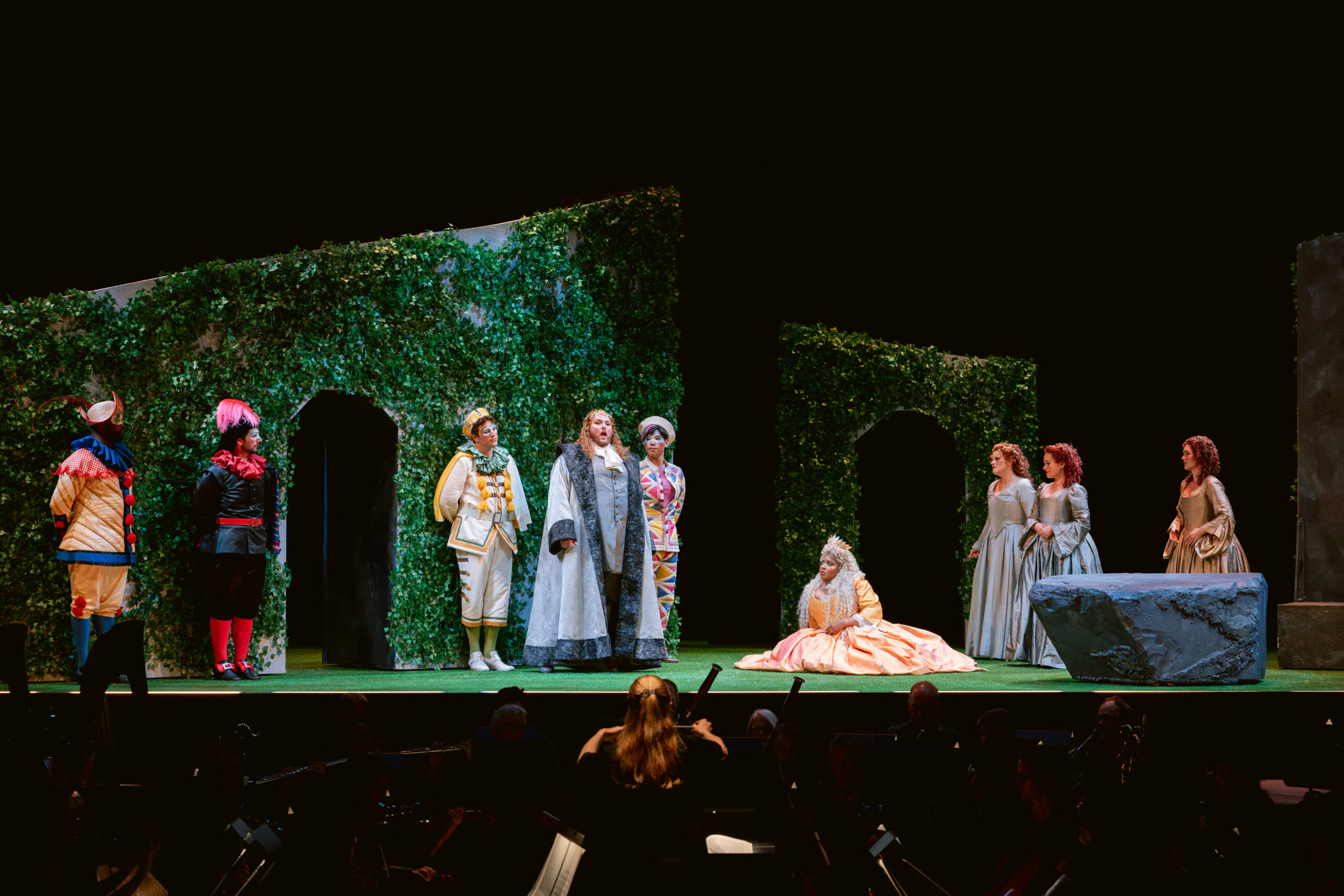
It was like something out of A Night at the Opera, if the Marx Brothers had worn Harlequin suits and extravagantly plumed hats. Instead, the vine-covered walls of Alexander V. Nichols’ set and the characters in modern street clothes (by costume designer Galen Till) brought the California Wine Country to mind.
The main act is longer and musically richer, building to a sequence of showy arias, ensembles and a love duet. Stöcker’s musical direction was particularly notable for how clearly and expressively the voices came across over a big, often brawny orchestra.
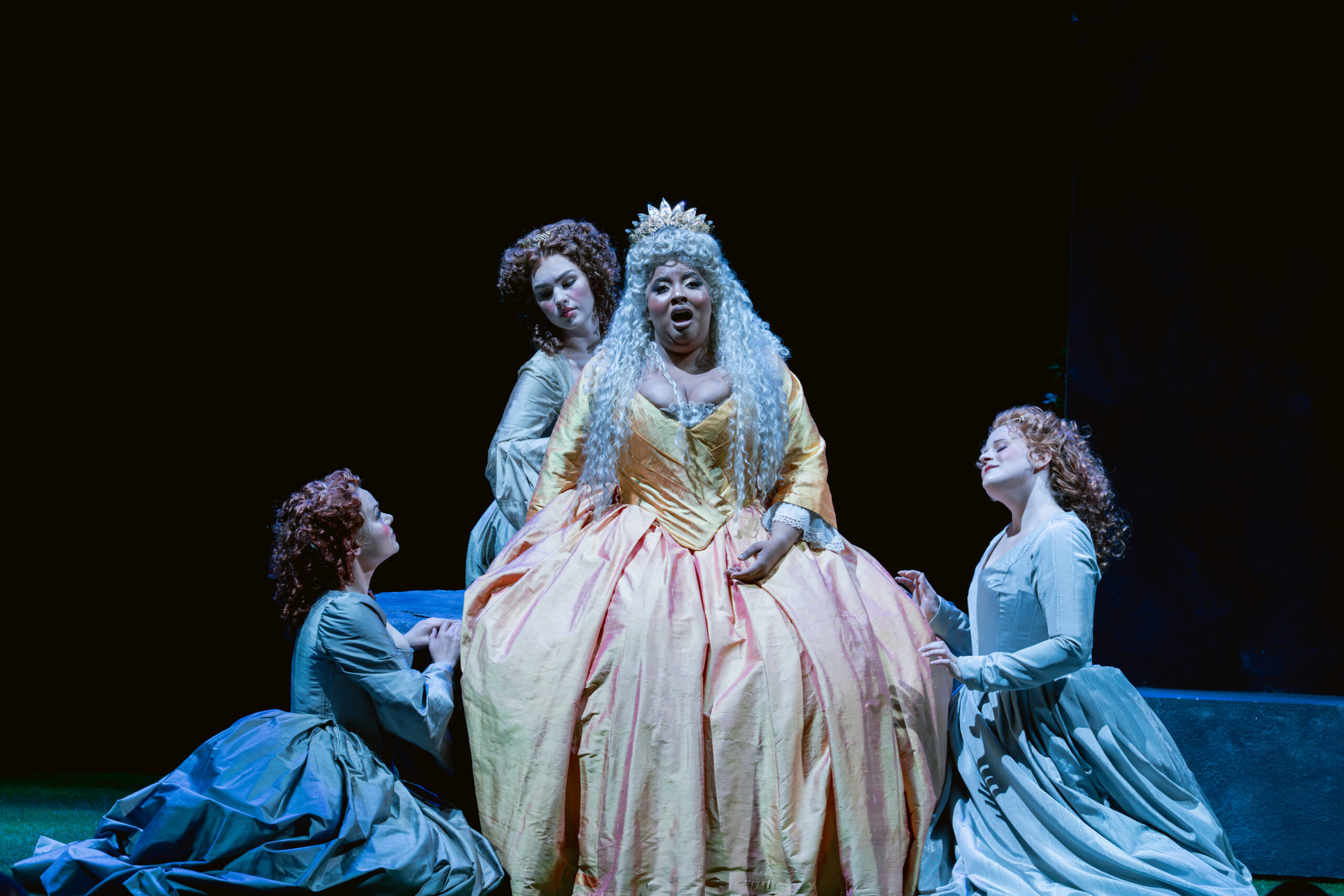
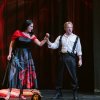
The play within a play began with Ariadne (Evans), spurned by her lover Theseus, all but lifeless with grief and determined to die. Sprawled out on a rock, she was covered in a red tablecloth like a shroud, hinting at the comedy to come. Bemoaning her fate, accompanied by a trio of empathic ethereal spirits, Evans rose to a fever pitch, her high notes like steely blades.
When the clowns interrupt, popping up like puppets over a parapet, everything — including the detachable set pieces — is set in motion.
In a sparkling, spitfire performance as Zerbinetta, a woman who knows what it’s like to play the field, get “dumped” (per the apt subtitles) and bounce back, Kealani was nothing less than brilliant. As if one of opera’s most treacherous coloratura passages was a snap, she nailed it atop a spinning rock.
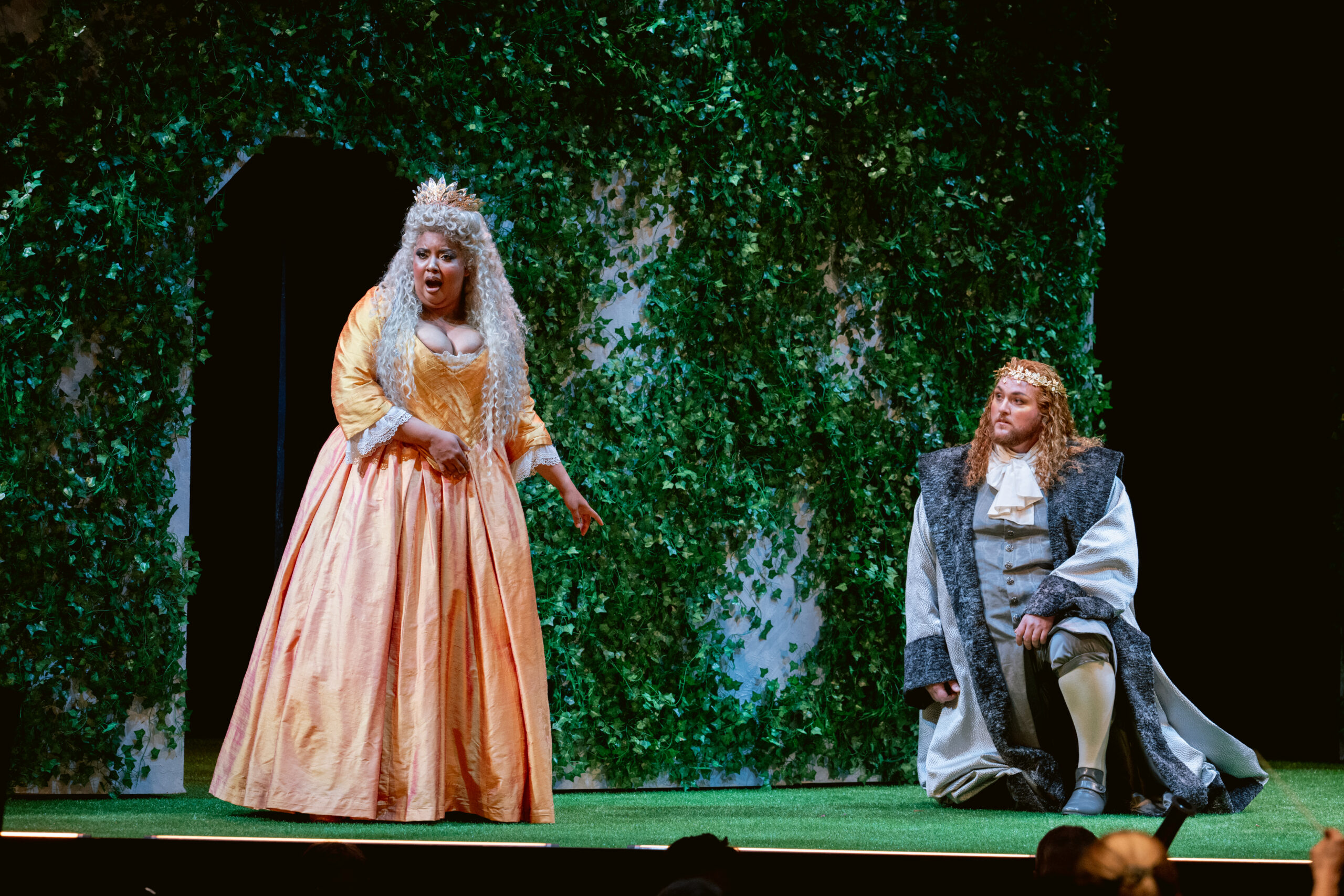
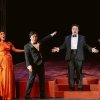
Evans’s Ariadne, who remained in her mourner’s cave for much of the act, found new life at the end when Bacchus (tenor Matthew Sink) gradually won her over.
In a wonderful touch at the end, the singers came backstage to celebrate their unlikely triumph with hugs and kisses all around. The patron’s precious fireworks went off after all — not in the sky but in this bright marriage of tragedy and comedy.
This story was first published in Datebook in partnership with the San Francisco Chronicle.