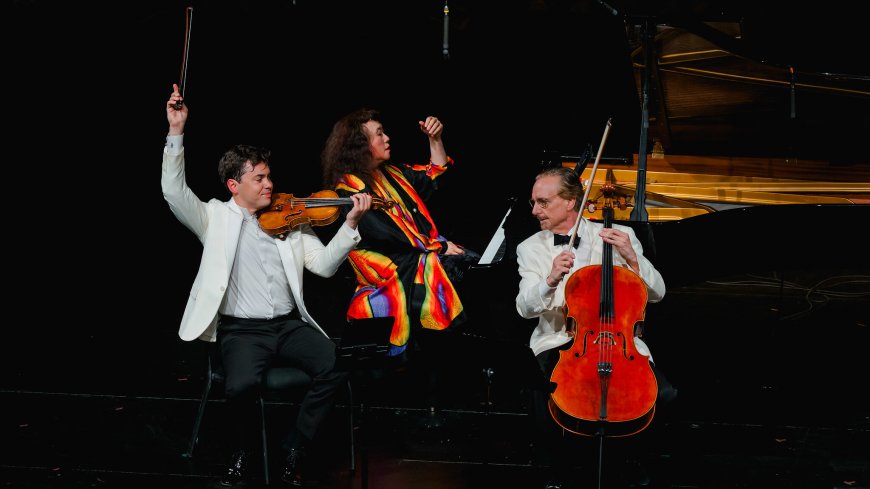
With a late-afternoon program of late-career masterworks by Franz Schubert, Music@Menlo brought the curtain down on its 2026 summer season. Before the shadows gathered, there was another farewell to mark. The concert on Saturday, Aug. 8, at the Menlo School’s Spieker Center for the Arts was the last under founding artistic directors David Finckel and Wu Han.
“I hope I don’t cry,” Han said when she took the microphone during a brief ceremony just after intermission. She didn’t. An overflow audience offered too much affection and gratitude for that. A board declaration honored the married couple as “Artistic Director Laureates.”
Nothing could have affirmed Finckel and Han’s 24-year stewardship of the annual chamber music festival more eloquently than a spectacular performance of Schubert’s Octet in F Major, D. 803, that closed the program. Its six varied and inventive movements encompassed festive waltzes and convulsive key changes, a set of winsome variations and pensive meditations, galloping joy and eerily creaking tremolos. It felt, as great music magnificently played can, as if it were about everything.
The virtuosic first violinist Paul Huang and mellifluous clarinetist Sebastian Manz, seated across from each other at the ends of a semicircle, acted as de facto co-concertmasters. Both introduced a considerable amount of the thematic material, leading the way into music that kept developing, surprising, and rippling with new colors.
The result was a performance at once delightful and democratic, with the wealth passed freely among the eight musicians. In one early example, horn player Radovan Vlatković rose from a quietly sustained single note to a burnished melodic lead. Cellist Sihao He set those haunting tremolos going in the final movement. Bassist Nina Bernat had her turn to shine, with several tenderly bowed passages and a single decisive pluck that finished off a phrase like a punctuation point.
At 65 minutes, the Octet outlasts many symphonies — and matches them in scale and range. Through it all, Huang’s lead performance was propulsive, precise in every detail, and seemingly spontaneous. Manz brought a singer’s lyrical long lines, supple phrasing, and coloratura trills to the clarinet part.
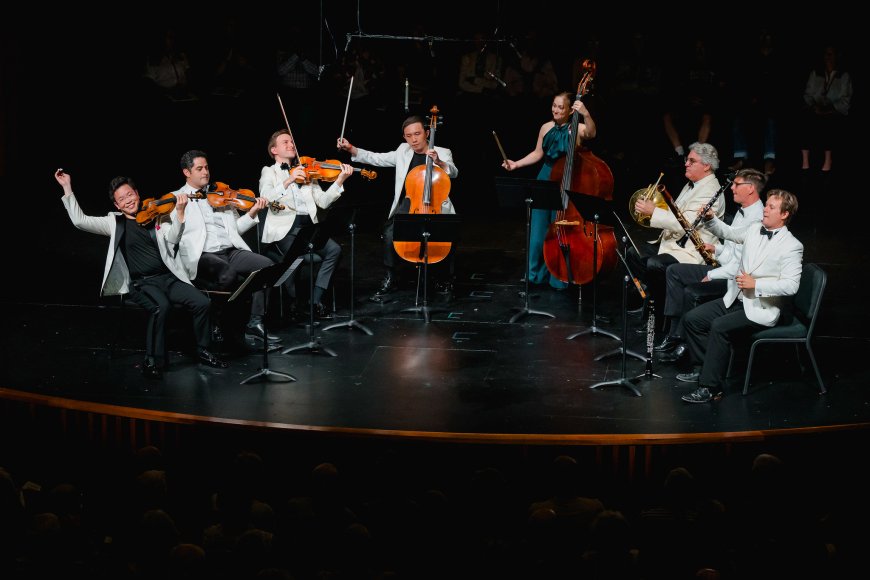
Even as those two players stood out, what distinguished this performance was the sense of a fully integrated ensemble. The Adagio introduction alone sealed the case. With agile entrances, dramatic pauses, and intuitive dynamics, the musicians seemed not just to be playing in sync but breathing together as one.
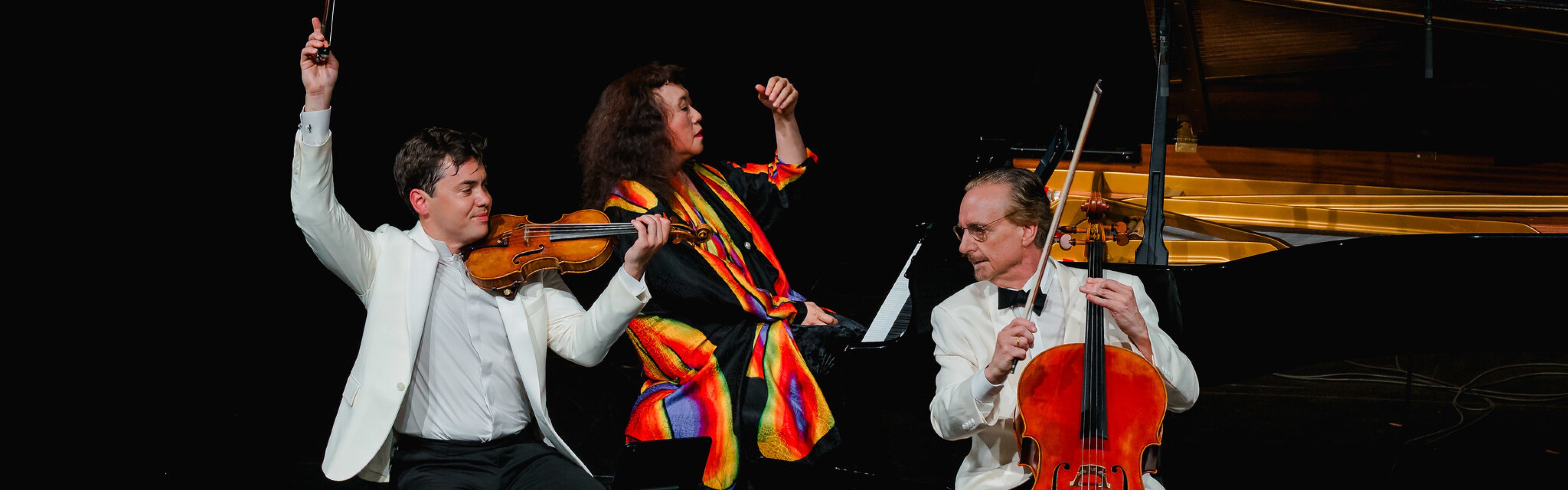
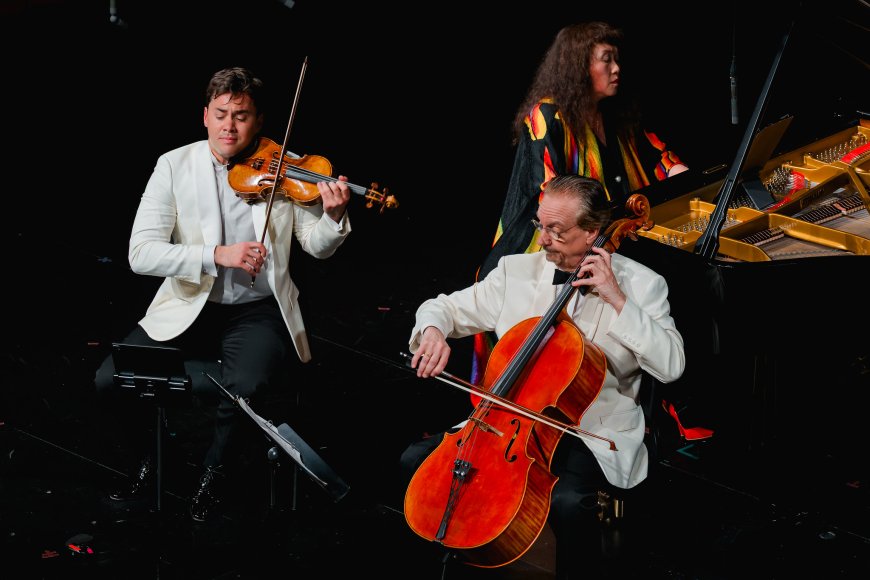
Schubert’s sweeping Piano Trio No. 2 in E-flat Major, D. 929, opened the program, with Han at the piano, Finckel on cello, and Benjamin Beilman on violin. The three landed some big moments and limned the work’s broad outlines, especially in the exciting outer movements. But the performance felt unfocused and unbalanced overall. Beilman, although excellent, consistently overshadowed Finckel, who played tenderly but with too much reserve in the keening Andante con moto. Han’s playing was often murky, especially in trickling descents that lacked sparkle and wit.
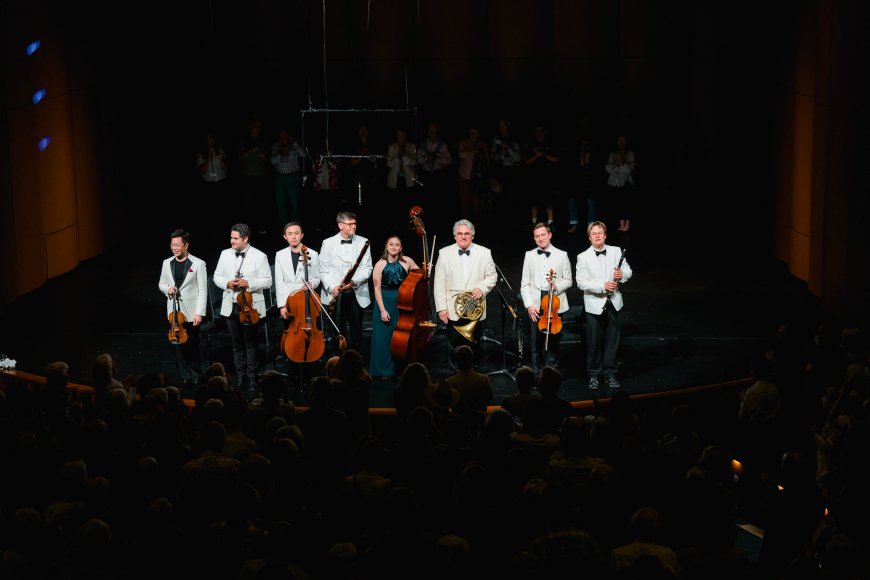
Enough said. By the end of the afternoon, none of it mattered. Audience members, including those seated onstage, leapt to their feet and summoned the musicians back for repeated curtain calls. They were saying goodbye, in the warmest and most demonstrative way they could.
During that mid-concert celebration, Han made the most open-hearted point of the afternoon. “Take care of our baby,” she told the audience, looking ahead to the festival’s 25th-anniversary season and beyond. Pianist Hyeyeon Park and cellist Dmitri Atapine, both of whom performed admirably here earlier this summer, take over in 2027.
Many good things, as Saturday’s ravishing Octet suggested, lie ahead.