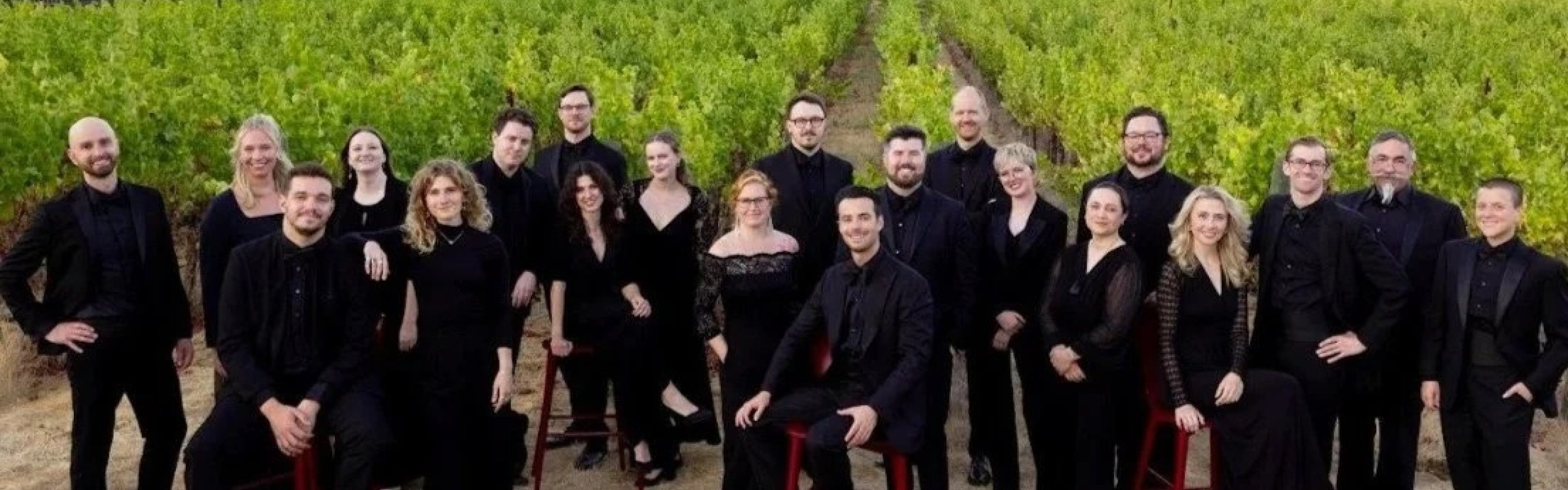
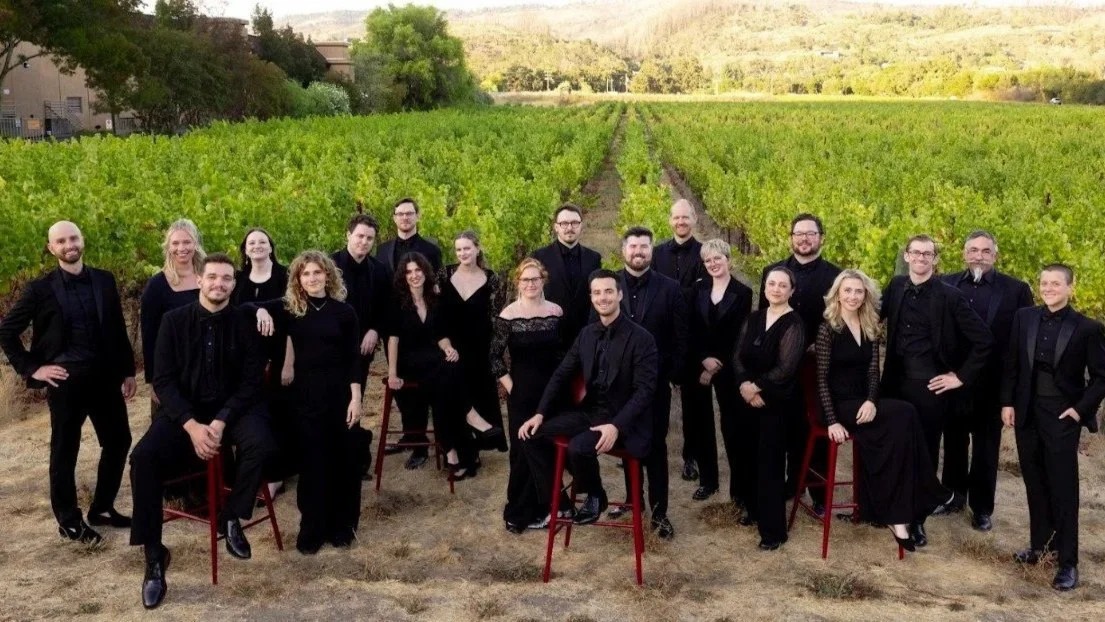
Aeternum, the Napa-based chamber choir, might just be the Bay Area’s latest and greatest master chorus you’ve never heard of.
Described on its website as “California’s Professional Vocal Ensemble,” Aeternum aims to be the U.S. equivalent of award-winning U.K. choirs like Tenebrae and Voces8. Indeed, half of Aeternum’s members are recruited from London, with the remainder based throughout the U.S.
The result of this Transatlantic vocal union is some truly breathtaking singing. This weekend’s program, “O Last Dream of Love,” deftly showcased the choir’s wide range of musical palettes, all while maintaining a warm and laser-focused vocal blend strongly reminiscent of the Anglican choral tradition.
The concert program was structured in three sections: “love,” “loss,” and “transcendence.” The rough narrative through these sections was that of a passionate, spiritual love which is lost, giving way for the lover to let in a more transcendent, divine love of God.
Indeed, the concert was all sacred music from a variety of periods, but it did not shy away from erotic, even political, overtones.
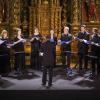
The program opened with a processional to Jacob Clemens non Papa’s Ego flos campi, a setting from the Song of Songs sung with deft mastery of the Renaissance style and a powerful, passionate sound fitting such vividly erotic scripture. This was further enhanced by the excellent acoustic of Moraga’s St. Mary’s Chapel.
The tenors and basses followed with an elegant plainchant rendition of Tota pulchra es, leading the choir to the center of the church. They continued attacca with Thomas Tallis’s classic motet, If ye love me and Maurice Duruflé’s Ubi Caritas, which flowed wonderfully into the next piece: another setting of Tota pulchra es by British composer Cecilia McDowall.
McDowall’s setting evoked Eastern music in a manner not unlike John Tavener’s Byzantine-infused Anglican choral masterworks. The choir impressively handled McDowall’s dense chord clusters with crystalline intonation, and the blossoming tutti moments, despite the choir’s smaller size (17 singers), were absolutely thrilling. Here, the ensemble really opened up sonically. The “Love” section ended with a commissioned work, an inventive, bass-heavy piece from Piers Connor Kennedy, a current member of the King’s Singers.
Pau Casal’s O vos omnes was solemn and competent, but it did serve as a beautiful introduction to Henry Purcell’s iconic Hear My Prayer, O Lord, sung excellently, as expected from Anglican choral specialists. The climax elicited genuine giggles from me. (Stifled, of course; it’s still a church.)
Somewhat less compelling were Kerensa Briggs’s Media vita and Josef Rheinberger’s Abendlied, though charitably, it is difficult to follow a section of such ecstatic music with anything more sedate and have it measure up. Still, the choir maintained incredible fortissimos throughout — the gentler sections on the program were less piano than mezzo-forte.
“Transcendence” opened with Philip Moore’s darkly brooding Morning Prayers, a setting of a prayer by Dietrich Bonhoeffer, the German pastor and theologian executed by the Nazis. It is refreshing to see a concert of sacred music unafraid to comment on, or at least resonate with, current political events. This section showed the choir’s amazing stylistic range as they skillfully sang selections by Arvo Pärt, William Walton, and even Pavel Chesnokov, the latter work allowing the choir some truly heroic singing and the rare treat of hearing their talented Bass 2’s low B.
The final two pieces were an incredible one-two punch: a surprise entrance of the organ heralded the opening of Brahms’s Geistliches Lied, sung with fabulous phrasing culminating a truly ecstatic amen section. The final work was Eric Whitacre’s Her Sacred Spirit Soars, sung with double chorus. The most energetic work on the program, it featured more booming, fortissimo cluster chords that truly felt like a spiritual ascent into the heavens. The encore, Jake Runestad’s Let My Love Be Heard served as a heartwarming palate cleanser after the ear-splitting sonic ecstasy of the Whitacre.
These are world-class singers who can do it all. The McDowall featured perfect, piano straight-tone soprano soli, while the Brahms and the Chesnokov showed the choir’s operatic chops. The choir was overpowering at times, and the chosen tempi sometimes rushed through moments I would have liked to linger on. But it was a rare delight to hear choral singing this good, with a program so methodically thought through in terms of key transitions, complementary textures, and narrative.
Aeternum is a choir you will certainly fall in love with.