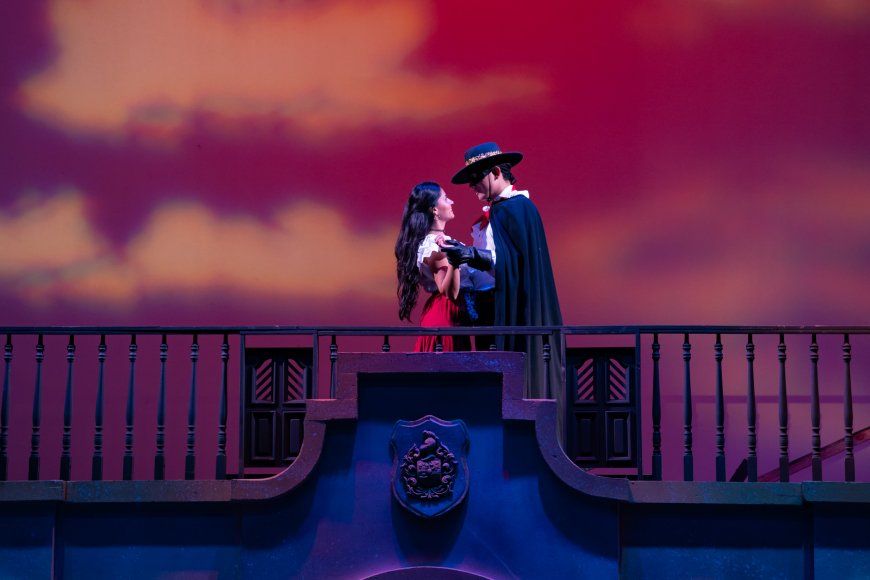
You’ve gotta love it when a new opera sells out a theater. For Pacific Opera Project’s performance of Héctor Armienta's swashbuckling opera Zorro (2022) on Sunday, May 17, an audience of more than 1,300 packed the historic San Gabriel Mission Playhouse. Artistic Director Josh Shaw announced from the stage that it was the largest audience to attend a POP production in the company's 15-year history.
The character of Zorro — that dashing defender of the poor in the Spanish pueblo of Reina de los Ángeles — has thrilled audiences for over a century, since his appearance in a pulp fiction magazine series by Johnston McCulley in 1919. He didn’t wait long for his film debut: The very next year Douglas Fairbanks portrayed the man behind the mask in The Mark of Zorro, which he produced and co-wrote.
Zorro's composer and lyricist has a long connection to the Bay Area. Armienta was a student of Conrad Susa when he attended the San Francisco Conservatory of Music. He then founded the Latinx company Opera Cultura in San José in 2014. Opera Southwest gave Zorro’s official premiere in 2023, followed by Opera Santa Barbara, Arizona Opera and San José Opera.
The opera proved an ideal fit for Pacific Opera Project. The Mission Revival architecture of the playhouse (and the nearby San Gabriel Mission) made the perfect ambience for Armienta's diverse score, which combines soaring Puccinian melody, guitar strumming flamenco, and pulsing mariachi with the romanticism of grand opera arias and Mexican canciones.
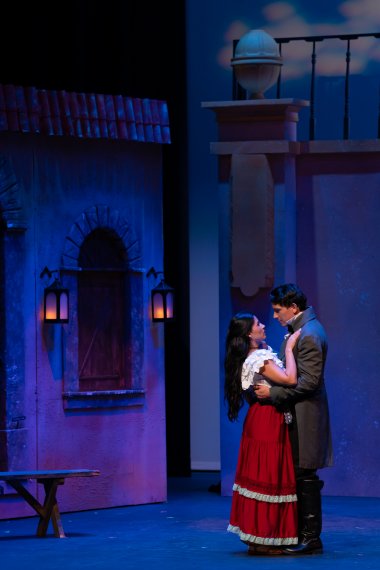
Directed with swashbuckling flair by Shaw, conducted admirably by Caleb Yanez Glickman, featuring abundant swordplay created by Brian Danner and colorful dances choreographed by Mario Vilches, Zorro ranks as one of POP's finest achievements.
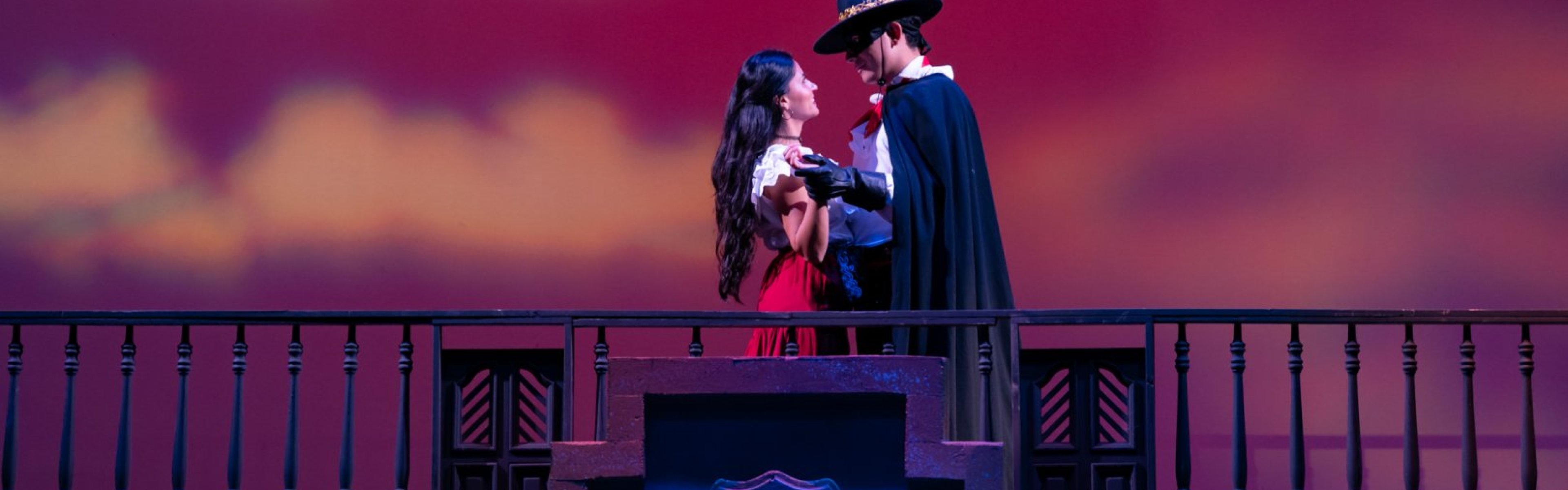
The four principal roles were sung at the highest level. Tenor David Silvano, his voice as bright as his blade, made a dashing debut with the company as the Spanish grandee Don Diego de la Vega, who transforms into the elusive hero in black. Ana Maria Soza, the woman who ignites his heart, was sung by Oriana Falla with clarion brightness. Carrying a big voice in a petite body, her performance combined a dynamic spinto-edged soprano with the kickass punch of an action hero. Together, their voices soared, especially in the opera's passionate duet, "Abrazame."
In the classic melodramatic style, romance is threatened by villainy. As Carlota de Obregón, the jealous, high-born daughter of the Governor of Alta California, mezzo-soprano Mariam Mouawad was a vengeful force. Carlota was involved with Diego when he was mastering swordcraft in Sevilla. In Los Angeles, she hopes to rekindle the flame, only to discover she's been replaced by Ana Maria — a mestiza (woman of mixed ancestry). Mouawad’s powerful rendition of Carlota’s jealousy aria, "Dime porque no me quieres," was a star turn.
Armienta requests in his score that the role of the evil enforcer Octavio Rivera y Moncada be sung by "a Verdi-style baritone.” Luis Orozco more than filled that bill. His voice was resonant, his presence demonic.
The supporting comic characters were sung with relish to the point of ribaldry by Armando Contreras as the pleasure-seeking Sergeant José Gomez, and Jessica Gonzalez-Rodriguez as the regimental camp follower, Toypurina.
For all its lyricism and gusto, the opera has weaknesses. The bilingual libretto calls for singers to alternate sentence by sentence between Spanish and English for no apparent reason. The effect is more confusing than provocative.
The surprisingly long first act is built on a succession of scenes so short that they fragment the musical/dramatic flow. The second act is better, giving the music and drama the space to really come alive. The orchestra, under Glickman's baton, found the breathing room it needed to highlight and savor Armienta's rich musical flavors.
Correction: The original version of this article misstated the title of Carlota's aria, "Dime porque no me quieres."