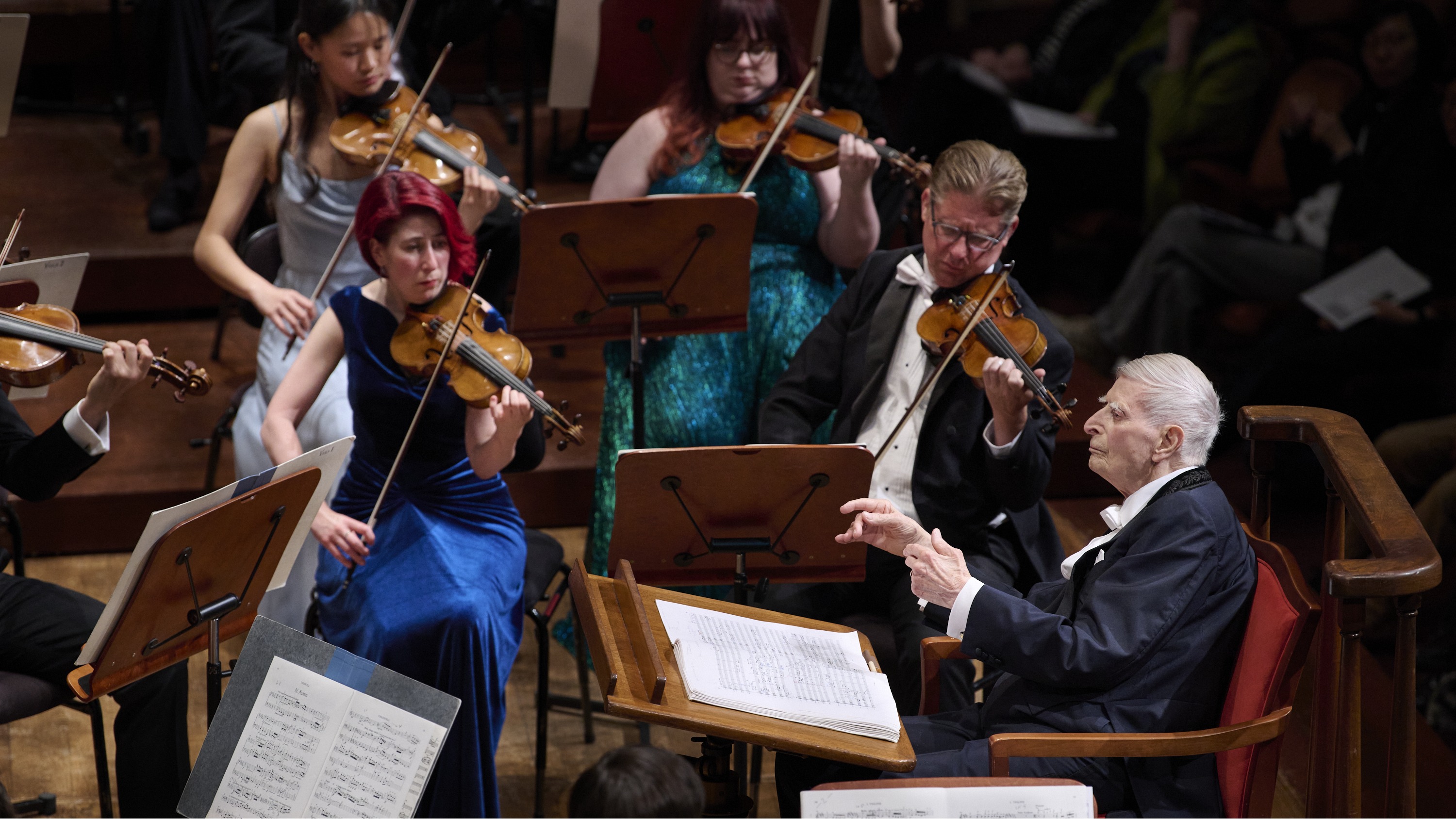
Herbert Blomstedt’s return to the San Francisco Symphony, the orchestra he led from 1985 to 1995, didn’t go as planned.
Blomstedt, the Symphony’s conductor laureate, reportedly arrived in San Francisco last week in a state of fatigue after conducting Anton Bruckner with the Berlin Philharmonic in late April and Gustav Mahler with the Detroit Symphony earlier in May.
“Out of an abundance of caution,” Symphony spokesperson Taryn Lott told SF Classical Voice, “he was admitted to the hospital.”
Blomstedt, who turns 99 in July, recovered sufficiently to run the last rehearsal for Mahler’s Symphony No. 9, Lott added, but David Robertson, former music director of the St. Louis Symphony and a regular guest with the Symphony, led the earlier rehearsals. Robertson was prepared to step in for the performances if Blomstedt’s health didn’t permit him to conduct.
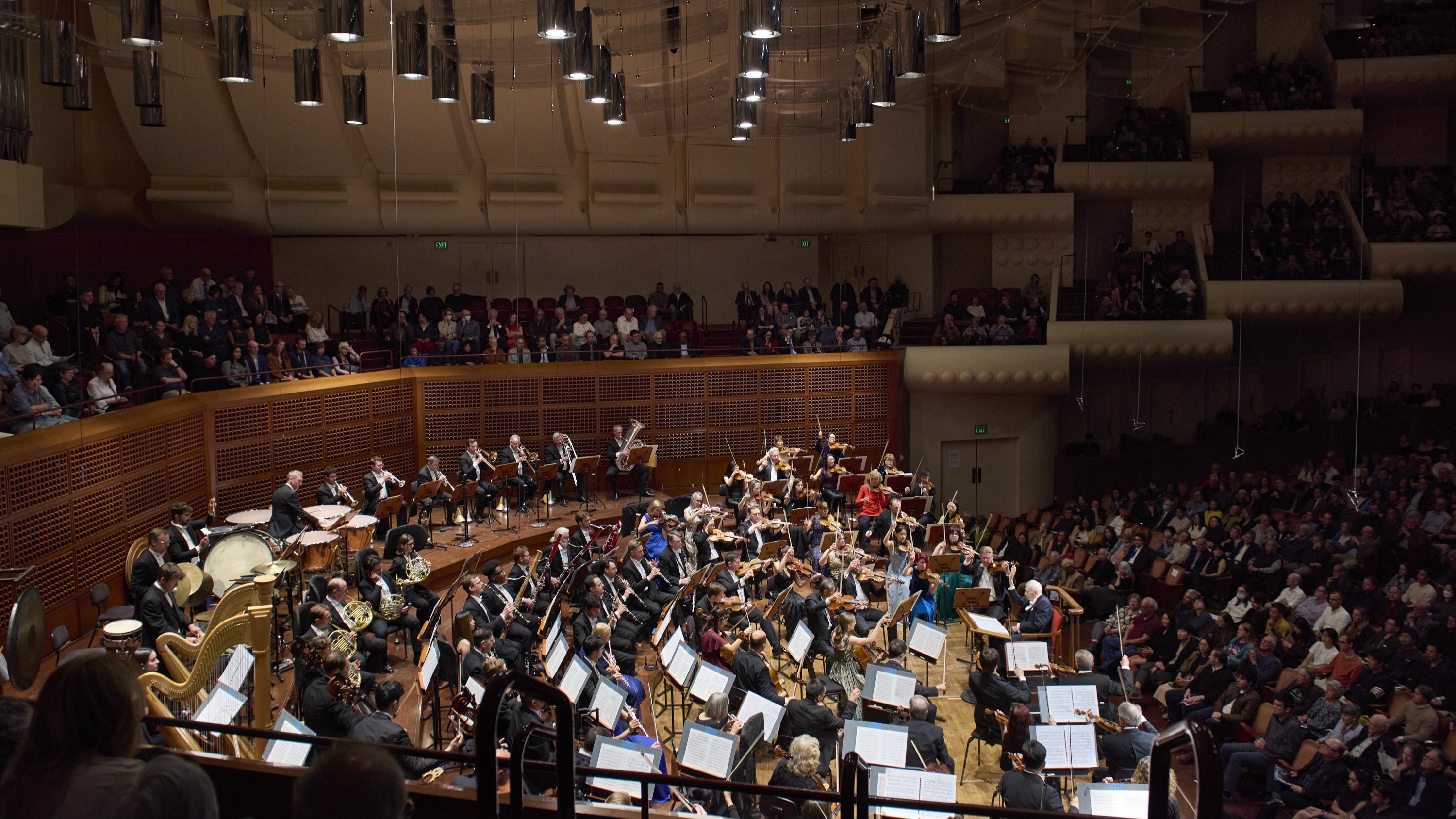
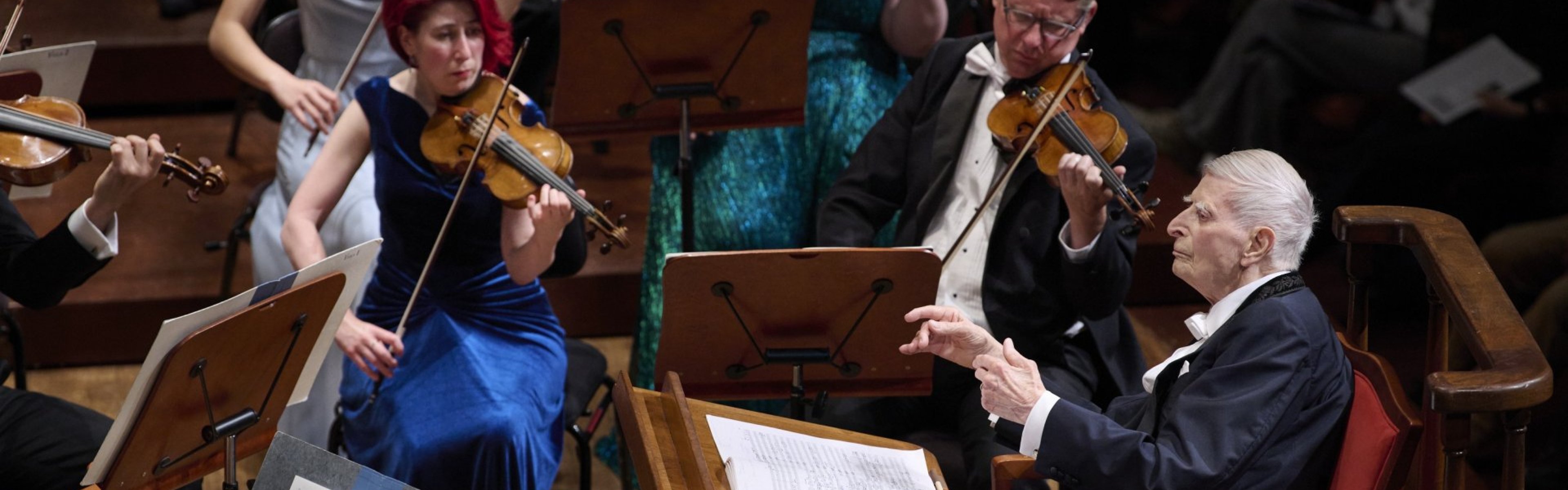
As Blomstedt came onstage at Davies Symphony Hall on Friday, May 15, the audience greeted the beloved conductor with a prolonged standing ovation. Fans had been invited to dress up in honor of his presence and in keeping with this, the orchestra, usually clad in long black, was also all dressed up, the men sporting tails and white tie, many of the women in sparkly, floor-length gowns.
But Blomstedt, looking quite frail, made his entrance in a wheelchair, accompanied by several attendants who carefully helped him onto the podium and onto a piano bench stationed there.
The performance that followed was a distinctly mixed bag. Blomstedt conducted without a baton and his beat seemed quite small, though some of his cues were high above the stand holding his score. As the symphony progressed, he seemed less and less physically in control of himself.
The orchestra was intently focused on the conductor, but also on each other, visibly so. Concertmaster Alexander Barantschik — who played his solo passages with poised intensity — moved with the music more than usual, perhaps helping to reinforce Blomstedt’s beat.
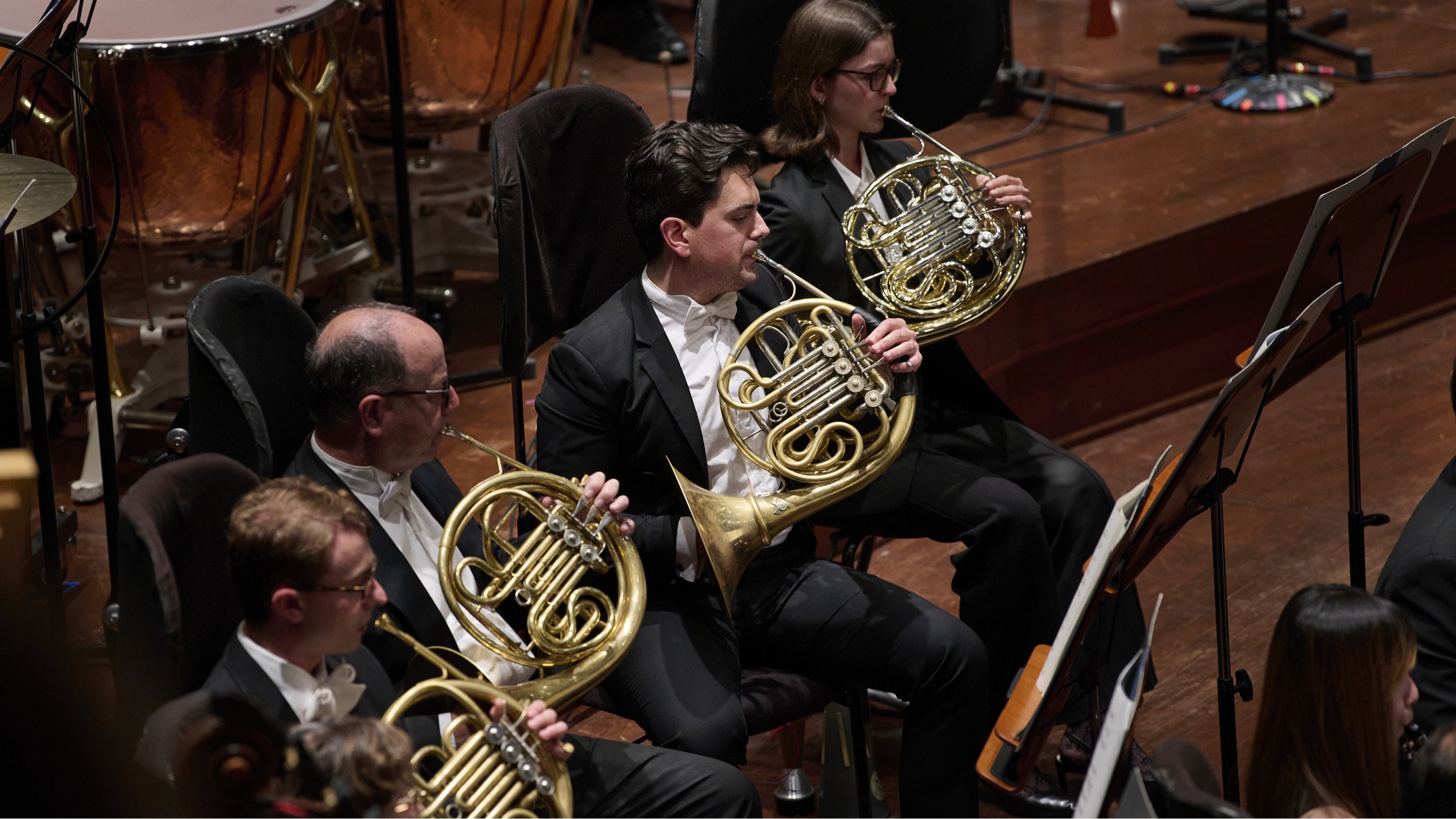
Despite some coordination issues within the orchestra over the course of the performance, there were moments of great beauty and power. French hornist Jonathan Ring, who isn’t usually heard in solo parts, had some on Friday and played beautifully, as did principal horn Diego Incertis Sánchez. Their different tones made a nice contrast.
The strings in the first movement were gorgeously transparent while remaining warm. Later, they took on a darker hue. The close of the movement glowed with spectral beauty.
The opening of the second movement Ländler, a rustic triple-meter dance, felt as though it was deliberately kept at bay, just a bit draggy. Principal bassoon Joshua Elmore, playing beautifully throughout the evening, brought a lightly amused touch to his solos. The contrasting sections of the movement proceeded to a wonderfully delicate conclusion.
But the third movement went badly awry. After an opening of almost unbearable intensity, Blomstedt slumped farther and farther to his right, dangerously so. The armless piano bench did nothing to stop him. Anyone can be hurt by a fall, but for a person as physically vulnerable as Blomstedt, a fall could easily be fatal.
As his slump progressed, the music faded away and out came Blomstedt’s attendants, carrying an armchair. They raised him off the bench, removed it and settled him into the chair. Distressingly, he cried out once during this harrowing process.
He rallied to call out a measure number, and the movement resumed with considerable vigor. The strings brought a luscious yet haunted sound to the concluding slow movement, in which principal violist Jonathan Vinocour and Barantschik played hair-raisingly beautiful solo passages.
Even in less-than-ideal conditions, Blomstedt brought some magic to the score. The closing measures, with just the strings playing, raised goosebumps.
Blomstedt, ever gracious, gave solo bows to all of the principals and whole sections. The following day, however, he regretfully withdrew from the remaining two concerts on Saturday-Sunday, May 16-17, which Robertson will conduct.
Everyone surely wishes Blomstedt the best, and hopes for his return in January, when he’s scheduled to conduct works of Franz Schubert and Bruckner.