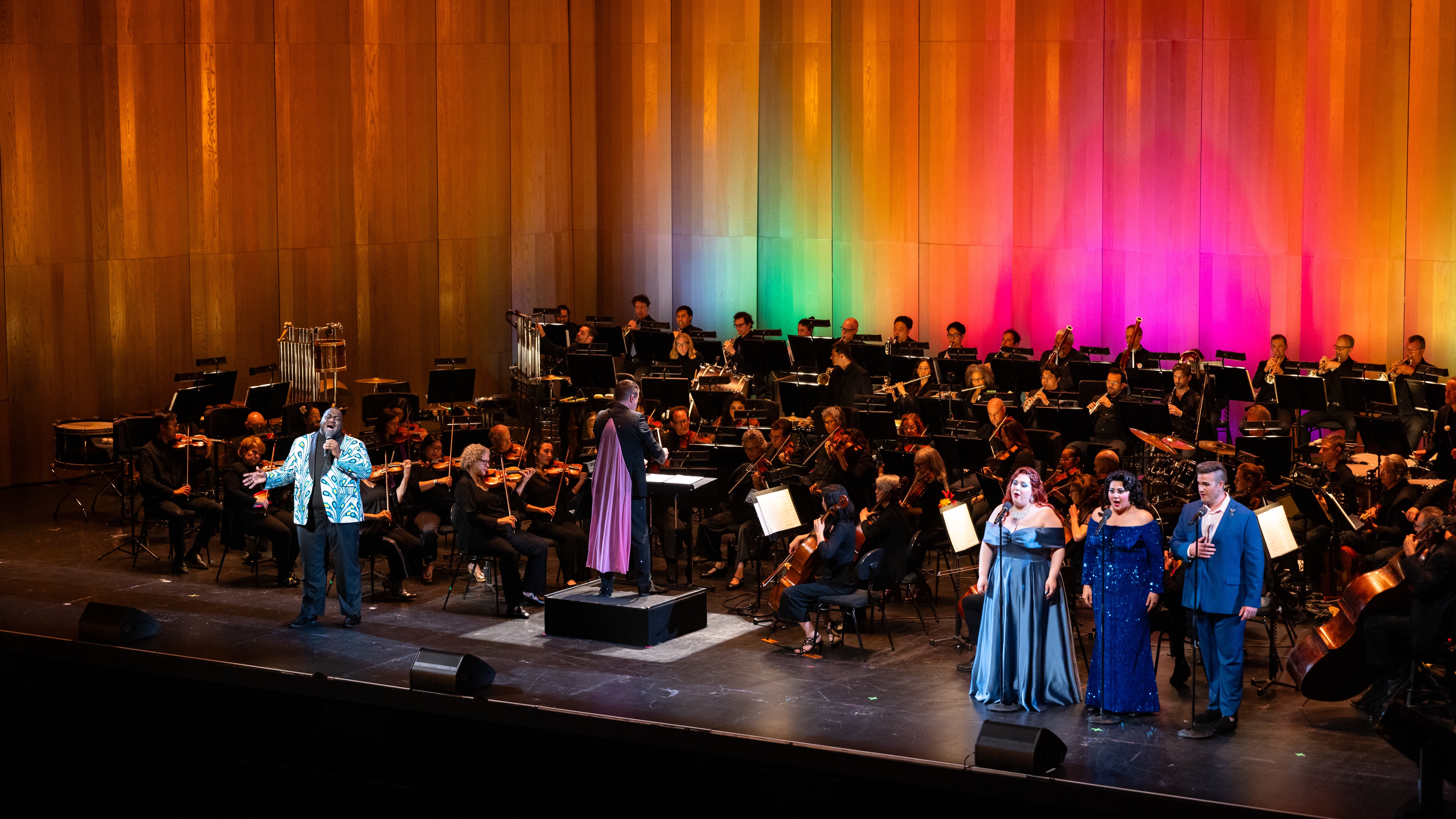
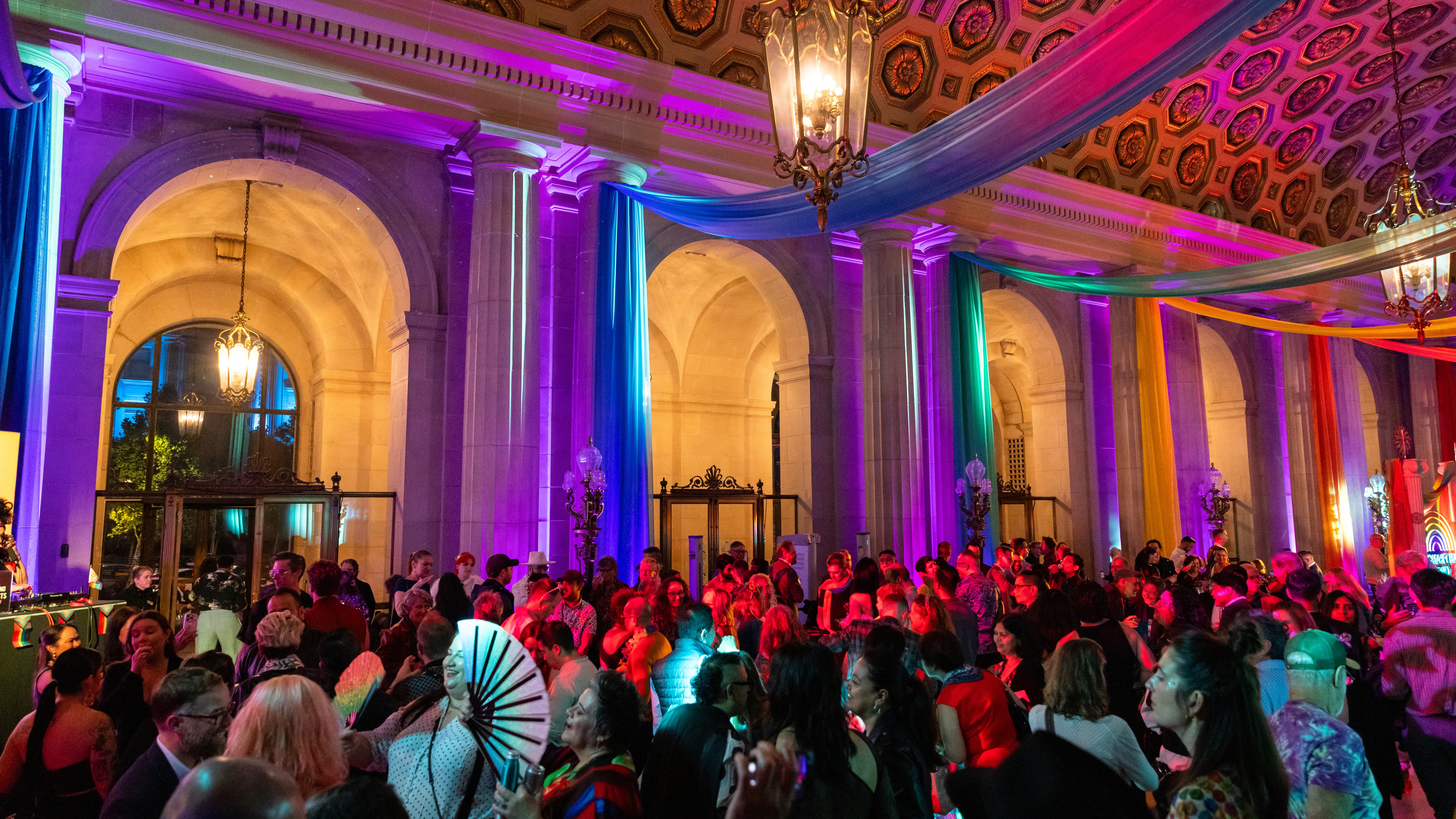
The singing was splendid, the costumes deluxe, the lighting rainbow-hued. But even for an audience that came primed for a high time at San Francisco Opera’s second annual Pride Concert on Friday, June 26, surprises both musical and emotional were in store at the War Memorial Opera House.
There was, for starters, the bustling, bumptious ride of the late Michael Tilson Thomas’ orchestral Agnegram, complete with slide whistle, cowbell, and a quotation of Tchaikovsky’s 1812 Overture. Conductor Robert Mollicone led the SF Opera Orchestra in a spirited performance of the former San Francisco Symphony music director’s 1998 piece.
MTT, as SF Opera General Director Matthew Shilvock noted in eloquent remarks from the stage, was one of the first openly gay music directors of a major American orchestra. Shilvock also made the point, which can’t be made too often or strongly enough, that this or any celebration of LGBTQIA+ rights comes at a time “when so much is under attack.”
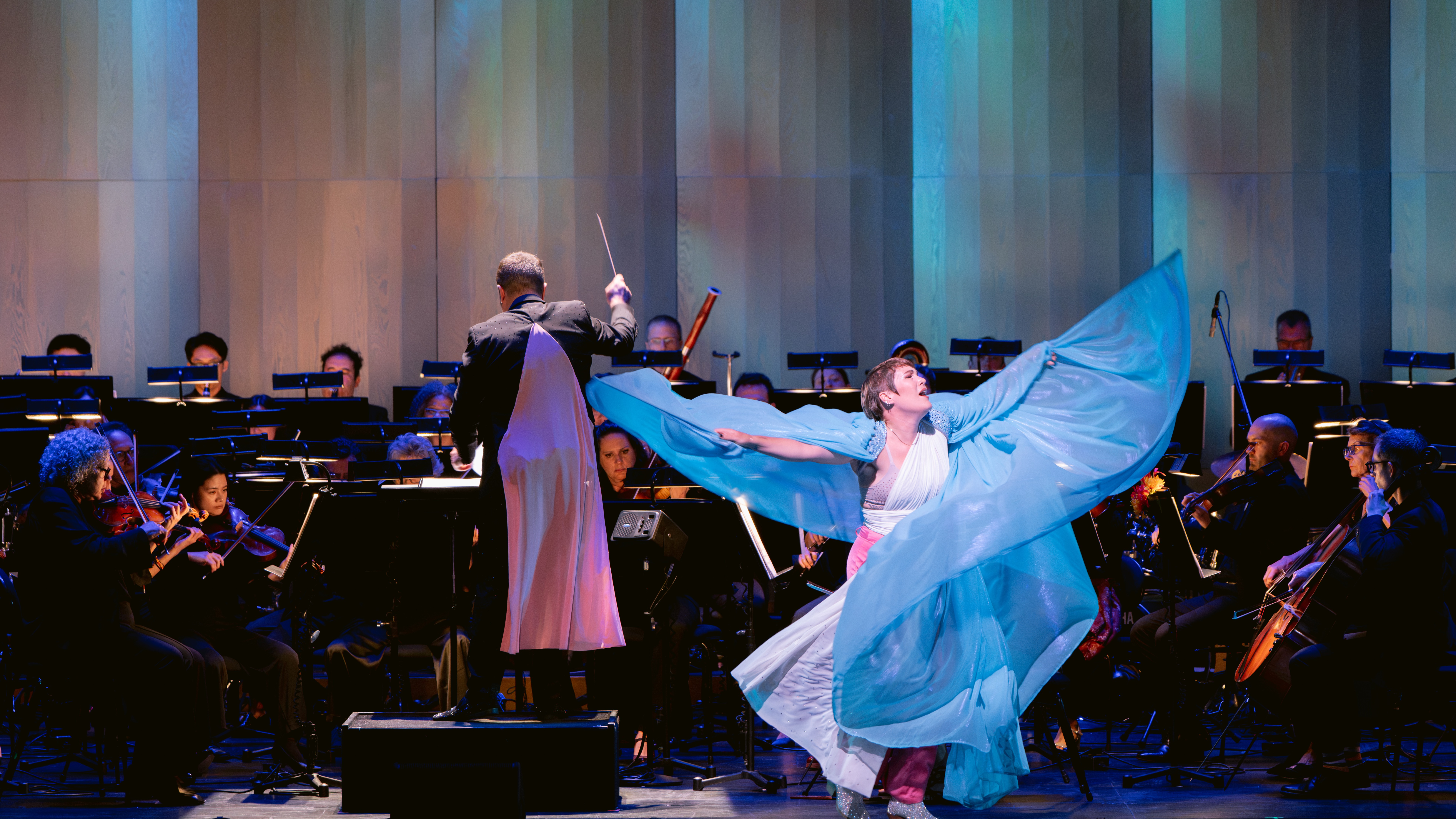
It felt fitting, then, that one of the night’s first operatic selections was the high-stakes farewell aria of the tormented heroine in Charles Gounod’s Sapho (1851).
Performing in a gown with expandable blue side-panels that became, in turn, a cocoon, upswept wings, and a collapsing death spiral, mezzo-soprano Nikola Printz delivered a verismo-like jolt as the ancient Greek woman now celebrated for her lesbian poetry.
While that aria reached one kind of peak, so in a completely different and improbable vein did soprano Melody Moore’s flat-out fantastic cover of Brandi Carlisle’s “The Joke.” Starting at a slow, slightly peevish simmer, Moore kept turning up the heat in this anthem of hard-won defiance. She leaned into the chorus, which concludes, “I have been to the movies. I know how it ends. The joke’s on them.”
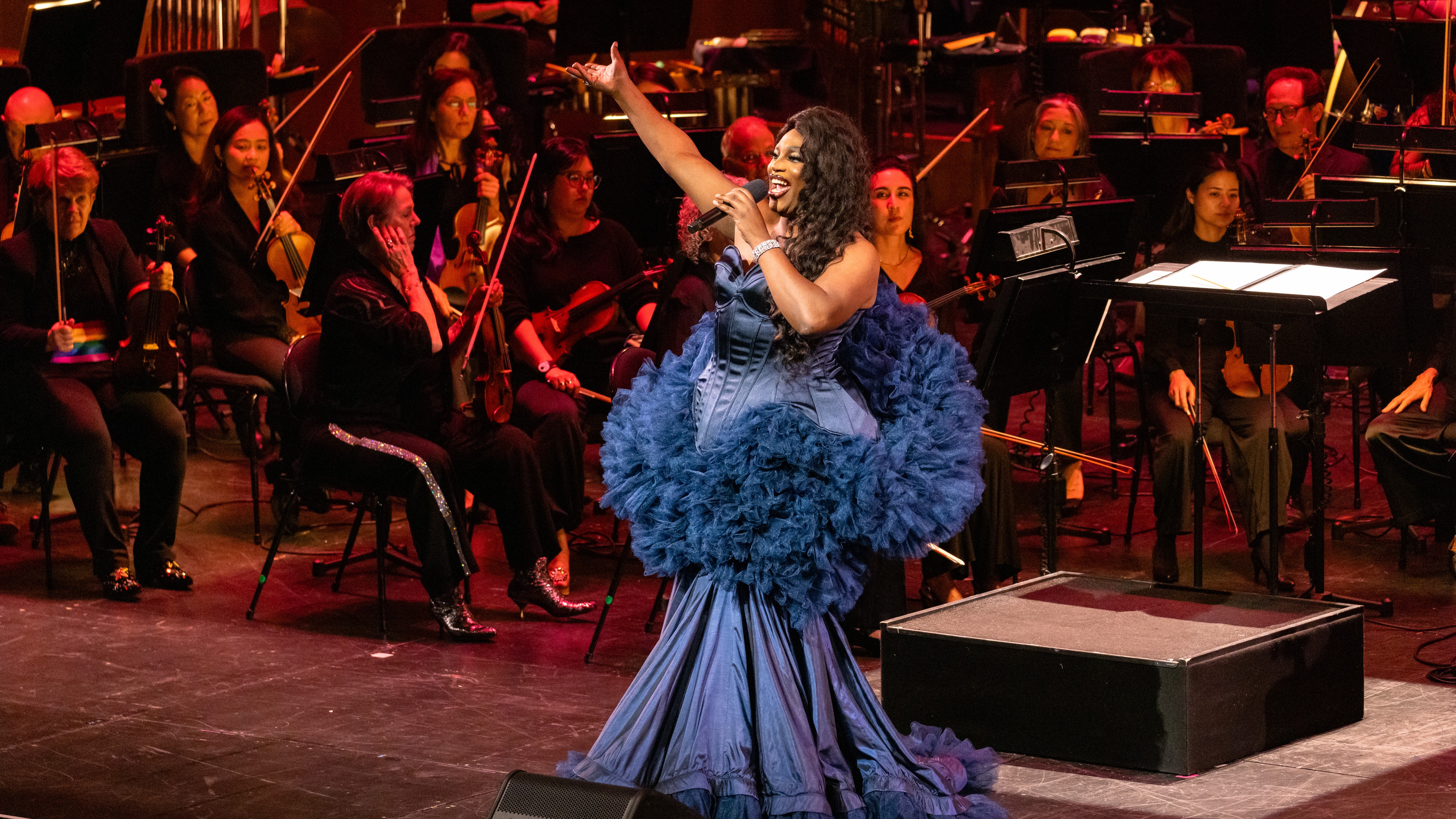
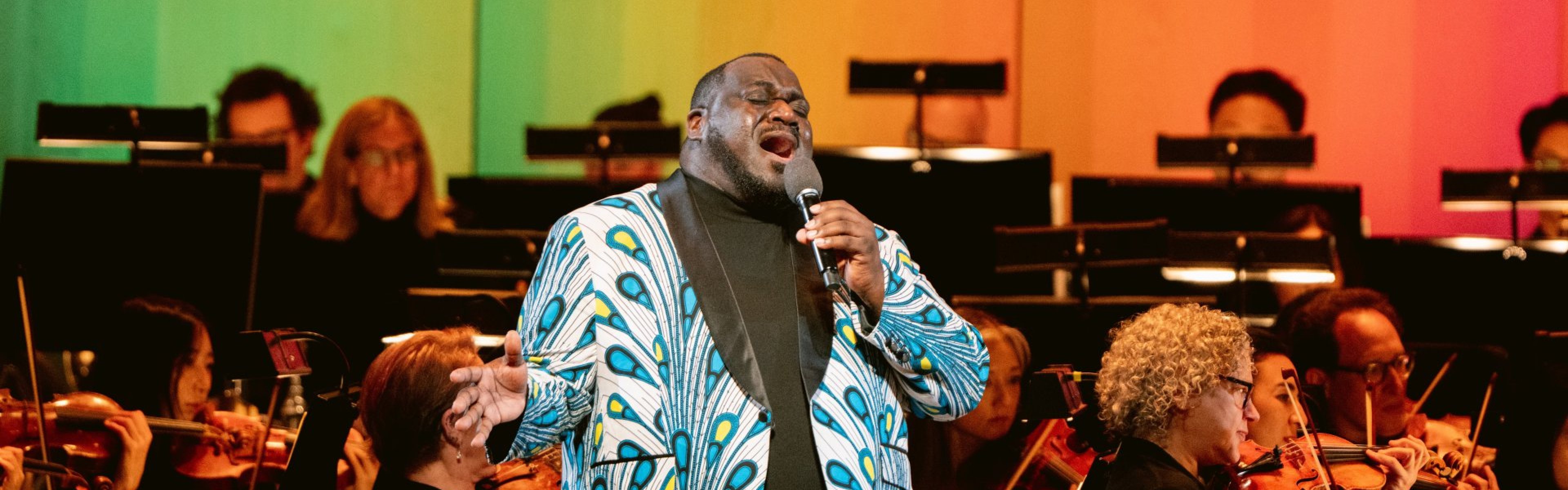
The concert, admirably curated by Gregory Henkel, contained multitudes, ranging from a gender-fluid duet from Jacques Offenbach’s The Tales of Hoffmann, sung by a mugging Printz and Moore, to songs first minted by Stevie Wonder, Luther Vandross, and Whitney Houston. The old consistently felt new and rarely nostalgic again. Baritone Reginald Smith, Jr. showed off a ravishing tone and expressive range. He rolled out Michael Abel’s “Be the Change” like a sermon you wouldn’t mind hearing over and over, His account of “Peculiar Grace,” from Terence Blanchard’s opera Fire Shut Up in My Bones, traced a bittersweet rite of passage of a boy trying to sort out his ambivalent desires in a small Southern town. Smith found just the right measure of aching hope in Tracy Chapman’s quietly devastating “Let It Rain.” A trio of swaying backup singers lent several of Smith’s numbers a nightclub glamour his ample voice and beaming demeanor deserved.
One of the musical pleasures of the concert was hearing the three principal singers in different kinds of repertoire, unmiked for the operatic excerpts and miked for the pop and jazz-inflected ones. Onstage, the Opera Orchestra was nimble, too, toggling from a sensitive opera ensemble to a bouncy big band sound. Multiple arrangers were credited in the program.
In a show within the show, drag performer Sapphira Cristál was the evening’s emcee, introducing the numbers as she stalked the stage in one over-the top costume and wig after another. The first of her outfits, in which the Miss Congeniality of Season 16 of RuPaul’s Drag Race seemed to be sprouting from a giant blue geranium, was hard to top. But top it she did.
Cristál was also a kind of in-house therapist and cheerleader. “Our queerness is our strength,” she said early on. When her lines about coming out and loving yourself didn’t get a big enough response, she repeated them, to diminishing effect. Tasked with threading the concert together, she had to keep her sharper side mostly sheathed. It did emerge late in the show, when she praised San Francisco before adding the quick seditious snark, “I would never live here.”
Did she mean it? Who cares? Pride, as the concert confirmed, wears many costumes — earnest, silly, rapturous, poignant, political, mischievous, painful, and urgent. For this one charmed and moving night, they all came together.
This story was first published in partnership with the San Francisco Chronicle.