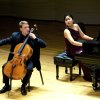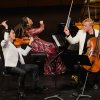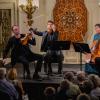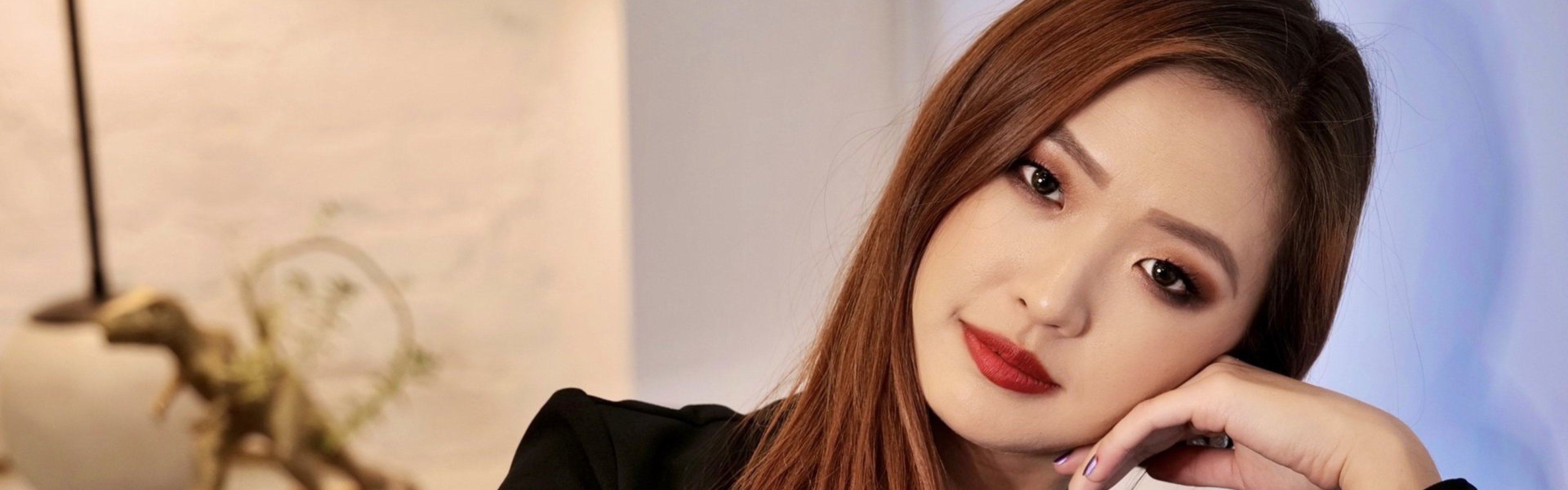
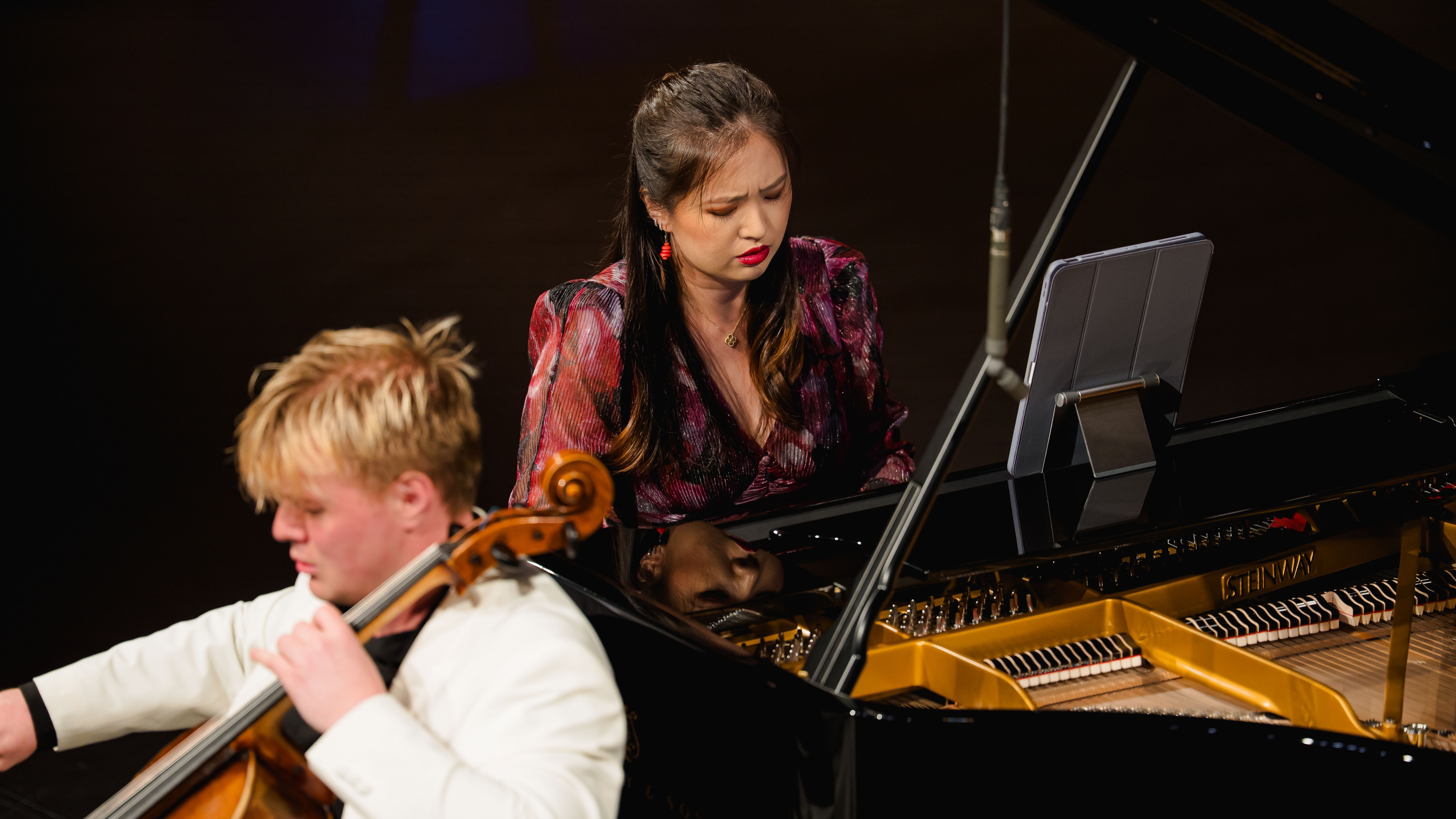
Pianist Chelsea Wang is, in a word, gaga for chamber music. Indeed, the 32-year-old award-winning musician who made her orchestral debut at the age of six will be returning to Music@Menlo in three different programs over four nights (July 18, July 31, August 1 and August 2).
A native of West Des Moines, Iowa, Wang began piano studies at age four before going on to earn her bachelor’s degree at the Curtis Institute of Music, where she received the Sergei Rachmaninoff Award upon graduation. She then earned a Master of Music degree and Graduate Performance Diploma from the Peabody Conservatory, where she studied with the late Leon Fleisher.
Wang’s numerous performances have also been broadcast on stations including NPR’s From the Top, WQXR (New York), and WHYY (Philadelphia), as well as on Rob Kapilow’s What Makes It Great.
A passionate educator, Wang serves on the faculty of the Music@Menlo Chamber Music Institute’s Young Performers Program and, through a fellowship with Ensemble Connect, has led numerous interactive classes in schools and community venues throughout New York City. Currently based in New York, the pianist is one of the newest members of the Chamber Music Society of Lincoln Center’s Bowers Program (2027-2030).

SF Classical Voice spoke with Wang over Zoom, with topics ranging from her Music@Menlo experiences and love of chamber music to working with new collaborators.
Was there music in your family, and why the piano?
I was a bored only child when I was growing up, so my mom bought me an electric keyboard, and that was like my best friend when I was a kid. I taught myself eventually how to play “Twinkle, Twinkle, [Little Star]” and [Happy Birthday]” and my mom started me on lessons afterward. The rest was my own organic desire to play — I’ve always loved music and my mom supported me with that.
When and how did you get into Menlo’s International Program?
I was in IP in 2018 and that was my first experience with Music@Menlo. At that time I was a master’s student at Peabody Institute in Baltimore. And I had played some chamber music in college but I went to a lot of piano-focused summer festivals. And at that time, I was craving a chamber music experience, so I applied to Menlo and got in and I really feel that changed the trajectory for me in so many ways. I realized I need to have chamber music in my life.
Explain that a little more.
Before going to Menlo, all of my chamber music experience was in student mode. Menlo was the first place where I got a glimpse of what life would be like as a real touring performing artist. As an IP participant, you are given like five or six pieces to learn and perform in the three weeks. That was the first time I had that amount of music given to me at once. And I had to learn it all at once before the first performances.
It was a glimpse into the real world, where you’re on the road and having to prepare so many different pieces. And you simply don’t have the weeks or months that you do when you’re in student mode in school, where you have so many coachings and you’re getting ready for one performance at the end of the quarter. And at Menlo, I learned the skills I needed to move forward in my career. Without it, there would have been a much steeper learning curve going into the professional world.
You’re playing on three separate programs. Have you played the music before or are some of the works new to you?
I've heard all the pieces before, but I have not performed any of them. The Liszt piece [“Tristia” from Vallee d’Oberman] I have performed the solo piano version, but I'm playing the trio version, so that'll be a new experience, because the different voices are going to be shared between different instruments. I think the different numbers of the strings will change a bit of the vibe of the piece, at least what I'm familiar with, and I'm excited to explore it.
I love the Romantics. And this year I get to play the Mahler Piano Quartet [1876], which is definitely on the romantic side of his works.
What do you listen for when you sit down with new collaborators or new works?
The first thing we do when we meet for our first rehearsal is just sit down and start playing, [to] see how things sound. Potentially, we go through the whole piece — run through however many movements there are — and then go back and start working.
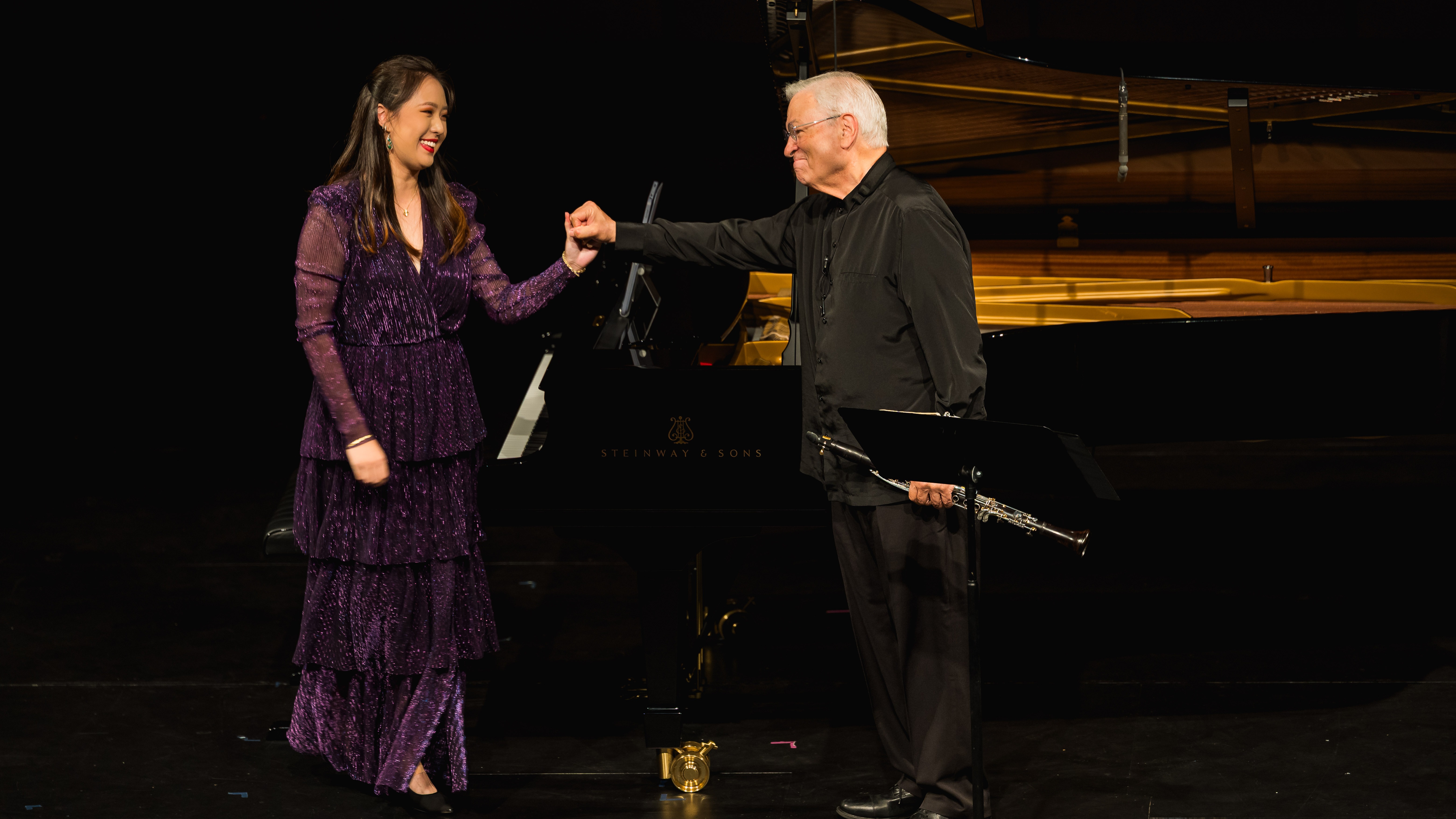
Through that first run through, I think a lot of things can naturally be adjusted. While you're playing with new people, you start to hear what kind of sound they have, and then you balance and calibrate your own sound with theirs. It’s an amazing thing, how we can just work and rehearse and play together without even talking a lot of the time.
And through our own ears and listening, we can figure out things and make our magic. But, of course, during rehearsal, we talk to each other and talk about what things we can try and explore. Maybe different types of sound, different types of imagery come to mind, because we're all potentially thinking different things.
It's so fascinating, [because] we're all different people coming together to try to create something that sounds like unity. And the best part about chamber music is that it's never boring, because, depending on the people you're working with, every single time the vibes are different and it can be so fun and refreshing.
I’m wondering how you navigate the balance between leading from the keyboard and yielding to the ensemble?
That's a good question. It's always a back and forth, and that's something I learned a lot through being an IP my first time here, because I felt like after that summer, I grew an extra set of ears; I [could] hear more multi-dimensionally than I did before.
Just knowing which voices have what parts, when different instruments have the leading voice, and when I can be more supportive, when my left hand can be more prominent to enhance the core of the sound, or when I should be on top and more melodic with my right hand, for example. It's always a balance, and at times it fluctuates every second of every piece, because sometimes the mood, the color or the character can change just like that. Other times it can stay a certain type of emotion for a longer period of time.
I do love being a soloist but also I really enjoy sharing the stage with other people and feeding off of other people’s energy. There’s just something really refreshing about chamber music and playing with different people all the time. It keeps you on your toes. You never know what to expect.
You teach at Menlo now. How do you find that?
I find so much fulfillment in teaching, which I started doing in New York as part of my two-year fellowship at Ensemble Connect. I’m on faculty with the Young Performers at Menlo. I’ve done that for the past two summers. It’s always so rewarding to see how they transform from the first day that they work on a piece up to their performance a week later. And they’re good, so they’re really, really fast.
How did Wu Han and David Finckel enter your life?
I knew about David and Wu Han when I was younger, listening to their recordings online. But my first time meeting them was at my audition for Music@Menlo. I remember going to their New York City apartment and I was a little starstruck. I remember, part of the audition process for pianists, we would play four-hand music with Wu Han, on the spot. So I played my solo repertoire and then Wu Han was like, “OK, let’s do our four-hand stuff” and that’s, so far, the only time I’ve gotten to play with her. Hopefully there will be others.
How do you see your career unfolding in the next three years?
I’ve been so lucky to perform all over in the last few years. This past month, I was on a recital tour of Asia with violinist Ray Chen. We went across seven countries, and it was my first time in a lot of them —Thailand, Indonesia, Singapore, Philippines. And at Menlo, I get to play with the greatest musicians, which is such a privilege. I hope to maintain it. I really enjoy traveling, exploring, performing, and sharing music with the world. It really is a special career and life.