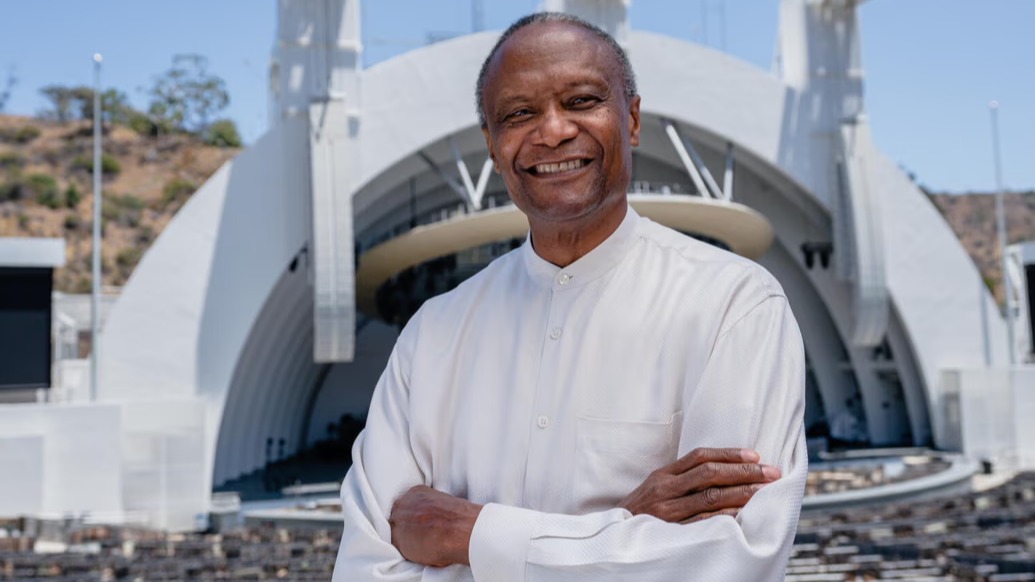
The Hollywood Bowl has, from its beginning, hosted memorable evenings of Black American music. Jazz greats Ella Fitzgerald, Billie Holiday, Duke Ellington, Count Basie, and Miles Davis have wowed crowds there. And it was there, in 1936, that composer/conductor William Grant Still became the first Black person to conduct a major American orchestra — the Los Angeles Philharmonic.
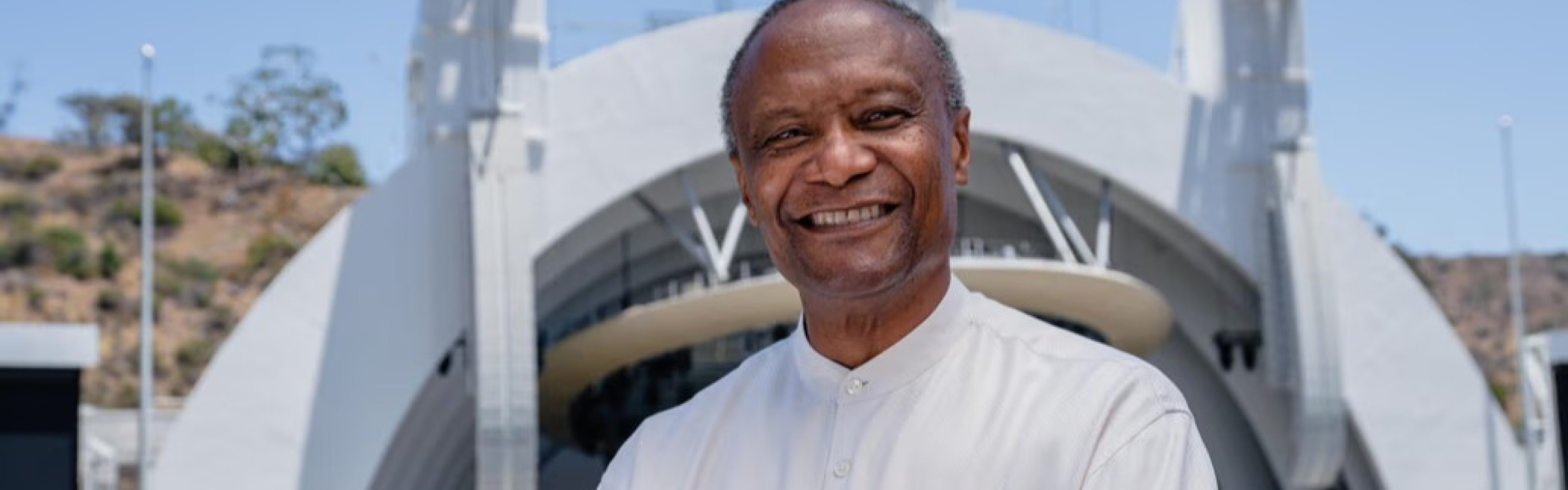
On July 8, the LA Philharmonic continued that special tradition with an eclectic and vibrant all-American program including major works by Still and Ellington. Thomas Wilkins, principal conductor of the Hollywood Bowl Orchestra, and a longtime advocate for Black American composers, conducted an admittedly almost entirely white ensemble with his usual urbane style and easy control.
This healthy dose of vernacular music came as a welcome antidote to the more “official” nationalistic fare of marches and patriotic hymns heard at this summer’s public semiquincentennial celebrations of U.S. independence. The diversity and richness of American music, its roots in different ethnic communities, and the political struggles for equality in an imperfectly democratic society emerged on full display.
In a program note, Valerie Coleman wrote: “I want to bring the Black experience in, the turmoil, the upheaval, the complexity of race conversation.” Inher Fanfare for Uncommon Times (2021), she also pays homage to an iconic monument of American music, Aaron Copland’s Fanfare for the Common Man, and gives a fond nod to Joan Tower’s series, Fanfare for the Uncommon Woman.
Here, as throughout the evening, the brass and woodwinds played with authority and lyricism, negotiating the dissonant harmonic passages and unexpected rhythmic twists with aplomb. Thankfully, the Bowl’s much-improved amplification system now renders the brass sound without exaggeration or at excessive volume.
In Still’s Mother and Child, the string section took the spotlight. A lithograph by Harlem Renaissance artist Sargent Johnson depicting a mother and child in a tender embrace inspired this melancholy lullaby, the second part of a three-movement suite. Led with her usual flair by LA Phil violinist Bing Wang, the strings made the most of the song-like lines and sustained a nicely balanced and resonant tone.

The mood went upbeat and explicitly political for the world premiere of the LA Phil-commissioned Suffs song cycle, an orchestral arrangement by Michael Starobin of four songs from Shaina Taub’s Tony-winning 2022 musical about the suffragist campaign to give women the vote. Taub not only wrote the lyrics, music and book, she also starred in the leading role of Alice Paul, becoming the first woman in Broadway history to accomplish that feat.
Taub made a surprise appearance, joining singers Gracie Lawrence, Alex Newell, and Ali Stroker for a rousing account of the show’s signature number, “Keep Marching,” a motivational hymn of activist commitment and endurance, heard in Allen Rene Louis’s effective new quartet version.
Lawrence sang “Finish the Fight,” a challenge to male opposition to the battle for the 19th amendment. Stroker belted out “Show Them Who You Are,” a pledge to persevere. Broadway veteran Newell brought a big gospel voice and personality to “Insane,” an emotional ballad decrying the marginalization of strong women in America.
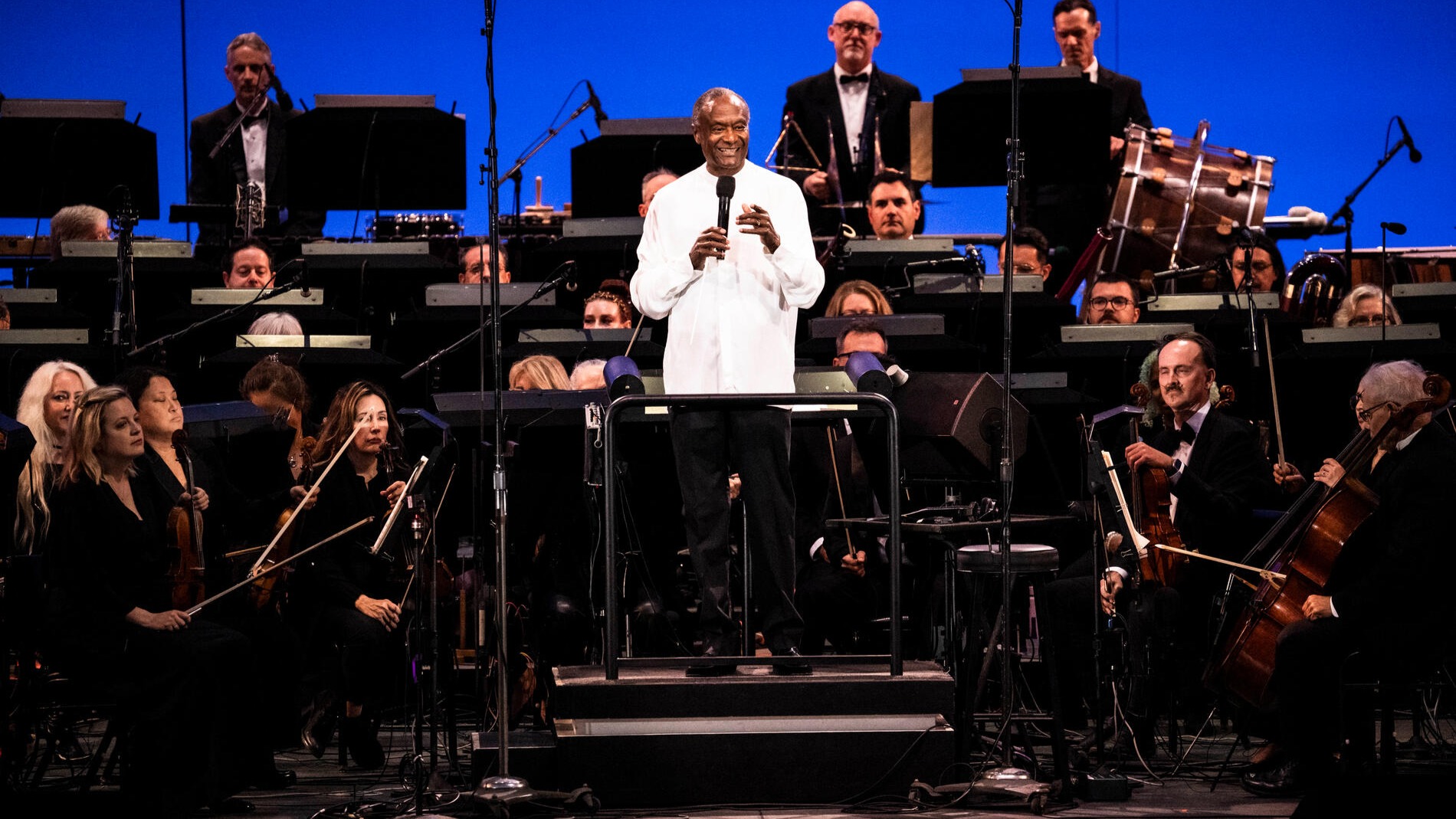
Two works celebrating New York, America’s great multicultural metropolis, occupied the second half. Bernstein’s dance episodes from the 1944 musical On the Town throbbed with the city’s energy and rhythms. In “The Great Lover Displays Himself,” the clarinets, saxophones, and trombones floated a dreamy landscape inflected with jazz. “Lonely Town: Pas de deux” showed Bernstein’s sensual and romantic side. Sounds of moving traffic and urban hustle rang out in clarinets and brass in “Times Square: 1944,” culminating in the hit tune, “New York, New York.”
Duke Ellington’s symphonic poem Harlem paints a less romantic portrait of New York, steamy and dark and dangerous. Utilizing all the arranging tricks he learned with his big band, such as employing brass mutes that produced woozy, tonally ambiguous effects, he gives us a street-eye view of various Harlem communities, each with their own musical world. The finale took us to a New Orleans funeral procession, ending with a thundering and angry improvised cadenza for drums and bongos.
Before he let the audience leave, Wilkins came back with an encore that perfectly captured the spirit of the evening: a flashy rendition of “America” from Bernstein’s West Side Story, a joyful but cynical celebration of the immigrant experience.