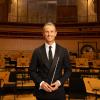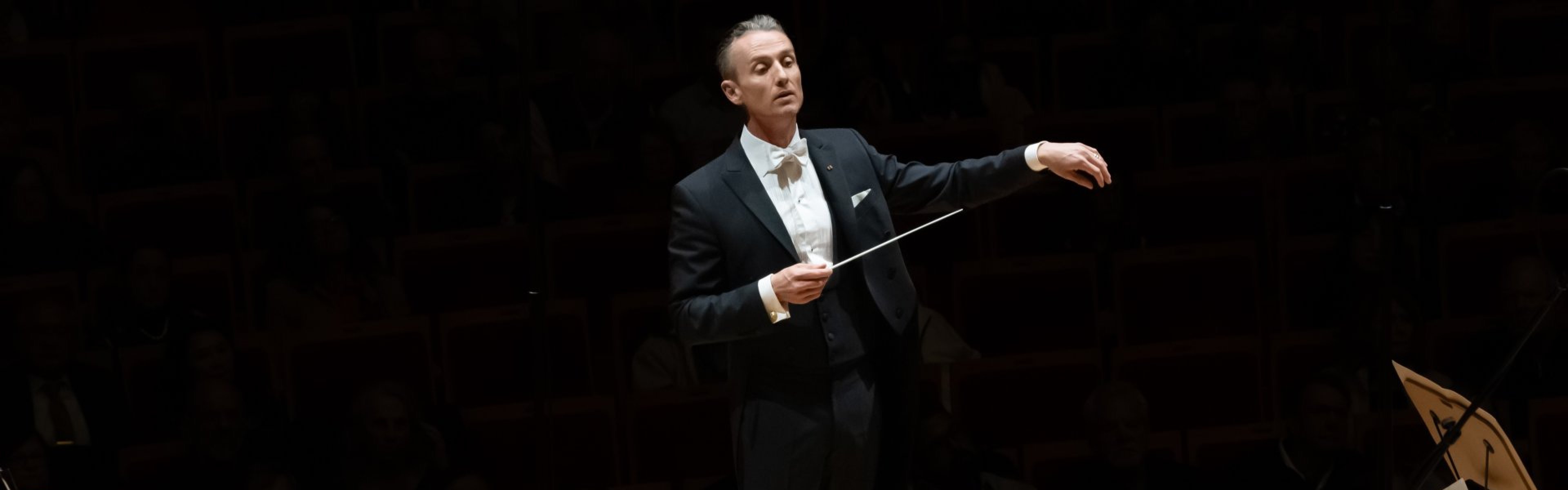
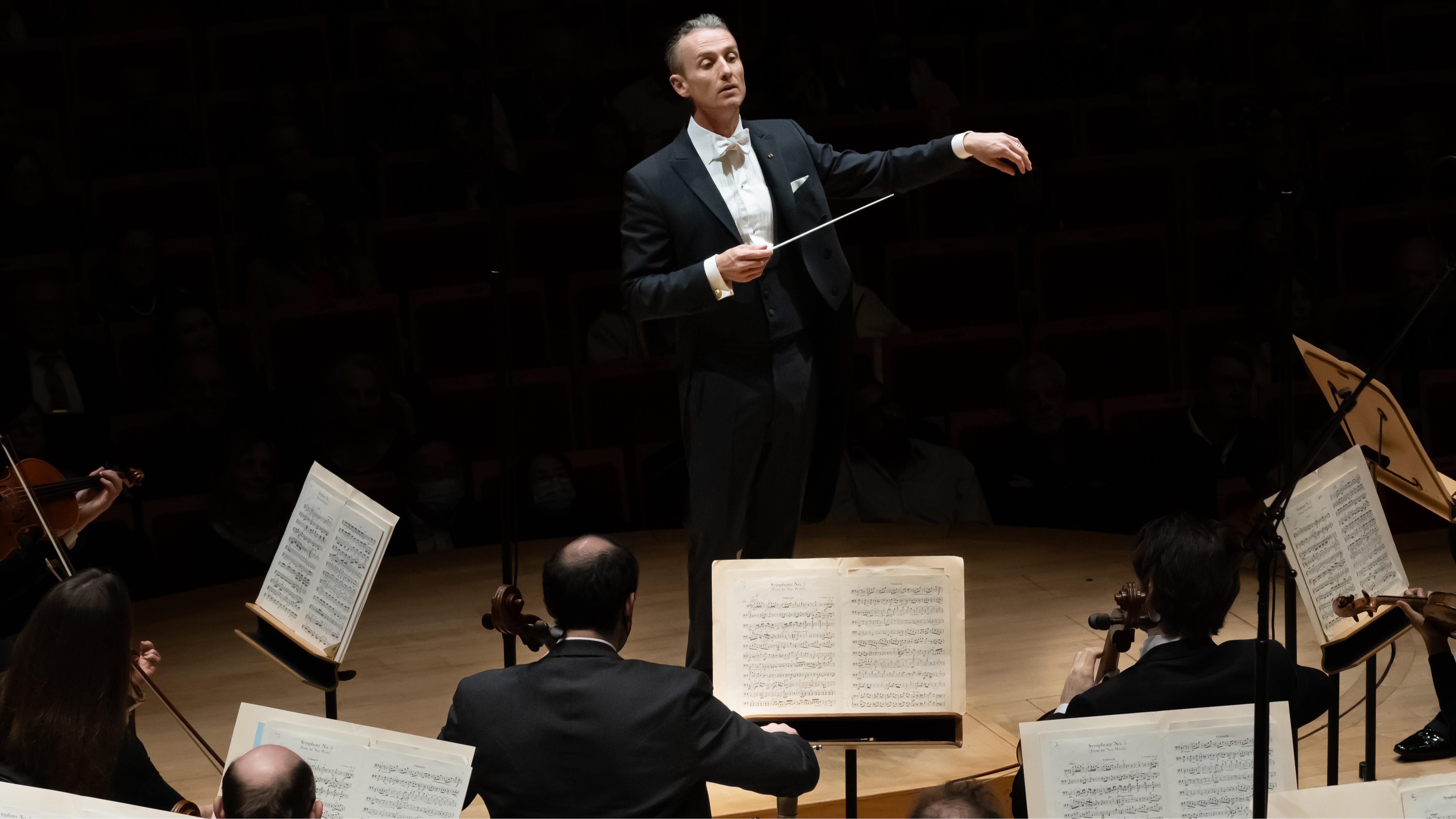
Some might say conductor Alexander Shelley was destined to follow in his parents’ musical footsteps. Born in 1979 in London to British pianist-conductor Howard Shelley and Irish pianist Hilary Macnamara, Shelley is the Pacific Symphony Orchestra’s artistic & music director designate. When he assumes full leadership in the 2026–2027 season, he will be only the third music director in that orchestra’s history, succeeding Carl St. Clair, who led the ensemble for 35 years. Critics have praised Shelley’s technique and temperament on the podium.
And these days, Shelley can certainly be found on many a podium: This season marks the conductor’s 11th and final one as music director of Canada’s National Arts Centre Orchestra in Ottawa, where he was also that band’s youngest. He was also recently appointed principal conductor of the National Symphony Orchestra Ireland beginning in 2026–2027, and he has been the artistic and music director of Artis-Naples in Pelican Bay, Florida since the 2024–2025 season. In addition, Shelley has served as principal associate conductor of London’s Royal Philharmonic Orchestra since 2015.
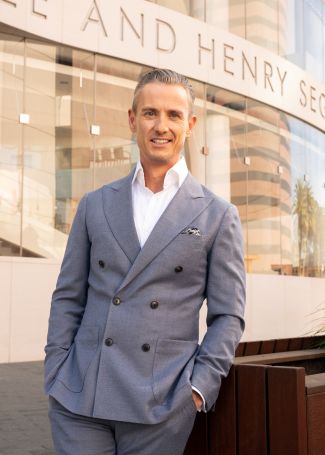
Shelley learned piano from his mother and cello from his grandmother and went on to study cello and conducting in Germany, eventually snagging first prize at the 2005 Leeds Conductors Competition. Other honors include winning the ECHO prize and the Deutsche Gründerpreis Cross of the Federal Order of Merit from Germany’s President Frank-Walter Steinmeier in recognition of his service to both music and culture.
SF Classical Voice caught up with Shelley by Zoom from Costa Mesa, where he was leading the Pacific Symphony in the second of a three-concert series. The conversation included his thoughts on his newest directorship, what makes for good chemistry between an orchestra and a conductor, and his attraction to contemporary music.
How did it feel stepping onto the podium at the Renée and Henry Segerstrom Concert Hall for the first time as artistic & music director designate?
It felt beautiful. I have guest-conducted around the world for decades, [and] I love guest conducting. But the most important thing in my life is to build the sound of an orchestra, to build the personality of the orchestra, to build the way we make music — the flexibility, the breadth of music we make together. And through that, to connect to an audience to give [them] unforgettable experiences, and to offer up memories in this unique space that is ever more valuable.
We have access to information like never before in human history and it can be overwhelming and fast. [But] the concert hall is much like a religious and spiritual space that offers a place to go and experience a different part of [the] self, to undertake a journey that may leave you asking questions, but definitely evokes and connects with another part of being and consciousness that is ever more important.
I’ve been at the National Arts Centre for 11 years, and every time I’m on the podium, I’m full of joy and excitement [because] I get to share my passion for music with our audience.
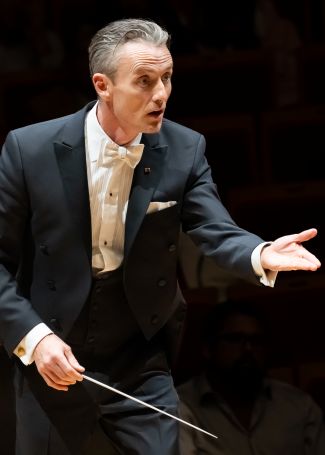
You’re known for mixing canonical and contemporary repertory in concerts, such as Beethoven and Tan Dun, or Georges Bizet with Gabriela Montero. Why is this important to you?
All the music we love from the past was written in response to its time. And [because] I'm a universalist, I believe that the experience of living has been the same since the dawn of time. The manifestations of life, they kind of vary: We have wheels and combustion engines and electric batteries, and now we can go to space.
But the underscoring motivations of life and the underscoring questions [of] love and hope, loss and mystery, all those things that are actually the nuts and bolts of our interactions with the material world, they have not changed a jot. And if you don't believe me, just read literature, read stories, listen to music. It's all the same stuff that's being articulated.
So it is important, when we interpret Beethoven, let's say, or [Maurice] Ravel, to remember the vitality, the dynamism, the presence, the immediate value that those composers felt in what they were creating. It was something that [was] a response to their time and their lives.
To allow music like that to be interpreted as, and to be perceived and felt like a museum piece that once had value but no longer does, is a grave error. My job as an educator [is] to say, “What is the burning essence, the core of this piece, and how can I summon that in the way we perform it? How can I make it feel like it was written today?” One of the great ways is to juxtapose the music of then with the music of now.
What draws you to contemporary music, and do you plan on commissioning many composers for the Pacific Symphony?
I think my record in Canada speaks for itself. I've commissioned, in the 10 seasons I've been there, over 40 pieces of orchestral music. We commissioned from Philip Glass his 13th symphony, Truth in Our Time, based on the life of a great Canadian American, Peter Jennings, who was the face of ABC News for a generation of Americans. And I personally conducted over 50 major world premieres and then dozens upon dozens more regional premieres.
If you're not engaged with the music of your time, you can't be engaged in the same way as music for previous times, because you don't sense what it means to create. When I conduct Ravel, like I did last night, my mind [asks], “Why did he feel compelled to write this? What was the energy of creation that made this happen?”
I have to make sure I make the audience feel that: That electricity of something that never was [before] coming into being. And that's what live performance is. That's why we don't just listen to CDs — I’ve just dated myself — or stream music. When you listen to a piece performed live, it's an act of birth and death. It's an act of something coming into creation and being ephemeral and then disappearing again.
And that performance will never happen again. That's something incredibly beautiful.
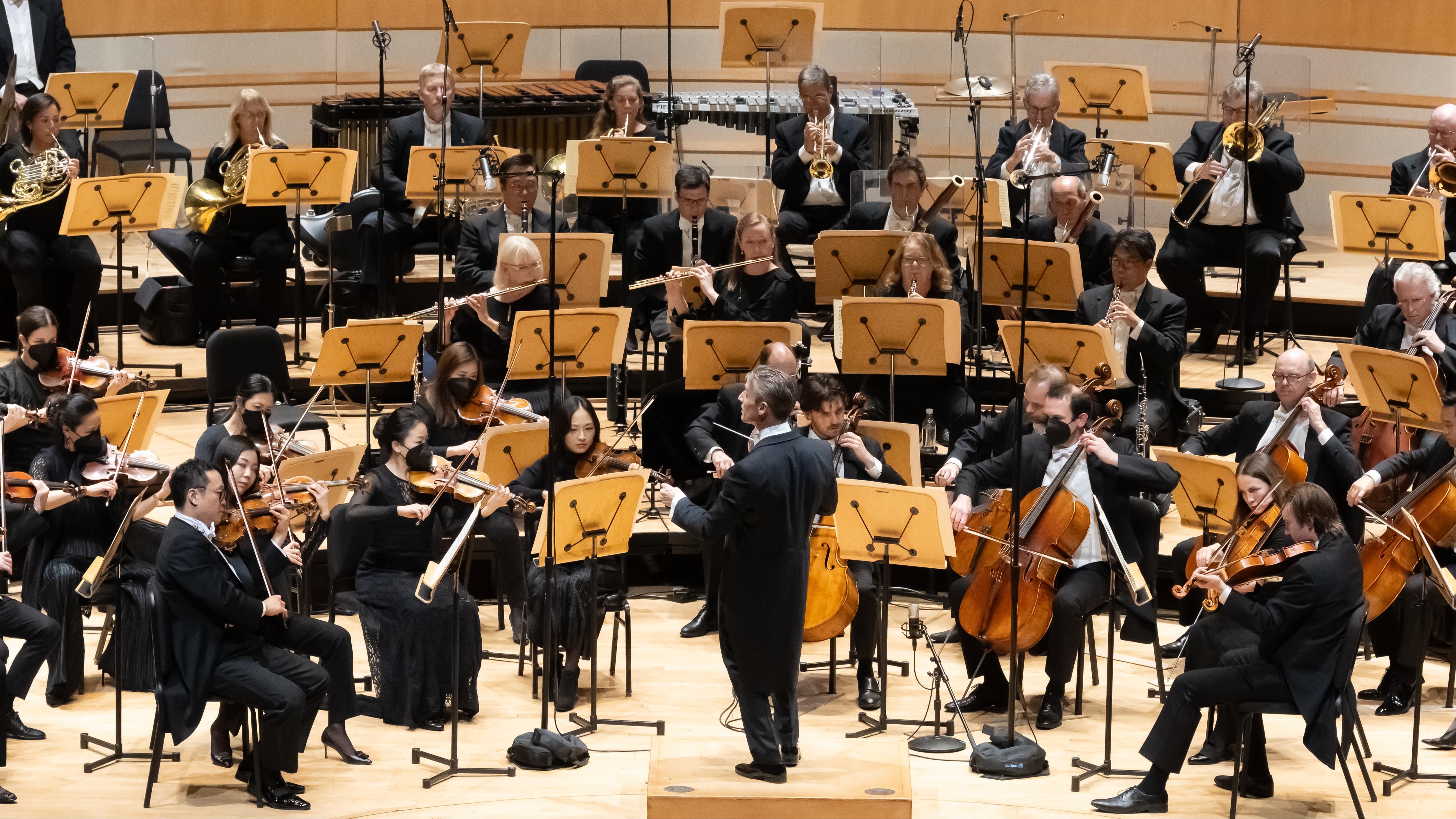
What makes for good chemistry between an orchestra and a conductor?
The answer for me is I am a servant of the composer, and I have to get inside their craft, their motivation, their lives, and be the most passionate, most prepared, most articulate advocate for their piece of music in the moment that I can. And if I stay in that headspace, if I just say, “How can I bring this to life most effectively, and how can we as a group work to polish this up, to be entirely compelling?” then you have chemistry, because you're all working together to the same ends.
The ends that you've all trained for; it's why we all got into music — to make really good music. And if you do that in an efficient manner, and you always use as much discretion and understanding and empathy as possible with the musicians and have respect for who they are, then it's always a constructive atmosphere. It’s an atmosphere of “we're building something, we're working efficiently,” and that generally results in chemistry.
What’s the most fulfilling part of being a conductor, and conversely, the most challenging?
Being a conductor, I'm biased, but I think it's one of the most fulfilling and enriching jobs I could possibly think of. I have the meditative and cerebral — and also emotional — relationship at a desk with a piece of music. I sit there for hours, quietly studying, analyzing, making notes, thinking. That's a very powerful time that fills the batteries and is a communion with the minds and the hearts of these great creators.
That's such a beautiful thing to do for a living: to really think about somebody else's craft, and somebody else's expressive statement, and to find empathy with it. That alone would be a very enriching life, but I then get to translate that and, if you will, turn myself inside out and turn into an outward facing character. Articulating again, with the greatest advocacy possible to a group, be they the musicians or an audience, the work of another person and being the advocate, being their champion.
And then the act of entering symbiosis with a group of 80 experts, forgetting self, forgetting time, and simply being in the music with them is one of the most beautiful human acts. When you are conducting an orchestra, it's all in [a] flow state.
The greatest challenge I face [is that] I have two beautiful young boys, ages 7 and 4, and a beautiful wife, [so] acting as their father and her husband, and making sure I have physical time in their presence is a bit of a juggling act. I work hard to make sure I’m there, wherever we choose to be. And any vacation time, any opportunities, they travel to be with me. They appreciate they’re able to enjoy being in different communities. That’s a great gift to my kids — as disruptive as it may be — to live in a different community, to smell the air, to see what the topography is like, to understand the rhythm of life, the dynamism of life in different places.
I’m generally an optimist and try to make the best of every situation. And so, I love my job very deeply and feel very, very privileged to do it.