Had Mozart and Anton Bruckner lived at the same time, they probably wouldn’t have been friends. In concerts, however, they go well together. Bruckner’s music brings the magnitude; Mozart’s, with its lithe melodies and vivid character, usually ends up lightening the mood.
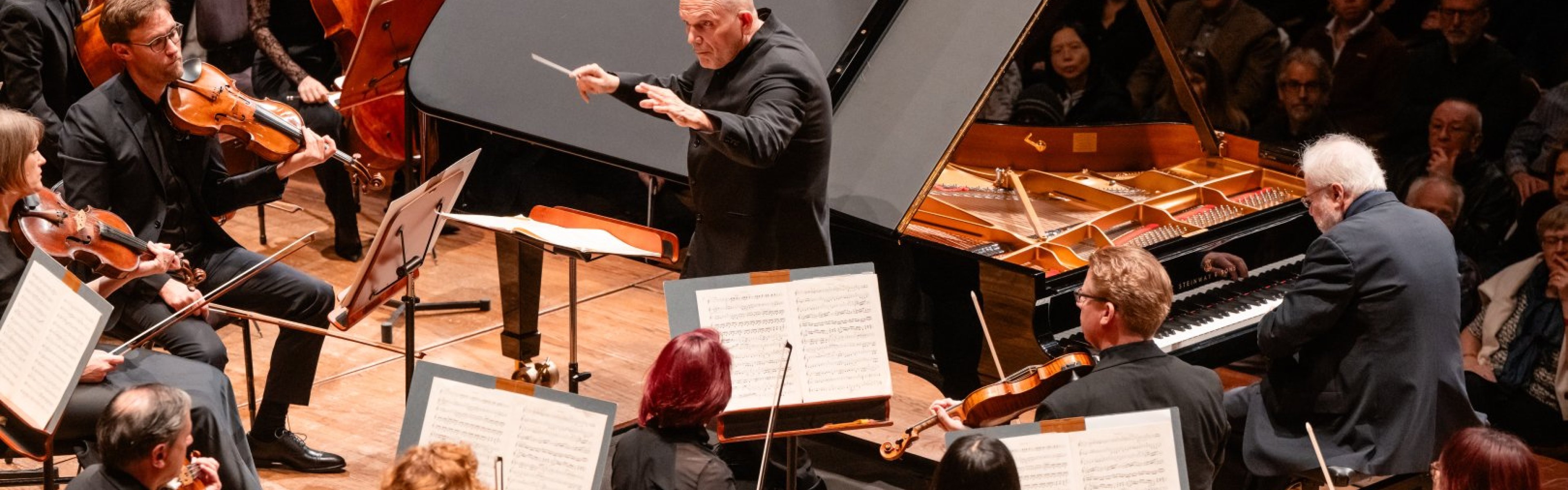
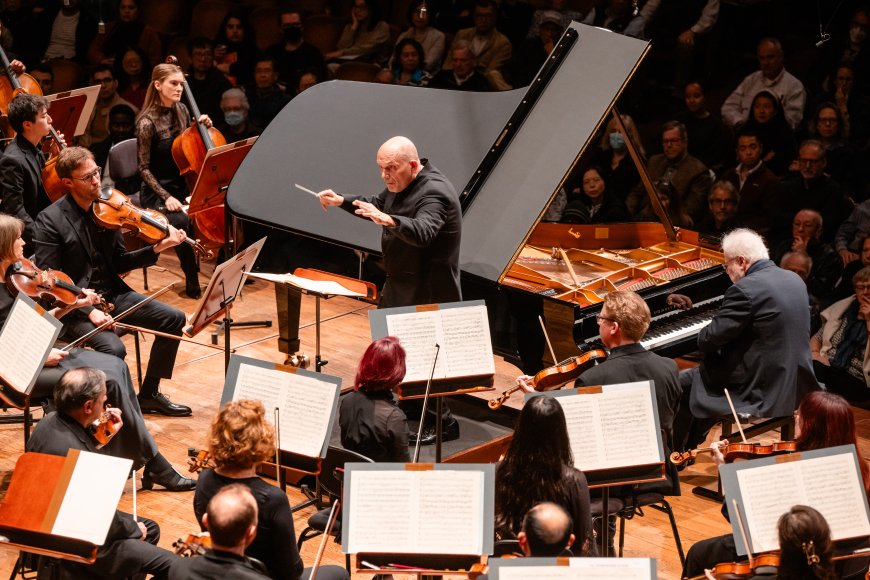
Mozart, the well-connected former prodigy, didn’t find composing laborious. He was usually cheerful and always self-assured. Bruckner, who also spent most of his adult life in Vienna, wasn’t predestined to become widely known as a composer and spent more than 20 years working as a church organist before he finally did. Diligent and self-critical, he obsessively practiced, wrote, prayed, and revised. Yet, in the San Francisco Symphony’s recent program under guest conductor Jaap van Zweden, both Bruckner’s Symphony No. 7 and Mozart’s Piano Concerto No. 25, with Emanuel Ax as soloist, shone brightly.
Bruckner’s Seventh Symphony was an unprecedented success during the composer’s lifetime. But it shares a contrapuntal sensibility with his other symphonies — through all of them, he worked painstakingly toward the same goal: a kind of spiritual perfection, one exemplified, for him, by Beethoven’s Ninth Symphony.
Bruckner’s Seventh is a temporally imposing work — most performances run about 65 minutes — but it’s otherwise humble. There are a few triple-fortissimo brass chorales, a staggering cymbal crash, yet most every other moment comprises perfectly simple techniques – mirror-flipping a melody, for example, or using pitches in common to glide between keys. Most of the music defies description: really, it’s about goodness.
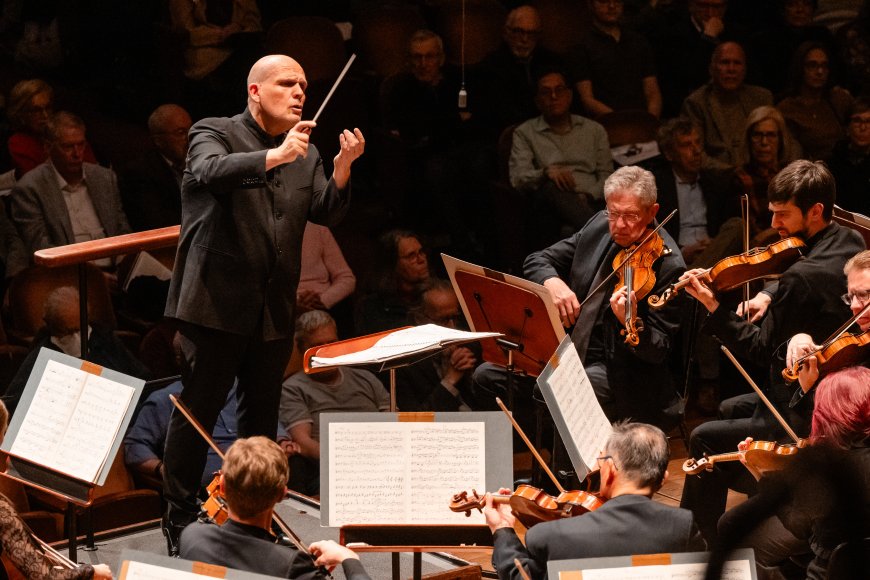
For van Zweden, this music is familiar territory. As concertmaster of Amsterdam’s Royal Concertgebouw Orchestra (the post he famously held at 19), the Dutch conductor would have played Bruckner under Bernard Haitink and Riccardo Chailly, two luminaries — or taskmasters, depending on who you ask. Now 65, van Zweden himself has a reputation for being strict. Guest conductors can’t exactly afford to throw Toscanini-level tantrums, but “intense” is a word that often comes up among local musicians. He’s been known to dictate a fingering, for example, then single out anyone who doesn’t immediately adopt it.
That’s no fun, but it was a total joy to hear the SF Symphony under van Zweden here. The orchestra has rarely sounded so tight, and it was never so easy to appreciate all there is — and isn’t — in Bruckner’s crystalline score.
Van Zweden got the orchestra to play softer than usual, and yet you could hear absolutely everything – the horns and trumpets’ intricate rhythms weaving through a thunderous fanfare, the violas and cellos’ imploring eighth notes supporting the melody of the Adagio. If you closed your eyes, Davies Symphony Hall just might have been a cathedral.
Clear but smooth boundaries demarcated consorts of instruments. In the opening Allegro moderato, an uptick in tempo made the winds’ and brasses’ slurred third theme sound especially fluid — like an organ, really. The long modulatory sequences of the slow movement had bountiful color, as did the Scherzo, whose ländler-like trio section began with gorgeous, breathy playing from the strings.
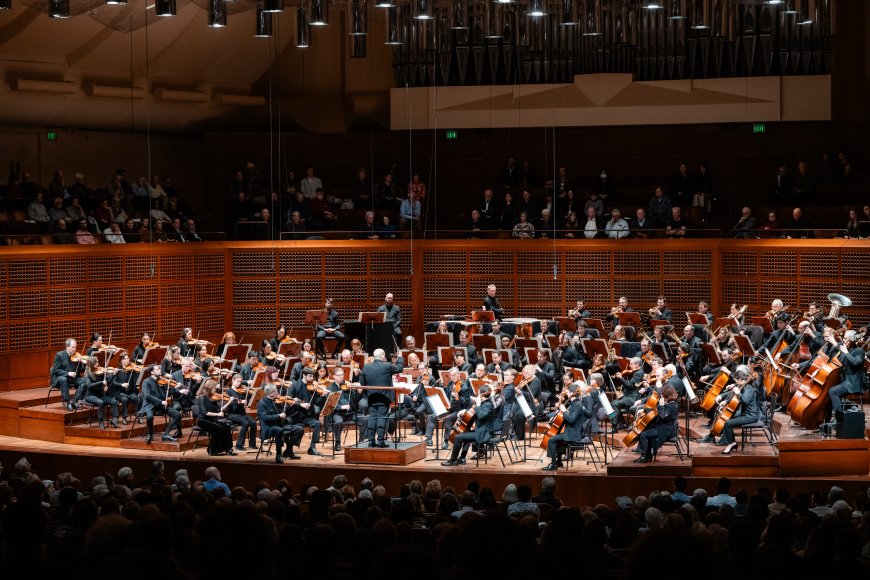
As for those fingerings? Well, whether they came from concertmaster Alexander Barantschik or from the conductor, they made all the difference in the slow movement’s theme, where the repeated note changes from a stable consonance to a juicy dissonance.
Thursday was a fabulous night for everyone in the orchestra, the brass, especially — including those four so-called Wagner tubas (mellifluous instruments like larger-bore French horns.) It took a while, though, for the musicians to stand for their second bow: they wanted to give van Zweden his due.
The same nuanced playing characterized Mozart’s concerto. The substantial opening ritornello began with pomp and closed with hushed, elegant curtsies. The slow movement’s bucolic interludes, tensing and slackening within measures, were wonderfully expansive.
At 76, the venerable Ax shows no signs of slowing down. The first movement’s pastoral cascades were supple; the cadenza (by Robert Casadesus) showcased a still-pristine technique. But this music is also about the spaces between the notes, in the second movement’s aria. It’s about sunshine, in the finale’s country dance. And the first movement’s development section — which cartwheels through key sequences and then reverses — is at least partly about sass.
In the last movement, Ax drew out the singing appoggiaturas, lingering just so. In a larger sense, too, he drew out all this music has to offer. It wasn’t for lack of applause that there was no encore; after his third or fourth bow, Ax apologetically gestured to his watch. Too bad, but maybe it was for the best that Mozart had the last word. You could bask in the glow.