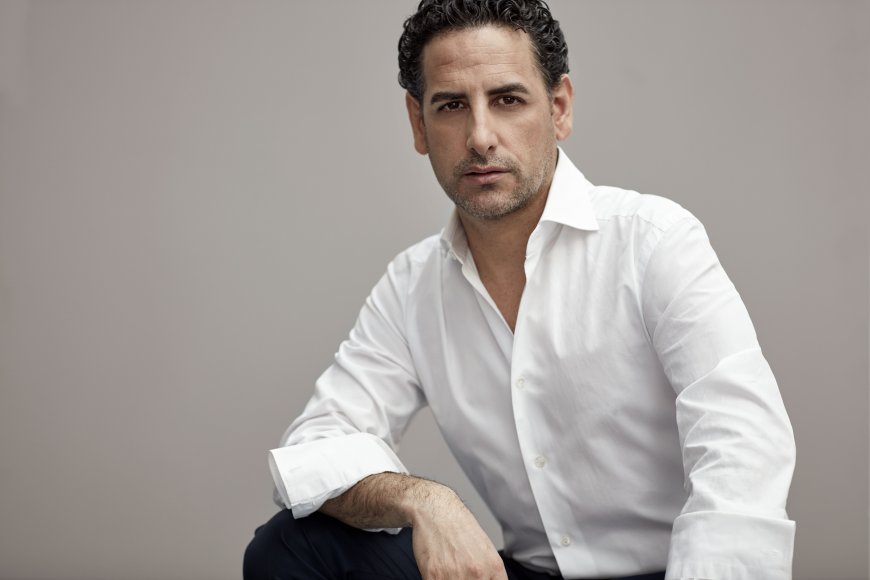
Juan Diego Flórez is more than a bel canto virtuoso.
The Peruvian-born tenor is succeeding Pavarotti as the “King of the High Cs” because of his ability to repeatedly deliver brilliant, and perfectly placed high Cs with ease and stylistic flair at the world’s most prestigious opera houses. Flórez will next bring this versatility to the Dorothy Chandler Pavilion in a recital on Feb. 10 as part of Los Angeles Opera’s 2025–2026 season.
Born in Lima, Peru in 1973, opera didn’t run in his family. But the singer inherited his vocal talent and love for Latin American music from his father, Rubén Flórez, who performed the vals criollo (Creole or Peruvian Waltzes) of Peruvian composer Chabuca Granda. He was also supported by his music-loving mother, María Teresa, the manager of a pub where Flórez played guitar and sang in — yes — a cover band.
Intending to pursue a career in pop music, Flórez entered Lima’s Conservatorio Nacional de Música, where he discovered his operatic voice before receiving a scholarship to the Curtis Institute in Philadelphia. Fast forward to 1996, when Flórez’s charismatic performance of the fiendishly challenging lead role in Gioachino Rossini’s Matilde di Shabran at the Rossini Festival in Pesaro, Italy created a sensation.
A star was born. Riccardo Muti invited the tenor to open La Scala's season that same year, with his other debuts following at Covent Garden and Vienna State Opera. In 2002, Flórez sang Count Almaviva in Rossini's The Barber of Seville at the Met. In 2003, he made his first LAO appearance in the gala, “Plácido Domingo and Friends,” and made his main stage debut in Barber in 2009. Of that debut, The Los Angeles Times’ Mark Swed said, “his arias brought down the house.”
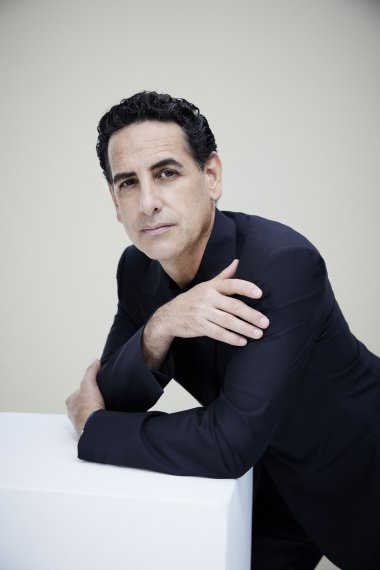
Flórez’s awards include the 2007 Orden El Sol del Perú (The Sun of Peru Order) — the highest decoration from the Peruvian government. In 2011, the singer created the foundation Sinfonía por el Perú, a non-profit organization that funds choral and orchestral programs for disadvantaged folks across his homeland.
SF Classical Voice spoke with Flórez from his home in Vienna. Topics ranged from his infamous High Cs to the state of opera today.
So, you played in a cover band as a teen in Peru?
Yes, I was in a band [and] also did my own concerts, which I organized myself when I was 15, 16. We were in festivals, on TV, but it was pop music.
I wanted to be a pop singer, but then opera struck me. I decided I wanted to do that because I fell in love with it.
And the rest is history. Let’s talk about your upcoming Los Angeles recital, which spans from bel canto and zarzuela to French and Italian lyric repertory. You also sing an aria from Faust, then end with some Puccini.
This program encompasses my career, actually. I’ve been singing bel canto from early on, but now [sing] a lot of French Romantic repertory and opera.
It’s a very versatile program, in styles and languages. The first part is dedicated to bel canto and starts with an aria in French by Rossini, “Le Sylvain.” There’s also a set of [Vincenzo] Bellini songs.
It continues with Gaetano Donizetti’s song, "Ah, rammenta, o bella Irene," and “La dame blanche” from the [François-Adrien] Boieldieu opera [of the same name] — it’s Rossini-like coloratura. The romanzas are very beautiful — very nice, witty, and funny. I finish with Puccini from La bohème ["Che gelida manina”].
I did [this recital] in December in Vienna, and it’s a bit of a celebration. This is my 30th year as a professional singer. My first theater was La Scala 30 years ago, when I was 24. It’s been great.
Bravo to that, Juan Diego! What about weaving your Peruvian musical heritage into this recital?
Since I’ll be in Los Angeles, and there’s a big community of Peruvians, I will sing a song there [as an encore]. It really became a tradition to bring out the guitar and offer the audience something from my upbringing, my country, my continent.
You’ve collaborated with pianist Vincenzo Scalera for many years. What makes your partnership special?
There’s complete musical trust. First of all, he sounds like an orchestra. He breathes with the singer. He understands the phrases. When you forget a line, he feels it and gives it to you. He leaves space for spontaneity. Our collaboration is great, [so] we don’t have to rehearse much.
Our first concert was in Japan in 1999, then London. Then we started doing recitals. He’s a legend also. He’s worked with the greatest — [Carlo] Bergonzi, [Montserrat] Caballe, [José] Carreras.
In 2007 in London, you sang Tonio in Donizetti’s La fille du regiment, reprising the role at the Met the next year. How did that role impact you?
I was at the Met and remember being a bit nervous. The tenor who had sung it before me at the Royal Opera was Pavarotti.
I was in contact with him [and] he was calling me sometimes on my phone. So, I called him before going on stage and said, “Can you wish me luck?” “Of course,” he said, “but you don’t need luck. You’re going to be great.” I thought a good word from him would make me secure.
It not only made you secure, but led to you being dubbed his successor — “The King of the High Cs.” Of your 2008 performance, New York Magazine critic Jutin Davidson wrote, “Flórez plucked the chain of Cs in Tonio’s aria ‘Ah, mes amis’ like daisies, making it look less like a feat than like fun.” Then you did an encore, something rare in modern productions. You were the first tenor to do so since Pavarotti in a 1994 performance of Puccini’s Tosca. What was that like for you?
It was great, but I didn’t know that at the time. I did it in Paris at the [Opéra] Bastille and didn’t know about that either. I was called “The Encore Tenor.” It feels good, [because] if they are asking for repetition, it means they liked it. They want to hear it again.
But when I did La fille at La Scala, I didn’t do the repetition. Sometimes, it’s not necessary to repeat a great, [but] difficult aria. It’s good to save your voice for the second aria, which is more difficult. I try to pace myself.
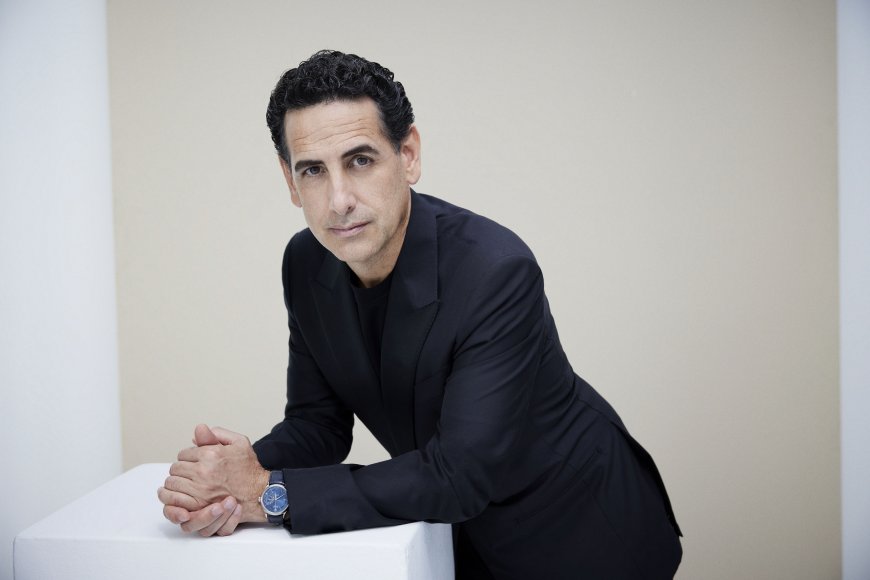
I’d love to know how Gustavo Dudamel helped inspire you to create your foundation, Sinfonía por el Perú?
I went to do a concert with him in 2009 in Venezuela and visited his program, El Sistema, to study and see the movement that [José Antonio] Abreu founded. Maestro Abreu and [Dudamel] both took me everywhere and I saw everything I needed to see. I said, I wanted to do this in my country.
This year, I’m so proud [Sinfonía por el Perú is] 15 years. We are changing underprivileged lives with music, and there are amazing results. We have also been touring with the youth orchestra [and] have been in many cities in Europe. It’s amazing how it’s working and changing the lives of so many youths in Peru.
With the arts seemingly always in jeopardy, what are your thoughts on the state of opera today?
The state of opera is very much alive. It’s reaching out to new audiences. It’s always a lot of effort, and some houses do better than others, [but] they have policies and programs to attract audiences. In Vienna, it’s amazing. Every day there’s a new opera, and it’s always full.
We shouldn’t always consider only Europe and America. In China, they love opera and fill opera houses and auditoriums. Young people will come if they have a contact with opera, if they are taken to the opera with a school or program. They come and see, and want to come again.
Either you like it or not, [and] many people will like it. I’ve been a witness of that. Young people coming for the first time tell me, “I love it,” and I see them again and again. It’s about bringing them to the opera houses. It has lasted 300 years, so why not 400 years!
Correction: The original text misstated the year of Florez's La Scala debut. He was 24.