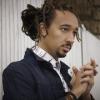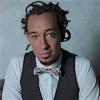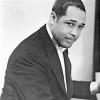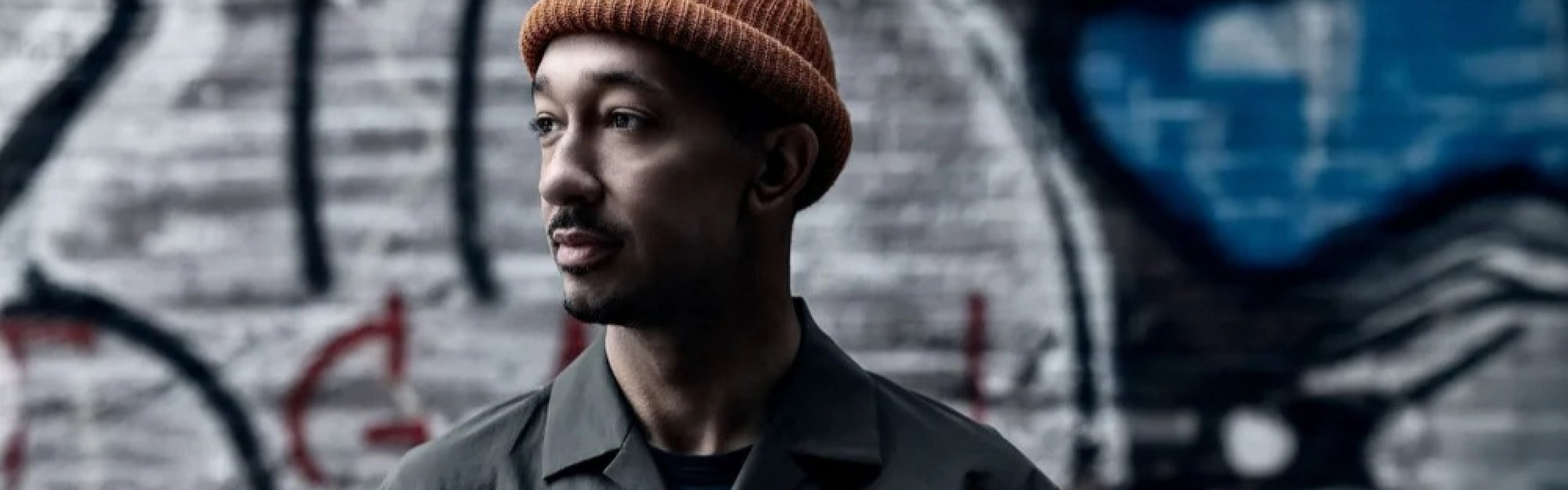
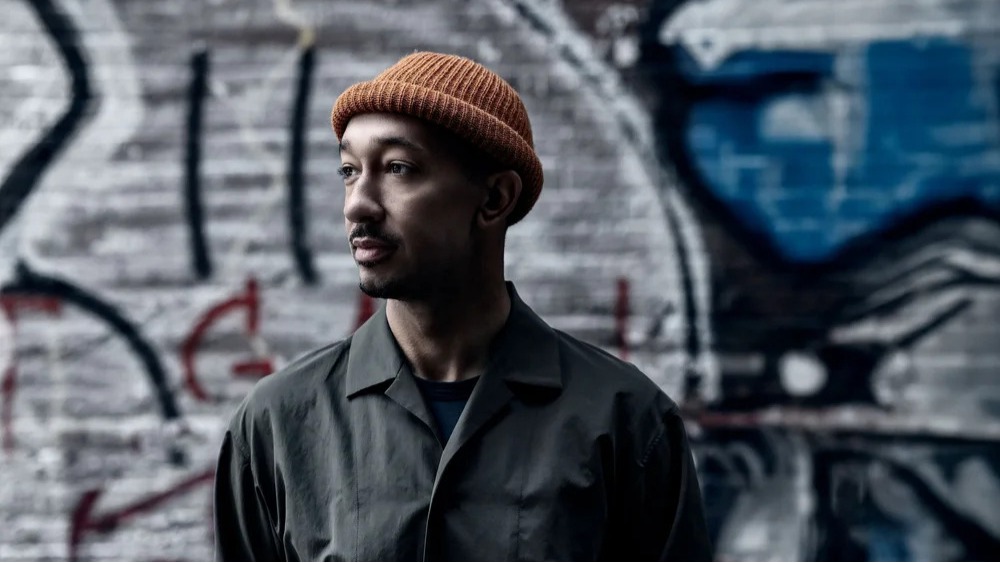
Read the following concert title carefully: “Gerald Clayton Honors Duke Ellington’s Concert of Sacred Music.”
It would be easy to quickly scan these words and assume that Clayton, the protean jazz pianist-composer-arranger, would be trying to recreate material from Ellington’s three Sacred Concerts, the project that Duke claimed was “the most important thing I’ve ever done.” But notice that Clayton didn’t use the words “recreate” or “play” or “perform.”
Rather, what transpired at The Soraya on Saturday afternoon, Jan. 31, was an almost entirely new Clayton composition, Sacredness, one that was inspired by the Ellington concerts but not tied to them note for note. In a pre-concert interview, Clayton told me that he was “looking for seeds that I can water and sprout in different ways. For those who know the [Ellington] music really well, you can connect the dots. But a lot will be fresh and new.”
For sure.
To start, Clayton selected nine numbers from all three Ellington Sacred Concerts, which were given in 1965, 1968, and 1973, respectively. He edited and desanctified most of their titles — for example, “Tell Me It’s the Truth” became “Tell Me What’s True”; “David Danced Before the Lord with All His Might” became “David Danced”; “Praise God and Dance” became “Praise and Dance,” and so forth.
Clayton used an 11-piece “mini-big band” — a cut-down version of Ellington’s orchestra with electric guitar added; Clayton played piano and electric piano (Duke actually dabbled on electric piano in his Second Sacred Concert, so that was not blasphemy). He also had a choir — the vocal ensemble Tonality — plus two solo singers (Christie Dashiell and Michael Mayo) and a tap dancer, Josette Wiggan.
These were, by and large, the forces that Ellington used. Not only that, but Clayton did not neglect the fact that Ellington was an entertainer as well as a serious composer; that’s one reason why Duke was able to keep a big band going for 50 years. Thus, there was an element of showbiz pizzazz in Clayton’s presentation, with a considerably expanded role for dance.
Under purple and red lighting, the opening number “I Stand in Humble Awe” droned for a while, opened up into a bumpy progressive thing, before becoming a mournful meditation with a prominent baritone sax solo from Corbin Jones. This might have represented the chaos before the Creation, or not. Two wild jitterbuggers in period costume did their thing, after which Clayton offered a soulful gospel-flavored solo piano interlude. A funky intro led to “Always Not All Ways,” an asymmetrically shaped tune sung partially in falsetto by Mayo.
You get the idea from there; Sacredness is mostly an eclectic circus of influences far removed from Ellington’s sound and harmonies. Whatever original seeds had been planted were so carefully obscured and transformed that I couldn’t detect an Ellingtonian thread until nearly halfway through the 78-minute piece, when wordless hints and shards of “Come Sunday” were seeping through. The number that hewed closest to the original was “David Danced,” whose tune is identical to that of “Come Sunday” — during which Wiggan put on a heavily amplified display of rapidly clicking footwork worthy of Duke’s man, Bunny Briggs. The drums, as handled by Kendrick Scott, served as more of a colorizing element than as a swinging machine.
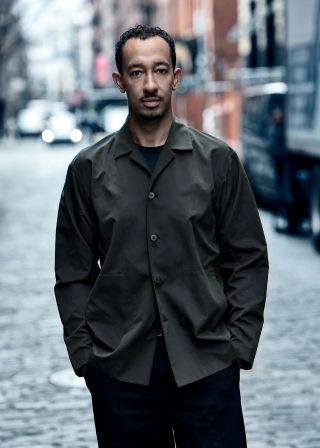
Two-thirds of the way through the piece, Clayton took the microphone and spoke about freedom in the manner of an informal sermon. “Love” — based on Ellington’s “Is God a Three-Letter Word for Love?” — is thankfully free of the mawkishness of the original. And toward the end, the recorded words of Duke himself came from the Great Beyond, tacitly blessing this enterprise while saying that he was not interested in theology per se.
Just what the piece has to do with theology was hard to determine, as many of the words were obscured by very loud, muddy amplification — unusual for The Soraya, which usually has good sound. Also, what I sense in this piece is a lack of humor; the first two Sacred Concerts have it in spots that illuminate Ellington as a contemporary man in touch with the vernacular.
Yet one aspect of Sacredness that Ellington certainly would have recognized and approved is that it is not a sacred text, that it follows the jazz tradition of constant reinvention and growth, that it feels free to change the identities, order, and even meanings of the selections at will. Number one on my wish list of leftover selections that Clayton could have included is “Father Forgive” from the Second Concert, whose words directly and presciently address our political, behavioral, and cultural predicaments in 2026. Maybe next time, if this piece is ever done again in the near future, he will.