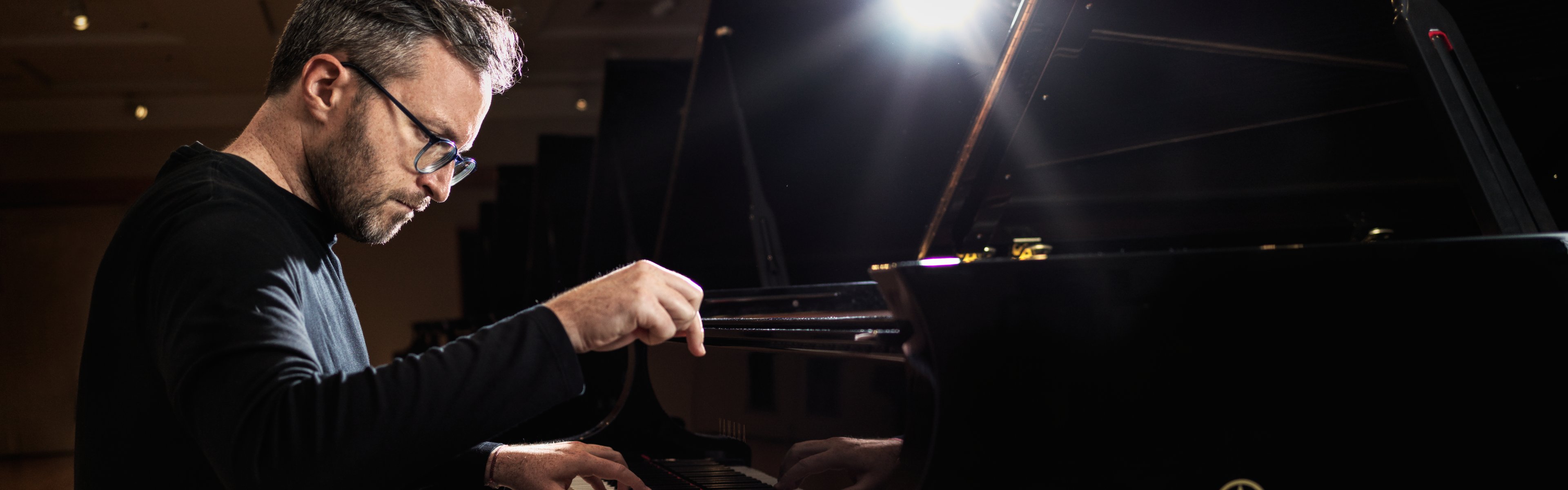
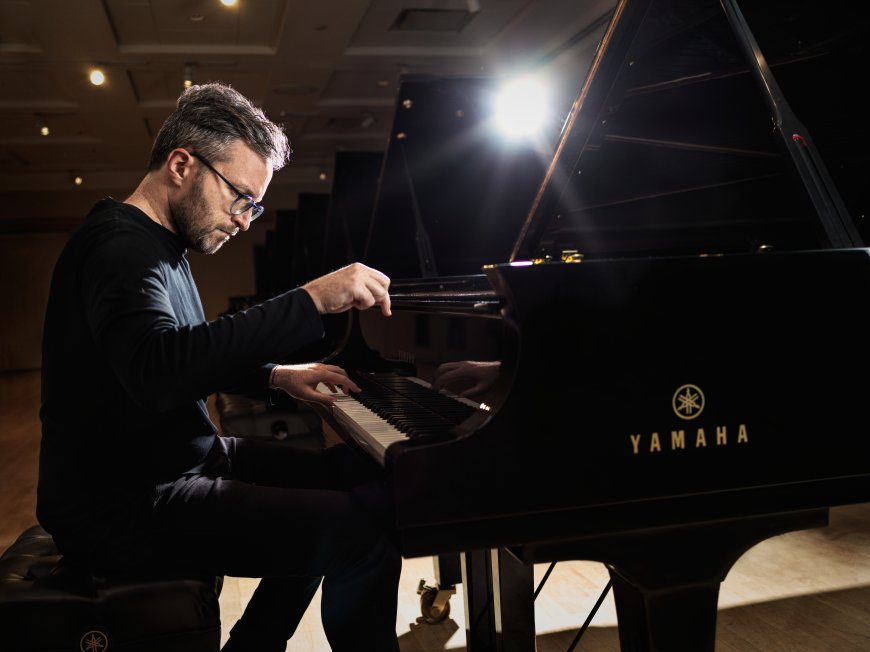
“Conor Hanick premieres new work by Adams” would seem to be a perfectly reasonable headline for a review. But in fact, it leaves out an essential piece of information: Which Adams?
On the opening night of the Ojai Festival in June, before joining colleagues for a stunningly intense rendition of Messiaen’s Quartet for the End of Time, Hanick gave the world premieres of two short pieces by John Adams. On Aug. 1, at the Music Academy of the West in Santa Barbara, he returns to a work he premiered three years ago: No Such Spring, a piano concerto by John’s son, Samuel Adams.
“I wouldn’t say I approach either of their bodies of work through the lens of their familial relationship,” he said during a recent interview at the Music Academy, where he has led the solo piano department since 2019. “They’re so distinct in my mind.
“That said, every once in a while, I notice a flicker of genetic material. And that goes both ways! It’s a healthy ecosystem of artistic sharing.”
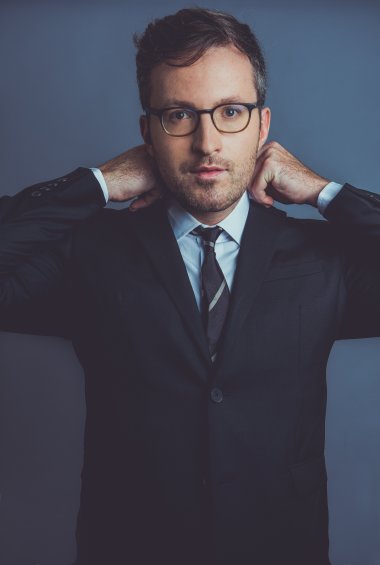
Hanick, who will turn 44 in August, performs a whole lot of contemporary music, and his fall schedule reflects that. He’s recording a new set of piano etudes by Nico Muhly and tackling two major works by Messiaen: The song cycle “Harawi” with Julia Bullock in Portland, and the massive 12-movement Des canyons aux étoiles in the outdoor Stargazing Theater at La Casa del Zorro, just outside San Diego.
But he also loves the standard repertoire, such as Shostakovich’s Piano Quintet, which he’ll perform with four of his fellow Music Academy teachers Aug. 6. We talked with him about how he balances the old and new, and how he approaches teaching gifted students.
Let’s begin by talking about Sam Adams’s concerto “No Such Spring,” which he wrote for you. You premiered it with Esa-Pekka Salonen and the San Francisco Symphony in 2023 and will be doing it twice in the next few months, in Santa Barbara and then Seattle.
He’s a dear friend, and an extremely nice guy. We recently did it with the BBC Philharmonic in Manchester and will do it in Seattle with Ludovic Morlot in the fall. It’s catching on!
I have commissioned and premiered a lot of pieces, but I’d be hard-pressed to name a piece written for me of higher quality, craft-wise. There’s not a note out of place. He understands my playing. It’s tailored to the things I love to do at the piano, and the way I like to make the piano sound.
When I work with composers on new pieces, I’m always paying attention to the balance between head and heart. This piece is perfectly balanced. It’s among the greatest gifts I have ever received.
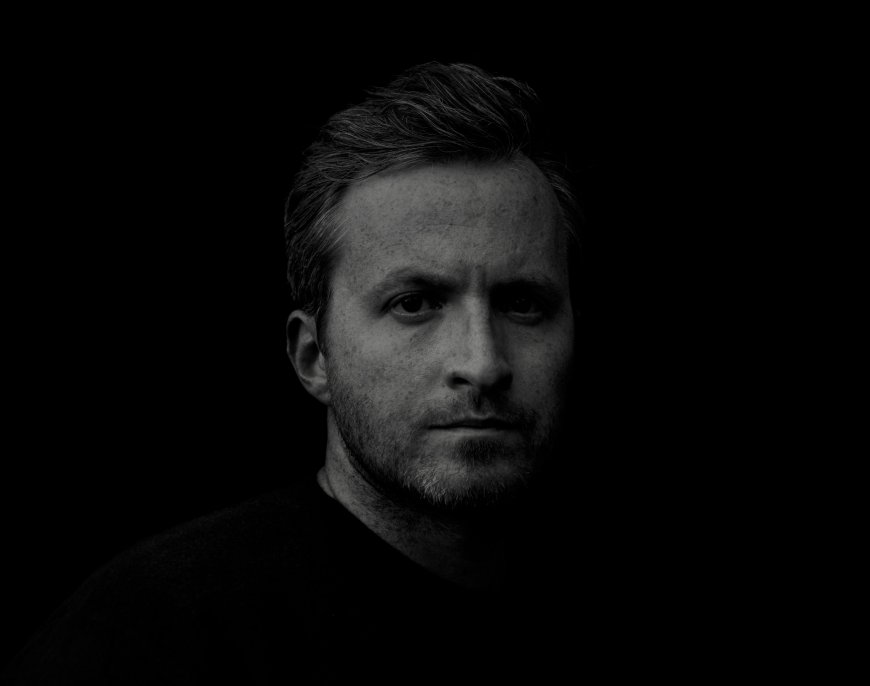
In putting together your season, do you consciously try to balance new music and established classics?
A lot goes into planning a year. In the best-case scenario, it’s artistically minded thinking about what you can say with a particular repertoire. What’s going to feed you. But then there are practical considerations. Am I going to be out of town and away from my family too many weeks in a row? It’s all a balancing act.
Even if I’m not performing it (in the near future), it’s important for me to have music from the canon on my music desk. It keeps me grounded. When John Adams hands me a new piece and asks me to play it in a few weeks, it’s useful to think of it as if you were on a similar deadline to perform a Beethoven sonata. It’s all music. It’s all notes. It’s all sound in space.
Of course, every composer makes different demands on you, musically, pianistically. The way that you end up translating a Mozart sonata is going to be slightly different than playing a new work. But the first steps are similar. It’s about looking at a piece and asking what’s the act of translation from the page to the microfibers of our ear canals. How do I make the piece come off of the page? The answer is slightly different for every composer, but for me, the act of discovery is similar.
We’re all basically detectives who are trying to figure out the mysteries of these magnificent pieces.
Of course, you can’t call Beethoven and ask him, “What is this passage about?” Do you do that with contemporary composers?
Totally! I love collaborating with composers. It showed me how to approach the canon in a way that feels alive to me.
I remember being an undergraduate and wondering why I was playing all this music that had been performed thousands of times. The key is thinking of those scores as new. That eliminates the detritus of tradition for me. It provides a more direct link to the composer and gives me agency to figure out what the piece is saying to me, and what I want to say about it.
Does that mean you don’t like to listen to how other pianists play those works?
Now I can. I understand those performances are personal and individual. The way Alfred Brendel plays Schubert has nothing to do with me.
Music is the most alive of all the art forms. It’s constantly malleable. If you’re treating it as something static, as something that can’t change or evolve, you’re missing the point.
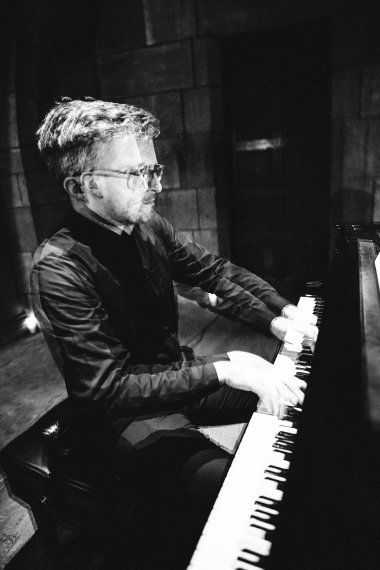
You’re performing the Shostakovich quintet later in the summer, and just did Messiaen’s Quartet for the End of Time in Ojai—two pieces that grow directly out of the traumas of the mid-2oth century. When you perform such pieces, which come out of a specific historical context, do you like to explore what was going on in the world at the time to better understand the music? Or are you strictly focused on the notes?
What goes into masterpieces like these is so vast that it would be shortsighted to think of them solely in a historical context. Shostakovich was writing during one of the most tumultuous periods of human history. He was in the eye of the storm. At the same time, the Piano Quintet is as influenced by Bach as it is by his war-ravaged circumstances. He’s exploring form and structure through the lens of Bach.
Let’s talk a bit about teaching. By the time a student here at the Music Academy — or at Juilliard, where you are also on faculty — get to you, they’re already at a very high technical level. What do you have to teach them?
We attract cream-of-the-crop talent here. You’re trying to elevate their playing further. You can always get better!
I don’t have a great sense of how much time we spend on technique versus interpretation. In my own playing, it’s all related, and that’s reflected in my teaching. It’s hard for me to talk about technique without thinking about the music that technique is serving. So many technical issues are actually musical issues.
So much was unlocked for me when I started understanding my own playing through the lens of thinking about a musical idea and then figuring out what has to happen physically to achieve it. I realized that, usually, when I wasn’t achieving the musical idea, it was because there was something going on in my hands or arms. If I couldn’t do it physically, it probably meant I was thinking about the musical idea in the wrong way. That informs a lot of my teaching.
Do you enjoy working with the students?
It’s a total joy. I love being engaged in learning in a deep way. When you’re teaching, you’re participating in a circular exchange of ideas. That’s extremely important.
Let’s go back to your own student days, growing up in Iowa City, Iowa. How old were you when you took up the piano?
I started piano when I was 6 and played only for about a year, until my teacher moved away. At age 9, I started on the violin, and took up piano again the next year, when I was 10. I love the violin repertoire, but I had no actual talent as a violinist.
I was also interested in sports, writing, science, art — all of that was in my life, and I’m probably the better for it. None of those things got my undivided attention until graduate school. I went to Northwestern University, where I ended up with an English degree.
After graduation, I took a year off and moved to New York, where I lived on my friend’s floor. He was at Juilliard getting his master’s. I practiced manically that year, ultimately getting admitted into Juilliard’s master’s program. A year of practicing 10 hours a day turned out to be the key!
I hear it’s how you get to Carnegie Hall.
I found out a lot about my own playing that year. That’s when I found that really rigorous focus you need. Before that, I had gotten by on pure talent. By the time I was an undergrad, I realized I needed to do a lot more.
At Juilliard, I was determined to be the “yes” person. If someone needed a pianist to play for a lesson, I said yes. If there was a composer wandering the hallways looking for a pianist to play on their composition recital, I said yes. That proved helpful. It gave me an enormous breadth of experience, and it showed me I can handle things in a pressurized environment.
What was your career plan after Juilliard?
It was the “Let’s see what happens” plan. I started working toward a doctorate, but then both performing and teaching opportunities started presenting themselves. Gradually, I started to see how this could work. That is still ongoing. I’m starting to build a life in music that I have control over. It’s been a long time coming.
Finally, we’re living in turbulent political times. Does the artist have a role to play in such moments? If so, what is it?
I’m resurrecting Frederick Rzewski’s The People United Will Not Be Defeated, so that partially answers your question. I’ll be playing it in Washington state in January.
The most important thing during periods of turbulence is just continuing to contribute your artistry. The people need it. We need it.