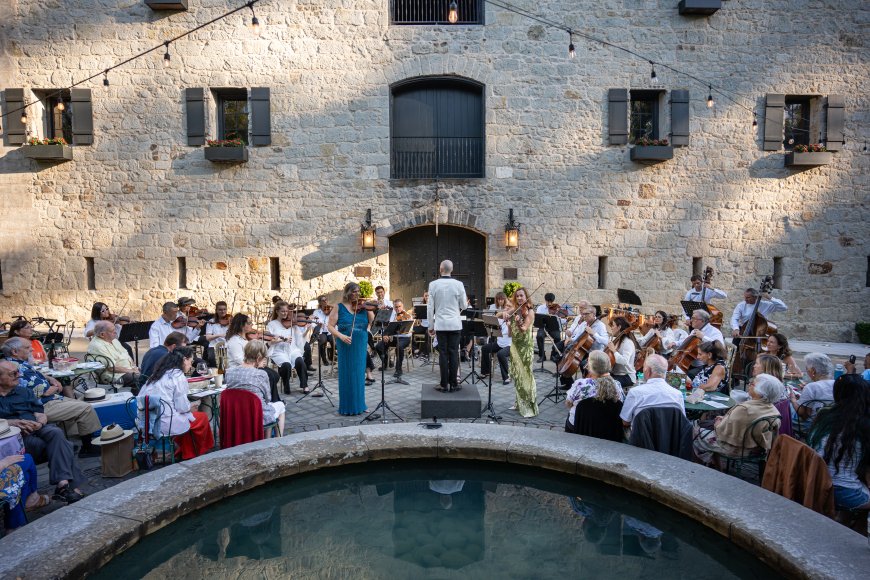
This year, the United States celebrates its 250th anniversary, and arts organizations across the country are attempting to comment on this milestone through music present and past. The 2026 Midsummer Mozart Festival seeks to tie the music of Mozart’s Parisian era to the Enlightenment ideals that influenced the formation of our country. While perhaps somewhat counterintuitive, this is not an unprecedented idea: books have been written on Mozart and the Enlightenment. There has always been much eager discussion of the Masonic allusions in works like The Magic Flute. That said, the music and story of Mozart’s time in Paris are more than sufficiently fascinating on their own.
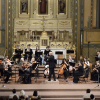
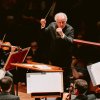
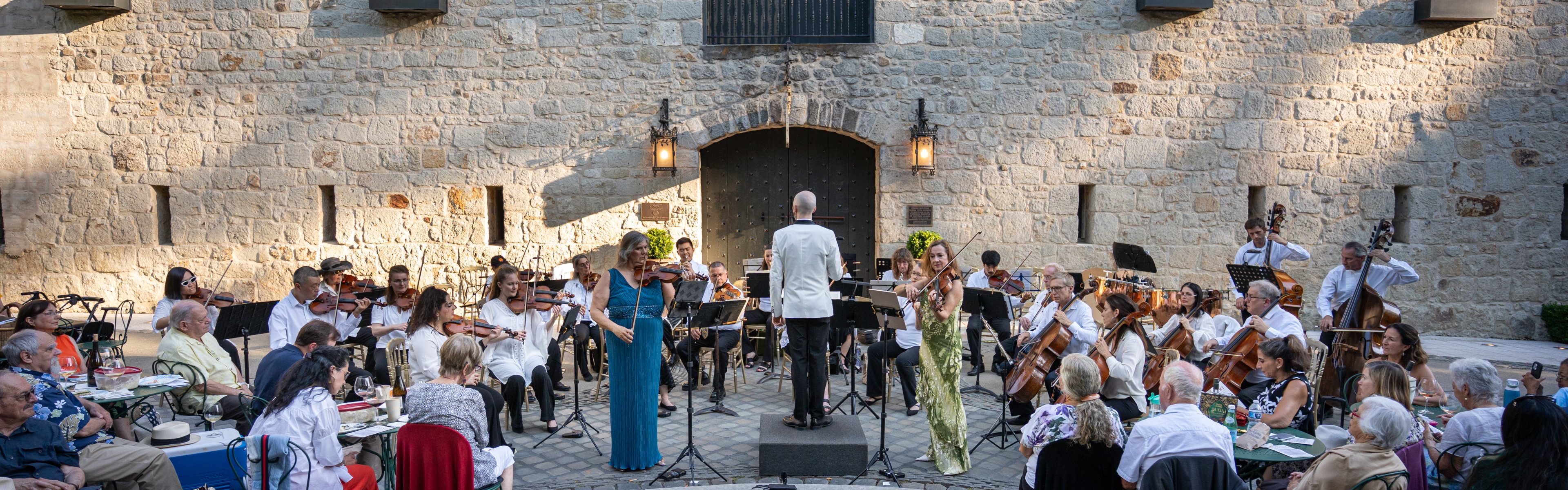
Friday’s program opened with the overture to Mozart’s ballet Les petits riens, K. 299b. The orchestra, led by guest conductor Ryan Murray, displayed beautiful ensemble work here, with the elegant, melismatic melodies gently soaring in the gorgeous acoustic of the Berkeley City Club.
In an era in which the orchestra seems to grow ever louder through amplification and added auxiliary instruments, it is a refreshing palate cleanser to hear music that was decidedly big and loud for its time (Mozart worked with 60-person orchestras during his time in Paris) but is nonetheless gentler on the modern ear. The subsequent works on the program showcased the bombast the Parisian audiences demanded.
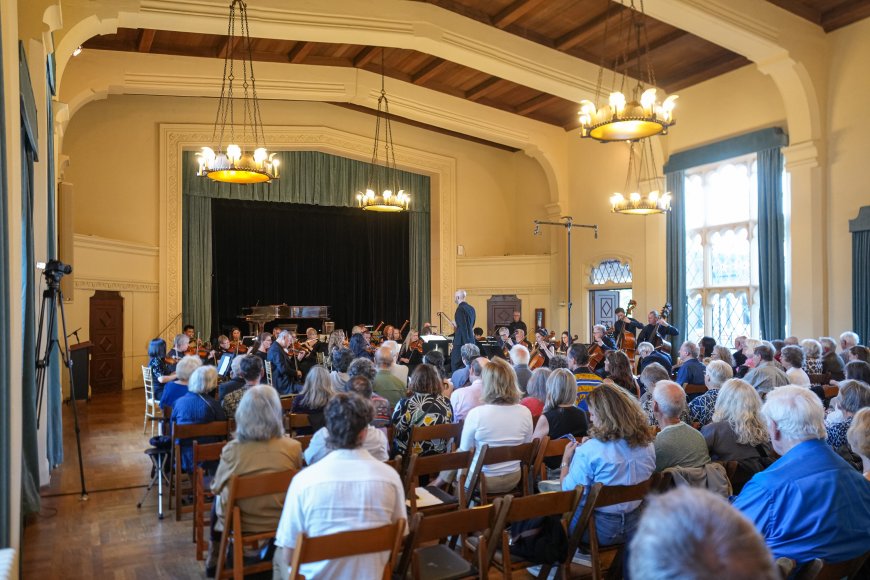
Next was the Sinfonia Concertante in E-flat Major for Violin and Viola, K. 364, featuring Robin Hansen on violin and Elizabeth Prior on viola. The soloists played with delightful verve, trading melodies in canon and harmonizing in thirds. There were equally impressive moments in the ensemble: thrilling, anxious trills in the upper and lower strings and rich, bright accents from the horns.
The opening Allegro maestoso displayed strongly contrasting moods. The work’s secondary theme flirted with the relative minor key, bringing necessary drama. But the storm clouds did not stay for long as the recapitulation brought back the opening themes with even more excited figurations from the soloists.
The second movement, the Andante, was a solemn, refined arioso reminiscent of the soloist-centered movements in Mozart’s sacred choral music, like the Recordare from the Requiem. The viola truly blossomed in this sparser setting, no longer competing acoustically with the other midrange strings; its gentle warmth filled the spacious texture. The finale, the Presto, condensed the energy of the opening movement into a shorter span, all of its tricks returning with an inertia that drove the movement to a headlong close.
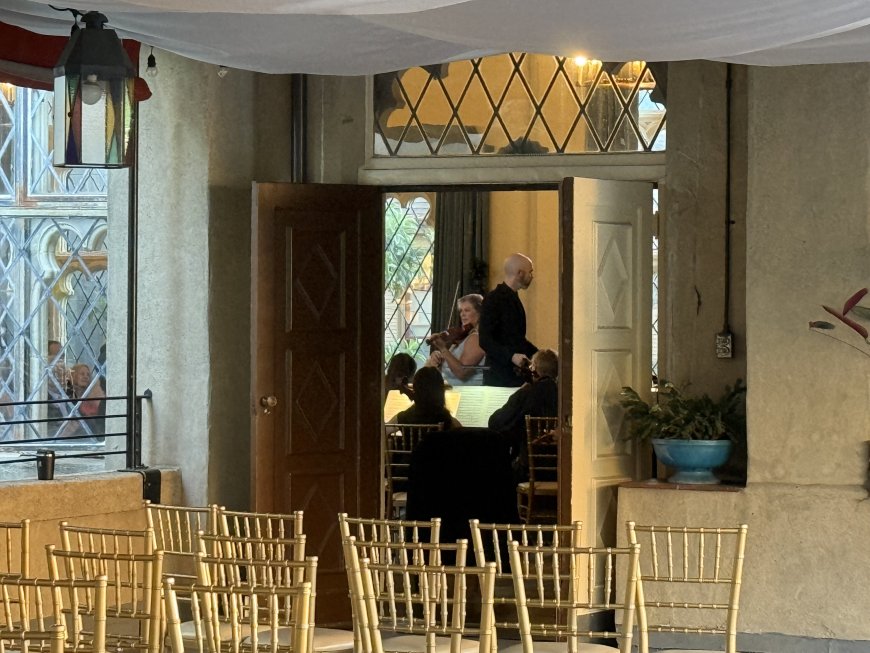
The program’s second half began with the iconic overture to The Marriage of Figaro. Under Murray’s direction, the orchestra excelled particularly in bringing a rhythmic articulation uncommon in interpretations of this work, though at times at the expense of the melodic lines.
The final work, Symphony No. 31 in D Major ("Paris"), K. 297, began with a forte unison tutti, a gesture Mozart refers to in letters to his father as the “premier coup d'archet,” or “first bow stroke,” referring to a sharp, sudden musical burst. To Mozart’s apparent annoyance, Parisians insisted on this as the customary opening to a symphony. This work felt big in both orchestration and tonal contrast. The Allegro assai featured more remarkable rhythmic vigor from the orchestra; the ensemble’s sound fully opened up here.
The development section repeated the opening chords, with Mozart almost comedically belaboring the point, and featured hints of modulations to minor keys that never fully obtained; once again, the Parisians would not suffer solemnity for long. The recapitulation featured deft harmonic twists subverting the opening material, and the movement ended with a final repeat of the opening chords.
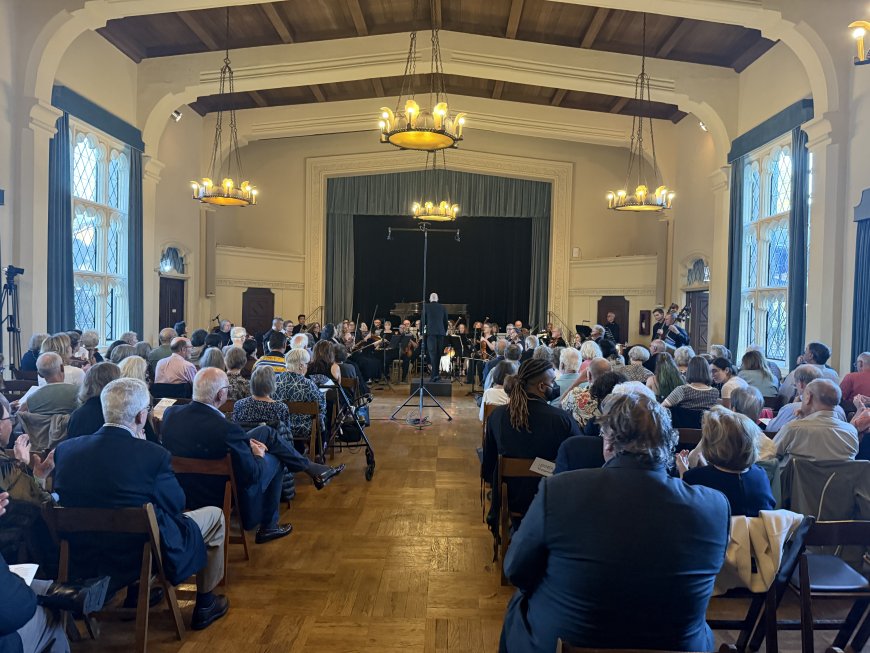
Mozart wrote two versions of the second movement, both presented here: the original, the Andantino, was a slow arioso movement that was bright and calming—evidently too calming to the Parisian ear, as in one letter Mozart recounts that he had to write a second as the audience applauded less for it than for the other movements (which is how we know they clapped between them at all!) and complained of its many modulations. The replacement, the Andante, was hardly andante, with a faster tempo and overall character mimicking the prior movement.
In effect, hearing both versions made this a four-movement symphony, with the two inner movements providing welcome contrast to each other. The finale was a fast ride of 16th-note figures and big, crashing chords that mounted in intensity. Despite the Parisian distaste for filigree, Mozart squeezed in a brief fugato highlighting each section of the orchestra before rapidly closing out the work.
Now, as in 18th-century Paris, attention spans are short. This program felt like Mozart for a modern audience, with no piece ever overstaying its welcome. Perhaps contemporary America has much in common with Mozart’s time after all.