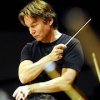
Santtu-Matias Rouvali, who’ll turn 40 next month, seems to have followed a path forged by fellow Sibelius Academy alumnus Esa-Pekka Salonen, now 67. Both were tapped as principal conductors by London’s Philharmonia Orchestra — Salonen in 2008 and Rouvali in 2021 — and by the end of the month, both will have showcased the Philharmonia at Cal Performances’ Zellerbach Hall on the UC Berkeley campus, Salonen in 2012 and Rouvali after his upcoming Bay Area debut Oct. 18–19, featuring pianist Víkingur Ólafsson.
The two Finns both committed themselves to a position at the podium in their early 20s. Salonen had previously focused on composition, while Rouvali, from age four, had set his sights and hands on percussion. He later studied percussion at the Sibelius Junior Academy and then at the graduate level, and performed with regional and national Finnish orchestras, as well as in the occasional jazz and rock ensemble. He returned to the Academy for graduate study in conducting and was soon chosen to guest conduct Finnish orchestras, and later in Denmark and Sweden, where he was made chief conductor of the Gothenburg Symphony in 2017.
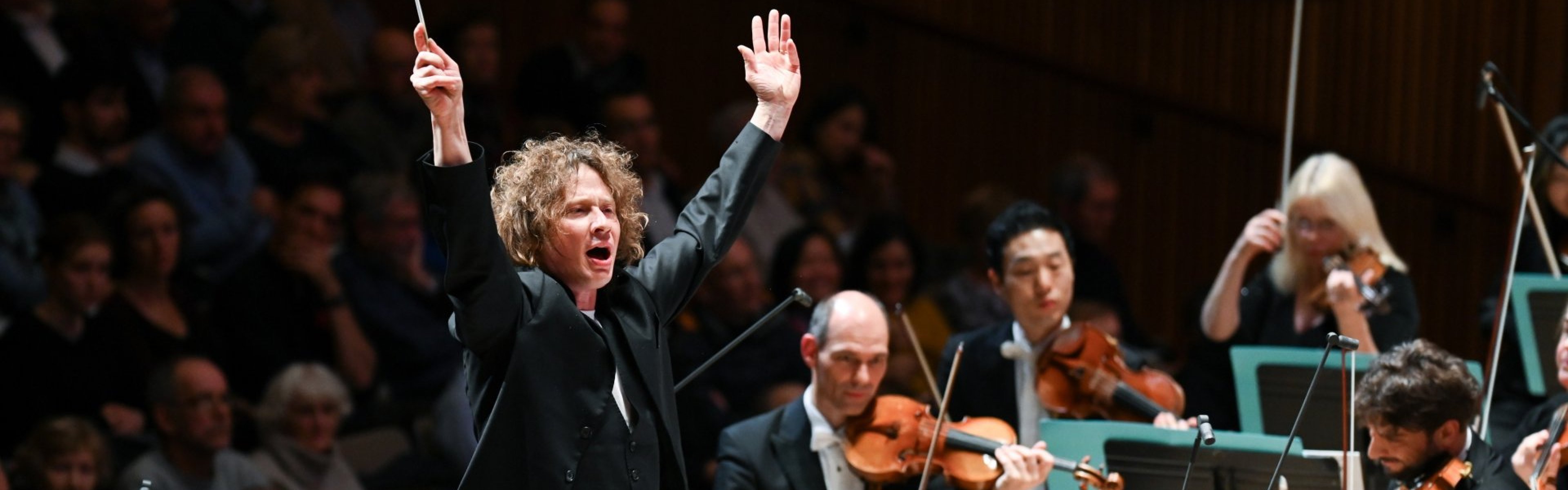
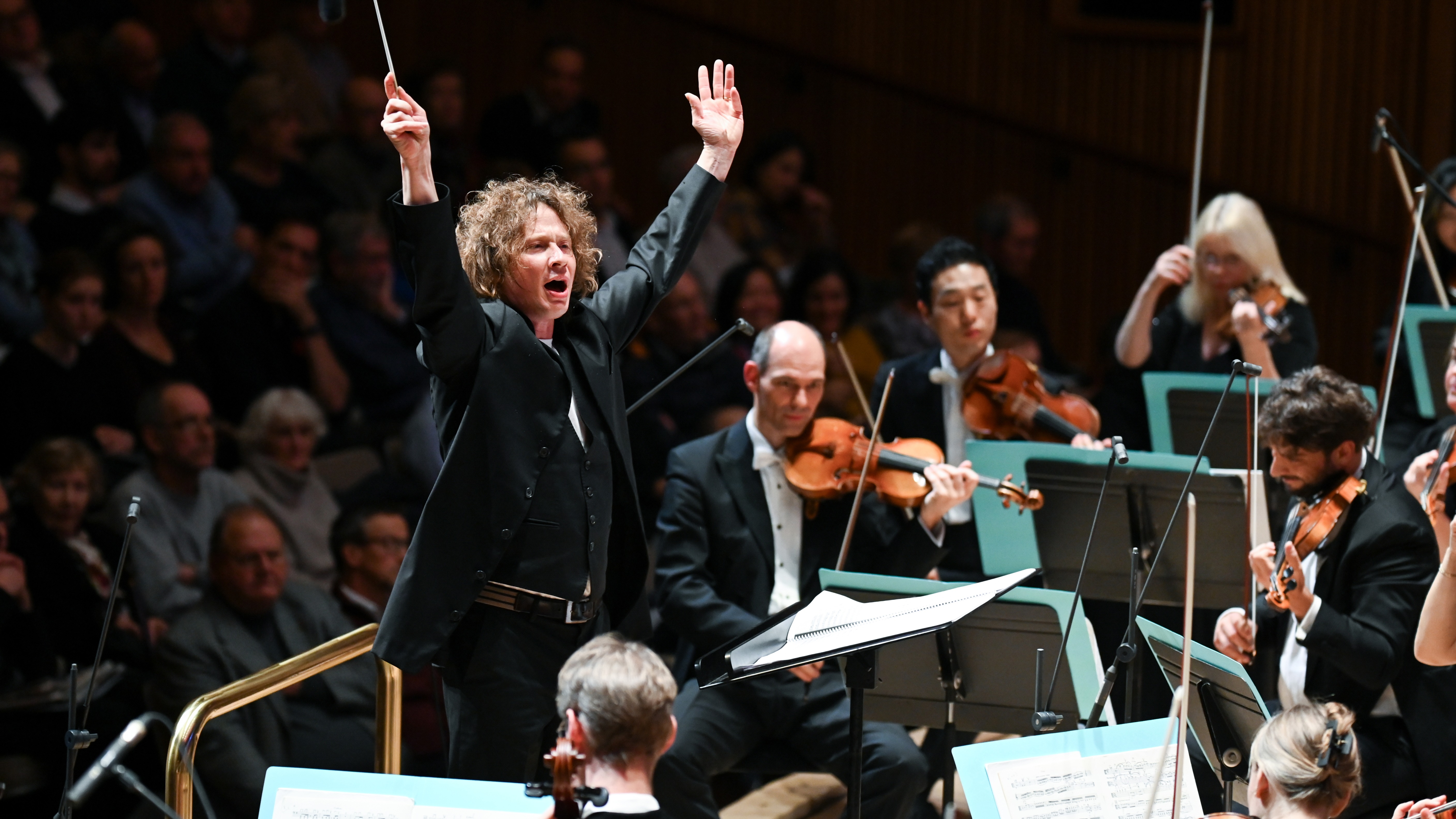
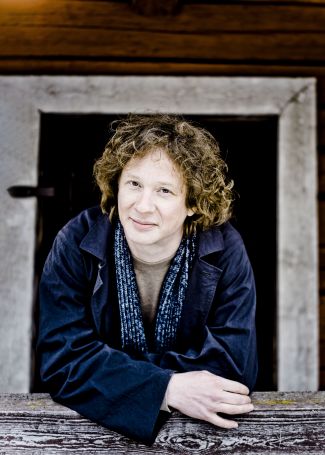
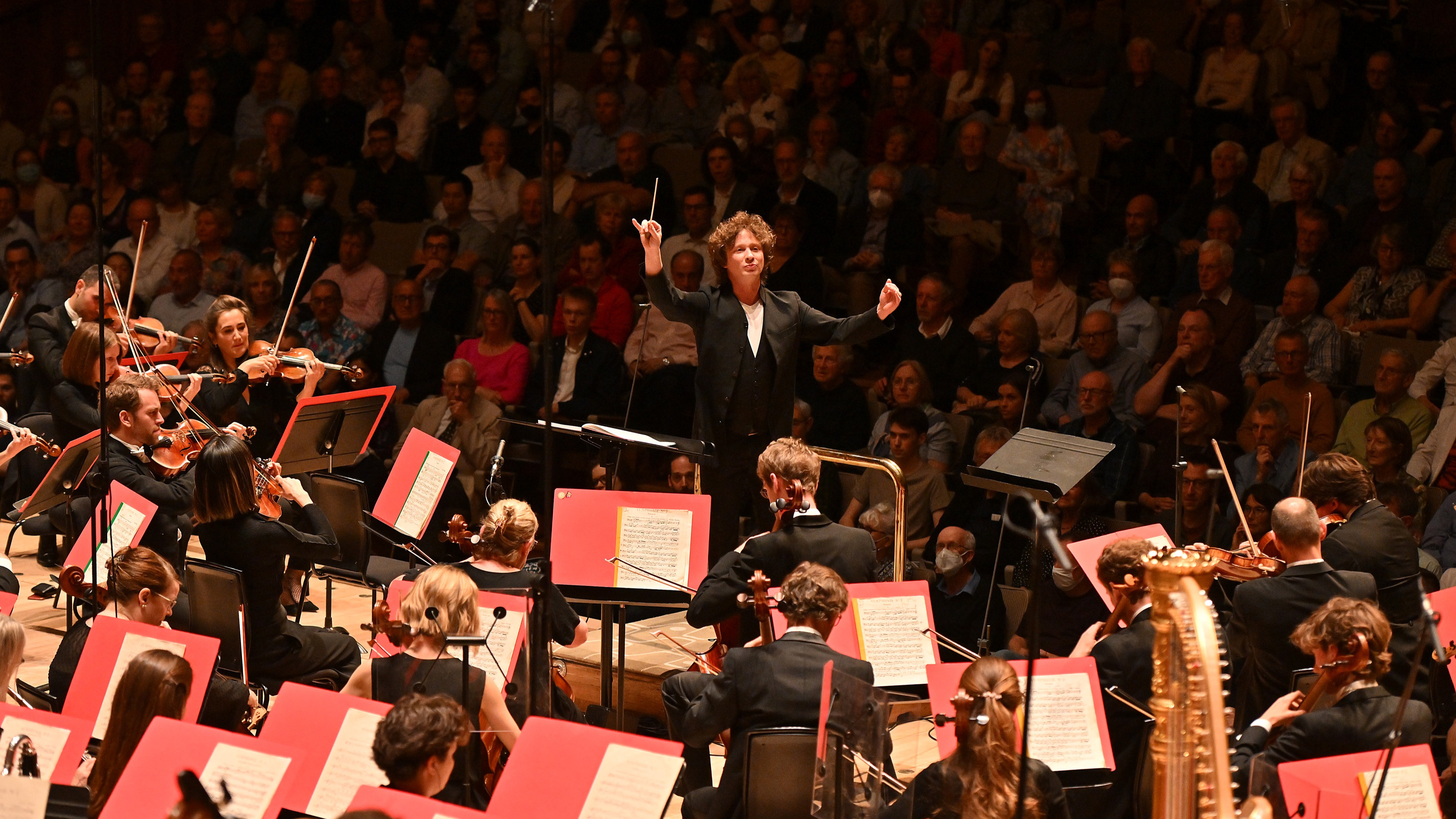
Rouvali guest conducted with the Philharmonia in 2013 and was contracted as its principal conductor in 2021. In person, he provides the additional entertainment of what’s been described as “balletic” and “extravagant” behavior on the podium, arguably influenced by his credentials as a percussionist. This energy was also manifest in SFCV’s Zoom interview with Rouvali last month, which he joined from his family home in Tampere, Finland, about two hours from Helsinki.
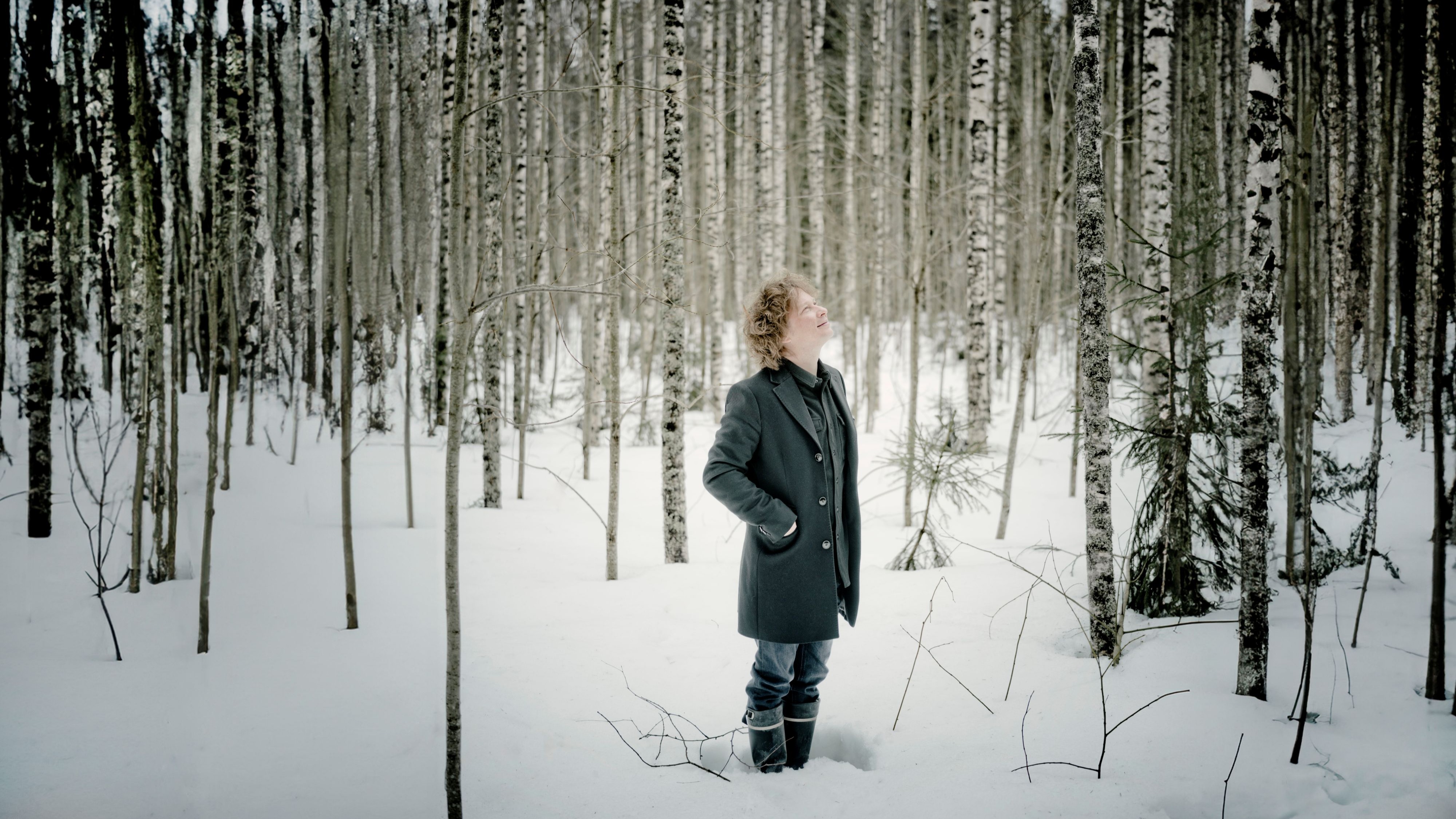
You can see me, right?
I can see you quite well, and there’s an almost solar globe above your head. That’s how bright your future is, I’ve heard.
[Laughs] Who knows? But I’m in trouble right now, because I need to get a second passport, because after the U.S., I’m heading to Korea with the Philharmonia.
Will they hear the same programs we’ll hear at Zellerbach?
No, no. God knows what it will be, but the program will be different.
Let’s talk about what you’ve chosen for Berkeley — Beethoven’s Piano Concerto No. 5
Well, [pianist] Víkingur Ólafsson is famous for his Bach and Beethoven, and we have done already a lot of Beethoven with him, and I know it works; we know his style. We also know how Beethoven should be accompanied: We can do it heavenly soft, but we can also do the rough stuff.
We are not using period instruments. I like Beethoven to be played with modern instruments, including the timpani.
Does your own experience with percussion in an orchestral setting influence your perspective?
Yes, definitely. When we are playing, for example, the Gabriela Ortiz piece [The Bay area premiere of Si el oxígeno fuera verde (If oxygen were green)], which is full of different kinds of glittering percussions — and the parts are extremely difficult — you will hear that the percussionist has been trained very well to do this in a shimmering way.
You might actually think that the first half of Gabriela’s piece is [Jean] Sibelius because of the percussion. It’s a similar sound kind of sound world, how he used the flautandos and flageolets [bowing effects] with the strings, almost like a fairy tale. But Gabriela is also doing nature effects all the way through, with the mallet instruments.
How did percussion enter your life?
When I was a child, my attention went immediately to the timpani. It looked great to do this and to create that sound. Conducting, you’re doing some of the same movements, but you achieve a bigger sound with the entire orchestra when it comes to the big chords and the glorious endings.
There’s a charming YouTube interview with you in which we also see the winter landscape around you. I sense that nature is a big deal for you, and for other Finnish musicians I’ve known.
I’m actually a little bit ill now, because of all the old airports on my latest tour, and home is the place where healing happens — where I can warm up the sauna, like I’m going to do today, and there’s silence. I walk a hundred meters into the sauna and throw some water on the stones. It heals you. It’s completely dark, you can’t hear any traffic, you just hear those random deer walking past, and your head goes, “Ah, that’s what I want to listen to right now.”
In one of your promo shots, you seem to almost be kissing a fish.
I think that was from Colorado, where I was with this piano technician and he said, “Come on, guy, let’s go fishing [in] the Eagle River,” We had a free afternoon, general rehearsal was done. And when I’m fishing or hunting, the best thing is that I’m not thinking about music at all! People think about Sibelius as living in nature, but actually he was a city person, a dandy.
At Zellerbach, you and the Philharmonia will present Sibelius’s Symphony No. 5 on Oct. 18, and his Finlandia on Oct. 19 with Maurice Ravel’s Piano Concerto in G Major and Shostakovich’s Symphony No. 5. What’s your personal approach to Finlandia?
Remember that this was composed [in 1899] before we became independent [in 1917]. Finlandia became our symbolic music, that we remained independent. My grandfather was there in those days when the bombing started [during the 1939–1940 Winter War against the Soviet Union]. And with those threatening chords in the beginning [of the work], you can imagine, “Oh, Finland will face again the same enemy, for a long time.”
You can see the Russians coming across the border, like what is happening now in Ukraine. And you can imagine those first trombone chords to be some kind of a threat. Before the [heroic] theme, I have done a long fermata for cellos, basses, bassoon, and timpani. That’s where the first shots are shot. And you hear the airplanes coming through, and I have done this ponticello tremolo for the cellos. I’m living with this piece! And then of course comes the hymn, which kind of tells that actually, everything will turn okay.
It sounds like you’re illuminating a documentary with your orchestra.
That’s exactly what it is about. It could happen in a movie about what happened in the Second World War, [or] what’s happening now in Ukraine. But Finland is independent anyway, and that’s how that story ends.
And it seems like Finns stick together. It was Esa-Pekka Salonen who lured you to the Philharmonia, of which he was the principal conductor from 2008–2021.
I remember the day when he called me and said, “Do you want to be principal guest conductor? Let’s see what we can achieve together.” I talked about two crazy Finns in London at the same time. It was easy to talk to him: If I had a problem I could call him and he always understood. And he would say, “Take a beer!”

Did you share perspectives about what it was like working in England, and what it would be like in the U.S.?
We mostly joked about it. We Finns don’t pretend to be something else we are not, and I think other people respect that. And that’s reflected in our music-making as well. We don’t have a big, long, old tradition of classical music, because our country is only a hundred-and-something years old.
But there’s increasingly more music out of Finland which you and Salonen are personally exporting to the rest of the world, including us here in the Bay Area.
Sure! I try to be in between the orchestra and the audience, and in that way to explain the music. And I’m sure the audience will recognize that.