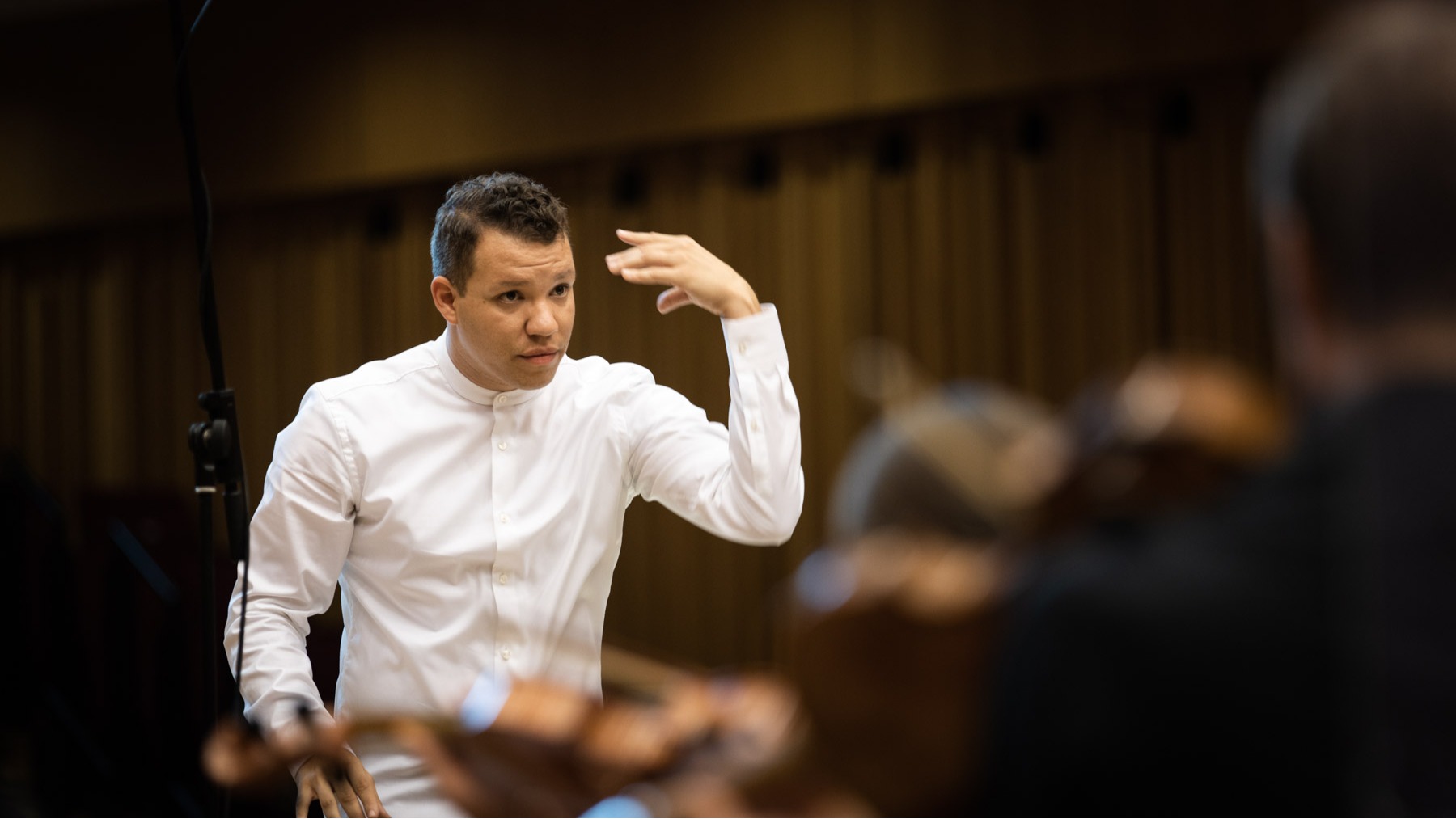
When up-and-coming Los Angeles native Ryan Bancroft conducted the LA Phil at the Hollywood Bowl in 2024, SFCV reviewer Jim Farber suggested that “if the LA Phil’s management is sharp, it will book Bancroft for future subscription concerts.”
On April 17, Bancroft returned to lead a concert of dark and stormy music from Russia and Scandinavia.
In his current role as Chief Conductor of the Royal Stockholm Philharmonic, Bancroft has embraced this repertoire, despite his upbringing under palm trees and warm sunshine.
Jean Sibelius (1865-1957) and Dmitri Shostakovich (1906-1975) never met in person, although it seems like they should have, since they lived for many years only a few hundred miles apart in the Baltic ports of Helsinki and Leningrad. But the neighboring Russia and Finland have experienced periods of tension for centuries, and Sibelius was an ardent Finnish nationalist at a time when his country struggled for self-determination under the long shadow of Russian and Soviet oppression.
Shostakovich, too, had his own share of difficulties with the Soviet regime, which alternately praised and punished him. Perhaps as a result, his music often wears a bipolar personality, veering between anguished despair and drunken merriment.
Five selections from the early Suite for Variety Orchestra show that yes, Shostakovich did have a real sense of humor and fun, which faded over the years under the stress of the often-terrible events he was fated to witness. He worked as a piano accompanist for comic silent movies in the 1920s, and later scored nearly 40 films — often a safe way for him to avoid the censors.
Shostakovich’s colleague Levon Atovmyan (1901-1973) arranged some of this music into the Suite, scored for a circus-like ensemble with four saxophones, guitar, and two pianos. Bancroft bounded onstage and ripped into the opening toe-tapping March with gleeful gusto. In the Lyric Waltz, the saxophones crooned sensually and were joined by accordion. The Suite, all too short, introduced some welcome sunshine into the proceedings.
At the opposite end of the emotional spectrum, the Cello Concerto No. 2 (1959), takes us into the lower depths of Shostakovich’s tortured soul.
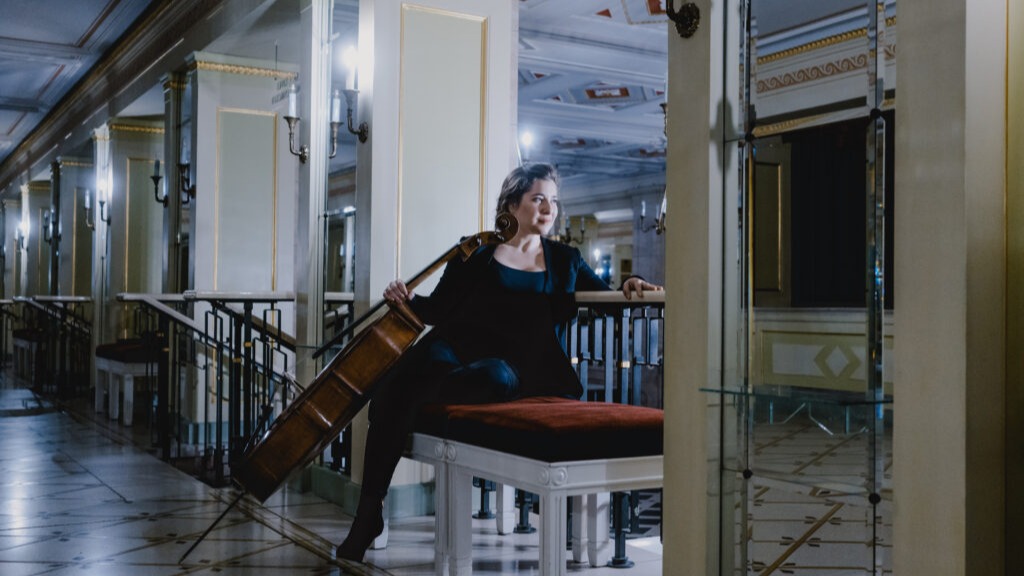
Alisa Weilerstein knows this concerto well, having recorded it with the Bavarian Radio Symphony in 2016 and played it around the world. Her performance was intelligent, conscientious, but sometimes effortful, as the piece demands heft, physical strength, and philosophical acumen. Written for Shostakovich’s friend and master cellist, Mstislav Rostropovich, the Concerto travels an obstacle course of technical difficulties: double stop harmonics, awkward cadenzas accompanied by bass and snare drums, long singing phrases alongside harsh dissonant outbursts.
Weilerstein’s account of the second movement’s wild Jewish vendor’s song (“Come Buy My Pretzels”) seethed with the appropriate irony. In the many chamber-like episodes, flutist Denis Bouriakov on the flute and hornist Andrew Bain made eloquent contributions.
The sizable audience responded with stunned silence at the end. Weilerstein returned with a refreshing encore by J.S. Bach, the Sarabande from the Fourth Cello Suite.
The marking “Largamente” — meaning “broadly” — appears frequently in the surging score of Sibelius’s Lemminkäinen Suite, a massive and rarely-heard setting of four stories about one of the “most thoroughbred” heroes in the Finnish national epic, the Kalevala. Originally conceived as an opera, the music throbs with drama, rising and falling in cresting waves from crescendo to crescendo. The second section, “The Swan of Tuonela,” has gone on to become one of Sibelius’ greatest hits, with what is one of the most beloved English horn solo parts in the orchestral repertoire, performed with exquisite artistry here by Andrew van der Paart.
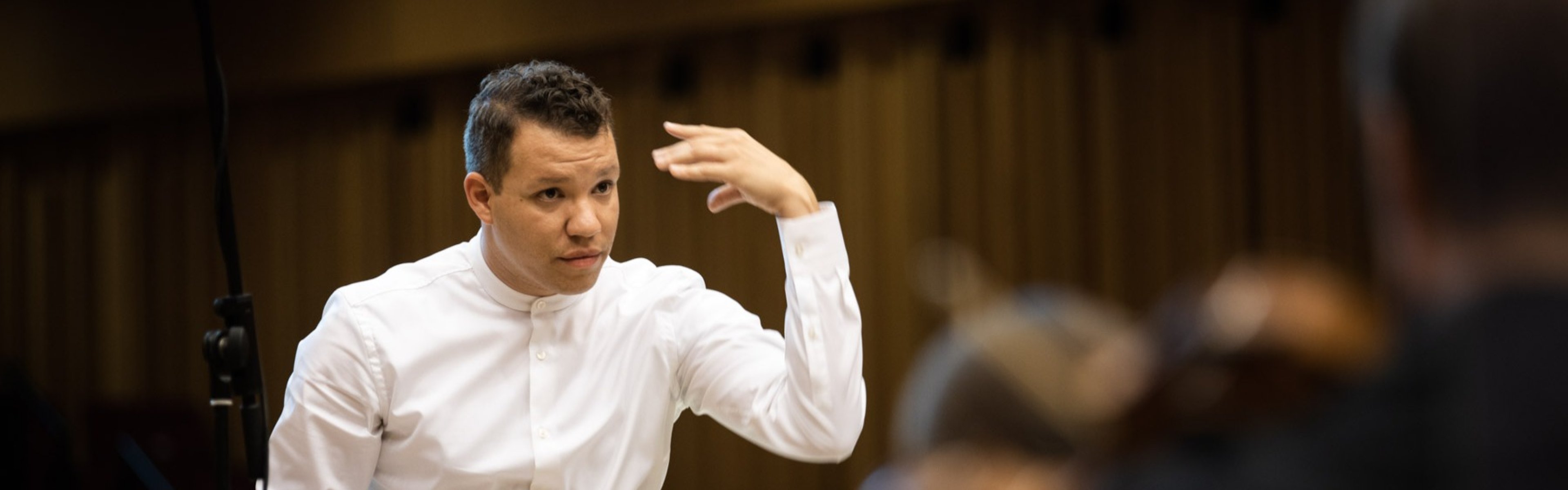
Bancroft managed the huge forces confidently, without a baton, giving a little kick with his feet at passionate moments. He gave the music the breathing room it needs, although Sibelius’s trademark pregnant pauses did not always receive adequate preparation — and one was interrupted by premature applause.
The long tremolo passages for the strings rang with delicate tension, and the many brass fanfares sounded mellow and refined. Acting Concertmaster Bing Wang brought a subtle sweetness to her solos, as did Ryan Roberts on oboe and Whitney Crockett on bassoon.
Management, if you are listening: bring Bancroft back.