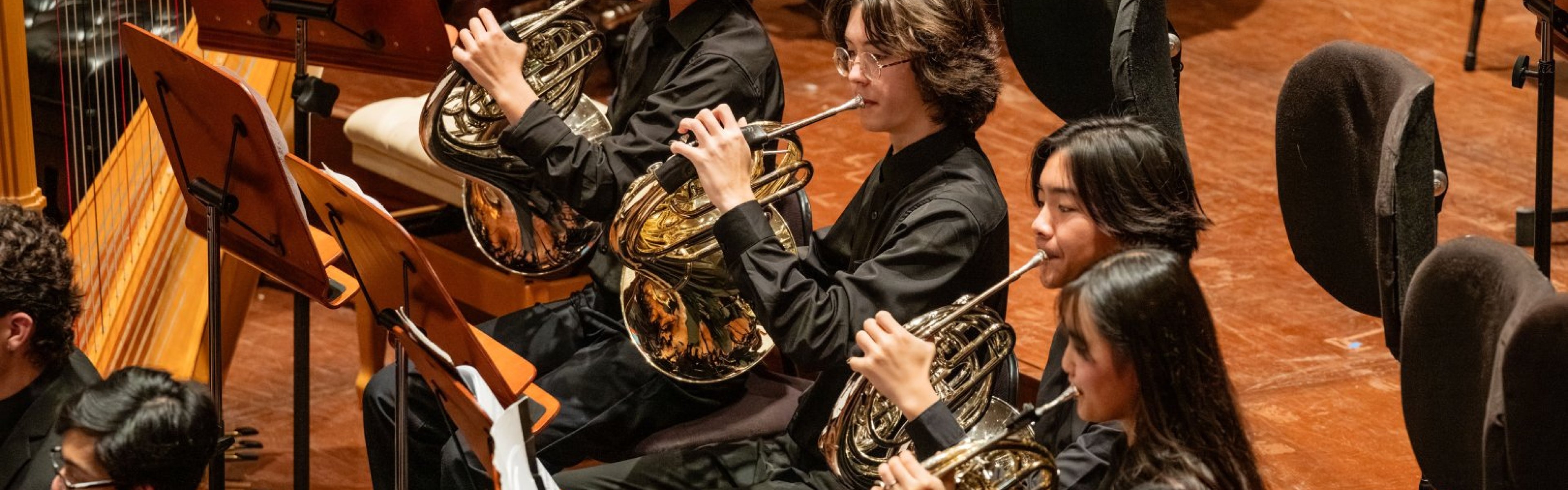
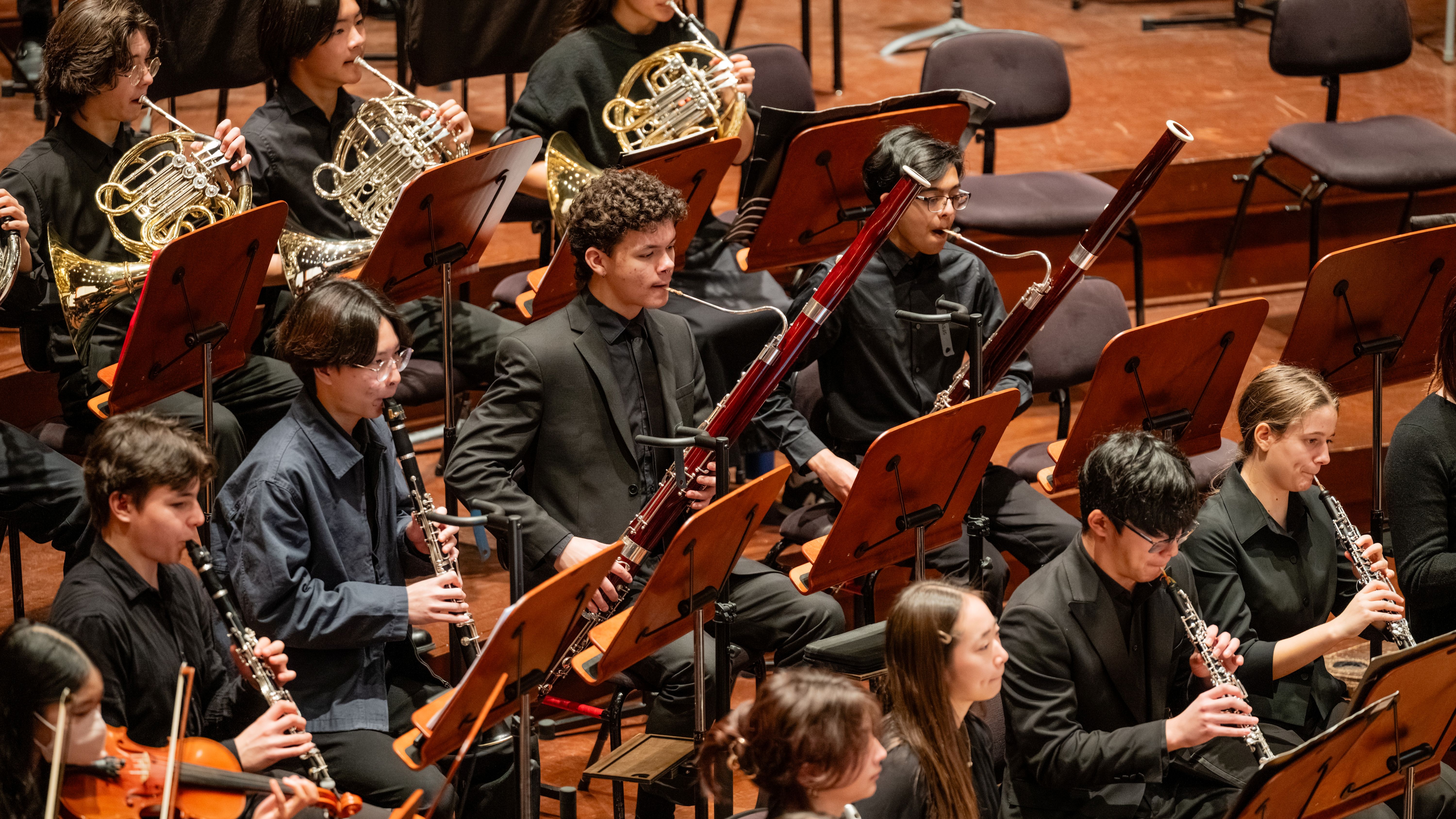
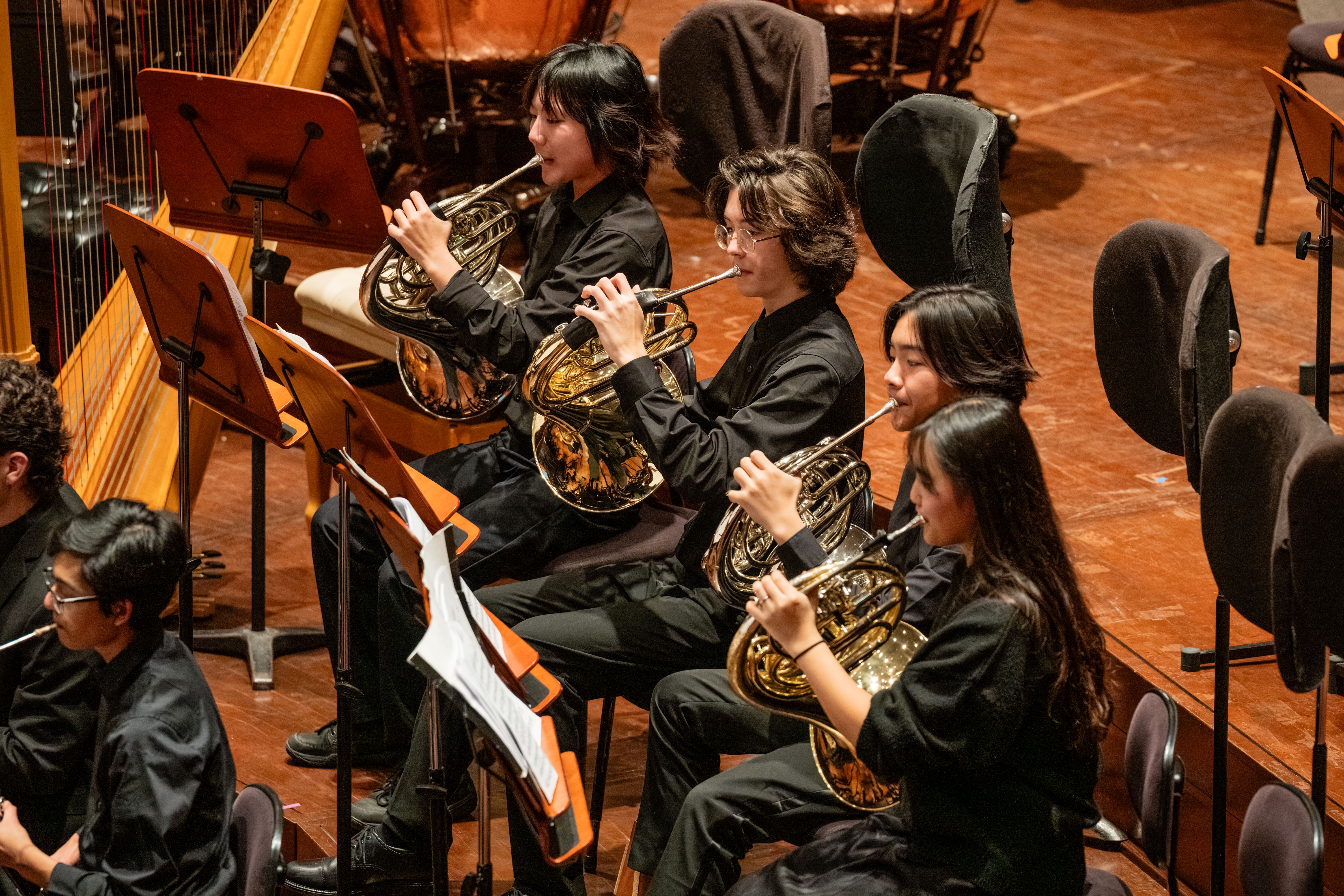
“I was so excited the moment I found out we were playing [Leonard] Bernstein,” said 12th grade student Grace Ha, who plays French horn in the Young People’s Symphony Orchestra (YPSO).
Symphonic Dances from West Side Story “has many sections from the very beginning to the end that are very technical and exposed,” said Ha. “But high-risk moments like these are the most exciting and fulfilling to me as a horn player.
“I especially love it when chaotic moments towards the end of the Prologue or the Mambo finally come together during rehearsal and everything suddenly clicks.”
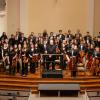
On May 2 at First Church of Berkeley, YPSO will mark the 250th anniversary of the signing of the Declaration of Independence with an all-American concert, called the America 250 Festival.
According to the announcement, “the festival explores the musical traditions that have shaped the American orchestral landscape while highlighting the role of young musicians in carrying that legacy forward.”
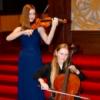
The first part of the concert presents chamber music works by Aaron Copland, Robert Hughes, Kenji Bunch, George Walker, Irving Berlin, and Jessie Montgomery.
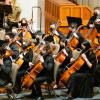
The second half, performed by the orchestra of 90 students, features Montgomery’s Starburst, John Adams’s Tromba Lontana, Copland’s “Buckaroo Holiday” from Rodeo, Samuel Barber’s Essay No. 2 for Orchestra, Op. 17, and the suite from West Side Story.
9th grade percussionist Roshni Rath said of playing in West Side Story: “It feels like being part of the storytelling that holds the energy and movement of the music. Throughout rehearsals, I’ve realized how percussively demanding the piece is, not just in the challenging rhythms and keeping time, but also in being adaptable to the quick shifts of style in the music."
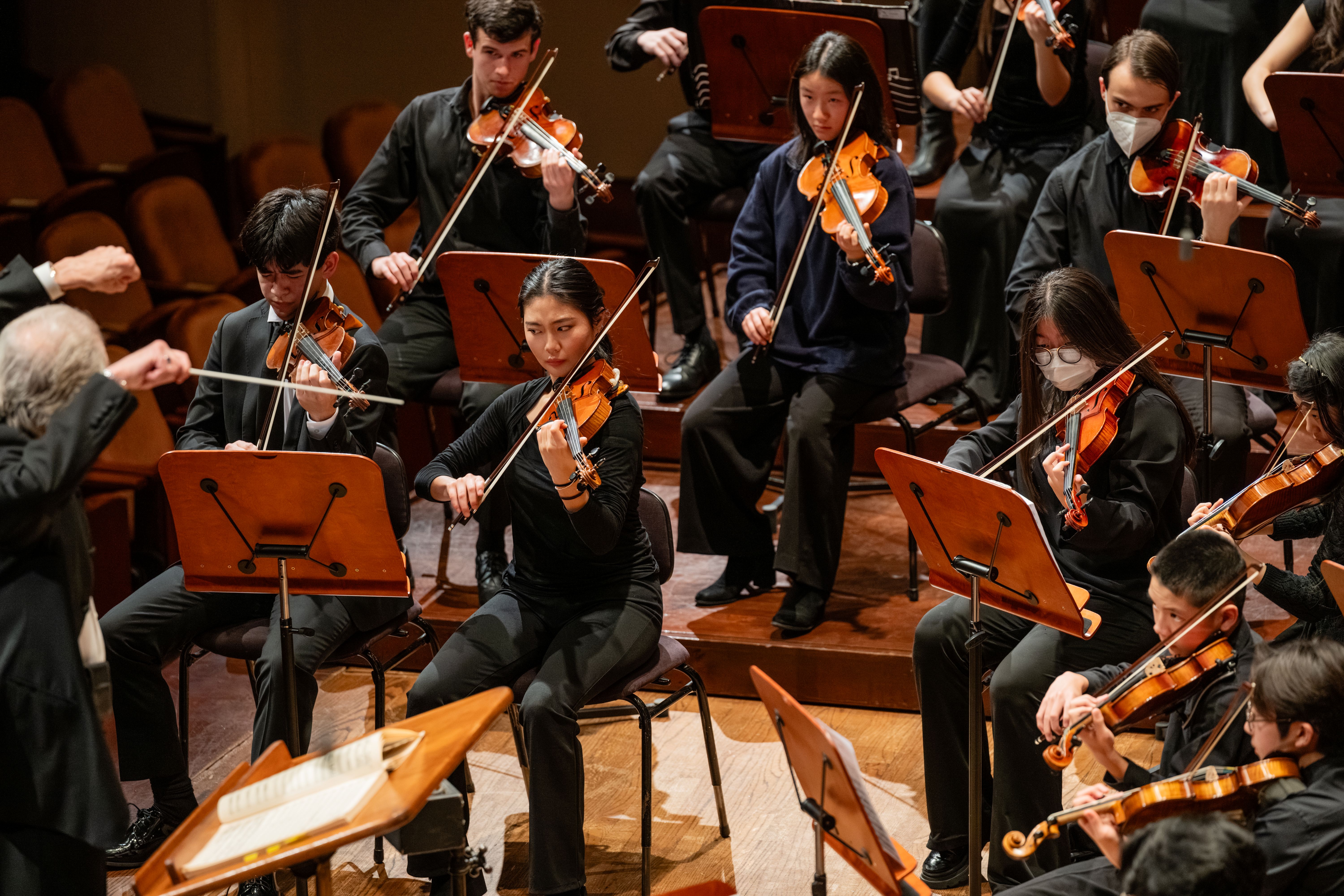
Ian Baker, an 11th grade violist who is in the chamber group performing Kenji Bunch’s String Circle, said the piece is “especially challenging because it has many different entrances where one instrument must come in completely differently from the others. For example, at the end, everyone comes in a beat apart, creating a round.”
Daven Ehrlich, 12th grade violinist, said: “This concert program has been incredibly effective in the role of a youth orchestra to facilitate the discovery of new music. When YPSO has programmed American composers in the past, often as concert overtures, there has been a general tendency to discount the unfamiliar and comparatively hard to approach; this program has forced us all to reconsider our approach to American genres, and I’ve already seen a broad rise in appreciation.”
YPSO Music Director David Ramadanoff said the program “represents a portion of the many American voices in classical music, both chamber and symphonic, from the 20th and 21st centuries.
“We are combining two important voices of today (Jessie Montgomery and John Adams) with three of our most iconic voices of the 20th century, Aaron Copland representing our frontier, Samuel Barber representing American romanticism, and Leonard Bernstein bringing Broadway to the concert hall.”
The National Endowment for the Arts awarded YPSO a grant for the project — many grants have been canceled for other arts organizations. Ramadanoff said NEA is “demonstrating recognition of YPSO’s efforts to include important voices of American music, both past and present, in the music we bring to both our young members and to our audiences.”
YPSO’s finances are based on student tuition, which was $1,900 per student, per season, last year. The organization offers numerous scholarship programs.
Among America250 events in the state: “America Innovates” at Gateway Pavilion, Pier 2, in San Francisco from May 16-18; Pacific Symphony’s “Shelley Conducts America at 250” from May 28-30; Pasadena Symphony on May 30; Opera San Luis Obispo’s “Patriotic Pops” on June 28.